The essays in this new collection, all by outstanding experts in the field of modern literature, provide a different and more complex sense of Eliot's place in literary history. The eight essays are: "The Waste Land Fifty Years After," by A. Walton Litz; "The Urban Apocalypse," by Hugh Kenner; "The First Waste Land:' by Richard Ellmann;" The Waste Land: Paris 1922," by Helen Gardner; "New Modes of Characterization in The Waste Land," by Robert Langbaum; "Precipitating Eliot," by Robert M. Adams; "Fear in the Way: The Design of Eliot's Drama," by Michael Goldman; and "Anglican Eliot," by Donald Davie. Originally published in 1973. The Princeton Legacy Library uses the latest print-on-demand technology to again make available previously out-of-print books from the distinguished backlist of Princeton University Press. These editions preserve the original texts of these important books while presenting them in durable paperback and hardcover editions. The goal of the Princeton Legacy Library is to vastly increase access to the rich scholarly heritage found in the thousands of books published by Princeton University Press since its founding in 1905.
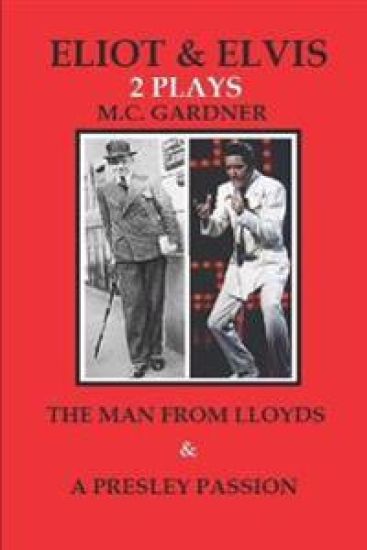
Eliot & Elvis: Two plays using music and verse to explore the wastelands of two American Icons--T.S. Eliot and Elvis Aaron Presley. The Man From Lloyds visits Eliot on the last day of his life to make a moral accounting. A post mortem Elvis visits the hospital bed of Colonel Tom Parker who devises A Presley Passion two weeks before the Colonel's own demise.
This is the first publication about Eliot Noyes (1910–77), an important figure in twentieth-century design in America. His influential and successful career stretched from his position as the first Director of Industrial Design at MoMA in the 1940s to Consulting Director of Design for key businesses such as IBM, Mobil Oil and Westinghouse. This book traces Noyes’ life and pioneering career, emphasizing his work for the corporate industries, to which he introduced key designers, artists and architects such as Paul Rand, Alexander Calder and Marcel Breuer, as well as his architectural projects and lectures. The focus is on the ideas he eschewed throughout his life and the influence he exerted on the design world
This book examines the influence of members of the Society of the Sacred Mission at Kelham Hall on T. S. Eliot’s poetics, cultural criticism and his search for identity. It focusses particularly on Eliot’s friendship with Br George Every SSM, and the correspondence between them that led to a deep intellectual and spiritual relationship. The author builds his study on his own conversations and correspondence with Every, the archive of Society of the Sacred Mission papers in the Borthwick Institute in York, and the collection of papers and other material left to the author by Every on his death. The result is a delicate journey through the growing personal and spiritual relationship between a great theologian and Christian writer, and one of the greatest modern poets and essayists.
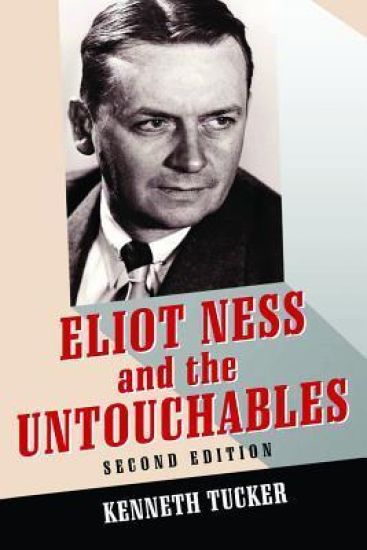
Lawman Eliot Ness has been transformed into legend by the films and television programs that depicted the war he and his "Untouchables" waged against Al Capone and the mobsters of Prohibition-era Chicago. Published by McFarland in 2000, the first edition of this volume analyzed both Ness the person and Ness the myth. This updated and expanded second edition is enhanced by information gathered through interviews with members of the original casts of the television and film versions of The Untouchables. Also included is new material on the historical Frank Nitti and "The Mad Butcher of Kingsbury Run," along with several gangsters whom Ness never actually encountered except in his media portrayals, among them Mad Dog Coll and Dutch Schultz. The author concludes by evaluating the life and accomplishments of Eliot Ness, and his impact as a cultural icon.
The late Eliot Asinof (1919-2008), renowned author of Eight Men Out, on which the movie version was later based, also wrote 14 other full length books, including 4 more on baseball. In addition, he produced countless articles, interviews, short stories, and screenplays in a writing career spanning over half a century. This is the first detailed critical study for both his baseball and non-baseball output. His entire oeuvre is explored, as well as pertinent themes, major characters and the current status of his literary reputation. A major addition to the scholarly work on this minor-league baseball player turned author.
"Middlemarch" is one of the great classic novels of the Victorian age and has also been seen as a key turning point in the history of the genre. George Eliot's novel is widely studied and this guide will provide an introduction to its context, language, themes, criticism and afterlife, leading students to a more sophisticated understanding of the text.It is the ideal guide to reading and studying the novel, setting "Middlemarch" in its historical, intellectual and cultural contexts, offering analyses of its themes, style and structure, providing exemplary close readings, presenting an up-to-date account of its critical reception. It also discusses the cultural afterlife including film and TV adaptations. It includes points for discussion, suggestions for further study and an annotated guide to relevant reading."Continuum" Reader's Guides are clear, concise and accessible introductions to key texts in literature and philosophy. Each book explores the themes, context, criticism and influence of key works, providing a practical introduction to close reading, guiding students towards a thorough understanding of the text. They provide an essential, up-to-date resource, ideal for undergraduate students.
This is the ideal guide to reading and studying this complex and challenging novel."Middlemarch" is one of the great classic novels of the Victorian age and has also been seen as a key turning point in the history of the genre. George Eliot's novel is widely studied and this guide will provide an introduction to its context, language, themes, criticism and afterlife, leading students to a more sophisticated understanding of the text.It is the ideal guide to reading and studying the novel, setting "Middlemarch" in its historical, intellectual and cultural contexts, offering analyses of its themes, style and structure, providing exemplary close readings, presenting an up-to-date account of its critical reception. It also discusses the cultural afterlife including film and TV adaptations. It includes points for discussion, suggestions for further study and an annotated guide to relevant reading."Continuum" Reader's Guides are clear, concise and accessible introductions to key texts in literature and philosophy. Each book explores the themes, context, criticism and influence of key works, providing a practical introduction to close reading, guiding students towards a thorough understanding of the text. They provide an essential, up-to-date resource, ideal for undergraduate students.
In the spirit of Devil in the White City comes a true detective tale of the highest standard: the haunting story of Eliot Ness's forgotten final case-his years-long hunt for The Mad Butcher of Kingsbury Run, a serial killer who terrorized Cleveland through the Great Depression, and tormented Ness to his dying breath. A careening read that's full of surprises. ... Collins and Schwartz deliver a nimble, taut tale. More importantly, they offer a portrait of a complex crime fighter who believed in science and reason at a time when most officers smacked suspects around with a blackjack, a portrait set against a backdrop of ethnic and class collisions, labor unrest, and political intrigue. Catnip for true-crime buffs. --Kirkus ReviewsIn 1934, the nation's most legendary crime-fighter-fresh from taking on the greatest gangster in American history-arrived in Cleveland, a corrupt and dangerous town about to host a world's fair. It was to be his coronation, as well as the city's. Instead, terror descended, as headless bodies started turning up. The young detective, already battling the mob and crooked cops, found his drive to transform American policing subverted by a menace largely unknown to law enforcement: a serial murderer.Eliot Ness's greatest case had begun. Now, Max Allan Collins and A. Brad Schwartz-the acclaimed writing team behind Scarface and the Untouchable-uncover this lost crime epic, delivering a gripping and unforgettable nonfiction account based on decades of groundbreaking research.Ness had risen to fame in 1931 for leading the "Untouchables," which helped put Chicago's Al Capone behind bars. As Cleveland's public safety director, in charge of the police and fire departments, Ness offered a radical new vision for better law enforcement. Crime-ridden and devastated by the Depression, Cleveland was preparing for a star-turn itself: in 1936, it would host the Great Lakes Exposition, which would be visited by seven million people. Late in the summer of 1934, however, pieces of a woman's body began washing up on the Lake Erie shore-first her ribs, then part of her backbone, then the lower half of her torso. The body count soon grew to five, then ten, then more, all dismembered in gruesome ways.As Ness zeroed in on a suspect-a doctor tied to a prominent political family?powerful forces thwarted his quest for justice. In this battle between a flawed hero and a twisted monster-by turns horror story, political drama, and detective thriller?Collins and Schwartz find an American tragedy, classic in structure, epic in scope.
In the spirit of Devil in the White City comes a true detective tale of the highest standard: the haunting story of Eliot Ness's forgotten final case-his years-long hunt for The Mad Butcher of Kingsbury Run, a serial killer who terrorized Cleveland through the Great Depression, and tormented Ness to his dying breath. A careening read that's full of surprises. ... Collins and Schwartz deliver a nimble, taut tale. More importantly, they offer a portrait of a complex crime fighter who believed in science and reason at a time when most officers smacked suspects around with a blackjack, a portrait set against a backdrop of ethnic and class collisions, labor unrest, and political intrigue. Catnip for true-crime buffs. --Kirkus ReviewsIn 1934, the nation's most legendary crime-fighter-fresh from taking on the greatest gangster in American history-arrived in Cleveland, a corrupt and dangerous town about to host a world's fair. It was to be his coronation, as well as the city's. Instead, terror descended, as headless bodies started turning up. The young detective, already battling the mob and crooked cops, found his drive to transform American policing subverted by a menace largely unknown to law enforcement: a serial murderer.Eliot Ness's greatest case had begun. Now, Max Allan Collins and A. Brad Schwartz-the acclaimed writing team behind Scarface and the Untouchable-uncover this lost crime epic, delivering a gripping and unforgettable nonfiction account based on decades of groundbreaking research.Ness had risen to fame in 1931 for leading the "Untouchables," which helped put Chicago's Al Capone behind bars. As Cleveland's public safety director, in charge of the police and fire departments, Ness offered a radical new vision for better law enforcement. Crime-ridden and devastated by the Depression, Cleveland was preparing for a star-turn itself: in 1936, it would host the Great Lakes Exposition, which would be visited by seven million people. Late in the summer of 1934, however, pieces of a woman's body began washing up on the Lake Erie shore-first her ribs, then part of her backbone, then the lower half of her torso. The body count soon grew to five, then ten, then more, all dismembered in gruesome ways.As Ness zeroed in on a suspect-a doctor tied to a prominent political family?powerful forces thwarted his quest for justice. In this battle between a flawed hero and a twisted monster-by turns horror story, political drama, and detective thriller?Collins and Schwartz find an American tragedy, classic in structure, epic in scope.
Title: Scenes and Characters from the works of George Eliot: a series of illustrations by eminent artists. India proofs. With introductory essay and descriptive letterpress by L. G. Seguin.Publisher: British Library, Historical Print EditionsThe British Library is the national library of the United Kingdom. It is one of the world's largest research libraries holding over 150 million items in all known languages and formats: books, journals, newspapers, sound recordings, patents, maps, stamps, prints and much more. Its collections include around 14 million books, along with substantial additional collections of manuscripts and historical items dating back as far as 300 BC.The FICTION & PROSE LITERATURE collection includes books from the British Library digitised by Microsoft. The collection provides readers with a perspective of the world from some of the 18th and 19th century's most talented writers. Written for a range of audiences, these works are a treasure for any curious reader looking to see the world through the eyes of ages past. Beyond the main body of works the collection also includes song-books, comedy, and works of satire. ++++The below data was compiled from various identification fields in the bibliographic record of this title. This data is provided as an additional tool in helping to insure edition identification: ++++ British Library Se guin, Lisbeth Gooch; Eliot, George; 1888. Leaves not numbered: plates; port. 28 cm. X22/5019
Young Eliot: From St. Louis to "The Waste Land" was hailed as "exceptional" and "assiduous" (The New York Times). Robert Crawford's meticulous, incisive scholarship continues in Eliot After "The Waste Land", an invaluable record of the revolutionary modernist, visionary poet, and troubled man. After being kept from the public for more than fifty years, the letters between T. S. Eliot and his longtime love and muse Emily Hale were unsealed in 2020. Drawing on these intimate exchanges and on countless interviews and archives, as well as on Eliot's own poetry and prose, the award-winning biographer Robert Crawford completes the narrative he began in Young Eliot. Eliot After "The Waste Land", the long-awaited second volume of Crawford's magisterial, meticulous portrait of the twentieth century's most significant poet, tells the story of the mature Eliot during his years as a world-renowned writer and intellectual, including his complex interior life. Chronicling Eliot's time as an exhausted bank employee after the publication of The Waste Land through the emotional turmoil of the 1920s and 1930s and his years as a firewatcher in bombed wartime London, Crawford shows us the public and personal experiences that helped inspire Eliot's later masterpieces. Crawford describes the poet's conversion to Anglo-Catholicism, his separation from Vivien Haigh-Wood and his happy second marriage to Valerie Fletcher, his editorship at Faber and Faber, his Nobel Prize, his great work Four Quartets, and his adventures in the theater. Crawford presents this complex and remarkable man not as a literary monument but as a human being: as husband, lover, and widower; as banker, editor, playwright, and publisher; and most of all as an epoch-shaping poet struggling to make art amid personal disasters.
Over a dozen new volumes of T. S. Eliot’s poetry, prose, and letters have been published in the past decade. This collection presents unabashedly fresh approaches to Eliot, while simultaneously guiding readers through the new materials that are available for the first time outside of restricted archives. Eliot, the figurehead of literary modernism, continues to be someone whom critics love to hate (Misogynist! Reactionary! Anti-Semite!) and readers love to devour (Profound! Revolutionary! Resonant!). Why does one artist elicit such different responses?Eliot Now collects new and established voices in Eliot studies, integrating contemporary critical approaches with careful attention to the newly published materials. Whether grappling with the controversial new two-volume Poems, narrating the experience of opening Eliot’s letters in the Emily Hale papers (until 2020 the “most famous sealed archive in the world”), or rereading his works through ecocritical or trans studies lenses, Eliot Now shows how this most effusively celebrated and heatedly criticized 20th-century writer continues to change the way we read literature in the 21st century. The collection concludes with six award-winning contemporary poets considering the influence of TheWaste Land on poetry today.
Over a dozen new volumes of T. S. Eliot’s poetry, prose, and letters have been published in the past decade. This collection presents unabashedly fresh approaches to Eliot, while simultaneously guiding readers through the new materials that are available for the first time outside of restricted archives. Eliot, the figurehead of literary modernism, continues to be someone whom critics love to hate (Misogynist! Reactionary! Anti-Semite!) and readers love to devour (Profound! Revolutionary! Resonant!). Why does one artist elicit such different responses?Eliot Now collects new and established voices in Eliot studies, integrating contemporary critical approaches with careful attention to the newly published materials. Whether grappling with the controversial new two-volume Poems, narrating the experience of opening Eliot’s letters in the Emily Hale papers (until 2020 the “most famous sealed archive in the world”), or rereading his works through ecocritical or trans studies lenses, Eliot Now shows how this most effusively celebrated and heatedly criticized 20th-century writer continues to change the way we read literature in the 21st century. The collection concludes with six award-winning contemporary poets considering the influence of TheWaste Land on poetry today.
Humility and humiliation have an awkward, often unacknowledged intimacy. Humility may be a queenly, cardinal or monkish virtue, while humiliation points to an affective state at the extreme end of shame. Yet a shared etymology links the words to lowliness and, further down, to the earth. As this study suggests, like the terms in question, T. S. Eliot and Samuel Beckett share an imperfect likeness. Between them is a common interest in states of abjection, shame and suffering and possible responses to such states. Tracing the relation between negative affect, ethics, and aesthetics, Eliot and Beckett's Low Modernism demonstrates how these two major modernists recuperate the affinity between humility and humiliation - concepts whose definitions have largely been determined by philosophy and theology.