The grandson of slaves, born into poverty in 1892 in the Deep South, A. G. Gaston died more than a century later with a fortune worth well over $130 million and a business empire spanning communications, real estate, and insurance. Gaston was, by any measure, a heroic figure whose wealth and influence bore comparison to J. P. Morgan and Andrew Carnegie. Here, for the first time, is the story of the life of this extraordinary pioneer, told by his niece and grandniece, the award-winning television journalist Carol Jenkins and her daughter Elizabeth Gardner Hines. Born at a time when the bitter legacy of slavery and Reconstruction still poisoned the lives of black Americans, Gaston was determined to make a difference for himself and his people. His first job, after serving in the celebrated all-black regiment during World War I, bound him to the near-slavery of an Alabama coal mine--but even here Gaston saw not only hope but opportunity. He launched a business selling lunches to fellow miners, soon established a rudimentary bank--and from then on there was no stopping him. A kind of black Horatio Alger, Gaston let a single, powerful question be his guide: What do our people need now? His success flowed from an uncanny genius for knowing the answer. Combining rich family lore with a deep knowledge of American social and economic history, Carol Jenkins and Elizabeth Hines unfold Gaston's success story against the backdrop of a century of crushing racial hatred and bigotry. Gaston not only survived the hardships of being black during the Depression, he flourished, and by the 1950s he was ruling a Birmingham-based business empire. When the movement for civil rights swept through the South in the late 1950s and early 1960s, Gaston provided critical financial support to many activists. At the time of his death in 1996, A. G. Gaston was one of the wealthiest black men in America, if not the wealthiest. But his legacy extended far beyond the monetary. He was a man who had proved it was possible to overcome staggering odds and make a place for himself as a leader, a captain of industry, and a far-sighted philanthropist. Writing with grace and power, Jenkins and Hines bring their distinguished ancestor fully to life in the pages of this book. Black Titan is the story of a man who created his own future--and in the process, blazed a future for all black businesspeople in America.
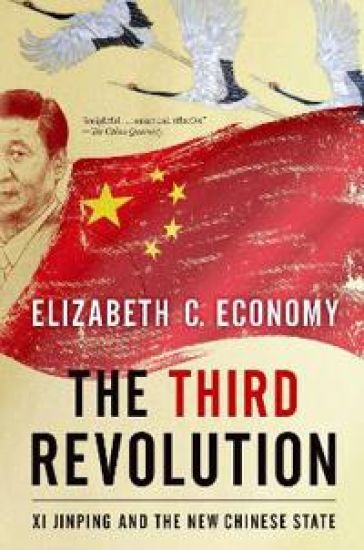
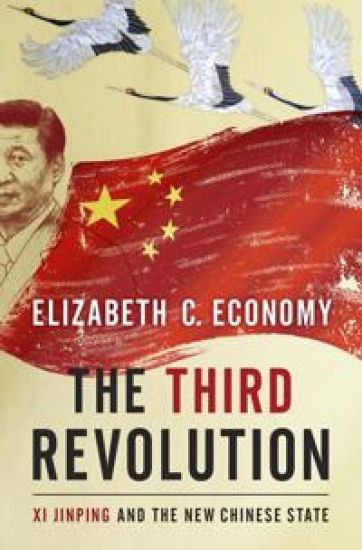
In this updated paperback edition of The Third Revolution, eminent China scholar Elizabeth C. Economy provides an incisive look at the transformative changes underway in China today. Chinese leader Xi Jinping has unleashed a powerful set of political and economic reforms: the centralization of power under Xi, himself, the expansion of the Communist Party's role in Chinese political, social, and economic life, and the construction of a virtual wall of regulations to control more closely the exchange of ideas and capital between China and the outside world. Through a wide-ranging exploration of Xi Jinping's top political, economic and foreign policy priorities-fighting corruption, managing the Internet, reforming the state-owned enterprise sector, improving the country's innovation capacity, enhancing air quality, and elevating China's presence on the global stage-Economy identifies the tensions, shortcomings, and successes of Xi's reform efforts over the course of his time in office. She also assesses their implications for the rest of the world, and provides recommendations for how the United States and others should navigate their relationship with this vast nation in the coming years. This updated edition features new material on China's reaction to the rise of Trump and his economic nationalist policies.
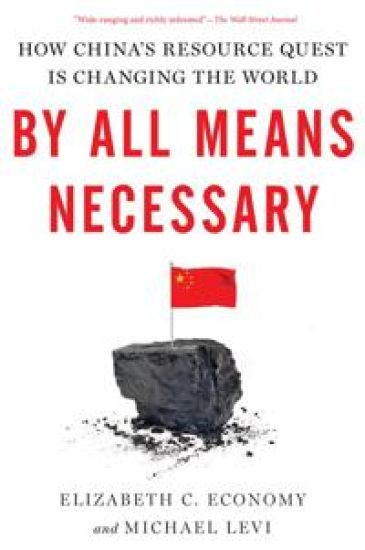
In the past thirty years, China has transformed from an impoverished country where peasants comprised the largest portion of the populace to an economic power with an expanding middle class and more megacities than anywhere else on earth. This remarkable transformation has required, and will continue to demand, massive quantities of resources. Like every other major power in modern history, China is looking outward to find them. In By All Means Necessary, Elizabeth C. Economy and Michael Levi explore the unrivaled expansion of the Chinese economy and the global effects of its meteoric growth. China is now engaged in a far-flung quest, hunting around the world for fuel, ores, water, and land for farming, and deploying whatever it needs in the economic, political, and military spheres to secure the resources it requires. Chinese traders and investors buy commodities, with consequences for economies, people, and the environment around the world. Meanwhile the Chinese military aspires to secure sea lanes, and Chinese diplomats struggle to protect the country's interests abroad. And just as surely as China's pursuit of natural resources is changing the world--restructuring markets, pushing up commodity prices, transforming resource-rich economies through investment and trade--it is also changing China itself. As Chinese corporations increasingly venture abroad, they must navigate various political regimes, participate in international markets, and adopt foreign standards and practices, which can lead to wide-reaching social and political ramifications at home. Clear, authoritative, and provocative, By All Means Necessary is a sweeping account of where China's pursuit of raw materials may take the country in the coming years and what the consequences will be--not just for China, but for the whole world.
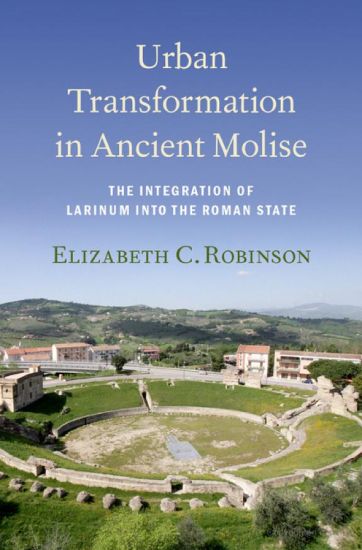
Larinum, a pre-Roman town in the modern region of Molise, underwent a unique transition from independence to municipal status when it received Roman citizenship in the 80s BCE shortly after the Social War. Its trajectory during this period illuminates complex processes of cultural, social, and political change associated with the Roman conquest throughout the Italian peninsula in the first millennium BCE. This book uses all the available evidence to create a site biography of Larinum from 400 BCE to 100 CE, with a focus on the urban transformation that occurred there during the Roman conquest. This study is distinctive in utilizing many different types of evidence: literary sources (including the pro Cluentio), settlement patterns, inscriptions, monuments and artifacts. It highlights the importance of local isolated variability in studies of Roman conquest, and provides a narrative that supplements larger works on this theme.
In The Third Revolution, eminent China scholar Elizabeth C. Economy provides an incisive look at the transformative changes underway in China today. Chinese leader Xi Jinping has unleashed a powerful set of political and economic reforms: the centralization of power under Xi, himself, the expansion of the Communist Party's role in Chinese political, social, and economic life, and the construction of a virtual wall of regulations to control more closely the exchange of ideas and capital between China and the outside world. Beyond its borders, Beijing has recast itself as a great power, seeking to reclaim its past glory and to create a system of international norms that better serves its more ambitious geostrategic objectives. In so doing, the Chinese leadership is reversing the trends toward greater political and economic opening, as well as the low-profile foreign policy, that had been put in motion by Deng Xiaoping's "Second Revolution" thirty years earlier. Through a wide-ranging exploration of Xi Jinping's top political, economic and foreign policy priorities-fighting corruption, managing the Internet, reforming the state-owned enterprise sector, improving the country's innovation capacity, enhancing air quality, and elevating China's presence on the global stage-Economy identifies the tensions, shortcomings, and successes of Xi's reform efforts over the course of his first five years in office. She also assesses their implications for the rest of the world, and provides recommendations for how the United States and others should navigate their relationship with this vast nation in the coming years.
Stepping is a complex performance that melds folk traditions with popular culture and involves synchronized percussive movement, singing, speaking, chanting, and drama. Elizabeth C. Fine's stunningly elaborate and vibrant portrayal of the cultural politics of stepping draws on interviews with individuals on college campuses and steppers and stepping coaches from high schools, community groups, churches, and dance organizations. Soulstepping is the first book to document the history of stepping, its roots in African and African American culture, and its transformation by churches, schools, and social groups into a powerful tool for instilling group identity and community involvement.
Domestic violence accounts for approximately one-fifth of all violent crime in the United States and is among the most difficult issues confronting professionals in the legal and criminal justice systems. In this volume, Elizabeth Britt argues that learning embodied advocacy—a practice that results from an expanded understanding of expertise based on lived experience—and adopting it in legal settings can directly and tangibly help victims of abuse.Focusing on clinical legal education at the Domestic Violence Institute at the Northeastern University School of Law, Britt takes a case-study approach to illuminate how challenging the context, aims, and forms of advocacy traditionally embraced in the U.S. legal system produces better support for victims of domestic violence. She analyzes a wide range of materials and practices, including the pedagogy of law school training programs, interviews with advocates, and narratives written by students in the emergency department, and looks closely at the forms of rhetorical education through which students assimilate advocacy practices. By examining how students learn to listen actively to clients and to recognize that clients have the right and ability to make decisions for themselves, Britt shows that rhetorical education can succeed in producing legal professionals with the inclination and capacity to engage others whose values and experiences diverge from their own.By investigating the deep relationship between legal education and rhetorical education, Reimagining Advocacy calls for conversations and action that will improve advocacy for others, especially for victims of domestic violence seeking assistance from legal professionals.
Domestic violence accounts for approximately one-fifth of all violent crime in the United States and is among the most difficult issues confronting professionals in the legal and criminal justice systems. In this volume, Elizabeth Britt argues that learning embodied advocacy—a practice that results from an expanded understanding of expertise based on lived experience—and adopting it in legal settings can directly and tangibly help victims of abuse.Focusing on clinical legal education at the Domestic Violence Institute at the Northeastern University School of Law, Britt takes a case-study approach to illuminate how challenging the context, aims, and forms of advocacy traditionally embraced in the U.S. legal system produces better support for victims of domestic violence. She analyzes a wide range of materials and practices, including the pedagogy of law school training programs, interviews with advocates, and narratives written by students in the emergency department, and looks closely at the forms of rhetorical education through which students assimilate advocacy practices. By examining how students learn to listen actively to clients and to recognize that clients have the right and ability to make decisions for themselves, Britt shows that rhetorical education can succeed in producing legal professionals with the inclination and capacity to engage others whose values and experiences diverge from their own.By investigating the deep relationship between legal education and rhetorical education, Reimagining Advocacy calls for conversations and action that will improve advocacy for others, especially for victims of domestic violence seeking assistance from legal professionals.
This volume is based on the premise that artistic performance is epistemological, a way of knowing self, culture, and other. The nine essays in this book, based on a broad range of ethnic, racial, and gender groups, share a common interest in exploring how performance reveals, shapes, and sometimes transforms personal and cultural identity. Editors Fine and Speer begin by examining the interdisciplinary roots of performance studies and the role of performance studies in the field of communication. They also discuss the power of performance to shape personal and cultural identity.The first two chapters explore the ritual nature of performance in two different cultural contexts: an African-American church service and an Appalachian storytelling event of the legendary Ray Hicks. In both arenas, the performers act as shamans, transporting the audience from their everyday, secular lives to the higher ground of the mythic spheres of heroic and fantastic events. The next three chapters discuss the notion of place and performance in various landscapes--the English countryside, the Blue Ridge Mountains, and the farmland of the Midwest. Through analysis of the speech and songs of a modern Sussex yeoman, the ghost tales of Appalachian storytellers, and the narratives of Midwest farmers coping with hard times, the authors reveal a variety of ways in which narrative performances function to preserve people's relationship with the land. The last four chapters share a focus on women as storytellers. One chapter offers a feminist critique of personal narrative research and challenges normative assumptions about the storytelling behavior of women. Another chapter interprets a narration of a Galician woman's typical day to reveal how the performance expresses deeply held attitudes and beliefs of her cultural community. Words are not the only medium that women use to tell their stories. The next chapter examines the story cloths of Hmong women refugees from Laos as intercultural and dialogical performances. The last chapter explores self-discovery and identity in the storytelling of a woman in the last years of her life. This volume is particularly representative of the ways in which communication scholars approach performance studies, but will also interest researchers and students of folklore, anthropology, sociology, theatre, and related disciplines.
The French humanist Rabelais (ca. 1483-1553) was the greatest French writer of the Renaissance and one of the most influential authors of all time. His Gargantua and Pantagruel, written in five books between 1532 and 1553, rivals the works of Shakespeare and Cervantes in terms of artistry, complexity of ideas and expression, and historical importance. Rabelais is read in numerous courses in French Literature, Renaissance Studies, and Western Civilization, and his writings continue to attract the attention of scholars and general readers alike. The first work of its kind, this encyclopedia is a comprehensive guide to his life and writings. Included are several hundred alphabetically arranged entries by expert contributors. These entries discuss his characters, his overt and veiled references to historical and Renaissance figures and events, his literary and philosophical allusions, his major themes, and the key events and influences that shaped his career. The entries cover such topics as education, religion, censors and censorship, humanism, death, and warfare. Entries cite works for further reading, and the encyclopedia closes with a selected, general bibliography.
Moral Development offers a comprehensive overview of classic and current theories of moral development and applications of these theories in various counseling and educational settings. It examines changes across time and experience in how people understand right and wrong, and individual differences in moral judgements, emotions, and actions. Elizabeth C. Vozzola and Amie K. Senland review the latest research in the field and integrate classic work with contemporary perspectives on assessment and treatment. Part 1 provides an understanding of a range of theories, explaining their strengths and challenges, and offering examples of how these theories apply to helping professionals. It covers Freud, Piaget, Kohlberg, Rest, Gilligan, Nodding, Bandura, Turiel, Nucci, Narvaez, Haidt, and Shweder. Part 2 highlights promising applications of moral development theory in education and counseling. Fully updated with new chapters on faith development and moral and prosocial development in infancy and early childhood, the text explores specific approaches to helping clients with a variety of clinical or developmental challenges and provides an excellent resource for courses addressing the CACREP program objectives for Human Growth and Development. It also integrates issues of gender, ethnicity, and culture throughout to prepare readers for practicing in a global culture and presents a new perspective: the cultural developmental approach. Illustrated throughout with examples that highlight applications of moral development concepts in today’s media, it also includes interviews from some of today’s leading theorists and practitioners. Ideal as a text for advanced courses on moral development and moral psychology, as well as courses on human, child, social and personality development taught in psychology, counseling, education, human development, family studies, social work, and religion. Its applied approach also appeals to mental health and school counselors.
Moral Development offers a comprehensive overview of classic and current theories of moral development and applications of these theories in various counseling and educational settings. It examines changes across time and experience in how people understand right and wrong, and individual differences in moral judgements, emotions, and actions. Elizabeth C. Vozzola and Amie K. Senland review the latest research in the field and integrate classic work with contemporary perspectives on assessment and treatment. Part 1 provides an understanding of a range of theories, explaining their strengths and challenges, and offering examples of how these theories apply to helping professionals. It covers Freud, Piaget, Kohlberg, Rest, Gilligan, Nodding, Bandura, Turiel, Nucci, Narvaez, Haidt, and Shweder. Part 2 highlights promising applications of moral development theory in education and counseling. Fully updated with new chapters on faith development and moral and prosocial development in infancy and early childhood, the text explores specific approaches to helping clients with a variety of clinical or developmental challenges and provides an excellent resource for courses addressing the CACREP program objectives for Human Growth and Development. It also integrates issues of gender, ethnicity, and culture throughout to prepare readers for practicing in a global culture and presents a new perspective: the cultural developmental approach. Illustrated throughout with examples that highlight applications of moral development concepts in today’s media, it also includes interviews from some of today’s leading theorists and practitioners. Ideal as a text for advanced courses on moral development and moral psychology, as well as courses on human, child, social and personality development taught in psychology, counseling, education, human development, family studies, social work, and religion. Its applied approach also appeals to mental health and school counselors.
As our understanding of aging and Alzheimer's, and the cultural changes related to these phenomena, grows so do the implications for interior design. Focus on recent innovations in care environments for the aging with a resource dedicated to this topic. This comprehensive book features: Coverage of the emerging building types of adult day care and hospice and the increased use of gardens and outdoor space in environments for the aging.Material on sustainable design and environmentally friendly building products.Design solutions that extend beyond assisted-living facilities and nursing homes as they can be easily adapted for residential use.Photographs, line drawings, and a 16-page color insert that bring the material to life. Order your copy of this book today.
In the late nineteenth century Tahiti embodied Western ideas of an earthly Paradise, a primitive utopia distant geographically and culturally from the Gilded Age or Belle Epoque. Stimulated by fin de siecle longings for the exotic, a few adventurous artists sought out this Eden on the South Seas - but what they found did not always live up to the Eden of their imagination. Bringing three of these figures together in comparative perspective for the first time, "Vanishing Paradise" offers a fresh take on the modernist primitivism of the French painter Paul Gauguin, the nostalgic exoticism of the American John LaFarge, and the elite tourism of the American writer Henry Adams. Drawing on archives throughout Europe, America, and the South Pacific, Childs explores how these artists, lured by romantic ideas about travel and exploration, wrestled with the elusiveness of paradise and portrayed colonial Tahiti in ways both mythic and modern.