Mary Barton is the first novel by English author Elizabeth Gaskell, published in 1848. The story is set in the English city of Manchester between 1839 and 1842, and deals with the difficulties faced by the Victorian working class. It is subtitled "A Tale of Manchester Life". Plot summary: The novel begins in Manchester, where we are introduced to the Bartons and the Wilsons, two working-class families. John Barton is a questioner of the distribution of wealth and the relations between rich and poor. Soon his wife dies-he blames it on her grief over the disappearance of her sister Esther. Having already lost his son Tom at a young age, Barton is left to raise his daughter, Mary, alone and now falls into depression and begins to involve himself in the Chartist, trade-union movement. Chapter 1 takes place in countryside where Moss Side is now. Mary takes up work at a dressmaker's (her father having objected to her working in a factory) and becomes subject to the affections of hard-working Jem Wilson and Harry Carson, son of a wealthy mill owner. She fondly hopes, by marrying Carson, to secure a comfortable life for herself and her father, but immediately after refusing Jem's offer of marriage she realises that she truly loves him. She therefore decides to evade Carson, planning to show her feelings to Jem in the course of time. Jem believes her decision to be final, though this does not change his feelings for her. Meanwhile, Esther, a "street-walker," returns to warn John Barton that he must save Mary from becoming like her. He simply pushes her away, however, and she's sent to jail for a month on the charge of vagrancy. Upon her release she talks to Jem with the same purpose. He promises that he will protect Mary and confronts Carson, eventually entering into a fight with him, which is witnessed by a policeman passing by. Not long afterwards, Carson is shot dead, and Jem is arrested for the crime, his gun having been found at the scene. Esther decides to investigate the matter further and discovers that the wadding for the gun was a piece of paper on which is written Mary's name. She visits her niece to warn her to save the one she loves, and after she leaves Mary realises that the murderer is not Jem but her father. She is now faced with having to save her lover without giving away her father. With the help of Job Legh (the intelligent grandfather of her blind friend Margaret), Mary travels to Liverpool to find the only person who could provide an alibi for Jem - Will Wilson, Jem's cousin and a sailor, who was with him on the night of the murder. Unfortunately, Will's ship is already departing, so that, after Mary chases after the ship in a small boat, the only thing Will can do is promise to return in the pilot ship and testify the next day. During the trial, Jem learns of Mary's great love for him. Will arrives in court to testify, and Jem is found "not guilty". Mary has fallen ill during the trial and is nursed by Mr Sturgis, an old sailor, and his wife. When she finally returns to Manchester she has to face her father, who is crushed by his remorse. He summons John Carson, Harry's father, to confess to him that he is the murderer. Carson is still set on justice, but after turning to the Bible he forgives Barton, who dies soon afterwards in Carson's arms. Not long after this Esther comes back to Mary's home, where she, too, soon dies. Jem decides to leave England, where, his reputation damaged, it would be difficult for him to find a new job. The novel ends with the wedded Mary and Jem, their little child, and Mrs Wilson living happily in Canada. News comes that Margaret has regained her sight and that she and Will, soon to be married, will visit.... Elizabeth Cleghorn Gaskell, (n e Stevenson; 29 September 1810 - 12 November 1865), often referred to as Mrs Gaskell, was an English novelist and short story writer.
Cranford is one of the better-known novels of the 19th-century English writer Elizabeth Gaskell. It was first published, irregularly, in eight instalments, between December 1851 and May 1853, in the magazine Household Words, which was edited by Charles Dickens. It was then published, with minor revision, in book form in 1853.The book is narrated by Mary Smith, a young woman who frequently visits the town and, when away, remains abreast of events through correspondence with the other characters. The first chapter introduces the leading women of Cranford, idiosyncratic yet endearing characters who hope to preserve their lifestyles (and all-important social customs) from change. Rowena Fowler, possessor of a red silk umbrella, conservatively considers an heir while her infirm body has outlived her kin. Miss Betty Barker is also determined to preserve the past, but in the form of her cow, which she sews pyjamas for, as it lost all of its hair after falling into a lime-pit. As for Miss Deborah Jenkyns, she establishes the norms and customs by which the town must abide. However, when Captain Brown moves to town, he challenges the women's rules of politeness. First, he openly admits his own poverty. This is particularly awful to Miss Deborah Jenkyns, whom Brown also offends by finding Charles Dickens a better writer than Jenkyns' preferred "Dr. Johnson" (Samuel Johnson). Nevertheless, Brown's warm manner subdues his detractors' contention of his supposed social awkwardness; therefore, they allow him to bypass custom and visit before noon. Brown also has two daughters: Miss Brown, an ill-tempered woman with hardened features, and Miss Jessie, who has an innocent face and, like her father, is naive to Cranford's rules. For instance, Miss Jessie boasts that her uncle can provide her with large amounts of Shetland wool. When aristocratic Miss Jamieson overhears, she takes exception to Miss Jessie putting on airs..... Elizabeth Cleghorn Gaskell, (n e Stevenson; 29 September 1810 - 12 November 1865), often referred to as Mrs Gaskell, was an English novelist and short story writer. Her novels offer a detailed portrait of the lives of many strata of Victorian society, including the very poor, and are of interest to social historians as well as lovers of literature. Her first novel, Mary Barton, was published in 1848. Gaskell's The Life of Charlotte Bront , published in 1857, was the first biography of Bront . Some of Gaskell's best known novels are Cranford (1851-53), North and South (1854-55), and Wives and Daughters (1865).
North and South is a social novel by English writer Elizabeth Gaskell. With Wives and Daughters (1865) and Cranford (1853), it is one of her best-known novels and was adapted for television twice (1975 and 2004). The later version renewed interest in the novel and attracted a wider readership. Gaskell's first novel, Mary Barton (1848), focused on relations between employers and workers in Manchester from the perspective of the working poor; North and South uses a protagonist from southern England to present and comment on the perspectives of mill owners and workers in an industrialising city. 1] The novel is set in the fictional industrial town of Milton in the north of England. Forced to leave her home in the tranquil, rural south, Margaret Hale settles with her parents in Milton. She witnesses the brutal world wrought by the Industrial Revolution, seeing employers and workers clashing in the first strikes. Sympathetic to the poor (whose courage and tenacity she admires and among whom she makes friends), she clashes with John Thornton: a nouveau riche cotton-mill owner who is contemptuous of his workers. The novel traces her growing understanding of the complexity of labour relations and their impact on well-meaning mill owners and her conflicted relationship with John Thornton. Gaskell based her depiction of Milton on Manchester, where she lived as the wife of a Unitarian minister. Plot: Nineteen-year-old Margaret Hale happily returns home from London to the idyllic southern village of Helstone after her cousin Edith marries Captain Lennox. She lived for almost 10 years in the city with Edith and wealthy Aunt Shaw to learn to be a young lady. Margaret has refused an offer of marriage from the captain's brother, Henry, am up-and-comng barrister. Her life is turned upside down when her father, the local pastor, leaves the Church of England and the rectory of Helstone as a matter of conscience; his intellectual honesty has made him a dissenter. At the suggestion of Mr. Bell, his old friend from Oxford, he settles with his wife and daughter in Milton-Northern (where Mr. Bell was born and owns property). The industrial town in Darkshire (a textile-producing region) manufactures cotton and is in the middle of the Industrial Revolution; masters and workers are clashing in the first organised strikes. 11] Margaret finds the bustling, smoky town of Milton harsh and strange, and she is upset by its poverty. Mr. Hale (in reduced financial circumstances) works as a tutor; one of his pupils is wealthy and influential manufacturer John Thornton, master of Marlborough Mills. From the outset, Margaret and Thornton are at odds with each other; she sees him as coarse and unfeeling, and he sees her as haughty. He is attracted to her beauty and self-assurance, and she begins to admire how he has risen from poverty. During the 18 months she spends in Milton Margaret gradually learns to appreciate the city and its hard-working people, especially Nicholas Higgins (a union representative) and his daughter Bessy, whom she befriends. Bessy is ill with byssinosis from inhaling cotton dust, which eventually kills her. Margaret's mother is becoming sicker, and a workers' strike is brewing..... Elizabeth Cleghorn Gaskell, (n e Stevenson; 29 September 1810 - 12 November 1865), often referred to as Mrs Gaskell, was an English novelist and short story writer. Her novels offer a detailed portrait of the lives of many strata of Victorian society, including the very poor, and are of interest to social historians as well as lovers of literature. Her first novel, Mary Barton, was published in 1848. Gaskell's The Life of Charlotte Bront , published in 1857, was the first biography of Bront . Some of Gaskell's best known novels are Cranford (1851-53), North and South (1854-55), and Wives and Daughters (1865)........
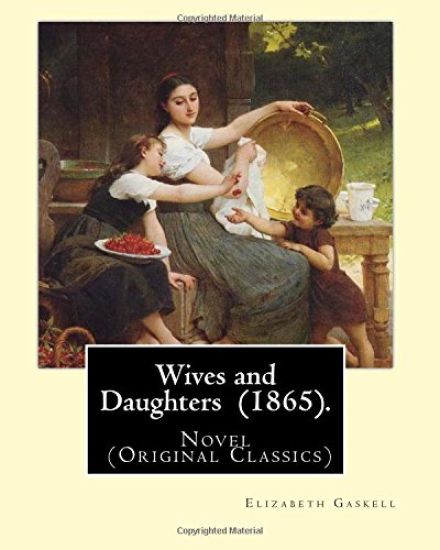
Wives and Daughters is a novel by Elizabeth Gaskell, first published in the Cornhill Magazine as a serial from August 1864 to January 1866. It was partly written whilst Gaskell was staying with the salon hostess Mary Elizabeth Mohl at her home on the Rue de Bac in Paris. When Mrs Gaskell died suddenly in 1865, it was not quite complete, and the last section was written by Frederick Greenwood. The story is about Molly Gibson, the only daughter of a widowed doctor living in a provincial English town in the 1830s. PLOT: The novel opens with young Molly Gibson, who has been raised by her widowed father, Dr. Gibson. During a visit to the local aristocratic 'great house' of Lord and Lady Cumnor, Molly loses her way in the estate and falls asleep under a tree. Lady Cuxhaven (one of the daughters of the house) and Mrs. Kirkpatrick (an ex-governess to the Cumnor children) find Molly in her slumbering state and Molly is put to bed in Mrs. Kirkpatrick's room. There are allusions to the latter as Miss Clare, her maiden name. Clare appears to be a kind woman and assures Molly that she will wake her up when it is time for the entourage to leave. However, she forgets to do so and Molly is stranded in the mansion. She is distressed at the thought of spending the night at the mansion. To her relief, her father arrives to collect her. Seven years later, Molly is described as an attractive and rather unworldly young woman, which arouses the interest of one of her father's apprentices, Mr. Coxe. Mr Gibson discovers the young man's secret affection and sends Molly to stay with the Hamleys of Hamley Hall, a gentry family that purportedly dates from the Heptarchy but whose circumstances are now reduced. Molly forms a close attachment with Mrs. Hamley, who embraces her almost as a daughter. Molly also befriends the younger son, Roger. Molly is aware that, as the daughter of a professional man, she would not be considered a suitable match for the sons of Squire Hamley. The elder son Osborne, is expected to make a brilliant marriage after an excellent career at Cambridge: he is handsome, clever and more fashionable than his brother. However, he has performed poorly at university, breaking the hearts of his parents. Molly accidentally discovers his great secret: Osborne has married for love, to a French Roman Catholic ex-nursery maid, Aimee, whom he has established in a secret cottage as he is convinced that his father would never accept Aim e as his daughter-in-law. During Molly's absence from the house, Mr. Gibson contemplates a second marriage. He expects that marriage will improve his domestic comfort and provide Molly with a mother figure to shield her from influences such as Mr. Coxe. He finds Miss Clare ideally matched to his requirements and recalls her apparent kindness to Molly many years ago. Molly remembers her from their previous encounter and has little love for her. For her father's sake, she does her best to get on with her socially ambitious and selfish stepmother, but the home is not always happy. However, Molly does find an ally in her new stepsister, Cynthia, who is about the same age as Molly. The two girls are a study in contrasts: Cynthia is far more worldly and rebellious than Molly, who is naive and slightly awkward. Cynthia has been educated in France, and it gradually becomes apparent that she and her mother have secrets in their past, involving the land agent from the great house, Mr. Preston, who is rumoured to be a gambler and a scoundrel. Osborne Hamley's failures make his invalid mother's illness worse and widens the divide between him and his father, which is amplified by the considerable debts Osborne has run up in maintaining his secret wife. ... Elizabeth Cleghorn Gaskell, (n e Stevenson; 29 September 1810 - 12 November 1865), often referred to as Mrs Gaskell, was an English novelist and short story writer....
This new study deals with the whole range of Gaskell's fiction, approaching her as a deeply poetic novelist and short-story writer. Among topics covered are women and the creation of the self, death and personal integrity, the status of words as utterance and the shape and meaning of individual lives. While seeing her as a product of her age, Wright transcends narrow categorisations of her work to read her 'whole' as a subtle exponent of the values of a humane realism.
First published in 1975, this book places Elizabeth Gaskell amongst the major novelists of the nineteenth-century. It considers how she has sometimes been overlooked, or admired for very few of her works, or for reasons that are not in fact central to her art. W. A. Craik looks at Gaskell’s full-length novels with three main purposes: to analyse her development as a novelist, her achievements, and the nature of her very original work; to see what she owes to earlier novelists, what she learns from them, and how far she is an innovator; and to put her in relation to those other novelists who write on similar themes with comparable aims. This book establishes Elizabeth Gaskelll’s excellence in comparison with her peers by demonstrating how far she extended the possibilities of the novel, both in materials and techniques.
First published in 1975, this book places Elizabeth Gaskell amongst the major novelists of the nineteenth-century. It considers how she has sometimes been overlooked, or admired for very few of her works, or for reasons that are not in fact central to her art. W. A. Craik looks at Gaskell’s full-length novels with three main purposes: to analyse her development as a novelist, her achievements, and the nature of her very original work; to see what she owes to earlier novelists, what she learns from them, and how far she is an innovator; and to put her in relation to those other novelists who write on similar themes with comparable aims. This book establishes Elizabeth Gaskelll’s excellence in comparison with her peers by demonstrating how far she extended the possibilities of the novel, both in materials and techniques.
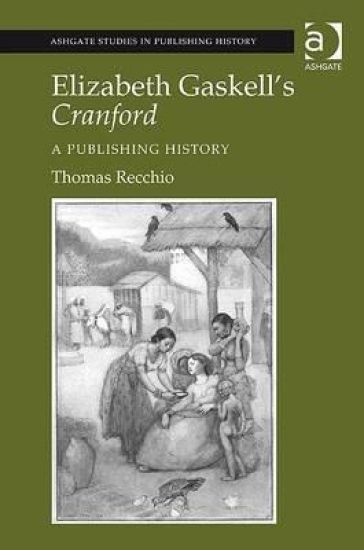
Tracing the publishing history of Elizabeth Gaskell's Cranford from its initial 1851-53 serialization in Dickens's Household Words through its numerous editions and adaptations, Thomas Recchio focuses especially on how the text has been deployed to support ideas related to nation and national identity. Recchio maps Cranford's nineteenth-century reception in Britain and the United States through illustrated editions in England dating from 1864 and their subsequent re-publication in the United States, US school editions in the first two decades of the twentieth century, dramatic adaptations from 1899 to 2007, and Anglo-American literary criticism in the latter half of the twentieth century. Making extensive use of primary materials, Recchio considers Cranford within the context of the Victorian periodical press, contemporary reviews, theories of text and word relationships in illustrated books, community theater, and digital media. In addition to being a detailed publishing history that emphasizes the material forms of the book and its adaptations, Recchio's book is a narrative of Cranford's evolution from an auto-ethnography of a receding mid-Victorian English way of life to a novel that was deployed as a maternal model to define an American sensibility for early twentieth-century Mediterranean and Eastern European immigrants. While focusing on one novel, Recchio offers a convincing micro-history of the way English literature was positioned in England and the United States to support an Anglo-centric cultural project, to resist the emergence of multicultural societies, and to ensure an unchanging notion of a stable English culture on both sides of the Atlantic.
Il volume si incentra sulla rivalutazione di un classico vittoriano di Elizabeth Gaskell "North and South" attraverso un'analisi multi-livellare, dallo studio topologico del setting, agli aspetti sociologicamente e antropologicamente rilevanti della diegesi, per finire alla critica letteraria e sociolinguistica. Vincenzo Longo, docente di lingua e cultura inglese, specializzato in letteratura inglese. Da diversi anni, ricerca e si occupa di studi vittoriani ed edoardiani, in particolare di Thomas Hardy, Elizabeth Gaskell e Virginia Woolf. E' autore di The Paradigm of Childhood in Thomas Hardy's Narrative e L'Armonia della Morte: il Simbolismo dell'Acqua da Shakespeare a Virginia Woolf. Nel 2018 ha ricoperto una cattedra di letteratura inglese al Clare College, presso l'Universit di Cambridge.
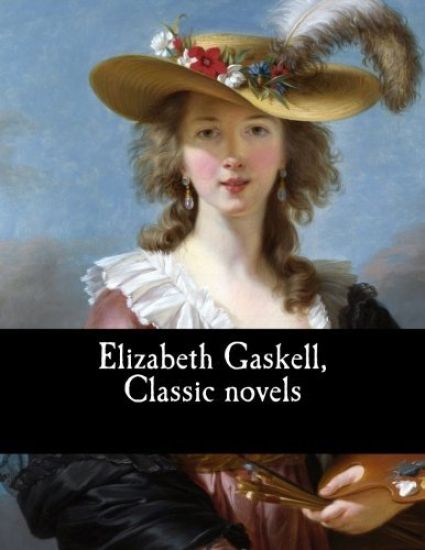
Elizabeth Cleghorn Gaskell, n e Stevenson (29 September 1810 - 12 November 1865), often referred to simply as Mrs Gaskell, was a British novelist and short story writer during the Victorian era. Her novels offer a detailed portrait of the lives of many strata of society, including the very poor, and are of interest to social historians as well as lovers of literature. Gaskell was also the first to write a biography of Charlotte Bronte, The Life of Charlotte Bronte, which was published in 1857. Mrs Gaskell's first novel, Mary Barton, was published anonymously in 1848. The best-known of her remaining novels are North and South (1854), and Wives and Daughters (1865). In this book: Ruth Sylvia's Lovers -- Complete Cousin Phillis My Lady Ludlow Curious, if True, Strange Tales
Elizabeth Cleghorn Gaskell, n e Stevenson (29 September 1810 - 12 November 1865), often referred to simply as Mrs Gaskell, was a British novelist and short story writer during the Victorian era. Her novels offer a detailed portrait of the lives of many strata of society, including the very poor, and are of interest to social historians as well as lovers of literature. Gaskell was also the first to write a biography of Charlotte Bronte, The Life of Charlotte Bronte, which was published in 1857. In this book: North and South Wives and Daughters Cranford
Elizabeth Cleghorn Gaskell, n e Stevenson (29 September 1810 - 12 November 1865), often referred to simply as Mrs Gaskell, was a British novelist and short story writer during the Victorian era. Her novels offer a detailed portrait of the lives of many strata of society, including the very poor, and are of interest to social historians as well as lovers of literature. Gaskell was also the first to write a biography of Charlotte Bronte, The Life of Charlotte Bronte, which was published in 1857. In this book: North and South Wives and Daughters
This book re-locates Elizabeth Gaskell’s ‘smaller stories’ in the literary and cultural context of the nineteenth century. While Gaskell is recognised as one of the major novelists of her time, the short stories that make up a large proportion of her published work have not yet received the critical attention they deserve. This study re-claims them as an indispensable part of her literary output that enables us to better contextualize and assess her achievement holistically as a highly-skilled woman of letters. The periodicals in which Gaskell’s shorter pieces were published offer a microcosm of nineteenth-century society, and Gaskell took full advantage of the medium to apply a consistent and barbed challenge to cultural and gendered constructs of roles and social behaviour. Although her eminently readable prose still flows easily in her short stories, it is less likely to elide the sharp corners of domestic violence, the disabling experiences of women, the pain of death and loss, andthe complications of family life.
This book re-locates Elizabeth Gaskell’s ‘smaller stories’ in the literary and cultural context of the nineteenth century. While Gaskell is recognised as one of the major novelists of her time, the short stories that make up a large proportion of her published work have not yet received the critical attention they deserve. This study re-claims them as an indispensable part of her literary output that enables us to better contextualize and assess her achievement holistically as a highly-skilled woman of letters. The periodicals in which Gaskell’s shorter pieces were published offer a microcosm of nineteenth-century society, and Gaskell took full advantage of the medium to apply a consistent and barbed challenge to cultural and gendered constructs of roles and social behaviour. Although her eminently readable prose still flows easily in her short stories, it is less likely to elide the sharp corners of domestic violence, the disabling experiences of women, the pain of death and loss, andthe complications of family life.