Well-read, observant, and spirited, a young Elizabeth Bennet draws the attention of a wealthy widower. When she finally meets Mr. Darcy, she outranks him. Of course, that doesn't stop him from insulting her. Married and wealthy, is she still beneath his notice?Elizabeth's high society connections create new opportunities for her sisters and, in turn, keep Darcy close to her family.When tragedy strikes, will Darcy rise to the occasion? Or will his propensity to give offense show no respect for rank?
William Harper has it all: looks, money, power. There's just one tiny problem-he's about to be deported. He needs a green card. Fast. An American wife is the easiest way to get one. But where will he find a woman to marry him on such short notice? Elizabeth Barrett is a full-time student, part-time dog walker, and weekend tutor. With a roommate who just ran out on her and neck deep in tuition payments, she needs money. Now. Harper just might make her an offer she can't refuse. He thinks he's worked out the perfect deal, she thinks she's signed up for an easy job. Neither of them bargained for the ride of their lives.
Once considered the preserve of the wealthy, nanny care has grown in response to changes in the labour market, including the rising number of working mothers with young children and increases in non-standard work patterns. This book presents new empirical research about in-home childcare in Australia, the United Kingdom and Canada, three countries where governments are pursuing new ways to support in-home childcare through funding, regulation and migration. The compelling policy story that emerges illustrates the implications of different mechanisms for facilitating in-home childcare - for families and for care workers.
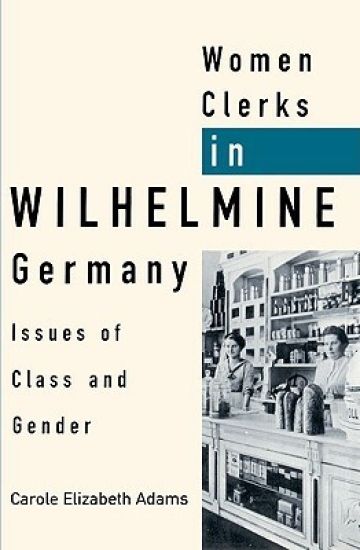
This book discusses the emergence of white-collar work for women and the motivations for organisation and political attitudes of German women clerks and white-collar workers before the First World War. In addition, the book explores issues concerning women’s work and labour-market situations, women’s class positions and their political mobilisation. The introductory chapters examine the situations of clerks and the home and family circumstances of women clerks. Dr Adams goes on to discuss the nature and limits of ‘feminism’ in Wilhelmine society, the early years of female clerks’ associations, and the interrelationship of women’s work and home roles, behaviours and attitudes. Finally, two case studies examine in depth the conflicts of class and gender. Before the First World War, Dr Adams concludes, women defined themselves by gender and by class; they sought fulfilment in the public and the private sphere; but they found it impossible to be both ‘woman’ and ‘worker’.
This work has been selected by scholars as being culturally important and is part of the knowledge base of civilization as we know it.This work is in the public domain in the United States of America, and possibly other nations. Within the United States, you may freely copy and distribute this work, as no entity (individual or corporate) has a copyright on the body of the work.Scholars believe, and we concur, that this work is important enough to be preserved, reproduced, and made generally available to the public. To ensure a quality reading experience, this work has been proofread and republished using a format that seamlessly blends the original graphical elements with text in an easy-to-read typeface.We appreciate your support of the preservation process, and thank you for being an important part of keeping this knowledge alive and relevant.
Bettye Noyes inherited the family homestead in 1960. As she began to sort through the family's possessions and long forgotten furniture, she noticed a blue chest amongst the dust and spider webs. Having no knowledge of the chest, she climbed over the detritus to open it. Inside, she discovered hundreds of letters wrapped neatly, and tied with blue ribbon. As she searched through the envelopes, she realized her family saved their letters for almost 200 years. Her imagination ran wild as to what she might discover about her past. Although she did not find any prominent politicians or scientists, she discovered something about her family that was even better. This is Bettye's story. Kenneth Knott studied writing at Maryland Writers Center and New School University. He has been published in The New York Law Journal, Legal Times, and The New Jersey Law Journal. He wrote for and edited the book "Best Practices in Legal Management." He is on the faculty of the University of Rhode Island Osher Lifetime Learning Institute, where he holds classes on how classic literature shapes our lives. Ken loved Bettye's story, and saved it for us all.
What tools do we need to empower ourselves and our communities to create a more just and desirable future?We are at a watershed moment of rising fascism and rising seas. Yet, our ability to connect and collaborate in creating our societies has never been greater. The urgent question is: How do we build democratic participation everywhere?Remaking Democracy: How We Make the Worlds We Want is a guidebook for social change. It provides strategy and tools to create a more just and desirable future for everyone. It empowers people from all walks of life to analyze root causes of the problems we face and design actions, transforming ourselves as we transform the world. Stories of successful projects illuminate the book's theory in action. Remaking Democracy teaches how to proliferate participation and grow democratic practices, so that those affected by systems can become their creators. It equips us to design the abundant variety of solutions our surviving and thriving require.
Title: Songs from the Novelists, from Elizabeth to Victoria. Edited with introduction and notes, by W. D. Adams.Publisher: British Library, Historical Print EditionsThe British Library is the national library of the United Kingdom. It is one of the world's largest research libraries holding over 150 million items in all known languages and formats: books, journals, newspapers, sound recordings, patents, maps, stamps, prints and much more. Its collections include around 14 million books, along with substantial additional collections of manuscripts and historical items dating back as far as 300 BC.The FICTION & PROSE LITERATURE collection includes books from the British Library digitised by Microsoft. The collection provides readers with a perspective of the world from some of the 18th and 19th century's most talented writers. Written for a range of audiences, these works are a treasure for any curious reader looking to see the world through the eyes of ages past. Beyond the main body of works the collection also includes song-books, comedy, and works of satire. ++++The below data was compiled from various identification fields in the bibliographic record of this title. This data is provided as an additional tool in helping to insure edition identification: ++++ British Library Adams, William Davenport.; 1885. xxviii. 155 p.; 4 . 11601.ddd.5.
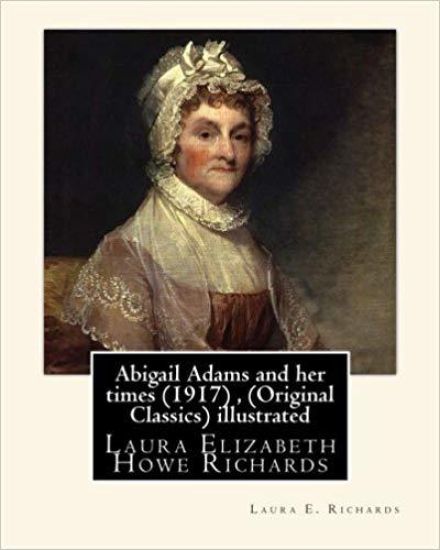
SEVENTEEN HUNDRED AND FORTY-FOUR George the Second on the throne of England, "snuffy old drone from the German hive"; Charles Edward Stuart ("bonnie Prince Charlie") making ready for his great coup which, the next year, was to cast down said George from the throne and set Charles Edward thereupon as "rightful, lawful prince-for wha'll be king but Charlie?", and which ended in Culloden and the final downfall and dispersion of the Scottish Stuarts. In France, Louis XV., Lord of Misrule, shepherding his people toward the Abyss with what skill was in him; at war with England, at war with Hungary; Frederick of Prussia alone standing by him. In Europe, generally, a seething condition which is not our immediate concern. In America, seething. Laura Elizabeth Howe Richards (February 27, 1850 - January 14, 1943) was an American writer. She wrote more than 90 books including biographies, poetry, and several for children. One well-known children's poem is her literary nonsense verse "Eletelephony", which is adapted into an animated segment (Vowel Letter Poem: E - Elephant) produced by Jeff Hale, and his animation studio, Imagination, Inc., for the television show Sesame Street.Laura Elizabeth Howe was born in Boston, Massachusetts, on February 27, 1850. Her father was Dr. Samuel Gridley Howe, an abolitionist and the founder of the Perkins Institution and Massachusetts School for the Blind. 1] She was named after his famous deaf-blind pupil Laura Bridgman. citation needed] Her mother Julia Ward Howe wrote the words to The Battle Hymn of the Republic. In 1871 Laura married Henry Richards. He would accept a management position in 1876 at his family's paper mill at Gardiner, Maine, where the couple moved with their three children. In 1917 Laura won a Pulitzer Prize for Julia Ward Howe, 1819-1910, a biography, which she co-authored with her sister, Maud Howe Elliott. She died on January 14, 1943. Abigail Adams (n e Smith; November 22 O.S. November 11] 1744 - October 28, 1818) was the wife of John Adams and the mother of John Quincy Adams. She is now designated the first Second Lady and second First Lady of the United States, although these titles were not in use at the time. Adams's life is one of the most documented of the first ladies: she is remembered for the many letters she wrote to her husband while he stayed in Philadelphia, Pennsylvania, during the Continental Congresses. John frequently sought the advice of Abigail on many matters, and their letters are filled with intellectual discussions on government and politics. The letters serve as eyewitness accounts of the American Revolutionary War home front.
No one thought that Elizabeth would live to become Queen of England. Her father, Henry VIII, beheaded her mother, Anne Bolyn, for treason in 1536. He then disowned his daughter, declaring her illegitimate. But in 1544, Parliament reestablished the young princess in the line of succession after her half brother and her half sister. Endowed with immense personal courage and a keen awareness of her responsibility as a ruler, Elizabeth commanded throughout her reign the unwavering respect and allegiance of her subjects. National Geographic supports K-12 educators with ELA Common Core Resources.Visit www.natgeoed.org/commoncore for more information.