

Kirjahaku
Etsi kirjoja tekijän nimen, kirjan nimen tai ISBN:n perusteella.
1000 tulosta hakusanalla Elizabeth J. Jung






Rebel Governance in the Age of Climate Change
Kathleen Gallagher Cunningham; Leonardo Gentil Fernandes; Elisabeth Anne Gilmore; Reyko Huang; Danielle Fitzpatrick Jung; Cyanne Elizabeth Loyle
Cambridge University Press
2025
sidottu

Rebel Governance in the Age of Climate Change
Kathleen Gallagher Cunningham; Leonardo Gentil Fernandes; Elisabeth Anne Gilmore; Reyko Huang; Danielle Fitzpatrick Jung; Cyanne Elizabeth Loyle
Cambridge University Press
2025
nidottu


Elizabeth J. Somers, November 5, 1837 to June 8, 1924: A Memoir
Faith Bradford
Literary Licensing, LLC
2011
nidottu

The dazzling, powerful story of a gutsy showgirl who tries to conquer her past amongst the glamour of 1960s Las Vegas â?? finding unexpected fortune, friendship and love.

A pioneering guide to understanding and leading workforce ecosystems, which include not only traditional employees, contractors, and gig workers, but also partner and complementor organizations that work with companies to accomplish enterprise and individual goals.Who is your workforce? This was a simple question when most organizations focused on hiring full- and part-time employees, but now organizations engage with both internal and external collaborators including subcontractors, freelancers, app developers, marketplace sellers, and others. As technology enables new, more efficient forms of working, and roles become more project- and outcomes-based, workforces are evolving into workforce ecosystems requiring updated strategies, leadership, and management practices.Workforce Ecosystems by Elizabeth J. Altman, David Kiron, Jeff Schwartz, and Robin Jones is an essential research-driven framework for leading these complex, interconnected workforces. Drawing on case studies, worldwide surveys, and extensive interviews with C-suite executives and senior leaders from Amazon, IBM, Mayo Clinic, NASA, Nike, Roche, Unilever, the US Army, Walmart, and others, the authors explore what workforce ecosystems are and how to navigate their unique challenges and opportunities.Practical and field-tested, Workforce Ecosystems will prepare leaders to identify distinguishing characteristics of workforce ecosystems; take advantage of their increasing relevance as the world becomes more interconnected and technology-enabled; refine business strategies to incorporate them; focus leadership, management practices, and technologies to leverage them; and traverse the ethical, societal, and public policy considerations of workforce ecosystems.
The establishment of juvenile courts in cities across the United States was one of the earliest social welfare reforms of the Progressive Era. The first juvenile court law was passed in Illinois in 1899. Within a decade twenty-two other states had passed similar laws, based on the Illinois example. Mothers of All Children examines this movement, focusing especially on the role of women reformers and the importance of gender consciousness in influencing the shape of reform. Until recently historians have assumed that male reformers dominated many of the Progressive Era social reforms. Mothers of All Children goes beyond simply writing women back into the history of the juvenile court movement to reveal the complexity of their involvement. Some women operated within nineteenth-century ideals of motherhood and domesticity while others, trained in the social sciences and living in the poor neighborhoods of America's cities, took a more pragmatic approach. Despite these differences, Clapp finds a common maternalist approach that distinguished women reformers from their male counterparts. Women were more willing to use the state to deal with wayward children, whereas men were more commonly involved as supporters of women reformers' initiatives rather than being themselves the initiators of reform. Firmly located in the context of recent scholarship on American women's history, Mothers of All Children has broad implications for American women's political history and the history of the welfare state.
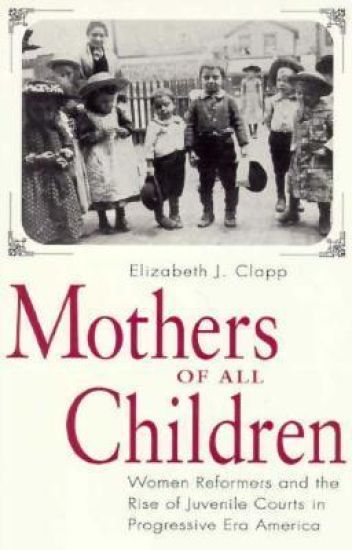
The establishment of juvenile courts in cities across the United States was one of the earliest social welfare reforms of the Progressive Era. The first juvenile court law was passed in Illinois in 1899. Within a decade twenty-two other states had passed similar laws, based on the Illinois example. Mothers of All Children examines this movement, focusing especially on the role of women reformers and the importance of gender consciousness in influencing the shape of reform. Until recently historians have assumed that male reformers dominated many of the Progressive Era social reforms. Mothers of All Children goes beyond simply writing women back into the history of the juvenile court movement to reveal the complexity of their involvement. Some women operated within nineteenth-century ideals of motherhood and domesticity while others, trained in the social sciences and living in the poor neighborhoods of America's cities, took a more pragmatic approach. Despite these differences, Clapp finds a common maternalist approach that distinguished women reformers from their male counterparts. Women were more willing to use the state to deal with wayward children, whereas men were more commonly involved as supporters of women reformers' initiatives rather than being themselves the initiators of reform. Firmly located in the context of recent scholarship on American women's history, Mothers of All Children has broad implications for American women's political history and the history of the welfare state.

Invasive Plants of the Upper Midwest: An Illustrated Guide to Their Identification and Control
Elizabeth J. Czarapata
UNIVERSITY OF WISCONSIN PRESS
2005
sidottu
Invasive Plants of the Upper Midwest is an informative, colorful, comprehensive guide to invasive species that are currently endangering native habitats in the region. It will be an essential resource for land managers, nature lovers, property owners, farmers, landscapers, educators, botanists, foresters, and gardeners. Invasive plants are a growing threat to ecosystems everywhere. Often originating in distant climes, they spread to woodlands, wetlands, prairies, roadsides, and backyards that lack the biological controls which kept these plant populations in check in their homelands. Invasive Plants of the Upper Midwest includes more than 250 color photos that will help anyone identify problem trees, shrubs, vines, grasses, sedges, and herbaceous plants (including aquatic invaders). The text offers further details of plant identification; manual, mechanical, biological, and chemical control techniques; information and advice about herbicides; and suggestions for related ecological restoration and community education efforts. Also included are literature references, a glossary, a matrix of existing and potential invasive species in the Upper Midwest, an index with both scientific and common plant names, advice on state agencies to contact with invasive plant questions, and other helpful resources. The information in this book has been carefully reviewed by staffs of the Wisconsin Department of Natural Resources Bureau of Endangered Resources and the University of Wisconsin-Madison Arboretum and other invasive plant experts.

Invasive Plants of the Upper Midwest
Elizabeth J. Czarapata
University of Wisconsin Press
2005
nidottu
This book will be an essential resource for land managers, nature lovers, property owners, farmers, landscapers, educators, botanists, foresters, and gardeners. Invasive plants are a growing threat to ecosystems everywhere. Often originating in distant climes, they spread to woodlands, wetlands, prairies, roadsides, and backyards that lack the biological controls that kept these plants in check in their homelands. This guide includes more than 250 color photos that will help identify problem trees, shrubs, vines, grasses, sedges, and herbaceous plants (including aquatic invaders). The text offers further details of plant identification; manual, mechanical, biological, and chemical control techniques; information and advice about herbicides; and suggestions for related ecological restoration and community education efforts. Also included are a glossary, a matrix of existing and potential invasive species in the Upper Midwest, an index with both scientific and common plant names, advice on agencies to contact with questions, and other resources. The information has been carefully reviewed by staffs of the Wisconsin Department of Natural Resources Bureau of Endangered Resources and the University of Wisconsin-Madison Arboretum, and other invasive plant experts.
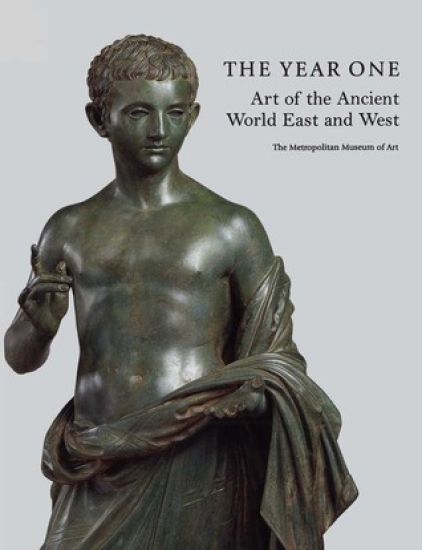
Two thousand years ago, artworks of astonishing variety were being created in far-flung regions of the world. Although some of the cultures flourishing in the Year One, such as that of Rome, are well known, others may be less familiar. In Europe, Celtic peoples excelled in intricate metalwork, and in Egypt a fascinating hybrid combining Greco-Roman and age-old Egyptian styles predominated. East of the Mediterranean, such wealthy centers of trade as Palmyra, Petra, the kingdoms of southern Arabia, and the mighty Parthian Empire produced a wide range of sculpture, ceramics, and precious metal objects that served both religious and luxury purposes as well as everyday uses. Continuing eastward from Parthia to what is now Afghanistan, Pakistan, and northern India, a traveler in the Year One would have discovered the eclectic arts of the Kushan Empire, where a distinctive early Buddhist art sometimes incorporated influences from Greece and Rome.In East Asia, China's great empire under the Han dynasty was home to sophisticated arts in every medium; seminomadic peoples in northern China made metalwork ornaments, often to adorn the gear for their horses; and characteristic arts had begun to develop in Korea and Japan. The elegant bronzework produced in Southeast Asia testifies to a fertile artistic interchange in that region. Finally, in cultures across the Pacific Ocean in South America and Mesoamerica, powerful and expressive objects were made of stone, ceramic, and gold. More than 150 works of art that exemplify all these societies at the Year One are illustrated in color and fully explained in this volume. Historical summaries accompanied by maps briefly describe the nature of each culture and the flow of power and peoples during the period centering around the Year One. An introductory essay offers both an overview and an account of the startling degree to which the ancient world was an interconnected one, crisscrossed by intrepid traders and adventurers who journeyed both east and west to bring back coveted goods and tantalizing scraps of information about exotic lands.The works of art included here are almost all in the collections of The Metropolitan Museum of Art in New York; the book's authors are members of the museum's curatorial staff representing seven different departments. (This title was originally published in 2000/01.)

Strategic Marketing for Libraries
Elizabeth J. Wood; Victoria L. Young
Libraries Unlimited Inc
1988
sidottu
Strategic Marketing for Libraries is a straightforward discussion of the full range of marketing concepts and tools applied to various types of libraries including public, special, and academic. Wood does an excellent job of explaining complicated marketing concepts and providing real-life examples. RQ This handbook on planning and marketing is recommended as a guide for library managers in academic, public, and special libraries, large or small, who are groping for effective methods of outreach to their constituencies. There are not many volumes which address these aspects of management so thoroughly or so lucidly. Special Libraries It is the authors' contention that, although librarians understand the need to market their institutions, they have not as yet focused on how to do so in a deliberate and structured fashion. The text provides means for the strategic planning of information marketing, and it incorporates cogent suggestions for defining missions, setting goals, and devising growth strategies and methodologies for evaluation. Wood and Young urge that the profession examine the challenges of automation in libraries in concert with current marketing strategies, thus assuring long-term viability and patron support. BooklistThis unique guide goes beyond mere endorsement of publicity and selling techniques to offer a thoughtful, practical, in-depth discussion of how marketing principles fit into library operations and planning. General marketing principles are explained and interpreted for practitioners in the library and information science fields. Applications of marketing principles appropriate for academic, public, and special libraries are described in detail. In addition, the book examines the interrelationships among the key steps of strategic planning, emphasizing the relationship of continuous, formal planning to implementation of marketing concepts. Numerous graphs and tables provide readily accessible information.