Kirjojen hintavertailu. Mukana 12 390 323 kirjaa ja 12 kauppaa.

Kirjahaku

Etsi kirjoja tekijän nimen, kirjan nimen tai ISBN:n perusteella.

1000 tulosta hakusanalla Ellen E. Wohl

Screen Deep

Screen Deep

Ellen E. Jones

FABER FABER
2024
sidottu
Screen Deep is a book about the immense potential of screen storytelling to defeat an evil both historic and urgently topical: racism. Everyone watches TV and movies. Everyone has an interest in building a more just and equitable world. Screen Deep goes beyond the many film books and anti-racist manuals by demonstrating the connection between these two aspects of modern life. In Screen Deep Ellen E. Jones combines her personal experience as a mixed-race woman who cares about racism with her professional expertise as a film and TV journalist of twenty years standing, to ask - and answer - several questions: Is there such a thing as an Indigenous western? Is race comedy 'cancelled'? Where are all the films for white people? And most importantly: Can you still fight the good fight with a mouthful of popcorn?
Screen Deep

Screen Deep

Ellen E. Jones

FABER FABER
2025
nidottu
'A brilliantly readable and insightful book.' Mark Kermode, Observer'Deftly, delightfully, yet inexorably, Ellen E Jones shows us exactly what's wrong with the world as we usually see it on screen. With her big love of cinema and her very big brain, she's the best film critic in a generation.' Lucy WorsleyIs race comedy 'cancelled'?Is there such a thing as an Indigenous Western?Where are all the films about 'whiteness'?Ellen E. Jones combines her personal experience as a mixed-race woman with her professional expertise as a film and TV journalist of twenty years to ask and answer these questions. Screen Deep illuminates the immense potential of screen storytelling to challenge societal racism, and ultimately defeat it.
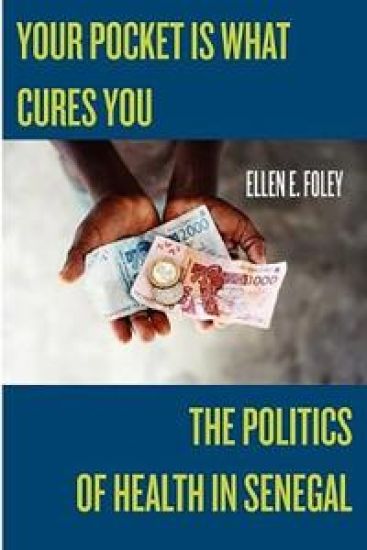
Your Pocket Is What Cures You

Your Pocket Is What Cures You

Ellen E Foley

Rutgers University Press
2009
sidottu
In the wake of structural adjustment programs in the 1980s and health reforms in the 1990s, the majority of sub-Saharan African governments spend less than ten dollars per capita on health annually, and many Africans have limited access to basic medical care. Using a community-level approach, anthropologist Ellen E. Foley analyzes the implementation of global health policies and how they become intertwined with existing social and political inequalities in Senegal. Your Pocket Is What Cures You examines qualitative shifts in health and healing spurred by these reforms, and analyzes the dilemmas they create for health professionals and patients alike. It also explores how cultural frameworks, particularly those stemming from Islam and Wolof ethnomedicine, are central to understanding how people manage vulnerability to ill health.While offering a critique of neoliberal health policies, Your Pocket Is What Cures You remains grounded in ethnography to highlight the struggles of men and women who are precariously balanced on twin precipices of crumbling health systems and economic decline. Their stories demonstrate what happens when market-based health reforms collide with material, political, and social realities in African societies.
Your Pocket Is What Cures You

Your Pocket Is What Cures You

Ellen E Foley

Rutgers University Press
2009
nidottu
In the wake of structural adjustment programs in the 1980s and health reforms in the 1990s, the majority of sub-Saharan African governments spend less than ten dollars per capita on health annually, and many Africans have limited access to basic medical care. Using a community-level approach, anthropologist Ellen E. Foley analyzes the implementation of global health policies and how they become intertwined with existing social and political inequalities in Senegal. Your Pocket Is What Cures You examines qualitative shifts in health and healing spurred by these reforms, and analyzes the dilemmas they create for health professionals and patients alike. It also explores how cultural frameworks, particularly those stemming from Islam and Wolof ethnomedicine, are central to understanding how people manage vulnerability to ill health.While offering a critique of neoliberal health policies, Your Pocket Is What Cures You remains grounded in ethnography to highlight the struggles of men and women who are precariously balanced on twin precipices of crumbling health systems and economic decline. Their stories demonstrate what happens when market-based health reforms collide with material, political, and social realities in African societies.
Genders 22

Genders 22

Ellen E. Berry

New York University Press
1995
sidottu
The epidemic of mass rape in the former Yugoslavia has illustrated once again, and in particularly brutal fashion, the inextricable relationship between national politics, sexual politics, and body politics. The nexus of these three forces is highly charged in any culture, at any time in history, but especially so among cultures in which rapid, even cataclysmic, changes in material realities and national self-conceptions are eroding or overwhelming previously secure boundaries. The postcommunist moment in the so-called Second World--Central and Eastern Europe and the former Soviet Union--has dramatically exposed the opportunities and dangers that arise when the political, cultural, and economic foundations of a society are de- and then re-structured. Gender roles and relations, expressions of sexuality or attempts to recontain them, representations of the body, especially the female body, and the larger, cultural meanings it assumes, are particularly marked sites to witness the performance of complex national dramas of crisis and change. This groundbreaking volume turns its attention to the Second World, specifically to such subjects as the birth of the sex media and porn industry in Russia; Russian women and alcoholism; cinema in post-communist Hungary; patriotism and gender in Poland; sexual dissidence in Eastern Europe; and women in the former Yugoslavia. >[ go to the Genders website ]
Genders 22

Genders 22

Ellen E. Berry

New York University Press
1995
pokkari
The epidemic of mass rape in the former Yugoslavia has illustrated once again, and in particularly brutal fashion, the inextricable relationship between national politics, sexual politics, and body politics. The nexus of these three forces is highly charged in any culture, at any time in history, but especially so among cultures in which rapid, even cataclysmic, changes in material realities and national self-conceptions are eroding or overwhelming previously secure boundaries. The postcommunist moment in the so-called Second World--Central and Eastern Europe and the former Soviet Union--has dramatically exposed the opportunities and dangers that arise when the political, cultural, and economic foundations of a society are de- and then re-structured. Gender roles and relations, expressions of sexuality or attempts to recontain them, representations of the body, especially the female body, and the larger, cultural meanings it assumes, are particularly marked sites to witness the performance of complex national dramas of crisis and change. This groundbreaking volume turns its attention to the Second World, specifically to such subjects as the birth of the sex media and porn industry in Russia; Russian women and alcoholism; cinema in post-communist Hungary; patriotism and gender in Poland; sexual dissidence in Eastern Europe; and women in the former Yugoslavia. >[ go to the Genders website ]
Resurrection of the Druidess

Resurrection of the Druidess

Ellen E Sutherland

Independently Published
2020
pokkari
"I resurrected a Druidess. In my defense, it was an accident," states Jamie Poole. "When you resurrect a Druidess everything changes." Eliyana, the Druidess, awakens to find herself almost 1500 years in the future. Lost, and scared, she's haunted by her past where she failed to save her people. They died too soon and unjustly at the hand of the High Druid. All Eliyana wants is to go home. How can she do that when home is buried in a past that can't be changed? Can it?Meanwhile creatures very real and very present seek to kill Eliyana, Jamie, and her family.The veil separating this world and the Otherworld is rent in two. Creatures freely cross the threshold to this world with one purpose: Aid their master, the High Druid, to locate Eliyana and the sword called Lumen which possesses unimaginable powers because it exists outside this dimension. Jamie and Eliyana have to work together or there's no hope. There's only one problem. Eliyana has disappeared. Meanwhile the Dead, those killed in Eliyana's time, continue to implore help. Because Eliyana is missing, they look to Jamie. They still consider Eliyana their leader. What can Jamie do to help?Things get more complicated as people from Jamie's time also set their eyes on Lumen. Most scientists believed it to be a myth, but Lumen will reveal its power to the world. Something so powerful cannot be hidden long.Can Eliyana return to save her people? It's not like Jamie has a time machine to assist the Dead.In this second Jamie Poole Diary, Jamie must work with Eliyana or they both will fail. Jamie dreams of adventure. Is this more than she anticipated? And who is her dad? He's an Egyptologist by trade. That's "what" he is. The "who" is illusive and her dad refuses to explain. There is far more to his story as it begins to unfold. Jamie's journey is only beginning in this sequel. She has much to learn. About her dad. About Lumen. And most importantly, about herself.
Alone Through Syria. with an Introduction by A. H. Sayce ... with ... Illustrations.

Alone Through Syria. with an Introduction by A. H. Sayce ... with ... Illustrations.

Ellen E Miller; Archibald Henry Sayce

British Library, Historical Print Editions
2011
pokkari
Title: Alone through Syria. With an introduction by A. H. Sayce ... With ... illustrations.Publisher: British Library, Historical Print EditionsThe British Library is the national library of the United Kingdom. It is one of the world's largest research libraries holding over 150 million items in all known languages and formats: books, journals, newspapers, sound recordings, patents, maps, stamps, prints and much more. Its collections include around 14 million books, along with substantial additional collections of manuscripts and historical items dating back as far as 300 BC.The HISTORY OF ASIA collection includes books from the British Library digitised by Microsoft. This series includes ethnographic and general histories of distinct peripheral coastal regions that comprise South and East Asia. Other works focus on cultural history, archaeology, and linguistics. These books help readers understand the forces that shaped the ancient civilisations and influenced the modern countries of Asia. ++++The below data was compiled from various identification fields in the bibliographic record of this title. This data is provided as an additional tool in helping to insure edition identification: ++++ British Library Miller, Ellen E.; Sayce, Archibald Henry; 1891. xxi. 330 p.; 8 . 010077.f.18.
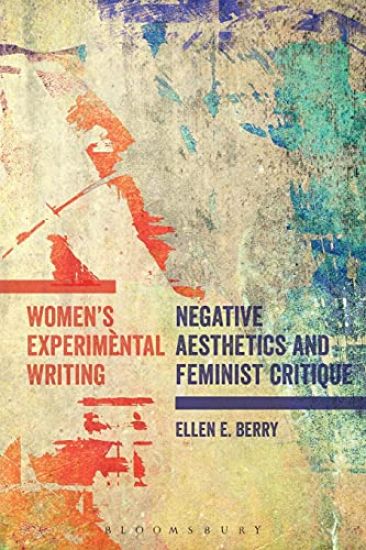
Women's Experimental Writing

Women's Experimental Writing

Ellen E. Berry

Bloomsbury Academic
2017
nidottu
Women's Experimental Writing considers six contemporary authors who use experimental methods and negative modes of critique in their fiction and feminism. The authors covered are Valerie Solanas, Kathy Acker, Theresa Cha, Chantel Chawaf, Jeanette Winterson, and Lynda Barry.These writers all share a commitment to combining extreme content with formally radical techniques in order to enact varieties of gender, sex, race, class and nation-based experience that, they suggest, may only be “represented” accurately through the experimental unmaking of dominant structures of rationality. Ellen Berry extends the anti-social negative critique predominant in queer studies by offering an alternative archive of feminist negative literary practices and explores the consequences of joining an anti-social critique with radical innovations in literary and cultural forms. She argues that the radical aesthetic practices the authors employ are central to the emergence of contemporary Western feminisms and in doing so rectifies a critical neglect of contemporary experimental writing by women, especially in politicized forms, within the still-emerging postmodern canon.