Kirjojen hintavertailu. Mukana 11 342 296 kirjaa ja 12 kauppaa.

Kirjahaku

Etsi kirjoja tekijän nimen, kirjan nimen tai ISBN:n perusteella.

302 tulosta hakusanalla Emi Jean

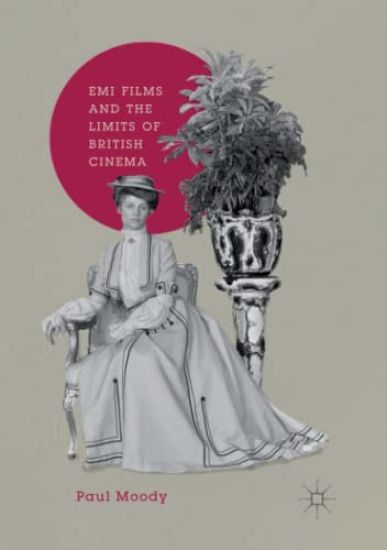
EMI Films and the Limits of British Cinema

EMI Films and the Limits of British Cinema

Paul Moody

Springer Nature Switzerland AG
2019
nidottu
This book is the first of its kind to trace the development of one of the largest and most important companies in British cinema history, EMI Films. From 1969 to its eventual demise in 1986, EMI would produce many of the key works of seventies and eighties British cinema, ranging from popular family dramas like The Railway Children (Lionel Jeffries, 1970) through to critically acclaimed arthouse successes like Britannia Hospital (Lindsay Anderson, 1982). However, EMI’s role in these productions has been recorded only marginally, as footnotes in general histories of British cinema. The reasons for this critical neglect raise important questions about the processes involved in the creation of cultural canons and the definition of national culture. This book argues that EMI’s amorphous nature as a transnational film company has led to its omission from this history and makes it an ideal subject to explore the ‘limits’ of British cinema.
EMI-Resilient Amplifier Circuits

EMI-Resilient Amplifier Circuits

Marcel J. van der Horst; Wouter A. Serdijn; André C. Linnenbank

Springer International Publishing AG
2013
sidottu
This book enables circuit designers to reduce the errors introduced by the fundamental limitations (noise, bandwith, and signal power) and electromagnetic interference (EMI) in negative-feedback amplifiers. The authors describe a systematic design approach for application specific negative-feedback amplifiers, with specified signal-to-error ratio (SER). This approach enables designers to calculate noise, bandwidth, EMI, and the required bias parameters of the transistors used in application specific amplifiers in order to meet the SER requirements.
EMI-Resilient Amplifier Circuits

EMI-Resilient Amplifier Circuits

Marcel J. van der Horst; Wouter A. Serdijn; André C. Linnenbank

Springer International Publishing AG
2015
nidottu
This book enables circuit designers to reduce the errors introduced by the fundamental limitations (noise, bandwith, and signal power) and electromagnetic interference (EMI) in negative-feedback amplifiers. The authors describe a systematic design approach for application specific negative-feedback amplifiers, with specified signal-to-error ratio (SER). This approach enables designers to calculate noise, bandwidth, EMI, and the required bias parameters of the transistors used in application specific amplifiers in order to meet the SER requirements.
EMI Films and the Limits of British Cinema

EMI Films and the Limits of British Cinema

Paul Moody

Springer International Publishing AG
2018
sidottu
This book is the first of its kind to trace the development of one of the largest and most important companies in British cinema history, EMI Films. From 1969 to its eventual demise in 1986, EMI would produce many of the key works of seventies and eighties British cinema, ranging from popular family dramas like The Railway Children (Lionel Jeffries, 1970) through to critically acclaimed arthouse successes like Britannia Hospital (Lindsay Anderson, 1982). However, EMI’s role in these productions has been recorded only marginally, as footnotes in general histories of British cinema. The reasons for this critical neglect raise important questions about the processes involved in the creation of cultural canons and the definition of national culture. This book argues that EMI’s amorphous nature as a transnational film company has led to its omission from this history and makes it an ideal subject to explore the ‘limits’ of British cinema.
EMI-Schutz für Kommunikationssysteme

EMI-Schutz für Kommunikationssysteme

Chitra Rajendran

Verlag Unser Wissen
2025
nidottu
Dieses Buch befasst sich mit den Herausforderungen und L sungen im Zusammenhang mit elektromagnetischen St rungen (EMI) in modernen Kommunikationssystemen. Angesichts der zunehmenden Komplexit t von drahtlosen, automobilen, industriellen und digitalen Hochgeschwindigkeitstechnologien stellt EMI eine ernsthafte Bedrohung f r die Signalintegrit t und Systemzuverl ssigkeit dar. Das Buch untersucht EMI-Quellen, Kopplungsmechanismen und ihre Auswirkungen auf die Daten bertragung sowie detaillierte Strategien zum Schutz, einschlie lich Abschirmung, Filterung, Erdung und Leiterplattendesign. Dar ber hinaus werden die wichtigsten internationalen EMI/EMV-Normen und die f r die Einhaltung erforderlichen Pr fprotokolle er rtert. Der Schwerpunkt liegt auf praktischen Entwurfstechniken, Fallstudien und neuen Innovationen zum Aufbau EMI-resistenter Systeme. Dieses Werk ist ein umfassender Leitfaden f r Ingenieure, Forscher und Studenten, die sich mit der Entwicklung von Kommunikationssystemen und elektromagnetischer Vertr glichkeit (EMV) besch ftigen.
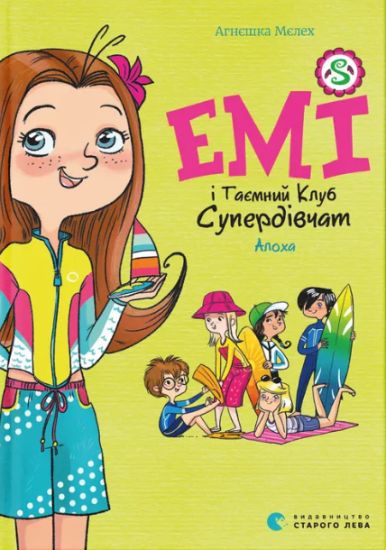
Emi i Tajemnij Klub Superdivchat. Kniga 11. Alokha

Emi i Tajemnij Klub Superdivchat. Kniga 11. Alokha

Agnieszke Mielech

Vydavnytstvo Staroho Leva
2026
sidottu
Nareshti omrijani kanikuli! Emi ta Flora jidut na more u tabir vindserfingistiv. A potim na vsju veselu kompaniju z Tajemnogo Klubu Superdivchat (i odnogo Superkhloptsja!) chekaje shalenij morskij tur, u jakij druzi virushat kumednim busom - . Pid chas podorozhi voni zhitimut na kempingakh, mandruvatimut uzberezhnimi stezhkami i zagubljatsja sered djun. A neochikuvana zustrich iz vikinutoju na bereg fotsenoju stane pochatkom novoji misiji Klubu. Treba dopomogti divovizhnij tvarini! Iljustrator Magdalena Babinska
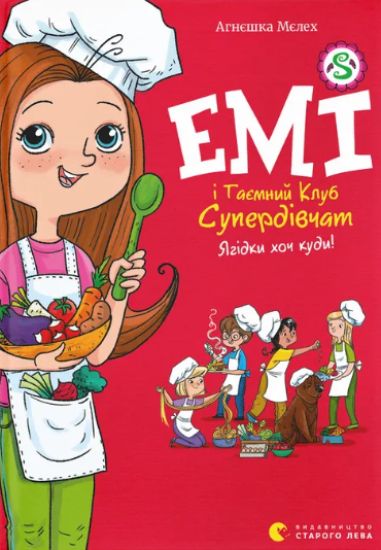
Emi i Tajemnij Klub Superdivchat. Kniga 12. Jagidki khoch kudi!

Emi i Tajemnij Klub Superdivchat. Kniga 12. Jagidki khoch kudi!

Agnieszke Mielech

Vydavnytstvo Staroho Leva
2026
sidottu
Solodke chi solone? Pasta chi pitsa? Petrushka chi bazilik? U Emi j Tajemnogo Klubu Superdivchat nove smachne khobi - kulinarija. A scho, jak pojednati mistetstvo kukhovariti ta blagodijnist? Adzhe u shkoli rozpochinajetsja navchalnij projekt pro tolerantnist, rivnist, povagu i prijnjattja.U Tajemnogo Klubu vinikaje ideja organizuvati kav'jarnju ta blagochinnij zbir na kantstovari dlja ditej, jaki potrebujut sotsialnoji pidtrimki. Vlashtovujtes zruchnishe na kukhni, spovnenij aromativ i smakiv, ta razom z Emi, Floroju, Franekom, Faustinoju ta Anjeloju virushajte u novu apetitnu tajemnu misiju!
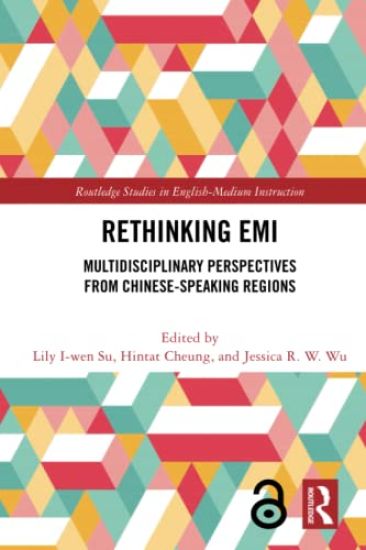
Rethinking EMI
Due to the competitive edge it confers on students, educational institutions, and non-English speaking nations in a globalized economy, English as a medium of instruction (EMI) has been gaining popularity in tertiary education in non-native English-speaking (NNES) countries. Institute-wide EMI implementation has often been imposed by top-down decisions, in combination with the optimistic view that the horse should always be placed before the cart. However, emerging evidence suggests that the delivery of such programs to NNES students has led to new pedagogical challenges and learning problems that go beyond the scope of language learning and teaching and deserve immediate attention. For example, how would an instructor respond to situations in which students’ learning of content is compromised by their limited language proficiency? This book draws on the current practice of EMI in diverse disciplines and university settings and examines how these new pedagogical and learning issues can be addressed. The discussion also involves a reflection on the essence of EMI in relation to the use of the first language (L1) as the medium of instruction in tertiary education. In addition, the book includes discussion about how to ensure and maintain the quality of EMI programs and assess the readiness of stakeholders for such programs, which include administrators, teachers, and students. The discussion is led by exemplars in Hong Kong and Taiwan, where the majority of students are native Chinese speakers, in the hope of developing critical perspectives and practical guidelines as references for EMI in other NNES settings.“The Open Access version of this book, available at http://www.taylorfrancis.com/books/e/ISBN, has been made available under a Creative Commons Attribution-Non Commercial-No Derivatives 4.0 license.
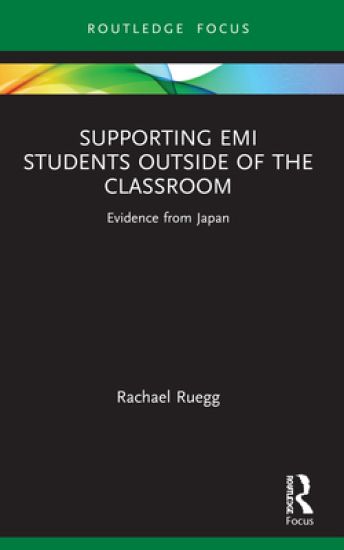
Supporting EMI Students Outside of the Classroom
There is a growing body of research on English-medium Instruction (EMI) in Asian contexts, and much of this research points out difficulties experienced by stakeholders. This volume takes up the issue of support for EMI, which is, and which can be, offered to students outside of the classroom in order to help them succeed academically in an EMI environment. Dr Ruegg’s book demonstrates the effectiveness of such support in the Japanese context. It begins by examining the support currently available for students in English-medium full degree programmes then goes on to examine one successful support service in more detail in order to determine the kinds of effects that can be achieved by establishing such a centre. The research reported in this book was conducted in Japan, but the findings will apply in other locations, especially in other Asian countries. The information provided in the book is expected to inform institutions who are looking to either establish an English-medium degree programme or improve on an existing programme by sharing information about the practices of other institutions.
Supporting EMI Students Outside of the Classroom
There is a growing body of research on English-medium Instruction (EMI) in Asian contexts, and much of this research points out difficulties experienced by stakeholders. This volume takes up the issue of support for EMI, which is, and which can be, offered to students outside of the classroom in order to help them succeed academically in an EMI environment. Dr Ruegg’s book demonstrates the effectiveness of such support in the Japanese context. It begins by examining the support currently available for students in English-medium full degree programmes then goes on to examine one successful support service in more detail in order to determine the kinds of effects that can be achieved by establishing such a centre. The research reported in this book was conducted in Japan, but the findings will apply in other locations, especially in other Asian countries. The information provided in the book is expected to inform institutions who are looking to either establish an English-medium degree programme or improve on an existing programme by sharing information about the practices of other institutions.
Rethinking EMI

Rethinking EMI

TAYLOR FRANCIS LTD
2023
nidottu
Due to the competitive edge it confers on students, educational institutions, and non-English speaking nations in a globalized economy, English as a medium of instruction (EMI) has been gaining popularity in tertiary education in non-native English-speaking (NNES) countries. Institute-wide EMI implementation has often been imposed by top-down decisions, in combination with the optimistic view that the horse should always be placed before the cart. However, emerging evidence suggests that the delivery of such programs to NNES students has led to new pedagogical challenges and learning problems that go beyond the scope of language learning and teaching and deserve immediate attention. For example, how would an instructor respond to situations in which students’ learning of content is compromised by their limited language proficiency? This book draws on the current practice of EMI in diverse disciplines and university settings and examines how these new pedagogical and learning issues can be addressed. The discussion also involves a reflection on the essence of EMI in relation to the use of the first language (L1) as the medium of instruction in tertiary education. In addition, the book includes discussion about how to ensure and maintain the quality of EMI programs and assess the readiness of stakeholders for such programs, which include administrators, teachers, and students. The discussion is led by exemplars in Hong Kong and Taiwan, where the majority of students are native Chinese speakers, in the hope of developing critical perspectives and practical guidelines as references for EMI in other NNES settings.“The Open Access version of this book, available at http://www.taylorfrancis.com/books/e/ISBN, has been made available under a Creative Commons Attribution-Non Commercial-No Derivatives 4.0 license.
Zero EMI: Unlock Your Financial Freedom

Zero EMI: Unlock Your Financial Freedom

Ra Ma Palaniappan

Notion Press
2020
nidottu
Are you happy with the way you are handling your finances? Research says that 90% of the people work for EMI and not for anything else. People stick to their job because of the EMIs they must pay. Are you one among them and want to get rid of your EMIs? Are you looking for ways to achieve Financial Freedom? Do you want to be organized and manage your finances better?Zero EMI has the answers to all your questions and will help you control your finances, instead of being controlled by them. The author explains the concepts in simple English with the use of his personal stories and the stories of his friends. The book offers practical personal finance tips for salaried people in the age group of 22 to 50 years. Grab a copy if you want to learn how to reduce your loans, avoid taking loans and lead a stress-free life financially.
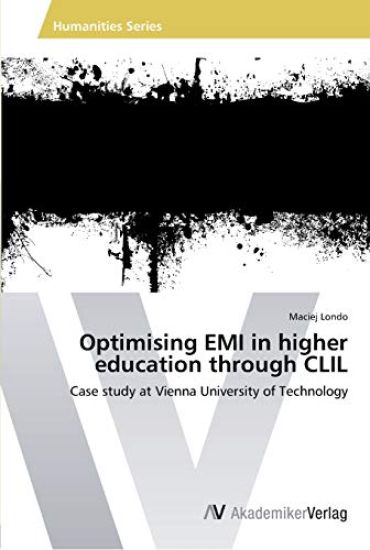
Optimising EMI in higher education through CLIL

Optimising EMI in higher education through CLIL

Maciej Londo

AV Akademikerverlag
2012
pokkari
The reasons for using foreign languages as medium of instruction vary across countries and educational settings. They stretch from pedagogical (e.g. language teaching), through practical (e.g. common language for education in multilingual societies) to ideological (e.g. integration). In the case of English, the reasons for its increased use as medium of instruction are closely related to the process of globalization and the establishment of English as an International Language. The present paper seeks to investigate the different rationales behind using English as medium of instruction (EMI) at tertiary level. In particular it focuses on the language-teaching dimension, which in the context of higher education is not always explicitly addressed. This lack of explicit language teaching objectives in English-‐medium courses is a barrier to unlocking the potential of EMI.