Kirjojen hintavertailu. Mukana 11 244 527 kirjaa ja 12 kauppaa.

Kirjahaku

Etsi kirjoja tekijän nimen, kirjan nimen tai ISBN:n perusteella.

1000 tulosta hakusanalla Emilio Comba

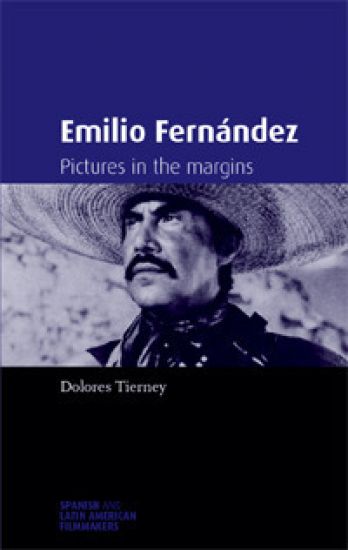
Emilio FernáNdez

Emilio FernáNdez

Dolores Tierney

Manchester University Press
2012
nidottu
Emilio Fernández: Pictures in the Margins is the first book-length English language account of Emilio Fernández (1904-1986) the most successful director of classical Mexican Cinema, famed with creating films that embody a loosely defined Mexican school of filmmaking. However, rather than offer an auteurist study this book interrogates the construction of Fernández as both a national and nationalist auteur (including racial and gender aspects e.g. as macho mexicano and indio). It also challenges auteurist readings of the films themselves in order to make new arguments about the significance of Fernández and his work. The aim of this book is to question Mexico’s fetishisation of its own position on the peripheries of the global cultural economy and the similar fetishisation of Fernández’s marginalisation as a mixed race (part white and part indigenous) director. This book argues that, as pictures in the margins, classical Mexican cinema and specifically Fernández’s films are not transparent reflections of dominant post Revolutionary Mexican culture, but annotations and re-inscriptions of the particularities of Mexican society in the post-Revolutionary era.
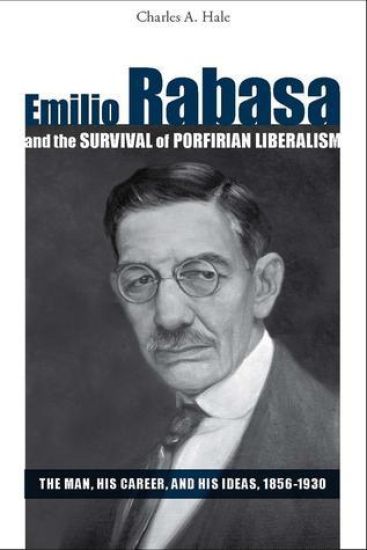
Emilio Rabasa and the Survival of Porfirian Liberalism

Emilio Rabasa and the Survival of Porfirian Liberalism

Charles A. Hale

Stanford University Press
2008
sidottu
This is an intellectual and career biography of Emilio Rabasa, the eminent Mexican jurist, politician, novelist, diplomat, journalist, and historian who opposed the Revolution of 1910-20, spent the years 1914 to 1920 in exile, but returned and was reintegrated into Mexican life until his death in 1930. Though he is still idolized by the juridical community of Mexico City, little is known about Rabasa beyond his principal publications. He was a reserved, enigmatic man who kept no personal archive and sought a low public profile. Hale reveals unknown aspects of his life, career, and personality from two extensive bodies of correspondence—with Jos Yves Limantour, finance minister from 1893 to 1911, and William F. Buckley, Sr., American lawyer and petroleum entrepreneur. He also analyzes Rabasa's political, juridical, and social ideas, arguing that they demonstrate continuity and even survival of late nineteenth-century liberalism through the revolutionary years and beyond. Rabasa's was a transformed liberalism, based on scientific politics drawn from European positivism and historical constitutionalism—an elitist rejection of abstract doctrines of natural rights and egalitarian democracy, emphasizing strong centralized yet constitutionally limited authority and empirically based economic development.
Emilio Ambasz

Emilio Ambasz

Barry Bergdoll

RIZZOLI INTERNATIONAL PUBLICATIONS
2022
sidottu
Famously labelled the father, poet, and prophet of green architecture and a vocal proponent of the idea that any project in architecture or design must present new or better ways of living or be deemed immoral, Emilio Ambasz is an award-winning architect, industrial designer, and protean maker of forms. He has invented highly efficient engines, modular furniture, streetlamps, flexible pens, expandable suitcases, ergonomic door handles, wrist-computers, dental hygiene systems, and 3D posters. He created the Vertebra chair, the first ever automatic, ergonomic chair in the world, now part of the permanent collections at MoMA and The Met in New York. In architecture he has long been a pioneer, and has retained a belief in the environment, or rather the larger ecology, as fundamental in viewing the world: as Professor Bergdoll notes of Ambasz in his introduction, his philosophy of green over gray may often have fallen on deaf ears at the height of Postmodernism, but it today seems profoundly relevant. And it is in the context of today that the book considers the work of Emilio Ambasz and its three main areas of concentration architecture, industrial design, curating with an aim of shining a light on the interdisciplinary nature of the work as a whole. Featuring built and manufactured designs that have achieved iconic fame and challenged others to approach new ways of reconciling architecture and nature notably the Prefectural Hall at Fukuoka, Japan, and the conservatory buildings of the San Antonio Botanical Garden, in addition to his own unique house outside Seville in Spain the book also considers Ambasz s work as curator at MoMA and his ongoing influence and legacy.
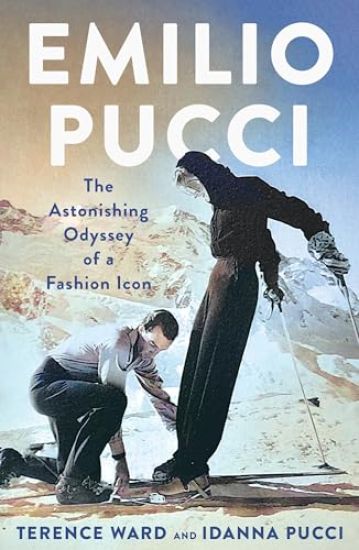
Emilio Pucci: The Astonishing Odyssey of a Fashion Icon

Emilio Pucci: The Astonishing Odyssey of a Fashion Icon

Terence Ward; Idanna Pucci

St. Martin's Press
2026
sidottu
The Drama of War and Postwar Italy Through the Life of One of Its Most Celebrated IconsWhen people think of fashion designer Emilio Pucci, it is of his bright, swirling colors and easy, freeing fabrics, and everyone from Sophia Loren to Jackie Kennedy donning the eye-catching dresses that personify La Dolce Vita. What few know about Pucci, however, is that before creating his world-famous fashions, he played a critical role in the war against the Nazis, risking his life to smuggle out to the Allies one of the most important documents of World War II. The authors bring to life Italy's darkest and brightest days, with the extraordinary Emilio Pucci at its center. Italy at the end of the war was broken, and Florence, which the Pucci family had called home for seven centuries, lay in ruins. Pucci returned home bruised in body and soul, having endured trials that would have broken many, but, like Italy itself, rose from the ashes, and went on to design some of the most exuberant fashion of all time. He helped usher in a new era of creativity in Italy, which again became a mecca of fashion, art, design, film, and more. A host of supporting characters--including Mussolini's daughter and Allen Dulles, and, most importantly, the timeless city of Florence and the mythic island of Capri--enrich this compelling narrative that will draw readers of all kinds, from war and history buffs, to fashionistas and fans of espionage thrillers along with the millions of readers who devour books about Italy and her many charms.
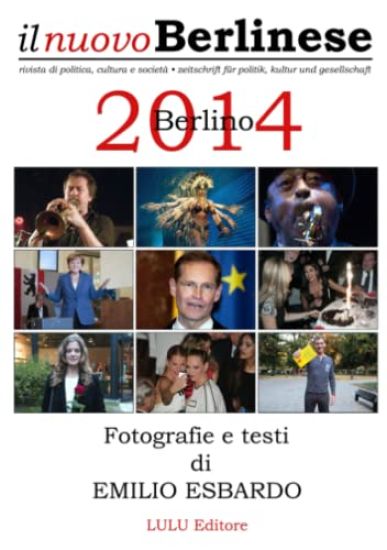
Berlino 2014 - Fotografie e Testi Di Emilio Esbardo
Berlino e, oggi, simbolo di progresso e di creativita ed e una destinazione turistica molto richiesta: la citta, dopo la caduta del Muro, e divenuta la capitale culturale d'Europa. Berlino non e solo sede di molti importanti mass media ma anche un importante centro di economia e di politica. Emilio Esbardo ripropone in questo libro i suoi migliori articoli e foto del 2014 apparsi sulla rivista online "il nuovo Berlinese".
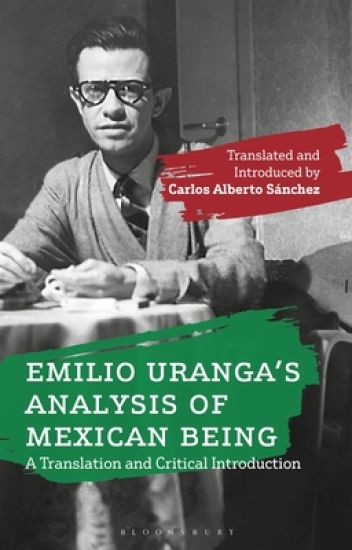
Emilio Uranga’s Analysis of Mexican Being

Emilio Uranga’s Analysis of Mexican Being

Emilio Uranga

Bloomsbury Academic
2021
sidottu
Emilio Uranga, a founding member of the famed el grupo Hiperión, devoted his life to characterizing the nuances and uniqueness of Mexican existence. His landmark book, Análisis del ser del mexicano became an instant classic. This is the first English translation of the work, which, accompanied by a comprehensive introduction, features:· Key moments in the development of 20th century Mexican philosophy up to the writing of Uranga’s text· A detailed overview of the translated text and its most significant movements· Discussion of Uranga’s relevance to contemporary debates in the phenomenology of culture, decolonial philosophy, phenomenology, and Latin American philosophy itself· Considerations of Uranga's “ontology,” and how he justified his project by appealing to 20th-century Mexican poetry and existential phenomenology Reading Uranga’s brilliant words expertly translated and introduced by Carlos Alberto Sánchez finally allows us to understand why this Mexican philosopher is considered one of the most fearless and original thinkers of the 20th century.
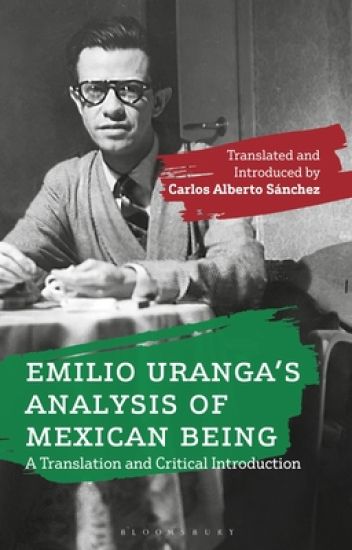
Emilio Uranga’s Analysis of Mexican Being

Emilio Uranga’s Analysis of Mexican Being

Emilio Uranga

Bloomsbury Academic
2021
nidottu
Emilio Uranga, a founding member of the famed el grupo Hiperión, devoted his life to characterizing the nuances and uniqueness of Mexican existence. His landmark book, Análisis del ser del mexicano became an instant classic. This is the first English translation of the work, which, accompanied by a comprehensive introduction, features:· Key moments in the development of 20th century Mexican philosophy up to the writing of Uranga’s text· A detailed overview of the translated text and its most significant movements· Discussion of Uranga’s relevance to contemporary debates in the phenomenology of culture, decolonial philosophy, phenomenology, and Latin American philosophy itself· Considerations of Uranga's “ontology,” and how he justified his project by appealing to 20th-century Mexican poetry and existential phenomenology Reading Uranga’s brilliant words expertly translated and introduced by Carlos Alberto Sánchez finally allows us to understand why this Mexican philosopher is considered one of the most fearless and original thinkers of the 20th century.