Kirjojen hintavertailu. Mukana 11 244 527 kirjaa ja 12 kauppaa.

Kirjahaku

Etsi kirjoja tekijän nimen, kirjan nimen tai ISBN:n perusteella.

1000 tulosta hakusanalla Eric C Walker

Electoral Systems and the Balance of Consumer-Producer Power

Electoral Systems and the Balance of Consumer-Producer Power

Eric C. C. Chang; Mark Andreas Kayser; Drew A. Linzer; Ronald Rogowski

Cambridge University Press
2010
pokkari
This book investigates the effects of electoral systems on the relative legislative and, hence, regulatory influence of competing interests in society. Building on Ronald Rogowski and Mark Andreas Kayser's extension of the classic Stigler–Peltzman model of regulation, the authors demonstrate that majoritarian electoral arrangements should empower consumers relative to producers. Employing real price levels as a proxy for consumer power, the book rigorously establishes this proposition over time, within the OECD, and across a large sample of developing countries. Majoritarian electoral arrangements depress real prices by approximately ten percent, all else equal. The authors carefully construct and test their argument and broaden it to consider the overall welfare effects of electoral system design and the incentives of actors in the choice of electoral institutions.

Electoral Systems and the Balance of Consumer-Producer Power

Electoral Systems and the Balance of Consumer-Producer Power

Eric C. C. Chang; Mark Andreas Kayser; Drew A. Linzer; Ronald Rogowski

Cambridge University Press
2010
sidottu
This book investigates the effects of electoral systems on the relative legislative and, hence, regulatory influence of competing interests in society. Building on Ronald Rogowski and Mark Andreas Kayser's extension of the classic Stigler–Peltzman model of regulation, the authors demonstrate that majoritarian electoral arrangements should empower consumers relative to producers. Employing real price levels as a proxy for consumer power, the book rigorously establishes this proposition over time, within the OECD, and across a large sample of developing countries. Majoritarian electoral arrangements depress real prices by approximately ten percent, all else equal. The authors carefully construct and test their argument and broaden it to consider the overall welfare effects of electoral system design and the incentives of actors in the choice of electoral institutions.

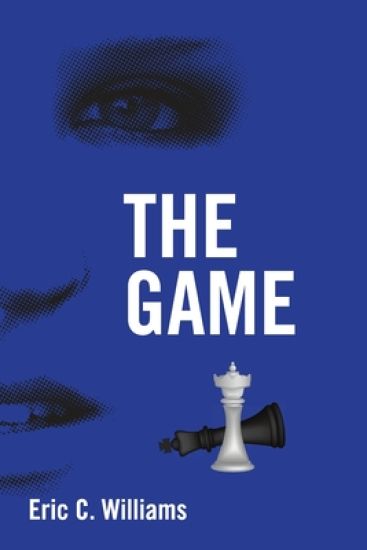
The Game

The Game

Eric C Williams

Eric C Williams
2021
pokkari
The Game explores why eight good friends decide to play a game created by one of them which challenges all of them beyond their comfort zones and relational ethics. The players are four married couples now living in Connecticut on the wealthy outskirts of Manhattan. Over years of friendly competition, the men and their wives have come to call themselves the Fearless Foursome. When one of the men constructs a game based on his sexual fantasy, he coerces the other seven - male and female - friends to play. After the game begins the norms they have developed as friends and couples begin to deteriorate. Each player begins to examine the meaning and value of marital and sexual ethics within the emerging background of sexual harassment and financial greed as 1999 comes to an end along with the millennium and Y2K. The Game is a page turner that chronicles the erosion across norms, values, standards, and relationships in today's society."... when fantasy overrides rational thinking, usually disaster or untoward outcomes result. It was a fun ride through, prior to the crash ... some of the content makes me cringe but that is the nature of the story, and the story is credible." Gail H Vance, M.D. "... the story line ... is an excellent example of the juxtaposition of competition and compassion as personal values, and the negative affect competition ultimately has on inter-personal relationships." Jim Van Buren.The Game is Eric C. Williams' debut novel. He has worked in economics, mathematics, and the world of software from mainframes in the late '60s to the laptops of today. Born in Chagrin Falls, Ohio he now lives in Chicago with his artistic (and very useful editor) wife, Sandy. As a result of his entrepreneurial career in the United States, London, and Brussels, Eric has developed rich insight into human relationships. The Game shows that he has been paying attention.
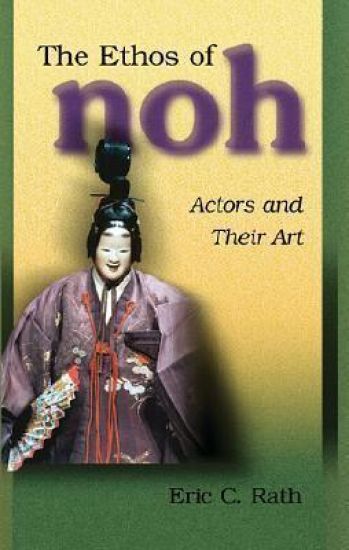
The Ethos of Noh

The Ethos of Noh

Eric C. Rath

Harvard University, Asia Center
2006
nidottu
Since the inception of the noh drama six centuries ago, actors have resisted the notion that noh rests on natural talent alone. Correct performance, they claim, demands adherence to traditions. Yet what constitutes noh’s traditions and who can claim authority over them have been in dispute throughout its history. This book traces how definitions of noh, both as an art and as a profession, have changed over time. The author seeks to show that the definition of noh as an art is inseparable from its definition as a profession.The aim of this book is to describe how memories of the past become traditions, as well as the role of these traditions in the institutional development of the noh theater from its beginnings in the fourteenth century through the late twentieth century. It focuses on the development of the key traditions that constitute the “ethos of noh,” the ideology that empowered certain groups of actors at the expense of others, and how this ethos fostered noh’s professionalization—its growth from a loose occupation into a closed, regulated vocation. The author argues that the traditions that form the ethos of noh, such as those surrounding masks and manuscripts, are the key traits that define it as an art.
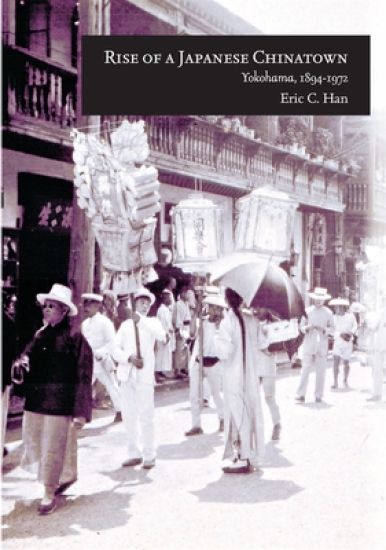
Rise of a Japanese Chinatown

Rise of a Japanese Chinatown

Eric C. Han

Harvard University, Asia Center
2020
nidottu
Rise of a Japanese Chinatown is the first English-language monograph on the history of a Chinese immigrant community in Japan. It focuses on the transformations of that population in the Japanese port city of Yokohama from the Sino-Japanese War of 1894–1895 to the normalization of Sino-Japanese ties in 1972 and beyond. Eric C. Han narrates the paradoxical story of how, during periods of war and peace, Chinese immigrants found an enduring place within a monoethnic state.This study makes a significant contribution to scholarship on the construction of Chinese and Japanese identities and on Chinese migration and settlement. Using local newspapers, Chinese and Japanese government records, memoirs, and conversations with Yokohama residents, it retells the familiar story of Chinese nation building in the context of Sino-Japanese relations. But it builds on existing works by directing attention as well to non-elite Yokohama Chinese, those who sheltered revolutionary activists and served as an audience for their nationalist messages. Han also highlights contradictions between national and local identifications of these Chinese, who self-identified as Yokohama-ites (hamakko) without claiming Japaneseness or denying their Chineseness. Their historical role in Yokohama’s richly diverse cosmopolitan past can offer insight into a future, more inclusive Japan.
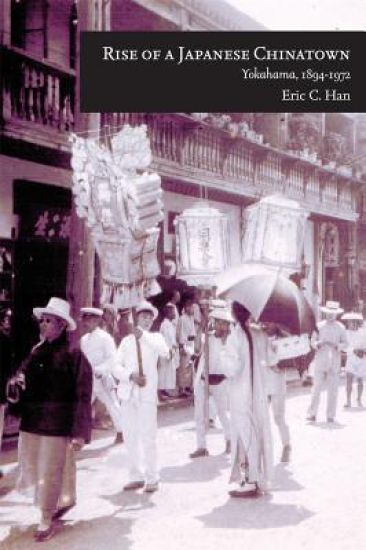
Rise of a Japanese Chinatown

Rise of a Japanese Chinatown

Eric C. Han

Harvard University, Asia Center
2014
sidottu
Rise of a Japanese Chinatown is the first English-language monograph on the history of a Chinese immigrant community in Japan. It focuses on the transformations of that population in the Japanese port city of Yokohama from the Sino-Japanese War of 1894–1895 to the normalization of Sino-Japanese ties in 1972 and beyond. Eric C. Han narrates the paradoxical story of how, during periods of war and peace, Chinese immigrants found an enduring place within a monoethnic state.This study makes a significant contribution to scholarship on the construction of Chinese and Japanese identities and on Chinese migration and settlement. Using local newspapers, Chinese and Japanese government records, memoirs, and conversations with Yokohama residents, it retells the familiar story of Chinese nation building in the context of Sino-Japanese relations. But it builds on existing works by directing attention as well to non-elite Yokohama Chinese, those who sheltered revolutionary activists and served as an audience for their nationalist messages. Han also highlights contradictions between national and local identifications of these Chinese, who self-identified as Yokohama-ites (hamakko) without claiming Japaneseness or denying their Chineseness. Their historical role in Yokohama’s richly diverse cosmopolitan past can offer insight into a future, more inclusive Japan.
Vampires, Dragons, and Egyptian Kings

Vampires, Dragons, and Egyptian Kings

Eric C. Schneider

Princeton University Press
2001
pokkari
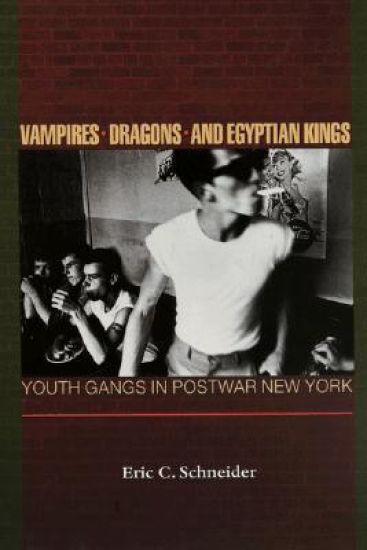
They called themselves "Vampires," "Dragons," and "Egyptian Kings." They were divided by race, ethnicity, and neighborhood boundaries, but united by common styles, slang, and codes of honor. They fought--and sometimes killed--to protect and expand their territories. In postwar New York, youth gangs were a colorful and controversial part of the urban landscape, made famous by West Side Story and infamous by the media. This is the first historical study to explore fully the culture of these gangs. Eric Schneider takes us into a world of switchblades and slums, zoot suits and bebop music to explain why youth gangs emerged, how they evolved, and why young men found membership and the violence it involved so attractive. Schneider begins by describing how postwar urban renewal, slum clearances, and ethnic migration pitted African-American, Puerto Rican, and Euro-American youths against each other in battles to dominate changing neighborhoods. But he argues that young men ultimately joined gangs less because of ethnicity than because membership and gang violence offered rare opportunities for adolescents alienated from school, work, or the family to win prestige, power, adulation from girls, and a masculine identity. In the course of the book, Schneider paints a rich and detailed portrait of everyday life in gangs, drawing on personal interviews with former members to re-create for us their language, music, clothing, and social mores. We learn what it meant to be a "down bopper" or a "jive stud," to "fish" with a beautiful "deb" to the sounds of the Jesters, and to wear gang sweaters, wildly colored zoot suits, or the "Ivy League look." He outlines the unwritten rules of gang behavior, the paths members followed to adulthood, and the effects of gang intervention programs, while also providing detailed analyses of such notorious gang-related crimes as the murders committed by the "Capeman," Salvador Agron. Schneider focuses on the years from 1940 to 1975, but takes us up to the present in his conclusion, showing how youth gangs are no longer social organizations but economic units tied to the underground economy. Written with a profound understanding of adolescent culture and the street life of New York, this is a powerful work of history and a compelling story for a general audience.
Partnering for the Environment

Partnering for the Environment

Eric C. Poncelet

Rowman Littlefield Publishers
2004
sidottu
Environmental policy domains are increasingly adopting strategies of cooperation over those of conflict. Decision-making processes founded upon collaboration and public participation are receiving more attention and favor and, in turn, engendering multistakeholder environmental partnerships. In his thoughtful analysis, Eric C. Poncelet seeks to illuminate the mechanics of these partnerships, especially at the level of social interaction. Drawing on ethnographic research performed with four case study partnerships in the European Union and the United States, Poncelet focuses on the diverging ways that stakeholders think, talk, and conventionally act with regard to the environmental issues at stake. Also explored are the roles of environmental partnerships as sites of personal transformation, where participants—and their perspectives, conceptualizations, and expectations—can and do change. Partnering for the Environment concludes by examining the broader implications of multistakeholder partnerships for the future of environmental decision-making and suggests ways by which these partnerships may be more effectively used and managed.
Partnering for the Environment

Partnering for the Environment

Eric C. Poncelet

Rowman Littlefield Publishers
2004
nidottu
Environmental policy domains are increasingly adopting strategies of cooperation over those of conflict. Decision-making processes founded upon collaboration and public participation are receiving more attention and favor and, in turn, engendering multistakeholder environmental partnerships. In his thoughtful analysis, Eric C. Poncelet seeks to illuminate the mechanics of these partnerships, especially at the level of social interaction. Drawing on ethnographic research performed with four case study partnerships in the European Union and the United States, Poncelet focuses on the diverging ways that stakeholders think, talk, and conventionally act with regard to the environmental issues at stake. Also explored are the roles of environmental partnerships as sites of personal transformation, where participants_and their perspectives, conceptualizations, and expectations_can and do change. Partnering for the Environment concludes by examining the broader implications of multistakeholder partnerships for the future of environmental decision-making and suggests ways by which these partnerships may be more effectively used and managed.
The Making of a Gay Asian Community

The Making of a Gay Asian Community

Eric C. Wat

Rowman Littlefield Publishers
2001
nidottu
In this unique oral history, gay Asian Americans talk frankly about their struggle for self-determination and independence. For the first time, in their own words, pioneers in the Los Angeles movement discuss the gay scene in Southern California and the development of a distinctly Asian American identity. Despite its size, until recently the gay Asian American community in Los Angeles was fragmented and marginalized. Gay Asian men separated into their own ethnic cliques and preferred whites as sexual partners. Eric C. Wat convincingly demonstrates that these patterns are legacies of both a racialized hierarchy of desire and racial exclusion from the mainstream gay community. Using a cultural studies lens to interpret the rich oral narratives he collected, Wat shows how a dominant sexual ideology can influence our desires and contradict our memories. He follows the development of 'specialty' bars that at once reinforced this dominant ideology and highlighted its contradictions. By documenting the founding of the first gay Asian organization in Southern California (Asian/Pacific Lesbians and Gays [A/PLG]), the author powerfully portrays the ways gay Asian men confronted these contradictions publicly and struggled to reconcile them as they fashioned a coherent identity and community based on both their race and sexuality. Wat's analysis returns gay Asian men to the center of their lives and celebrates the power of individuals working collectively to define their desires and to change what is unjust around them. As living history, their voices are valuable and overdue.
The Music of Chou Wen-chung

The Music of Chou Wen-chung

Eric C. Lai

Ashgate Publishing Limited
2009
sidottu
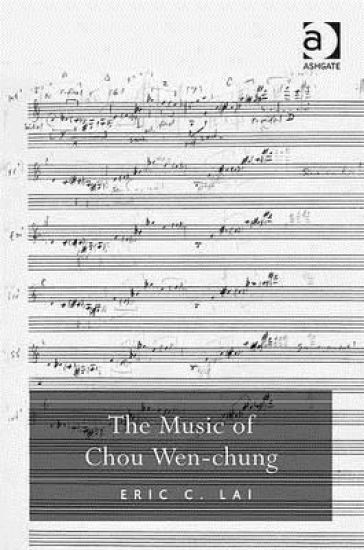
Chou Wen-chung is one of the most influential musical figures of our time. His rich cultural background, his studies with Edgard Varèse, and his interest in the genuine rapport between Eastern and Western musical traditions have been the major influences on his career. Although he is active in various artistic and cultural circles that include scholarship, education and cultural preservation, his major calling has always been composition. As a composer, Chou has created a group of works whose stylistic innovation and technical profundity are distinctive among composers of his generation. His music, which has received critical acclaim around the globe, documents his creative journey, especially in the realization of re-merger - the fusion of Eastern and Western music that has become a new mainstream in art music. Through extensive focus on sketch study, Eric Lai examines Chou's music to contribute to an understanding of his aesthetic orientation, his compositional technique, his role in the development of new music, and his influence upon the younger generation of composers.
Beyond Free and Fair

Beyond Free and Fair

Eric C. (Democracy International) Bjornlund

John Hopkins University Press
2004
sidottu
Beyond Free and Fair Elections: Monitoring Elections and Building Democracy draws on worldwide experience since the mid-1980s to evaluate international election monitoring and domestic monitoring, and their contributions to democracy promotion and democratic change.
Beyond Free and Fair

Beyond Free and Fair

Eric C. Bjornlund

Johns Hopkins University Press
2004
pokkari
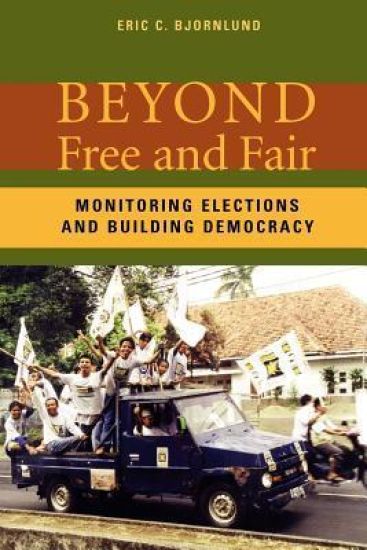
Beyond Free and Fair: Monitoring Elections and Building Democracy draws on worldwide experience since the mid-1980s to evaluate international election monitoring and domestic monitoring, and their contributions to democracy promotion and democratic change. In this book, Eric Bjornlund provides an overview of what election monitoring is, where it comes from, and how it is currently conducted, and he educes general lessons for democracy promotion. Bjornlund reports on actual practice, including case studies of particular election monitoring efforts and the author's own experience in the field, and on a few previous efforts to synthesize guidelines and lessons learned. Case studies include Cambodia, Zimbabwe, the Philippines, and Indonesia, with the last especially providing an opportunity to show how domestic monitors can be supported by international monitors, funders, and advisers. Bjornlund also devotes a chapter to the influential election monitoring work of former president Jimmy Carter. The author criticizes the tendency to view elections and election monitoring narrowly rather than as part of broader strategies to build democracy. He makes practical recommendations about how election monitoring should evolve in the future if it is to continue to contribute to genuine democratization.
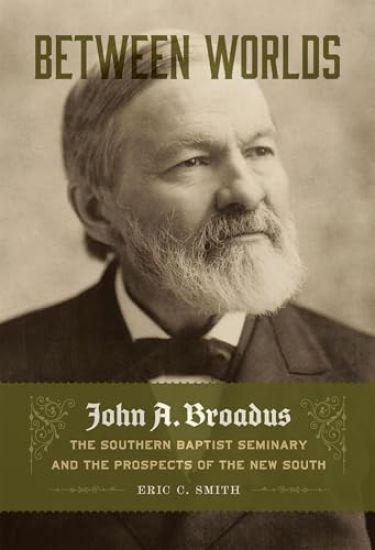
Between Worlds

Between Worlds

Eric C. Smith

LOUISIANA STATE UNIVERSITY PRESS
2026
sidottu
John A. Broadus (1827–95) was a highly influential Southern Baptist leader, preacher, scholar, and educator during the latter half of the nineteenth century. He cofounded the Southern Baptist Theological Seminary, which today is among the largest seminaries in the world. Broadus's enduring impact on American preaching stems in part from his 1870 homiletics manual, a widely adopted textbook that ministers continue to use today. A prominent southerner before and after the Civil War, Broadus actively shaped his region during the shift from the Old South to the New. Eric C. Smith's Between Worlds—the first scholarly biography of Broadus—joins recent historical scholarship in reevaluating Broadus's legacy.
Smack

Smack

Eric C. Schneider

University of Pennsylvania Press
2011
pokkari
Why do the vast majority of heroin users live in cities? In his provocative history of heroin in the United States, Eric C. Schneider explains what is distinctively urban about this undisputed king of underworld drugs. During the twentieth century, New York City was the nation's heroin capital-over half of all known addicts lived there, and underworld bosses like Vito Genovese, Nicky Barnes, and Frank Lucas used their international networks to import and distribute the drug to cities throughout the country, generating vast sums of capital in return. Schneider uncovers how New York, as the principal distribution hub, organized the global trade in heroin and sustained the subcultures that supported its use. Through interviews with former junkies and clinic workers and in-depth archival research, Schneider also chronicles the dramatically shifting demographic profile of heroin users. Originally popular among working-class whites in the 1920s, heroin became associated with jazz musicians and Beat writers in the 1940s. Musician Red Rodney called heroin the trademark of the bebop generation. "It was the thing that gave us membership in a unique club," he proclaimed. Smack takes readers through the typical haunts of heroin users-52nd Street jazz clubs, Times Square cafeterias, Chicago's South Side street corners-to explain how young people were initiated into the drug culture. Smack recounts the explosion of heroin use among middle-class young people in the 1960s and 1970s. It became the drug of choice among a wide swath of youth, from hippies in Haight-Ashbury and soldiers in Vietnam to punks on the Lower East Side. Panics over the drug led to the passage of increasingly severe legislation that entrapped heroin users in the criminal justice system without addressing the issues that led to its use in the first place. The book ends with a meditation on the evolution of the war on drugs and addresses why efforts to solve the drug problem must go beyond eliminating supply.
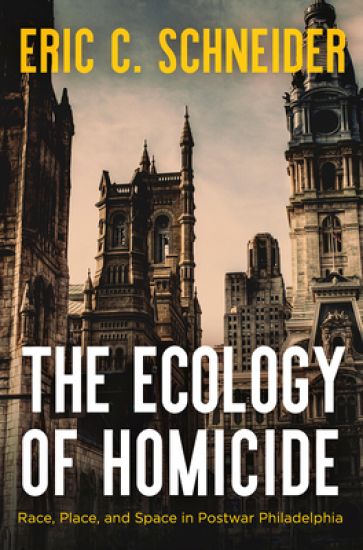
The Ecology of Homicide

The Ecology of Homicide

Eric C. Schneider

University of Pennsylvania Press
2020
sidottu
Like so many big cities in the United States, Philadelphia has suffered from a strikingly high murder rate over the past fifty years. Such tragic loss of life, as Eric C. Schneider demonstrates, does not occur randomly throughout the city; rather, murders have been racialized and spatialized, concentrated in the low-income African American populations living within particular neighborhoods. In The Ecology of Homicide, Schneider tracks the history of murder in Philadelphia during a critical period from World War II until the early 1980s, focusing on the years leading up to and immediately following the 1966 Miranda Supreme Court decision and the shift to easier gun access and the resulting spike in violence that followed. Examining the transcripts of nearly two hundred murder trials, The Ecology of Homicide presents the voices of victims and perpetrators of crime, as well as the enforcers of the law-using, to an unprecedented degree, the words of the people who were actually involved. In Schneider's hands, their perspectives produce an intimate record of what was happening on the streets of Philadelphia in the decades from 1940 until 1980, describing how race factored into everyday life, how corrosive crime was to the larger community, how the law intersected with every action of everyone involved, and, most critically, how individuals saw themselves and others. Schneider traces the ways in which low-income African American neighborhoods became ever more dangerous for those who lived there as the combined effects of concentrated poverty, economic disinvestment, and misguided policy accumulated to sustain and deepen what he calls an "ecology of violence," bound in place over time. Covering topics including gender, urban redevelopment, community involvement, children, and gangs, as well as the impact of violence perpetrated by and against police, The Ecology of Homicide is a powerful link between urban history and the contemporary city.