Kirjojen hintavertailu. Mukana 11 244 527 kirjaa ja 12 kauppaa.

Kirjahaku

Etsi kirjoja tekijän nimen, kirjan nimen tai ISBN:n perusteella.

1000 tulosta hakusanalla Eric D. Knapp

A Second Coming

A Second Coming

Eric D Johnson

Eric D. Johnson
2022
pokkari
A congregation wants the feeling of belonging and believing but is not sure what to believe. Led by a team of craven materialists, the church resorts to a concert and talk show format instead of normal worship services. This strategy fails and the church resorts to a prosperity ministry and a dubious insurance sales scheme to stay solvent.The church learns that Barack Obama plans a visit to honor "The Mother of the Church" who he considers his social justice inspiration, but leadership has no idea who or what the Mother of the Church is. Seeing the visit as a financial windfall, church leaders charge a young minister with finding The Mother. Assisted by an ex- hip hop video vixen, and a mystical Silent Deacon, chaos ensues as the minister attempts to find The Mother while fending off a dangerous assortment of eccentric adversaries.
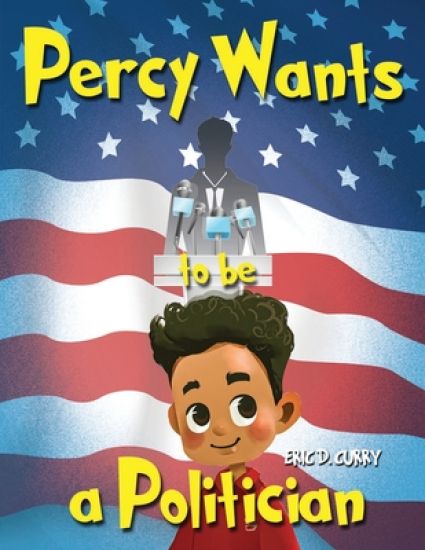
Percy Wants to be a Politician

Percy Wants to be a Politician

Eric D. Curry

Eric Curry
2020
nidottu
Percy Wants to be a Politician is a story of a young boy who asks his dad, a politician, what it means to be a politician. His dad uses this as a teaching opportunity by taking his son around town to essentially teach what it means to be a good human being and share how that ties into being a politician. Percy is more than the main character in this story, but a movement. P.E.R.C.Y. represents Peace, Equality, Respect, Courage & Youthfulness and is about encouraging all people to do their part and to love one another to make the world a better place.
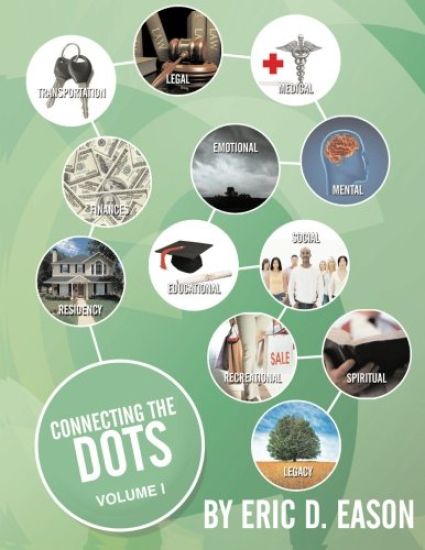
Connecting-The-Dots: For Everyday People
Connecting-The-Dots (For Everyday People) is not just a book but an experience It is multi-purpose and can be utilized as an organizer, a daily planner, a mentoring guide, a comprehensive journal, your personal corrective action plan, a life skills manual, a relapse prevention plan, and can be viewed as your own personal counseling sessions when you feel you have to be reintroduced to 'You'. Connecting-The-Dots (For Everyday People) demonstrates how the importance of strengthening one's personal growth enhances their professional development. Connecting-The-Dots (For Everyday People) can be utilized to facilitate discussions in small to large group sessions or by yourself. Connecting-The-Dots (For Everyday People) is not a sprint, but a marathon. It is written in a certain order and for best results should be completed in that order. Remember in primary school your teacher probably distributed the Connect-The-Dots handouts for you to complete as a means of a reward. The only instruction was for you to connect the dots in the "order" of the numerical series. If you connected out of order then the image or picture would be skewed or distorted. As a result you would have to reassess where you went wrong in drawing your lines from one dot to the next in order to obtain the original image or picture. Connect-The-Dots handouts can be paralled to the vehicle called - Life. To life, there is an "order" - making good decisions, for the right reasons, at the right time. However, there are some people who travel through life not completely aware of the significance of "order". Therefore when they realize they have made an error they appear to be incapable of rectifying the problem because they used an instrument that leaves a permanent mark -ink. Instead a person should use a pencil. The pencil is equipped with an eraser. The pencil is symbolic of God's Grace and Mercy. The pencil allows you to (erase) or implement new decisions in your life to draw your desired "Big Picture" for your future once you can honestly identify what and where did you go wrong. Connecting-The-Dots (For Everyday People) will only help you based upon your level of honesty. Therefore fearless honesty is the key You may seek background information from your family and friends but they can not connect your dots for you. There are no right or wrong answers. The only answers are based upon your experiences. Some of the material may be challenging to confront but necessary for strengthening personal growth and enhancing professional development. Therefore this book and its subsequent volumes should not be accessible to any person you do not desire to read your information. Volume I addresses the (basic and immediate needs) of every person regardless to race, ethnicity, religious belief, creed, gender, socioeconomic class, or whatever age or stage of life you are currently experiencing. These foundational areas are critical to one understanding the significance of acquiring and maintaining basic needs not as a luxury but as a necessity for daily living. Volume I, will challenge you - 'the participant' to actively explore whether some changes may need to occur in these specific areas of your life or confirm that your previous decisions have yielded positive outcomes in those areas. Connecting-The-Dots (For Everyday People) series will challenge you - 'the participant' to actively explore each current situation in your life, and how past decisions have affected your current life situation, and how your current life situation will shape your future decisions. Therefore, choose wisely so that your next decision will be in order so you can visualize the "Big Picture" of your life. Once you complete Volume I, then you will be ready to begin Volume II - (emotional and psychological needs). Remember, no one is perfect, that is why we have erasers
Parental Advisory

Parental Advisory

Eric D Nuzum

HarperCollins
2001
nidottu
Everything You Ever Wanted To Know About The Music Your Parents Never Wanted You To HearBelieve it or not, music censorship in America did not begin with Tipper Gore's horrified reaction to her daughter's Prince album. The vilification of popular music by government and individuals has been going on for decades. Now, for the first time, Parental Advisory offers a thorough and complete chronicle of the music that has been challenged or suppressed -- by the people or the government -- in the United States.From Dean Martin's "Wham, Bam, Thank you Ma'am" to Marilyn Manson's Antichrist Superstar; from freedom fighters such as Frank Zappa and in-your-face rappers such a N.W.A. to crusaders such as Tipper Gore, this intelligent and entertaining book shows how censorship has crossed sexual, class, and ethnic lines, and how many see it as a de facto form of racism. With nearly one hundred fascinating photographs of musicians, record burning, and controversial cover art; illuminating sidebars; and a decade-by-decade timeline of important moments in censorship history, Parental Advisory is by turns frightening and hilarious -- but always revealing.
Creating German Communism, 1890-1990

Creating German Communism, 1890-1990

Eric D. Weitz

Princeton University Press
1997
pokkari
Eric Weitz presents a social and political history of German communism from its beginnings at the end of the nineteenth century to the collapse of the German Democratic Republic in 1990. In the first book in English or in German to explore this entire period, Weitz describes the emergence of the Communist Party of Germany (KPD) against the background of Imperial and Weimar Germany, and clearly explains how the legacy of these periods shaped the character of the GDR to the very end of its existence. In Weimar Germany, social democrats and Germany's old elites tried frantically to discipline a disordered society. Their strategies drove communists out of the workplace and into the streets, where the party gathered supporters in confrontations with the police, fascist organizations, and even socialists and employed workers. In the streets the party forged a politics of display and spectacle, which encouraged ideological pronouncements and harsh physical engagements rather than the mediation of practical political issues. Male physical prowess came to be venerated as the ultimate revolutionary quality. The KPD's gendered political culture then contributed to the intransigence that characterized the German Democratic Republic throughout its history. The communist leaders of the GDR remained imprisoned in policies forged in the Weimar Republic and became tragically removed from the desires and interests of their own populace.
A World Divided

A World Divided

Eric D. Weitz

PRINCETON UNIVERSITY PRESS
2019
sidottu
A global history of human rights in a world of nation-states that grant rights to some while denying them to othersOnce dominated by vast empires, the world is now divided into close to 200 independent countries with laws and constitutions proclaiming human rights—a transformation that suggests that nations and human rights inevitably developed together. But the reality is far more problematic, as Eric Weitz shows in this compelling global history of the fate of human rights in a world of nation-states.Through vivid histories drawn from virtually every continent, A World Divided describes how, since the eighteenth century, nationalists have struggled to establish their own states that grant human rights to some people. At the same time, they have excluded others through forced assimilation, ethnic cleansing, or even genocide. From Greek rebels, American settlers, and Brazilian abolitionists in the nineteenth century to anticolonial Africans and Zionists in the twentieth, nationalists have confronted a crucial question: Who has the "right to have rights?" A World Divided tells these stories in colorful accounts focusing on people who were at the center of events. And it shows that rights are dynamic. Proclaimed originally for propertied white men, rights were quickly demanded by others, including women, American Indians, and black slaves.A World Divided also explains the origins of many of today's crises, from the existence of more than 65 million refugees and migrants worldwide to the growth of right-wing nationalism. The book argues that only the continual advance of international human rights will move us beyond the quandary of a world divided between those who have rights and those who don't.
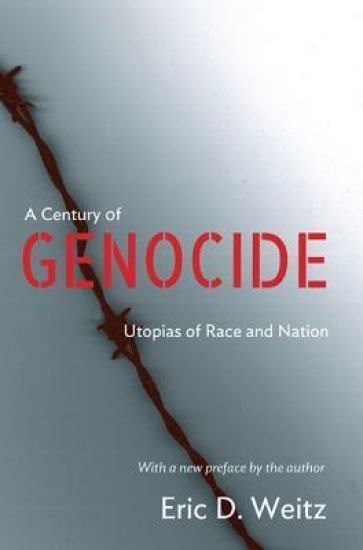
A Century of Genocide

A Century of Genocide

Eric D. Weitz

Princeton University Press
2015
pokkari
Why did the twentieth century witness unprecedented organized genocide? Can we learn why genocide is perpetrated by comparing different cases of genocide? Is the Holocaust unique, or does it share causes and features with other cases of state-sponsored mass murder? Can genocide be prevented? Blending gripping narrative with trenchant analysis, Eric Weitz investigates four of the twentieth century's major eruptions of genocide: the Soviet Union under Stalin, Nazi Germany, Cambodia under the Khmer Rouge, and the former Yugoslavia. Drawing on historical sources as well as trial records, memoirs, novels, and poems, Weitz explains the prevalence of genocide in the twentieth century--and shows how and why it became so systematic and deadly. Weitz depicts the searing brutality of each genocide and traces its origins back to those most powerful categories of the modern world: race and nation. He demonstrates how, in each of the cases, a strong state pursuing utopia promoted a particular mix of extreme national and racial ideologies. In moments of intense crisis, these states targeted certain national and racial groups, believing that only the annihilation of these "enemies" would enable the dominant group to flourish. And in each instance, large segments of the population were enticed to join in the often ritualistic actions that destroyed their neighbors. This book offers some of the most absorbing accounts ever written of the population purges forever associated with the names Stalin, Hitler, Pol Pot, and Milosevic. A controversial and richly textured comparison of these four modern cases, it identifies the social and political forces that produce genocide.
Weimar Germany

Weimar Germany

Eric D. Weitz

Princeton University Press
2018
pokkari
The definitive history of Weimar politics, culture, and societyA New York Times Book Review Editor’s ChoiceA Financial Times Best Book of the YearThoroughly up-to-date, skillfully written, and strikingly illustrated, Weimar Germany brings to life an era of unmatched creativity in the twentieth century—one whose influence and inspiration still resonate today. Eric Weitz has written the authoritative history that this fascinating and complex period deserves, and he illuminates the uniquely progressive achievements and even greater promise of the Weimar Republic. Weitz reveals how Germans rose from the turbulence and defeat of World War I and revolution to forge democratic institutions and make Berlin a world capital of avant-garde art. He explores the period’s groundbreaking cultural creativity, from architecture and theater, to the new field of "sexology"—and presents richly detailed portraits of some of the Weimar’s greatest figures. Weimar Germany also shows that beneath this glossy veneer lay political turmoil that ultimately led to the demise of the republic and the rise of the radical Right. Yet for decades after, the Weimar period continued to powerfully influence contemporary art, urban design, and intellectual life—from Tokyo to Ankara, and Brasilia to New York. Featuring a new preface, this comprehensive and compelling book demonstrates why Weimar is an example of all that is liberating and all that can go wrong in a democracy.
A World Divided

A World Divided

Eric D. Weitz

Princeton University Press
2021
pokkari
A global history of human rights in a world of nations that grant rights to some while denying them to othersOnce dominated by vast empires, the world is now divided into some 200 independent countries that proclaim human rights—a transformation that suggests that nations and human rights inevitably develop together. But the reality is far more problematic, as Eric Weitz shows in this compelling global history of the fate of human rights in a world of nation-states. Through vivid histories from virtually every continent, A World Divided describes how, since the eighteenth century, nationalists have established states that grant human rights to some people while excluding others, setting the stage for many of today’s problems, from the refugee crisis to right-wing nationalism. Only the advance of international human rights will move us beyond a world divided between those who have rights and those who don't.
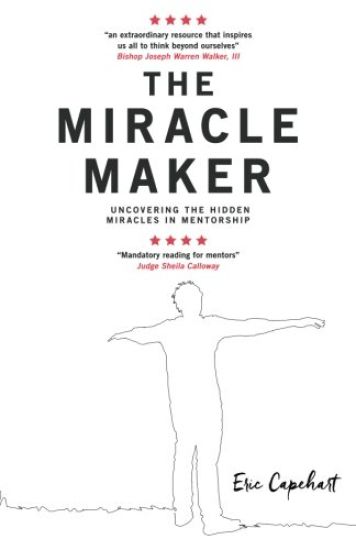
The Miracle Maker: Uncovering The Hidden Miracles in Mentorship

The Miracle Maker: Uncovering The Hidden Miracles in Mentorship

Eric D. Capehart Mba

All the King's Men Publishing
2016
nidottu
This book is an extraordinary resource that inspires us all to think beyond ourselves. Eric Capehart has demonstrated the power of mentorship and has literally touched countless lives through his selfless service. I've watched him over the years pour into others and I am convinced he is well qualified to speak on this issue. This book is necessary and timely. Miracles indeed are happening every day. This book reveals how they happen one life at a time. Thank you Eric for the courage to write it and the compassion to live it. Bishop Joseph Warren Walker, III Senior Pastor, Mount Zion Baptist Church Nashville Presiding Bishop, Full Gospel Baptist Church Fellowship International *100% of proceeds from this book go towards mentorship programs at All The King's Men, Inc. in Nashville, Tn.
Family Configurations

Family Configurations

Eric D. Widmer

Ashgate Publishing Limited
2010
sidottu
Family Configurations develops current scholarship on families and intimate lives by demonstrating that family relationships, far from being fluid and inconsequential, are more structured and committed than ever. Based on a series of empirical studies carried out in the US and Europe, this volume reveals the diversity of family relationships that emerge as a result of various key family issues, emphasizing the supportive and disruptive interdependencies existing among large sets of family members beyond the nuclear family. By applying social network methods to uncover the relational patterns of contemporary families, and making use of rich empirical data, this book draws on recent developments in family sociology, social network analysis and kinship studies to present a fascinating interdisciplinary approach to the family.
Questioning Martin Heidegger

Questioning Martin Heidegger

Eric D. Meyer

University Press of America
2013
sidottu
In Questioning Martin Heidegger, Martin Heidegger’s “Overcoming Metaphysics” provides the jumping-off point for a wide-ranging critique and deconstruction of Western metaphysics from the Pre-Socratics and Sophists to Descartes, Kant, Hegel, Nietzsche, and Derrida. Besides questioning Martin Heidegger’s controversial relationship with German National Socialism (Nazism) and the Holocaust, Questioning Martin Heidegger also takes off onto diverse topics like the question of being and the problem of nothingness, the birth of subjectivity and the death of God, and the Kehre and the emergence of a global ecological consciousness. Written in straightforward, jargon-free language, Questioning Martin Heidegger will be stimulating and exciting reading for professional scholars and enthusiastic laypersons, philosophy students and the general public.
An Introduction to Satellite Image Interpretation

An Introduction to Satellite Image Interpretation

Eric D. Conway

Johns Hopkins University Press
1997
pokkari
Eric D. Conway and the Maryland Space Grant Consortium present a fascinating introduction to the interpretation of satellite imagery, a technology of increasing importance for a wide variety of scientific applications. Prepared in association with the National Oceanic and Atmospheric Administration (NOAA), this extensively illustrated text and accompanying CD-ROM offer a thorough overview of the use of satellite technology in Earth and planetary science, weather forecasting, and environmental research. The book covers the foundations of remote sensing, the types of satellites, and the basics of satellite image interpretation. Other topics include geographical, oceanographical applications, and atmospheric science applications of satellite imagery. With a fully indexed glossary, this well-written and thoughtfully presented text is ideal for science teachers, undergraduate and graduate students, professionals working in the field of operational meteorology, and others interested in knowing more about interpreting satellite imagery. The accompanying CD-ROM of satellite images enables the user to zoom in on many images (some of which appear in color), use overlays to identify important elements in the satellite image, and keep a notes file. The program requires a Macintosh, Windows, or Windows 95 operating system.
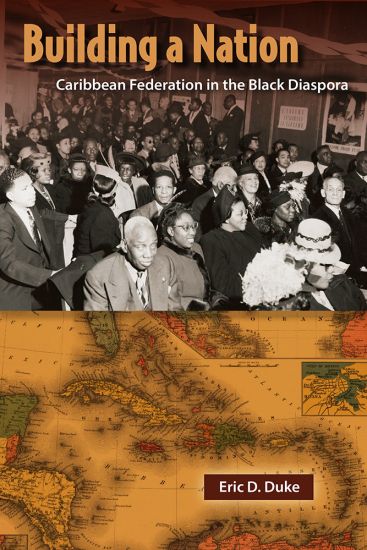
Building a Nation

Building a Nation

Eric D. Duke

University Press of Florida
2015
sidottu
The initial push for a federation among British Caribbean colonies might have originated among the white elites, but the banner for federation was quickly picked up by Afro-Caribbean activists who saw in the possibility of a united West Indian nation a means of securing political power and more. In Building a Nation, Eric Duke moves beyond the narrow view of federation as only relevant to Caribbean and British imperial histories. By examining support for federation among many Afro-Caribbean and other black activists in and out of the West Indies, Duke convincingly expands and connects the movement’s history squarely into the wider history of political and social activism in the early-mid-twentieth century Black Diaspora.Exploring the relationships between the pursuit of Caribbean federation and Black Diaspora politics, Duke posits that federation was more than a regional endeavor; it was a diasporic, black–nation building undertaking—with broad support in diaspora centers such as Harlem and London—deeply immersed in ideas of racial unity, racial uplift, and black self-determination.
Building a Nation

Building a Nation

Eric D. Duke

University Press of Florida
2018
nidottu
The initial push for a federation among British Caribbean colonies might have originated among colonial officials and white elites, but the banner for federation was quickly picked up by Afro-Caribbean activists who saw in the possibility of a united West Indian nation a means of securing political power and more.In Building a Nation, Eric Duke moves beyond the narrow view of federation as only relevant to Caribbean and British imperial histories. By examining support for federation among many Afro-Caribbean and other black activists in and out of the West Indies, Duke convincingly expands and connects the movement's history squarely into the wider history of political and social activism in the early to mid-twentieth century black diaspora.Exploring the relationships between the pursuit of Caribbean federation and black diaspora politics, Duke convincingly posits that federation was more than a regional endeavor; it was a diasporic, black nation-building undertaking--with broad support in diaspora centers such as Harlem and London--deeply immersed in ideas of racial unity, racial uplift, and black self-determination.A volume in this series New World Diasporas, edited by Kevin A. Yelvington
Enemy in the Blood

Enemy in the Blood

Eric D. Carter

The University of Alabama Press
2020
nidottu
Enemy in the Blood: Malaria, Environment, and Development in Argentina examines the dramatic yet mostly forgotten history of malaria control in northwest Argentina. Carter traces the evolution of malaria science and policy in Argentina from the disease's emergence as a social problem in the 1890s to its effective eradication by 1950. Malaria-control proponents saw the campaign as part of a larger project of constructing a modern identity for Argentina. Insofar as development meant building a more productive, rational, and hygienic society, the perceptions of a culturally backwards and disease-ridden interior prevented Argentina from joining the ranks of 'modern' nations. The path to eradication, however, was not easy due to complicated public health politics, inappropriate application of foreign malaria control strategies, and a habitual misreading of the distinctive ecology of malaria in the northwest, especially the unique characteristics of the local mosquito vector. Homegrown scientific expertise, a populist public health agenda, and an infusion of new technologies eventually brought a rapid end to malaria's scourge, if not the cure for regional underdevelopment.Enemy in the Blood sheds light on the often neglected history of northwest Argentina's interior, adds to critical perspectives on the history of development and public health in modern Latin America, and demonstrates the merits of integrative socialenvironmental research.
Homegrown Terror

Homegrown Terror

Eric D. Lehman

Wesleyan University Press
2017
nidottu
On September 6, 1781, Connecticut native Benedict Arnold and a force of 1,600 British soldiers and loyalists took Fort Griswold and burnt New London to the ground. The brutality of the invasion galvanized the new nation, and “Remember New London!” would become a rallying cry for troops under General Lafayette. In Homegrown Terror, Eric D. Lehman chronicles the events leading up to the attack and highlights this key transformation in Arnold—the point where he went from betraying his comrades to massacring his neighbors and destroying their homes. This defining incident forever marked him as a symbol of evil, turning an antiheroic story about weakness of character and missed opportunity into one about the nature of treachery itself. Homegrown Terror draws upon a variety of perspectives, from the traitor himself to his former comrades like Jonathan Trumbull and Silas Deane, to the murdered Colonel Ledyard. Rethinking Benedict Arnold through the lens of this terrible episode, Lehman sheds light on the ethics of the dawning nation, and the way colonial America responded to betrayal and terror.