Kirjojen hintavertailu. Mukana 12 390 323 kirjaa ja 12 kauppaa.

Kirjahaku

Etsi kirjoja tekijän nimen, kirjan nimen tai ISBN:n perusteella.

1000 tulosta hakusanalla Eric Hobsbawm

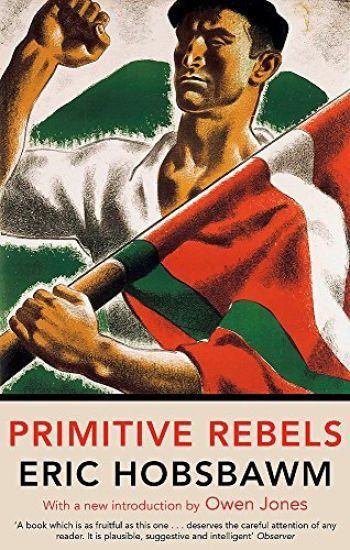
Primitive Rebels

Primitive Rebels

Eric Hobsbawm

Little, Brown Book Group
2017
pokkari
Reissued with a new introduction by Owen Jones, Primitive Rebels is the perfect guide to the revolutions that shaped western civilisation, and the bandits, reformers and anarchists who have fought to change the world.
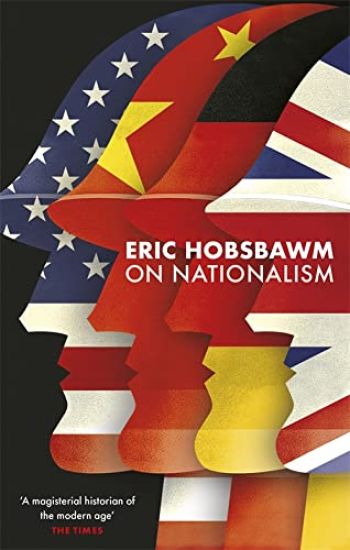
On Nationalism

On Nationalism

Eric Hobsbawm

Abacus
2022
nidottu
I remain in the curious position of disliking, distrusting, disapproving and fearing nationalism wherever it exists . . . but recognising its enormous force, which must be harnessed for progress if possible.In the last two decades the uses of the term 'nationalism' has increased steeply with the rising tide of nationalist parties. In this collection of historian Eric Hobsbawm's writing on nationalism, we see some of the critical historical insights he brings to bear on this contentious subject, which is more than ever relevant as we stand on the doorstep of an age when the internet and the globalisation of capital threaten to blow away many national boundaries while, as a reaction, nationalism seems to re-emerge with renewed strength.More than any other historian of our time, Hobsbawm took great care to seriously consider these movements, and never to decry nationalism and patriotism as simply absurd. The clarity of his insight is as vital today as it was in his lifetime: On Nationalism is an essential work for anyone who wants to understand the phenomenon.
The Jazz Scene

The Jazz Scene

Eric Hobsbawm

Faber Faber
2014
pokkari
From 1955-65 the historian Eric Hobsbawm took the pseudonym 'Francis Newton' and wrote a monthly column for the New Statesman on jazz - music he had loved ever since discovering it as a boy in 1933 ('the year Adolf Hitler took power in Germany'). Hobsbawm's column led to his writing a critical history, The Jazz Scene (1959). This enhanced edition from 1993 adds later writings by Hobsbawm in which he meditates further 'on why jazz is not only a marvellous noise but a central concern for anyone concerned with twentieth-century society and the twentieth-century arts.' 'All the greats are covered in passing (Louis Armstrong, Billie Holiday), while further space is given to Duke Ellington, Ray Charles, Thelonious Monk, Mahalia Jackson, and Sidney Bechet ... Perhaps Hobsbawm's tastiest comments are about the business side and work ethics, where his historian's eye strips the jazz scene down to its commercial spine.' Kirkus Reviews
The Age of Empire: 1875-1914

The Age of Empire: 1875-1914

Eric Hobsbawm

VINTAGE
1989
nidottu
Erica Hobsbawm discusses the evolution of European economics, politics, arts, sciences, and cultural life from the height of the industrial revolution to the First World War. Hobsbawm combines vast erudition with a graceful prose style to re-create the epoch that laid the basis for the twentieth century.
The Age of Extremes: A History of the World, 1914-1991
Dividing the century into the Age of Catastrophe, 1914-1950, the Golden Age, 1950-1973, and the Landslide, 1973-1991, Hobsbawm marshals a vast array of data into a volume of unparalleled inclusiveness, vibrancy, and insight, a work that ranks with his classics The Age of Empire and The Age of Revolution. In the short century between 1914 and 1991, the world has been convulsed by two global wars that swept away millions of lives and entire systems of government. Communism became a messianic faith and then collapsed ignominiously. Peasants became city dwellers, housewives became workers--and, increasingly leaders. Populations became literate even as new technologies threatened to make print obsolete. And the driving forces of history swung from Europe to its former colonies. Includes 32 pages of photos.
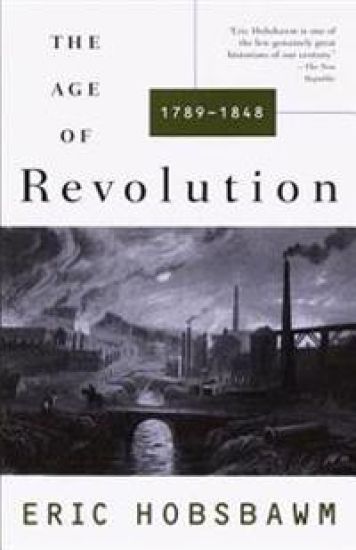
The Age of Revolution: 1749-1848
This magisterial volume follows the death of ancient traditions, the triumph of new classes, and the emergence of new technologies, sciences, and ideologies, with vast intellectual daring and aphoristic elegance. Part of Eric Hobsbawm's epic four-volume history of the modern world, along with The Age of Capitalism, The Age of Empire, and The Age of Extremes.
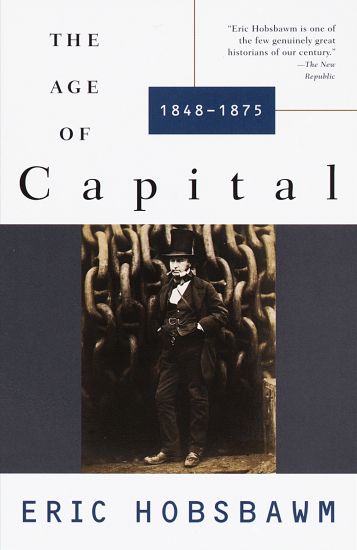
The Age of Capital: The Age of Capital: 1848-1875

The Age of Capital: The Age of Capital: 1848-1875

Eric Hobsbawm

Knopf Publishing Group
1996
nidottu
In this book, Eric Hobsbawm chronicles the events and trends that led to the triumph of private enterprise and its exponents in the years between 1848 and 1875. Along with Hobsbawm's other volumes, this book constitutes and intellectual key to the origins of the world in which we now live. Although it pulses with great events--failed revolutions, catastrophic wars, and a global depression--The Age of Capital is most outstanding for its analyis of the trends that created the new order. With the sweep and sophistication that have made him one of our greatest historians, Hobsbawm indentifies this epoch's winners and losers, its institutions, ideologies, science, and religion.
Echoes of the Marseillaise

Echoes of the Marseillaise

Eric Hobsbawm

Verso Books
1990
nidottu
The bicentenary of the French Revolution has been dominated by those who do not like the French Revolution or its heritage. This book deals with a surprisingly neglected subject: the history, not of the revolution itself, but of its reception and interpretation in the nineteenth and twentieth centuries.A critical assumption of the book is that while it is necessary and inevitable that historians write out of the history of their own times, those who write only out of their own times cannot understand the past and what came out of it. The recent historiographical reaction against the centrality of the Revolution reflects the politics of those contemporary historians for whom progress and revolutionary democracy are dangerous concepts. Their reinterpretations, Hobsbawm argues, are misguided. The Revolution transformed the world permanently and, as recent events in Eastern Europe emphasize, introduced ideas that continue to transform it. 'The French Revolution', writes Hobsbawm, ' gave peoples the sense that history could be changed by their action ... [and] demonstrated the power of the common people in a manner which no subsequent government has ever allowed itself to forget.'Echoes of the Marseillaise is a stimulating mix of historiography and political analysis, a much-needed epilogue of clarity and reason to a muddled bicentenary.
Politics for a Rational Left

Politics for a Rational Left

Eric Hobsbawm

Verso Books
1989
nidottu
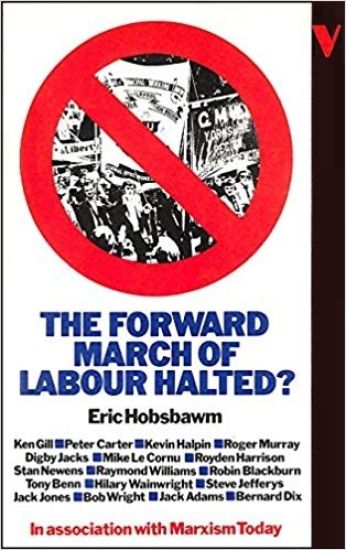
In this book, Eric Hobsbawm, one of Britain's most distinguished historians, tackles the current impasse of the left. In a series of cogent and elegant contributions he elaborates a strategy for the defeat of Thatcherism and the opening of a new era of progressive and democratic politics.Hobsbawm situates the left's recent difficulties within a longer historical perspective: the epochal crisis of the 'classic labour movement' created by new patterns of urbanization and post-industrial economics. He argues that in Britain this crisis has been exacerbated by a factionalism which obstructs the creation of rational alliances, and by an insularity which blinds the left to valuable lessons from elsewhere in Europe. Unity of the left, around a broad and imaginative programme including major reform of the electoral system, is the only effective response to a Conservative government which has made a radical break with the post-war consensus.Politics for a Rational Left sets Hobsbawm's influential political analyses in the context of more discursive contributions ranging over themes such as working-class organization in the modern city, the appeal of nationalism in contemporary society, the lessons of the pre-war Popular Front, and his own formative political experience. Hobsbawm emerges from these pages as a hard-headed and lucid political commentator whose dismissal of wishful thinking and party chauvinism never deflects from an underlying commitment to the relevance of socialism for the 1990s.Published in association with Marxism Today
Labouring Men

Labouring Men

Eric Hobsbawm

Weidenfeld Nicolson
2015
pokkari
The topics covered in this book can be divided into four broad groups: studies of labour conditions up to the middle of the nineteenth century; studies in the 'new trade unionism' of 1889 to 1914; studies in the late nineteenth-century revival of Socialism in Britain; and more general topics covering a wider chronological span. The common factor in this wide-ranging work is that, unlike much other work of labour history, it concentrates on the working classes as such, and on the economic and technical conditions which allowed labour movements to be effective or which prevented their effectiveness.This work is notable not only for its clarity and incisiveness, but also for the richness and variety of the material, which ranges from Marx to Methodism and from labour traditions to the machine breakers.
On History

On History

Eric Hobsbawm

The New Press
1998
nidottu
Few historians have done more to change the way we see the history of modern times than Eric Hobsbawm. From his early books on the Industrial Revolution and European empires, to his magisterial 1995 study of the "short twentieth century," Age of Extremes, Hobsbawm has become known as one of the finest practitioners of his craft. On History brings together his brilliant and challenging reflections on the uses, and abuses, of history. Ranging from considerations of "history from below" and the "progress" of history to recent debate on the relevance of studying history and the responsibility of the historian, On History reflects Hobsbawm's lifelong concern with the relations between past, present, and future.
Industry and Empire

Industry and Empire

Eric Hobsbawm

THE NEW PRESS
1999
pokkari
Premier historian Eric Hobsbawm's brilliant study of the Industrial Revolution, which sold more than a quarter of a million copies in its original edition, is now back in print, updated for a new generation. In Industry and Empire, Hobsbawm explores the origin and dramatic course of the Industrial Revolution over two hundred and fifty years and its influence on social and political institutions. He describes and accounts for Britain's rise as the first industrial power, its decline from domination, its special relation with the rest of the world, and the effects of this trajectory on the lives of its ordinary citizens. This new edition includes a fascinating summary of events of the last twenty years, and an illuminating new conclusion.
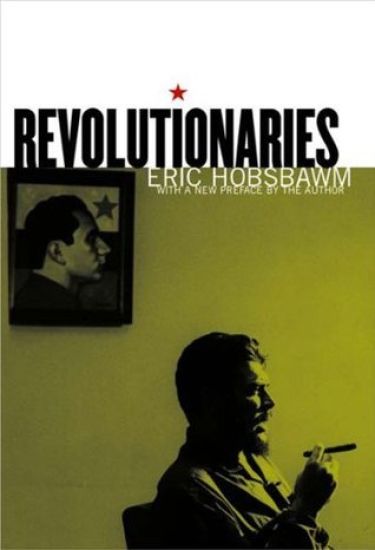
Revolutionaries

Revolutionaries

Eric Hobsbawm

The New Press
2001
nidottu
"One of the few genuinely great historians of our century" according to the New Republic, Eric Hobsbawm has produced a canon of landmark books--including The Age of Capital, The Age of Revolution, Bandits, and The Age of Extremes--that has both set the standard for radical scholarship and influenced historical thinking across the political spectrum. Now back in print after thirty years, Revolutionaries is vintage Hobsbawm, written masterfully amid one of the century's most intense periods of political and social upheaval, putting those events in historical context. Few observers were as astute as Hobsbawm at probing, criticizing, and clarifying radical movements, whether in Beijing or Berkeley. Ranging from historical investigations into communism to contemporary appraisals of revolutionary movements and meditations on Marxism, Hobsbawm's commentaries are essential guides to ideas and people that changed the face of the twentieth century. Hobsbawm's essays retain a freshness that speaks both to his brilliance as a writer and scholar, as well as to the perennial importance of his subjects. At a time when the very concept of revolution has been largely discredited, these essays remind us of the enduring importance of radical investigations into--and solutions to--society's persistent inequalities and injustices.
Echoes of the Marseillaise

Echoes of the Marseillaise

Eric Hobsbawm

Rutgers University Press
2018
sidottu
What was the French Revolution? Was it the triumph of Enlightenment humanist principles, or a violent reign of terror? Did it empower the common man, or just the bourgeoisie? And was it a turning point in world history, or a mere anomaly? E.J. Hobsbawm's classic historiographic study--written at the very moment when a new set of revolutions swept through the Eastern Bloc and brought down the Iron Curtain--explores how the French Revolution was perceived over the following two centuries. He traces how the French Revolution became integral to nineteenth-century political discourse, when everyone from bourgeois liberals to radical socialists cited these historical events, even as they disagreed on what their meaning. And he considers why references to the French Revolution continued to inflame passions into the twentieth century, as a rhetorical touchstone for communist revolutionaries and as a boogeyman for social conservatives. Echoes of the Marseillaise is a stimulating examination of how the same events have been reimagined by different generations and factions to serve various political agendas. It will give readers a new appreciation for how the French Revolution not only made history, but also shaped our fundamental notions about history itself.
Sobre El Nacionalismo

Sobre El Nacionalismo

Eric Hobsbawm

Planeta Publishing
2022
nidottu
Edici n a cargo de Donald Sassoon Sigo estando en la curiosa posici n de rechazar, desconfiar, desaprobar y temer al nacionalismo all donde exista ... si bien reconozco su enorme fuerza, que se debe aprovechar para progresar, si ello es posible. En las dos ltimas d cadas, los usos del t rmino nacionalismo han aumentado vertiginosamente con la creciente marea de partidos nacionalistas. En esta recopilaci n de los escritos de Hobsbawm sobre el nacionalismo, vemos algunas de las consideraciones hist ricas cr ticas que aplic a este asunto tan controvertido, lo cual es m s relevante que nunca, ya que nos encontramos en el umbral de una era en la que internet y la globalizaci n del capital amenazan con borrar muchas fronteras nacionales mientras que, en parte como reacci n, el nacionalismo parece resurgir con renovadas fuerzas.M s que cualquier otro historiador de nuestro tiempo, Hobsbawm tuvo mucho cuidado de considerar seriamente estos movimientos y nunca condenar el nacionalismo y el patriotismo como algo simplemente absurdo. La claridad de su intuici n es tan vital hoy como lo fue en su vida: Sobre el nacionalismo es un trabajo esencial para cualquiera que quiera comprender este fen meno.
Kuinka muuttaa maailmaa

Kuinka muuttaa maailmaa

Eric Hobsbawm

VASTAPAINO
2019
sidottu
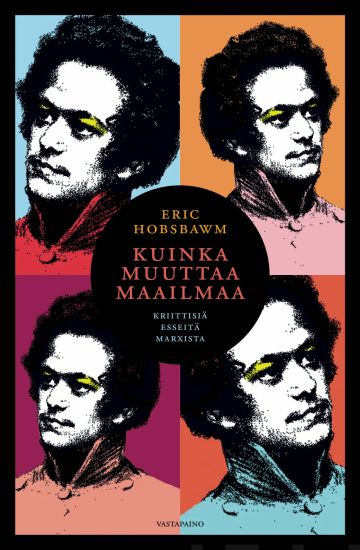
Yli 150 vuotta Pääoman julkaisemisen jälkeen vapaat markkinat tuottavat taloudellista epätasa-arvoa ja ympäristöllisen katastrofin. Ilmastonmuutos pakottaa pohtimaan maailman muuttamista. ”Filosofit ovat vain eri tavoin selittäneet maailmaa, mutta tehtävänä on sen muuttaminen”, vaati Karl Marx tasa-arvon edistämisen nimissä. Sittemmin kommunismi epäonnistui, marxilaisuus epäonnistui. Miksi? Nyt on aika arvioida uudelleen kapitalismin suurimman kriitikon - marxilaisuuden - perintö.Teoksessaan Kuinka muuttaa maailmaa arvostettu historiantutkija Eric Hobsbawm käsittelee marxilaisen ajattelun kehitystä ja vaikutuksia läpi historian aina tähän päivään asti. Kirjan näkökulma ylittää oppialojen väliset rajat, ja se on myös kriittinen katsaus marxilaisuuteen.Eric Hobsbawm (1917-2012) oli merkittävä brittiläinen historioitsija, joka tutki erityisesti teollisuuskapitalismia, sosialismia ja nationalismia. Hän syntyi Aleksandriassa, kävi koulunsa Wienissä, Berliinissä, Lontoossa ja Cambridgessa. Hän opetti Lontoon yliopiston Birkbeck Collegessa ja New Yorkin New School for Social Researchissa. Hänen laajasta tuotannostaan on suomennettu teokset Nationalismi (Vastapaino 1994), Äärimmäisyyksien aika - Lyhyt 1900-luku (Vastapaino 1999) ja Rosvot (Vastapaino 2005). Terävänä kirjoittajana tunnettu Hobsbawn sai useita palkintoja ja valittiin usean tieteellisen seuran jäseneksi (British Academy, American Academy of Arts and Sciences, Royal Society in Literature).
Nationen und Nationalismus

Nationen und Nationalismus

Eric Hobsbawm

Campus Verlag GmbH
2005
nidottu
Eric Hobsbawm gilt als einer der wichtigsten Historiker des 20. Jahrhunderts. Seine scharfsinnige Analyse zur Geschichte der Nationen und des Nationalismus ist ein Klassiker der Geschichtswissenschaft und hat bis heute nichts an Aktualität und Bedeutung verloren. Es war der um 1780 entstehende moderne Nationalismus, der unserer heutigen Welt ihr politisches Gesicht verliehen hat. Gegenwärtige Prozesse wie Europäisierung und Globalisierung können losgelöst von nationalen Maßstäben und Kategorien, die in den letzten 200 Jahren geprägt wurden, nicht erklärt werden. Hobsbawm wagt eine Bewertung des folgenreichen Begriffs der Nation und der entsprechenden Bewegungen, deren Lektüre ein Muss für jeden ist, der sich mit dem Thema auseinander setzt.