Kirjojen hintavertailu. Mukana 11 244 527 kirjaa ja 12 kauppaa.

Kirjahaku

Etsi kirjoja tekijän nimen, kirjan nimen tai ISBN:n perusteella.

1000 tulosta hakusanalla Eric M Watterson

Economic Security and High Technology Competition in an Age of Transition
This study was motivated by an awareness of the ever-growing importance of technology on productivity and power in the information age. It examines the relationship among national security, economic competition, and technology. An underlying premise is that in an era of diminished military confrontation, economic and technological power are acquiring enhanced importance in national security considerations. Green believes that this is bound to promote closer coordination between government and private industry, but not without tensions. Using both a public policy and an economic focus, his work seeks to clarify the debate on high technology industrial policy and to address the policy question of whether and how government should respond to competitive assaults in strategic industries.
Archaeology, the Rabbis and Early Christianity

Archaeology, the Rabbis and Early Christianity

Eric M. Meyers; James F. Strange

SCM Press
2012
nidottu
In this important study, two active field archaeologists, one Jewish and the other Christian, combine in an attempt to draw an accurate picture of rabbinic Judaism and Christian origins in Roman Palestine on the basis of both historical literature and archaeological findings. Their work includes important material previously accessible only in other languages, including modern Hebrew. Writing for students and others concerned to arrive at a balanced understanding of Palestine in the first century AD, the authors are concerned to establish a general picture rather than to argue for particular hypotheses; above all, they document by archaeology and epigraphy the great diversity there was in early Palestinian ,Judaism and early Christianity. They also make out a case for far more contact between,Jewish and Christian communities than has ordinarily been assumed possible. After examining the cultural setting of Galilee and the question of regionalism, together with the context of early Christianity and Palestinian Judaism in Jerusalem, Nazareth and Capernaum. they look in detail at the languages of Roman Palestine, Jewish burial practice and views of afterlife, evidences of-Christianity in Palestine and synagogues, art and the world of the sages. There are maps, drawings and diagrams of synagogues, and a final chapter discusses the place of Palestine in Jewish and Christian theology
Red Thunder, Tropic Lightning

Red Thunder, Tropic Lightning

Eric M Bergerud

Routledge
2019
sidottu
T his BOOK EXAMINES the world confronted by the men of an American combat division during the Vietnam War. Although the unit in question is the 25th Infantry Division, this is not a unit history or standard military chronology. Instead, I try to view all of the major parts of the soldiers' world-including subjects as diverse as climate, living conditions, deadly combat, and morale. The world inhabited by the soldiers of the 25th Division was not theirs alone; the men and women who served with other frontline units in Vietnam will immediately recognize the major landmarks. Using the 25th Division as a focal point, I hope to help the people of today better understand what the Vietnam War was like in fact, not fiction. This work is based on a variety of sources. The documentary foundations come from a great number of 25th Division records generated during the war; the most important of which are the large quarterly Division reports. They, in turn, are complemented by the quarterly reports that came from II Field Force, Vietnam, the Army headquarters for the units operating in the provinces near Saigon. The Center of Military History, Department of the Army, provided these documents to me while I was doing research on the village war in a Vietnamese province. I used this research to write The Dynamics of Defeat: The Vietnam War in Hau Nghia Province (Westview Press, 1991), which deals with the political and military struggle waged by both sides in an important part of the 25th Division's area of operations.
Red Thunder, Tropic Lightning

Red Thunder, Tropic Lightning

Eric M Bergerud

Routledge
2020
nidottu
This book examines the world confronted by the men of an American combat division during the Vietnam War. It covers several subjects, including the physical surroundings, weaponry, battles big and small, the medical effort, relations with the Vietnamese, and morale.
The Dynamics Of Defeat

The Dynamics Of Defeat

Eric M Bergerud

Routledge
2019
sidottu
Some of the most active debate about the Vietnam War today is prompted by those who believe that the United States could have won the war either through an improved military strategy or through more enlightened social policies. Eric Bergerud takes issue with both of these positions. Carefully analyzing the entire course of the war in a single key p
Classroom Motivation

Classroom Motivation

Eric M. Anderman; Lynley H. Anderman

Routledge
2020
sidottu
Classroom Motivation is a comprehensive introduction to the practical applications of research on academic motivation to teaching and learning. Though grounded in theory, the book is uniquely structured around instructional practices that teachers use daily in schools, such as rewards, group activities, academic tasks, student assessment, and parent interaction. This thoroughly revised third edition includes new content on interventions, mindsets, technologies, engagement, and social-emotional learning. Each chapter’s case studies, application exercises, and updated empirical findings will further connect preservice teachers with motivation in practice.
Classroom Motivation

Classroom Motivation

Eric M. Anderman; Lynley H. Anderman

Routledge
2020
nidottu
Classroom Motivation is a comprehensive introduction to the practical applications of research on academic motivation to teaching and learning. Though grounded in theory, the book is uniquely structured around instructional practices that teachers use daily in schools, such as rewards, group activities, academic tasks, student assessment, and parent interaction. This thoroughly revised third edition includes new content on interventions, mindsets, technologies, engagement, and social-emotional learning. Each chapter’s case studies, application exercises, and updated empirical findings will further connect preservice teachers with motivation in practice.
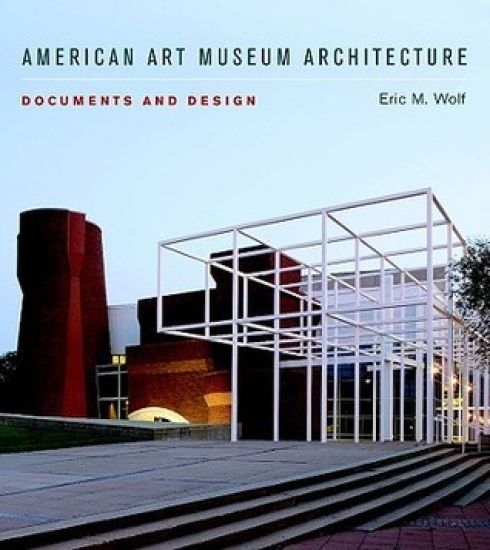
American Art Museum Architecture

American Art Museum Architecture

Eric M. Wolf

WW Norton Co
2010
sidottu
Museum interior spaces must be as carefully designed as their façades—if not more so—to meet the needs of both the art on display and the viewers. The design and construction of art museums in America thus is a complex process, and one rarely undertaken lightly. The architect must design a building that effectively supports the art exhibited. The museumgoers’ interaction with the art must be enhanced by the architecture, while amenities such as restaurants, cafes, gift shops, and accessible and convenient restrooms ensure their comfort. Finally, the storage of works of art not on display must be accounted for in the building design. American Art Museum Architecture: Documents and Design explores all aspects of, and approaches to, museum architecture—the aesthetic, the practical, the innovative, and the functional. Architectural historian Eric M. Wolf delves into the archives of some of the country’s premier institutions not only to explore the design decisions made at their founding, but also to understand how those institutions have continued to evolve along with their collections, up to the present day. Wolf examines the gradual development of six major museums: the Frick Collection, the Museum of Modern Art, and the Whitney Museum of American Art in New York; the Menil Collection in Houston, the Georgia O’Keefe Museum in Santa Fe, and the Art Institute of Chicago. He explains how each museum was originally conceived, how the architecture reflected or modified that original conception, and how the buildings have been reconsidered or revised in later years, as the nature of art, art display, and museum-going has evolved. Extensive archival plans, documents, and photographs enhance the narrative. American Art Museum Architecture also considers the unique architectural challenges often posed by contemporary art. Conceptual art, video installations, and large-scale pieces are increasingly found in permanent collections, at small galleries and encyclopedic institutions alike. Museums built decades ago may have to renovate in order to accommodate such pieces, while newer museums devoted to contemporary work must tackle new architectural challenges when considering how best to house this work. Encompassing both grand nineteenth-century institutions and avant-garde contemporary art collections, American Art Museum Architecture is a timely and fascinating exploration of the ever-changing relationship between architecture and art.
The Theory of Measures and Integration

The Theory of Measures and Integration

Eric M. Vestrup

John Wiley Sons Inc
2003
sidottu
An accessible, clearly organized survey of the basic topics of measure theory for students and researchers in mathematics, statistics, and physics In order to fully understand and appreciate advanced probability, analysis, and advanced mathematical statistics, a rudimentary knowledge of measure theory and like subjects must first be obtained. The Theory of Measures and Integration illuminates the fundamental ideas of the subject–fascinating in their own right–for both students and researchers, providing a useful theoretical background as well as a solid foundation for further inquiry. Eric Vestrup’s patient and measured text presents the major results of classical measure and integration theory in a clear and rigorous fashion. Besides offering the mainstream fare, the author also offers detailed discussions of extensions, the structure of Borel and Lebesgue sets, set-theoretic considerations, the Riesz representation theorem, and the Hardy-Littlewood theorem, among other topics, employing a clear presentation style that is both evenly paced and user-friendly. Chapters include: *Measurable Functions *The Lp Spaces *The Radon-Nikodym Theorem *Products of Two Measure Spaces *Arbitrary Products of Measure Spaces Sections conclude with exercises that range in difficulty between easy "finger exercises"and substantial and independent points of interest. These more difficult exercises are accompanied by detailed hints and outlines. They demonstrate optional side paths in the subject as well as alternative ways of presenting the mainstream topics. In writing his proofs and notation, Vestrup targets the person who wants all of the details shown up front. Ideal for graduate students in mathematics, statistics, and physics, as well as strong undergraduates in these disciplines and practicing researchers, The Theory of Measures and Integration proves both an able primary text for a real analysis sequence with a focus on measure theory and a helpful background text for advanced courses in probability and statistics.
The Movers and the Shirkers

The Movers and the Shirkers

Eric M. Uslaner

The University of Michigan Press
2002
nidottu
What is the nature of representation? Why do some legislators seem to pursue their own policy agenda and others only vote for the wishes of a majority in their district? Eric M. Uslaner sheds new light on this important debate, demonstrating that current notions of representation are too narrow and that members of Congress do both pursue a policy agenda and represent their constituents's interests.Uslaner argues that most representatives do not have to choose between following their ideals or constituency preferences, because voters usually elect public officials who are in tune with their beliefs. And because the constituency is a complex organization of sub-groups--some of which are more critical to achieving re-election than others--the legis-lator is able to form alliances with those who support the legislator's policy preferences. The views of these groups within the constituence become the views to which the legislator pays most attention. In short, the author argues, politics are both local and ideological.Uslaner explores the intersection of a legislator ideology and the preferences of various constituencies. In looking at how they interact and how representation affects reelection, the book sheds new light on the place of ideology in American politics.This book will be of interest to those concerned with representation in all legislative bodies, including political scientists and historians. Eric M. Uslaner is Professor of Government, University of Maryland. He is the author of The Decline of Comity in Congress.
The Movers and the Shirkers

The Movers and the Shirkers

Eric M. Uslaner

The University of Michigan Press
1999
sidottu
What is the nature of representation? Why do some legislators seem to pursue their own policy agenda and others only vote for the wishes of a majority in their district? Eric M. Uslaner sheds new light on this important debate, demonstrating that current notions of representation are too narrow and that members of Congress do both pursue a policy agenda and represent their constituents's interests. Uslaner argues that most representatives do not have to choose between following their ideals or constituency preferences, because voters usually elect public officials who are in tune with their beliefs. And because the constituency is a complex organization of sub-groups--some of which are more critical to achieving re-election than others--the legis-lator is able to form alliances with those who support the legislator's policy preferences. The views of these groups within the constituence become the views to which the legislator pays most attention. In short, the author argues, politics are both local and ideological. Uslaner explores the intersection of a legislator ideology and the preferences of various constituencies. In looking at how they interact and how representation affects reelection, the book sheds new light on the place of ideology in American politics. This book will be of interest to those concerned with representation in all legislative bodies, including political scientists and historians. Eric M. Uslaner is Professor of Government, University of Maryland. He is the author of The Decline of Comity in Congress.
The Moral Foundations of Trust

The Moral Foundations of Trust

Eric M. Uslaner

Cambridge University Press
2002
pokkari
The Moral Foundations of Trust seeks to explain why people place their faith in strangers, and why doing so matters. Trust is a moral value that does not depend upon personal experience or on interacting with people in civic groups or informal socializing. Instead, we learn to trust from our parents, and trust is stable over long periods of time. Trust depends on an optimistic world view: the world is a good place and we can make it better. Trusting people are more likely to give through charity and volunteering. Trusting societies are more likely to redistribute resources from the rich to the poor. Trust has been in decline in the United States for over 30 years. The roots of this decline are traceable to declining optimism and increasing economic inequality, which Uslaner supports by aggregate time series in the United States and cross-sectional data across market economies.
Corruption, Inequality, and the Rule of Law

Corruption, Inequality, and the Rule of Law

Eric M. Uslaner

Cambridge University Press
2010
pokkari
Corruption flouts rules of fairness and gives some people advantages that others don't have. Corruption is persistent; there is little evidence that countries can escape the curse of corruption easily - or at all. Instead of focusing on institutional reform, in this book Eric M. Uslaner suggests that the roots of corruption lie in economic and legal inequality, low levels of generalized trust (which are not readily changed), and poor policy choices (which may be more likely to change). Economic inequality provides a fertile breeding ground for corruption, which, in turn, leads to further inequalities. Just as corruption is persistent, inequality and trust do not change much over time, according to Uslaner's cross-national aggregate analyses. He argues that high inequality leads to low trust and high corruption, and then to more inequality - an inequality trap - and identifies direct linkages between inequality and trust in surveys of the mass public and elites in transition countries.
Segregation and Mistrust

Segregation and Mistrust

Eric M. Uslaner

Cambridge University Press
2012
pokkari
Generalized trust – faith in people you do not know who are likely to be different from you – is a value that leads to many positive outcomes for a society. Yet some scholars now argue that trust is lower when we are surrounded by people who are different from us. Eric M. Uslaner challenges this view and argues that residential segregation, rather than diversity, leads to lower levels of trust. Integrated and diverse neighborhoods will lead to higher levels of trust, but only if people also have diverse social networks. Professor Uslaner examines the theoretical and measurement differences between segregation and diversity and summarizes results on how integrated neighborhoods with diverse social networks increase trust in the United States, Canada, the United Kingdom, Sweden and Australia. He also shows how different immigration and integration policies toward minorities shape both social ties and trust.
Segregation and Mistrust

Segregation and Mistrust

Eric M. Uslaner

Cambridge University Press
2012
sidottu
Generalized trust – faith in people you do not know who are likely to be different from you – is a value that leads to many positive outcomes for a society. Yet some scholars now argue that trust is lower when we are surrounded by people who are different from us. Eric M. Uslaner challenges this view and argues that residential segregation, rather than diversity, leads to lower levels of trust. Integrated and diverse neighborhoods will lead to higher levels of trust, but only if people also have diverse social networks. Professor Uslaner examines the theoretical and measurement differences between segregation and diversity and summarizes results on how integrated neighborhoods with diverse social networks increase trust in the United States, Canada, the United Kingdom, Sweden and Australia. He also shows how different immigration and integration policies toward minorities shape both social ties and trust.
Putting Trust in the US Budget

Putting Trust in the US Budget

Eric M. Patashnik

Cambridge University Press
2000
sidottu
In the United States many important programs are paid from trust funds. At a time when major social insurance funds are facing insolvency, this book provided the first comprehensive study of this significant yet little-studied feature of the American welfare state. Equally importantly, the author investigates an enduring issue in democratic politics: can current officeholders bind their successors? By law, trust funds, which get most of their money from earmarked taxes, are restricted for specific uses. Patashnik asks why these structures were created, and how they have affected political dynamics. He argues that officeholders have used trust funds primarily to reduce political uncertainty, and bind distant futures. Based on detailed case studies of trust funds in a number of policy sectors, he shows how political commitment is a developmental process, whereby precommitments shape the content of future political conflicts. This book will be of interest to students of public policy, political economy and American political development.
Putting Trust in the US Budget

Putting Trust in the US Budget

Eric M. Patashnik

Cambridge University Press
2000
pokkari
In the United States many important programs are paid from trust funds. At a time when major social insurance funds are facing insolvency, this book provides the first comprehensive study of this significant yet little-studied feature of the American welfare state. Equally importantly, the author investigates an enduring issue in democratic politics: can current officeholders bind their successors? By law, trust funds, which get most of their money from earmarked taxes, are restricted for specific uses. Patashnik asks why these structures were created, and how they have affected political dynamics. He argues that officeholders have used trust funds primarily to reduce political uncertainty, and bind distant futures. Based on detailed case studies of trust funds in a number of policy sectors, he shows how political commitment is a developmental process, whereby precommitments shape the content of future political conflicts. This book will be of interest to students of public policy, political economy and American political development.
The Moral Foundations of Trust

The Moral Foundations of Trust

Eric M. Uslaner

Cambridge University Press
2002
sidottu
The Moral Foundations of Trust seeks to explain why people place their faith in strangers, and why doing so matters. Trust is a moral value that does not depend upon personal experience or on interacting with people in civic groups or informal socializing. Instead, we learn to trust from our parents, and trust is stable over long periods of time. Trust depends on an optimistic world view: the world is a good place and we can make it better. Trusting people are more likely to give through charity and volunteering. Trusting societies are more likely to redistribute resources from the rich to the poor. Trust has been in decline in the United States for over 30 years. The roots of this decline are traceable to declining optimism and increasing economic inequality, which Uslaner supports by aggregate time series in the United States and cross-sectional data across market economies.
Corruption, Inequality, and the Rule of Law

Corruption, Inequality, and the Rule of Law

Eric M. Uslaner

Cambridge University Press
2008
sidottu
Corruption flouts rules of fairness and gives some people advantages that others don't have. Corruption is persistent; there is little evidence that countries can escape the curse of corruption easily - or at all. Instead of focusing on institutional reform, in this book Eric M. Uslaner suggests that the roots of corruption lie in economic and legal inequality, low levels of generalized trust (which are not readily changed), and poor policy choices (which may be more likely to change). Economic inequality provides a fertile breeding ground for corruption, which, in turn, leads to further inequalities. Just as corruption is persistent, inequality and trust do not change much over time, according to Uslaner's cross-national aggregate analyses. He argues that high inequality leads to low trust and high corruption, and then to more inequality - an inequality trap - and identifies direct linkages between inequality and trust in surveys of the mass public and elites in transition countries.