Kirjojen hintavertailu. Mukana 12 390 323 kirjaa ja 12 kauppaa.

Kirjahaku

Etsi kirjoja tekijän nimen, kirjan nimen tai ISBN:n perusteella.

1000 tulosta hakusanalla Eric R. Eaton

The Periodic Table

The Periodic Table

Eric R. Scerri

Oxford University Press
2019
nidottu
The periodic table of elements, first encountered by many of us at school, provides an arrangement of the chemical elements, ordered by their atomic number, electron configuration, and recurring chemical properties, and divided into periodic trends. In this Very Short Introduction Eric R. Scerri looks at the trends in properties of elements that led to the construction of the table, and shows how the deeper meaning of the table's structure gradually became apparent with the development of atomic theory and, in particular, quantum mechanics, which underlies the behaviour of all of the elements and their compounds. This new edition, publishing in the International Year of the Periodic Table, celebrates the completion of the seventh period of the table, with the ratification and naming of elements 113, 115, 117, and 118 as nihonium, moscovium, tennessine, and oganesson. Eric R. Scerri also incorporates new material on recent advances in our understanding of the origin of the elements, as well as developments concerning group three of the periodic table. ABOUT THE SERIES: The Very Short Introductions series from Oxford University Press contains hundreds of titles in almost every subject area. These pocket-sized books are the perfect way to get ahead in a new subject quickly. Our expert authors combine facts, analysis, perspective, new ideas, and enthusiasm to make interesting and challenging topics highly readable.
From the Mind of Chaos

From the Mind of Chaos

Eric R Arledge

Tellwell Talent
2023
pokkari
This is a collection of free-verse poetry that represents my life of chaos. Each poem is unique and a memory of times gone by. As you read each poem, it will paint a portrait of love, loss, and life itself.
Reductionism in Art and Brain Science

Reductionism in Art and Brain Science

Eric R. Kandel

Columbia University Press
2018
pokkari
Are art and science separated by an unbridgeable divide? Can they find common ground? In this new book, neuroscientist Eric R. Kandel, whose remarkable scientific career and deep interest in art give him a unique perspective, demonstrates how science can inform the way we experience a work of art and seek to understand its meaning. Kandel illustrates how reductionism—the distillation of larger scientific or aesthetic concepts into smaller, more tractable components—has been used by scientists and artists alike to pursue their respective truths. He draws on his Nobel Prize-winning work revealing the neurobiological underpinnings of learning and memory in sea slugs to shed light on the complex workings of the mental processes of higher animals. In Reductionism in Art and Brain Science, Kandel shows how this radically reductionist approach, applied to the most complex puzzle of our time—the brain—has been employed by modern artists who distill their subjective world into color, form, and light. Kandel demonstrates through bottom-up sensory and top-down cognitive functions how science can explore the complexities of human perception and help us to perceive, appreciate, and understand great works of art. At the heart of the book is an elegant elucidation of the contribution of reductionism to the evolution of modern art and its role in a monumental shift in artistic perspective. Reductionism steered the transition from figurative art to the first explorations of abstract art reflected in the works of Turner, Monet, Kandinsky, Schoenberg, and Mondrian. Kandel explains how, in the postwar era, Pollock, de Kooning, Rothko, Louis, Turrell, and Flavin used a reductionist approach to arrive at their abstract expressionism and how Katz, Warhol, Close, and Sandback built upon the advances of the New York School to reimagine figurative and minimal art. Featuring captivating drawings of the brain alongside full-color reproductions of modern art masterpieces, this book draws out the common concerns of science and art and how they illuminate each other.
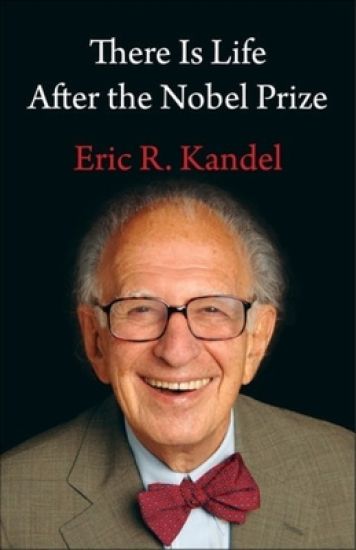
There Is Life After the Nobel Prize

There Is Life After the Nobel Prize

Eric R. Kandel

Columbia University Press
2021
sidottu
One day in 1996, the neuroscientist Eric R. Kandel took a call from his program officer at the National Institute of Mental Health, who informed him that he had been awarded a key grant. Also, the officer said, he and his colleagues thought Kandel would win the Nobel Prize. “I hope not soon,” Kandel’s wife, Denise, said when she heard this. Sociologists had found that Nobel Prize winners often did not contribute much more to science, she explained.In this book, Kandel recounts his remarkable career since receiving the Nobel in 2000—or his experience of proving to his wife that he was not yet “completely dead intellectually.” He takes readers through his lab’s scientific advances, including research into how long-term memory is stored in the brain, the nature of age-related memory loss, and the neuroscience of drug addiction and schizophrenia. Kandel relates how the Nobel Prize gave him the opportunity to reach a far larger audience, which in turn allowed him to discover and pursue new directions. He describes his efforts to promote public understanding of science and to put brain science and art into conversation with each other. Kandel also discusses his return to Austria, which he had fled as a child, and observes Austria’s coming to terms with the Nazi period. Showcasing Kandel’s accomplishments, erudition, and wit, There Is Life After the Nobel Prize is a candid account of the working life of an acclaimed scientist.
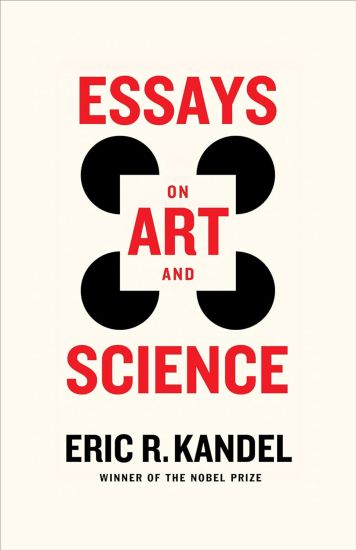
Essays on Art and Science

Essays on Art and Science

Eric R. Kandel

Columbia University Press
2024
sidottu
When we view a work of art, we often experience an emotional response, but the causes of our reactions are complex. Our knowledge of why we respond to art as we do is rooted in science—in psychology and biology. Eric R. Kandel traces the origins of this understanding to early twentieth-century Vienna, which gave rise to the concept of the “beholder’s share,” the realization that art is incomplete without the perceptual and emotional involvement of the viewer—that is, without our responses to it.But what causes our response? Our brain is a creativity machine that brings to bear on any image—including a painting—certain innate, universal processes related to sensory perception as well as higher-order processes related to our personal experiences, memories, and emotions. Understanding how these unconscious processes in the brain interact to create the beholder’s share is one of the great challenges currently confronting brain science.The essays on art and science in this book vary widely in subject matter, including the angst-ridden portraits of Soutine, conflicting views of women’s sexuality, Cubism’s challenge to our innate visual processes, and why we react differently to abstract versus figurative art. But each essay focuses on the interaction of art and science. Woven throughout are the many notable scientists, art historians, artists, and others, both Jewish and non-Jewish, who contributed to our understanding of how we experience art.
Essays on Art and Science

Essays on Art and Science

Eric R. Kandel

Columbia University Press
2025
pokkari
When we view a work of art, we often experience an emotional response, but the causes of our reactions are complex. Our knowledge of why we respond to art as we do is rooted in science—in psychology and biology. Eric R. Kandel traces the origins of this understanding to early twentieth-century Vienna, which gave rise to the concept of the “beholder’s share,” the realization that art is incomplete without the perceptual and emotional involvement of the viewer—that is, without our responses to it.But what causes our response? Our brain is a creativity machine that brings to bear on any image—including a painting—certain innate, universal processes related to sensory perception as well as higher-order processes related to our personal experiences, memories, and emotions. Understanding how these unconscious processes in the brain interact to create the beholder’s share is one of the great challenges currently confronting brain science.The essays on art and science in this book vary widely in subject matter, including the angst-ridden portraits of Soutine, conflicting views of women’s sexuality, Cubism’s challenge to our innate visual processes, and why we react differently to abstract versus figurative art. But each essay focuses on the interaction of art and science. Woven throughout are the many notable scientists, art historians, artists, and others, both Jewish and non-Jewish, who contributed to our understanding of how we experience art.
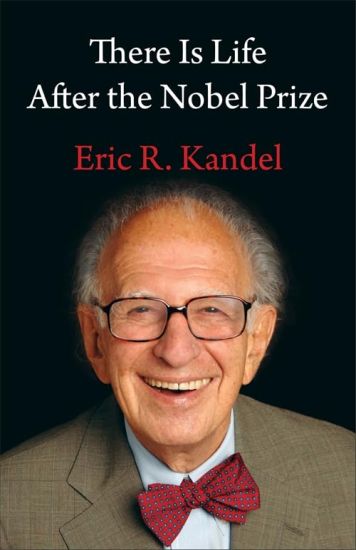
There Is Life After the Nobel Prize

There Is Life After the Nobel Prize

Eric R. Kandel

Columbia University Press
2026
pokkari
One day in 1996, the neuroscientist Eric R. Kandel took a call from his program officer at the National Institute of Mental Health, who informed him that he had been awarded a key grant. Also, the officer said, he and his colleagues thought Kandel would win the Nobel Prize. “I hope not soon,” Kandel’s wife, Denise, said when she heard this. Sociologists had found that Nobel Prize winners often did not contribute much more to science, she explained. In this book, Kandel recounts his remarkable career since receiving the Nobel in 2000—or his experience of proving to his wife that he was not yet “completely dead intellectually.” He takes readers through his lab’s scientific advances, including research into how long-term memory is stored in the brain, the nature of age-related memory loss, and the neuroscience of drug addiction and schizophrenia. Kandel relates how the Nobel Prize gave him the opportunity to reach a far larger audience, which in turn allowed him to discover and pursue new directions. He describes his efforts to promote public understanding of science and to put brain science and art into conversation with each other. Kandel also discusses his return to Austria, which he had fled as a child, and observes Austria’s coming to terms with the Nazi period. Showcasing Kandel’s accomplishments, erudition, and wit, There Is Life After the Nobel Prize is a candid account of the working life of an acclaimed scientist.
The Lizard Man Speaks

The Lizard Man Speaks

Eric R. Pianka

University of Texas Press
2011
pokkari
Alone on the endless red-sand desert in the Australian outback, tracking Varanus giganteus, the perentie lizard that grows to be more than six feet long...for desert rat Eric Pianka, such adventures have led to a satisfying, if unusual, way of life, as well as a distinguished career as a field biologist.In The Lizard Man Speaks, Pianka recounts more than thirty years of adventures in reptile studies. He tells of "lizarding" in the North American deserts, the Kalahari Desert of southern Africa, and the Great Victoria Desert in Western Australia. His vivid imagery draws the reader into a world where lions lurk in the darkness beyond a gecko hunter's lights, where being stranded by car trouble miles from the last outpost is a constant danger, and where the wilderness still deserves to be called wild.Along the way, Pianka provides much general information about lizard ecology, the fire succession cycle, and the interaction of humans with the landscape. And he reveals the springs of his own determined spirit and love of solitude, describing a near-fatal boyhood accident and its shaping and character-building effect on the life that followed.
Thermoplastic Material Selection

Thermoplastic Material Selection

Eric R. Larson

William Andrew Publishing
2015
sidottu
Thermoplastic Material Selection: A Practical Guide presents current information on how proper material selection is a critical component of any manufactured product. The text is a practical guide to a difficult process, giving the reader a fundamental grounding in thermoplastic materials and providing the tools they need to save time, money, and frustration. The book provides an overview of the most commonly used thermoplastic materials, including discussions of the different chemical families, plastics categories, and material grades - and the implications of these differences on the material selection process. It provides fresh insights on the traditional methods of material selection based on performance and cost, and also discusses the use of non-traditional methods based on subjective evaluation. Subsequent sections include references on tools that can be used to conduct further exploration, how to accurately select the most suitable material, writing an effective material specification, and working with material suppliers and distributors.
Red Adriatic

Red Adriatic

Eric R. Terzuolo

Routledge
2019
sidottu
All European Communist parties define themselves largely in terms of their relationship, amicable or not, to the Communist Party of the Soviet Union. Consequently, most studies of relations between Communist parties emphasize interactions with the Soviets. However, not all the smaller European Communist parties interact strictly through the medium of Moscow. There exists an extensive, genuinely bilateral aspect to the relationship between Italian and Yugoslav Communists. Both have tended to seek distinctively national paths and, to differing degrees, both have been at odds with the Soviets. The history of Italo-Yugoslav nationality and border disputes, as well as major differences in how the two Communist parties have approached those disputes, has done much to condition inter-party relations.Red Adriaticis the first book to focus on relations between Communist parties in adjacent countries. As such, it offers insights, both practical and theoretical, into problems of inter-party relations. Based on archival sources, as well as on published materials, it also contributes to the individual historiographies of the Italian and Yugoslav Communist parties. The study speaks to several issues in comparative Communist studies, contrasting the different ways in which the two parties have adapted to national circumstances, balancing nationalism and internationalism, and to their different leadership styles.
Red Adriatic

Red Adriatic

Eric R. Terzuolo

Routledge
2021
nidottu
All European Communist parties define themselves largely in terms of their relationship, amicable or not, to the Communist Party of the Soviet Union. Consequently, most studies of relations between Communist parties emphasize interactions with the Soviets. However, not all the smaller European Communist parties interact strictly through the medium of Moscow. There exists an extensive, genuinely bilateral aspect to the relationship between Italian and Yugoslav Communists. Both have tended to seek distinctively national paths and, to differing degrees, both have been at odds with the Soviets. The history of Italo-Yugoslav nationality and border disputes, as well as major differences in how the two Communist parties have approached those disputes, has done much to condition inter-party relations.Red Adriaticis the first book to focus on relations between Communist parties in adjacent countries. As such, it offers insights, both practical and theoretical, into problems of inter-party relations. Based on archival sources, as well as on published materials, it also contributes to the individual historiographies of the Italian and Yugoslav Communist parties. The study speaks to several issues in comparative Communist studies, contrasting the different ways in which the two parties have adapted to national circumstances, balancing nationalism and internationalism, and to their different leadership styles.
Quantum Dynamics

Quantum Dynamics

Eric R. Bittner

CRC Press
2019
nidottu
Even though time-dependent spectroscopic techniques continue to push the frontier of chemical physics, they receive scant mention in introductory courses and are poorly covered in standard texts. Quantum Dynamics: Applications in Biological and Materials Systems bridges the gap between what is traditionally taught in a one-semester quantum chemistry course and the modern field of chemical dynamics, presenting the quantum theory of charge and energy transport in biological systems and optical-electronic materials from a dynamic perspective.Reviews the basicsTaking a pedagogical approach, the book begins by reviewing the concepts of classical mechanics that are necessary for studying quantum mechanics. It discusses waves and wave functions and then moves on to an exploration of semiclassical quantum mechanics methods, an important part of the development and utilization of quantum theory.Time-independent and time-dependent perspectivesThe main focus of the book is the chapter on quantum dynamics, which begins with a brief review of the bound states of a coupled two-level system. This is discussed with a time-independent as well as a time-dependent perspective. The book also explores what happens when the two-level system has an additional harmonic degree of freedom that couples the transitions between the two states.The book reviews different ways in which one can represent the evolution of a quantum state, explores the quantum density matrix, and examines the basis for excitation energy transfer between molecules. Later chapters describe the pi electronic structure of conjugated organic systems and discuss electron-phonon coupling in conjugated systems and transport and dynamics in extended systems.Includes Mathematica® downloadsOn an accompanying website, Mathem
The Disordered Mind: What Unusual Brains Tell Us about Ourselves
A Nobel Prize-winning neuroscientist's probing investigation of what brain disorders can tell us about human nature Eric R. Kandel, the winner of the Nobel Prize in Physiology or Medicine for his foundational research into memory storage in the brain, is one of the pioneers of modern brain science. His work continues to shape our understanding of how learning and memory work and to break down age-old barriers between the sciences and the arts. In his seminal new book, The Disordered Mind, Kandel draws on a lifetime of pathbreaking research and the work of many other leading neuroscientists to take us on an unusual tour of the brain. He confronts one of the most difficult questions we face: How does our mind, our individual sense of self, emerge from the physical matter of the brain? The brain's 86 billion neurons communicate with one another through very precise connections. But sometimes those connections are disrupted. The brain processes that give rise to our mind can become disordered, resulting in diseases such as autism, depression, schizophrenia, Parkinson's, addiction, and post-traumatic stress disorder. While these disruptions bring great suffering, they can also reveal the mysteries of how the brain produces our most fundamental experiences and capabilities--the very nature of what it means to be human. Studies of autism illuminate the neurological foundations of our social instincts; research into depression offers important insights on emotions and the integrity of the self; and paradigm-shifting work on addiction has led to a new understanding of the relationship between pleasure and willpower. By studying disruptions to typical brain functioning and exploring their potential treatments, we will deepen our understanding of thought, feeling, behavior, memory, and creativity. Only then can we grapple with the big question of how billions of neurons generate consciousness itself.
The Disordered Mind: What Unusual Brains Tell Us about Ourselves
A Nobel Prize-winning neuroscientist's probing investigation of what brain disorders can tell us about human nature Eric R. Kandel, the winner of the Nobel Prize in Physiology or Medicine for his foundational research into memory storage in the brain, is one of the pioneers of modern brain science. His work continues to shape our understanding of how learning and memory work and to break down age-old barriers between the sciences and the arts. In his seminal new book, The Disordered Mind, Kandel draws on a lifetime of pathbreaking research and the work of many other leading neuroscientists to take us on an unusual tour of the brain. He confronts one of the most difficult questions we face: How does our mind, our individual sense of self, emerge from the physical matter of the brain? The brain's 86 billion neurons communicate with one another through very precise connections. But sometimes those connections are disrupted. The brain processes that give rise to our mind can become disordered, resulting in diseases such as autism, depression, schizophrenia, Parkinson's, addiction, and post-traumatic stress disorder. While these disruptions bring great suffering, they can also reveal the mysteries of how the brain produces our most fundamental experiences and capabilities--the very nature of what it means to be human. Studies of autism illuminate the neurological foundations of our social instincts; research into depression offers important insights on emotions and the integrity of the self; and paradigm-shifting work on addiction has led to a new understanding of the relationship between pleasure and willpower. By studying disruptions to typical brain functioning and exploring their potential treatments, we will deepen our understanding of thought, feeling, behavior, memory, and creativity. Only then can we grapple with the big question of how billions of neurons generate consciousness itself.
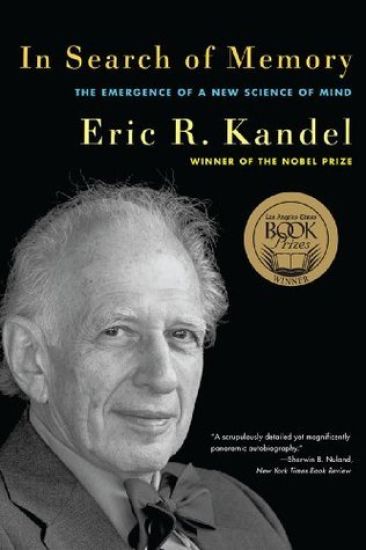
In Search of Memory

In Search of Memory

Eric R. Kandel

WW Norton Co
2007
nidottu
Memory binds our mental life together. We are who we are in large part because of what we learn and remember. But how does the brain create memories? Nobel Prize winner Eric R. Kandel intertwines the intellectual history of the powerful new science of the mind—a combination of cognitive psychology, neuroscience, and molecular biology—with his own personal quest to understand memory. A deft mixture of memoir and history, modern biology and behavior, In Search of Memory brings readers from Kandel's childhood in Nazi-occupied Vienna to the forefront of one of the great scientific endeavors of the twentieth century: the search for the biological basis of memory.
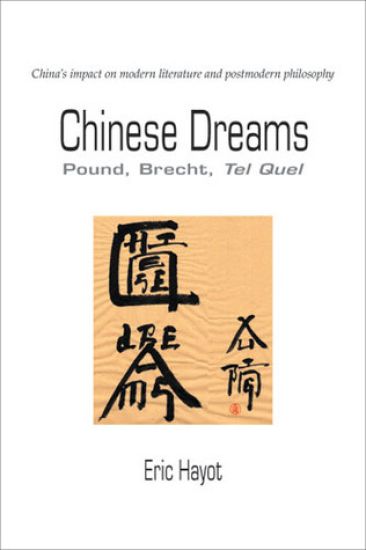
Chinese Dreams

Chinese Dreams

Eric R. J. Hayot

The University of Michigan Press
2011
nidottu
China’s profound influence on the avant-garde in the 20th century was nowhere more apparent than in the work of Ezra Pound, Bertolt Brecht, and the writers associated with the Parisian literary journal Tel quel. Chinese Dreams explores the complex, intricate relationship between various “Chinas”—as texts—and the nation/culture known simply as “China”—their context—within the work of these writers. Eric Hayot calls into question the very means of representing otherness in the history of the West and ultimately asks if it might be possible to attend to the political meaning of imagining the other, while still enjoying the pleasures and possibilities of such dreaming. The latest edition of this critically acclaimed book includes a new preface by the author. “Lucid and accessible . . . an important contribution to the field of East-West comparative studies, Asian studies, and modernism.”—Comparative Literature Studies“Instead of trying to decipher the indecipherable ‘China’ in Western literary texts and critical discourses, Hayot chose to show us why and how ‘China’ has remained, and will probably always be, an enchanting, ever-elusive dream. His approach is nuanced and refreshing, his analysis rigorous and illuminating.”—Michelle Yeh, University of California, Davis
The Unchanging American Voter

The Unchanging American Voter

Eric R. A. N. Smith

University of California Press
1989
pokkari
Have the American people grown more politically sophisticated in the past three decades, or do they remain relatively ignorant of the political world? Did a 'great leap forward' take place during the 1960s in which our citizenry became involved and adept voters? In this important book, Eric Smith addresses these and other provocative questions that have long befuddled political scientists and policymakers. Much of the current wisdom about American voters derives from an argument advanced in a volume entitled "The Changing American Voter", written by Nie, Verba, and Petrocik. In this work, the authors contend that the electorate made a 'great leap forward' in political sophistication and ideological thinking between the 1960 and 1964 elections. They argue that people changed in response to a shifting environment, and that, in particular, the surge of protest and ideological rhetoric between 1960 and 1964 engendered a new political savvy and sophistication. In their view, people learned to understand politics better, to relate the issues to the candidates more accurately, and to cast more informed, intelligent votes. In "The Unchanging American Voter", Smith takes issue with this portrait of an engaged American citizenry and replaces it with a quite different picture of the voters of this nation. He posits a more bleak political landscape in which the typical voter knows little about politics, is not interested in the political arena and consequently does not participate in it, and is even unable to organize his or her attitudes in a coherent manner. To support this view, Smith demonstrates how the indices by which Nie, Verba, and Petrocik measured levels of sophistication during the 1960s were methodologically flawed and how a closer examination of supposed changes reveals only superficial and unimportant shifts in the ways voters have approached the ballot box since the 1950s. "The Unchanging American Voter" is an intelligent and original work that provides a new perspective of the American citizenry. It is sure to engender discussion and debate about the dynamics of voting in postwar America.
Envisioning Power

Envisioning Power

Eric R. Wolf

University of California Press
1999
pokkari
With the originality and energy that have marked his earlier works, Eric Wolf now explores the historical relationship of ideas, power, and culture. Responding to anthropology's long reliance on a concept of culture that takes little account of power, Wolf argues that power is crucial in shaping the circumstances of cultural production. Responding to social-science notions of ideology that incorporate power but disregard the ways ideas respond to cultural promptings, he demonstrates how power and ideas connect through the medium of culture. Wolf advances his argument by examining three very different societies, each remarkable for its flamboyant ideological expressions: the Kwakiutl Indians of the Northwest Pacific Coast, the Aztecs of pre-Hispanic Mexico, and National Socialist Germany. Tracing the history of each case, he shows how these societies faced tensions posed by ecological, social, political, or psychological crises, prompting ideological responses that drew on distinctive, historically rooted cultural understandings. In each case study, Wolf analyzes how the regnant ideology intertwines with power around the pivotal relationships that govern social labor. Anyone interested in the history of anthropology or in how the social sciences make comparisons will want to join Wolf in Envisioning Power.
Pathways of Power

Pathways of Power

Eric R. Wolf; Aram Yengoyan

University of California Press
2001
pokkari
This collection of twenty-eight essays by renowned anthropologist Eric R. Wolf is a legacy of some of his most original work, with an insightful foreword by Aram Yengoyan. Of the essays, six have never been published and two have not appeared in English until now. Shortly before his death, Wolf prepared introductions to each section and individual pieces, as well as an intellectual autobiography that introduces the collection as a whole. Sydel Silverman, who completed the editing of the book, says in her preface, "He wanted this selection of his writings over the past half-century to serve as part of the history of how anthropology brought the study of complex societies and world systems into its purview."
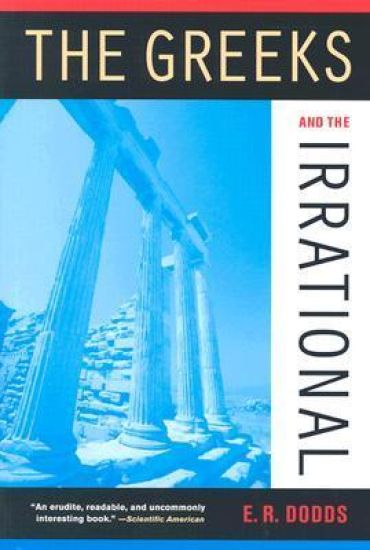
The Greeks and the Irrational

The Greeks and the Irrational

Eric R. Dodds

University of California Press
2004
pokkari
In this philosophy classic, which was first published in 1951, E.R. Dodds takes on the traditional view of Greek culture as a triumph of rationalism. Using the analytical tools of modern anthropology and psychology, Dodds asks, 'Why should we attribute to the ancient Greeks an immunity from 'primitive' modes of thought which we do not find in any society open to our direct observation?'. Praised by reviewers as "an event in modern Greek scholarship" and "a book which it would be difficult to over-praise", "The Greeks and the Irrational" was Volume 25 of the "Sather Classical Lectures" series.