Kirjojen hintavertailu. Mukana 11 244 527 kirjaa ja 12 kauppaa.

Kirjahaku

Etsi kirjoja tekijän nimen, kirjan nimen tai ISBN:n perusteella.

1000 tulosta hakusanalla Erinn Banting

Rätsel, Malen & Erinnerungen, dein Reisespaß für unterwegs: Beschäftigungsbuch für Kinder 6 -10 Jahre: Rätselspaß, Ausmalbildern, Spielideen und Erinn
Dieses kreative Mitmachbuch begleitet Kinder im Alter von 6 bis 10 Jahren auf Reisen und in den Ferien. Es enth lt abwechslungsreiche R tsel, liebevoll gestaltete Ausmalbilder, Spielideen f r unterwegs und pers nliche Erinnerungsseiten zum Ausf llen. So wird jede Fahrt, ob mit Auto, Zug oder Flugzeug zum Erlebnis
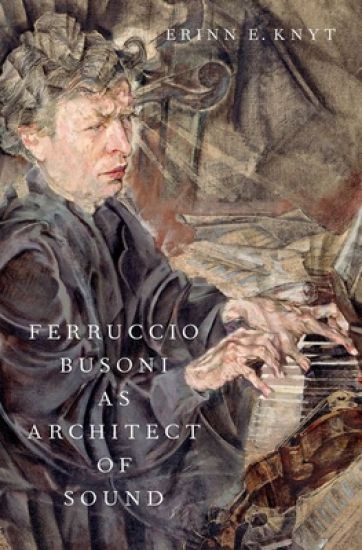
Ferruccio Busoni as Architect of Sound

Ferruccio Busoni as Architect of Sound

Erinn E. Knyt

OXFORD UNIVERSITY PRESS INC
2023
sidottu
Ferruccio Busoni as Architect of Sound presents the composer as an innovator inspired not only by past musical traditions but also by a contemporary interest in experimentalism. In the twentieth-century, Busoni wrote pieces where sound radiates from different directions, created montage formal structures, and freely used all twelve pitches of the chromatic scale without avoiding consonances. This book reveals how he also applied his understanding of tangible architectural spaces, buildings, and floor plans to his music, reconciling the spatial and temporal divide in music through an interdisciplinary approach. His innovation prompted and inspired new trends in pitch organization, the spatialization of sound, and the expansion of formal structures. Transcending physical boundaries of compositional innovation, Busoni also engaged in a rich exchange of ideas with contemporary architects and artists. Through a broad analysis of Busoni's compositional activities, musicologist Erinn E. Knyt brings Busoni's music into dialogue with more recent accounts of modernism in music that move beyond elitist esotericism and notions of rupture with the past. In addition, she facilitates a discourse between Busoni and other twentieth-century artists and explores how Busoni's spatialized architectural music left a lasting imprint on future generations of musicians and early film pioneers.
Johann Sebastian Bach's Goldberg Variations Reimagined

Johann Sebastian Bach's Goldberg Variations Reimagined

Erinn E. Knyt

OXFORD UNIVERSITY PRESS INC
2024
sidottu
This book provides the first detailed reception history of adaptations of Johann Sebastian Bach's Aria mit 30 Veränderungen (Goldberg Variations, BWV 988). It documents multiple ways Bach's work has appeared in arrangements, transcriptions, and re-compositions from 1800 to 2020. It examines adaptations for the traditional concert hall as well as for dance, theater, cinema, literature, digital media, and visual art. Overall, the book reveals a dramatic increase in adaptations of the piece in the late twentieth and early twenty-first centuries. In addition, it brings the reception history of Bach's Goldberg Variations into dialogue with broader scholarly discourse about performance practice issues. The piece was often performed in transcribed or arranged versions in the nineteenth century and then again in the late twentieth and early twenty-first centuries. Yet if nineteenth-century adaptations of this piece were usually created out of necessity, as a means of performing a lengthy piece without access to the original instrument, many twenty-first century adaptations, which have developed alongside historically informed performances, were motivated by deconstructionist ideologies. This contrasts with the middle part of the twentieth century, when there was a prevalence of historically informed performances and a dearth of adaptations. Comparisons to other works by Bach reveal similar performance practice trends. The reception history documented in the book also considers the musical work concept. It shows that, particularly since the late 1980s, there has been a loosening of the regulative hold of the modernist work concept associated with single authorship, structural unity, and an autonomous score. It reveals that many recent adaptations are not direct interpretations of an authoritative text, but engage in multivalent dialogues as Bach's score becomes an infinite or open text in which multiple people, including subsequent (re)-composers, performers, directors, and audience members enter into inter- and intra-textual conversations. In the process, the book contributes to recent studies about adaptations, the role of musical authorship, and changing notions of Bach and the work concept in the twenty-first century. At the same time, it discusses many recently composed pieces, including ones by underrepresented composers.
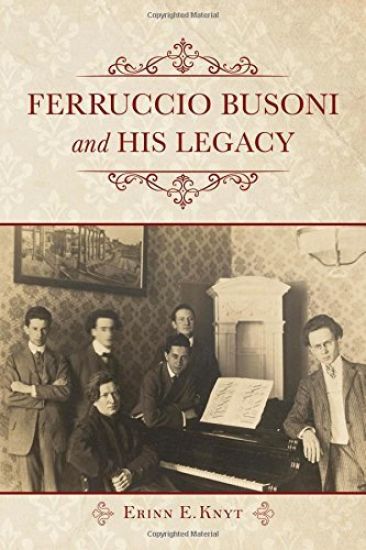
Ferruccio Busoni and His Legacy

Ferruccio Busoni and His Legacy

Erinn E. Knyt

Indiana University Press
2017
sidottu
Many students of renowned composer, conductor, and teacher Ferruccio Busoni had illustrious careers of their own, yet the extent to which their mentor's influence helped shape their success was largely unexplored until now. Through rich archival research including correspondence, essays, and scores, Erinn E. Knyt presents an evocative account of Busoni's idiosyncratic pedagogy—focused on aesthetic ideals rather than methodologies or techniques—and how this teaching style and philosophy can be seen and heard in the Nordic-inspired musical works of Sibelius, the unusual soundscapes of Varèse, the polystylistic meldings of music and technology in Louis Gruenberg's radio operas and film scores, the electronic music of Otto Luening, and the experimentalism of Philip Jarnach. Equal parts critical biography and interpretive analysis, Knyt's work compels a reconsideration of Busoni's legacy and puts forth the notion of a "Busoni School" as one that shaped the trajectory of twentieth-century music.
Ferruccio Busoni and His Legacy

Ferruccio Busoni and His Legacy

Erinn E. Knyt

Indiana University Press
2017
pokkari
Many students of renowned composer, conductor, and teacher Ferruccio Busoni had illustrious careers of their own, yet the extent to which their mentor's influence helped shape their success was largely unexplored until now. Through rich archival research including correspondence, essays, and scores, Erinn E. Knyt presents an evocative account of Busoni's idiosyncratic pedagogy—focused on aesthetic ideals rather than methodologies or techniques—and how this teaching style and philosophy can be seen and heard in the Nordic-inspired musical works of Sibelius, the unusual soundscapes of Varèse, the polystylistic meldings of music and technology in Louis Gruenberg's radio operas and film scores, the electronic music of Otto Luening, and the experimentalism of Philip Jarnach. Equal parts critical biography and interpretive analysis, Knyt's work compels a reconsideration of Busoni's legacy and puts forth the notion of a "Busoni School" as one that shaped the trajectory of twentieth-century music.
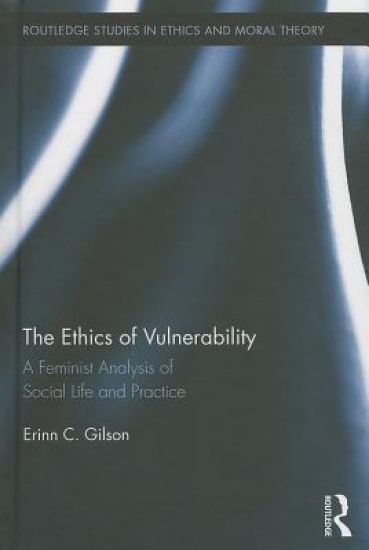
The Ethics of Vulnerability

The Ethics of Vulnerability

Erinn Gilson

Routledge
2014
sidottu
As concerns about violence, war, terrorism, sexuality, and embodiment have garnered attention in philosophy, the concept of vulnerability has become a shared reference point in these discussions. As a fundamental part of the human condition, vulnerability has significant ethical import: how one responds to vulnerability matters, whom one conceives as vulnerable and which criteria are used to make such demarcations matters, how one deals with one’s own vulnerability matters, and how one understands the meaning of vulnerability matters. Yet, the meaning of vulnerability is commonly taken for granted and it is assumed that vulnerability is almost exclusively negative, equated with weakness, dependency, powerlessness, deficiency, and passivity. This reductively negative view leads to problematic implications, imperiling ethical responsiveness to vulnerability, and so prevents the concept from possessing the normative value many theorists wish it to have. When vulnerability is regarded as weakness and, concomitantly, invulnerability is prized, attentiveness to one’s own vulnerability and ethical response to vulnerable others remain out of reach goals. Thus, this book critiques the ideal of invulnerability, analyzes the problems that arise from a negative view of vulnerability, and articulates in its stead a non-dualistic concept of vulnerability that can remedy these problems.
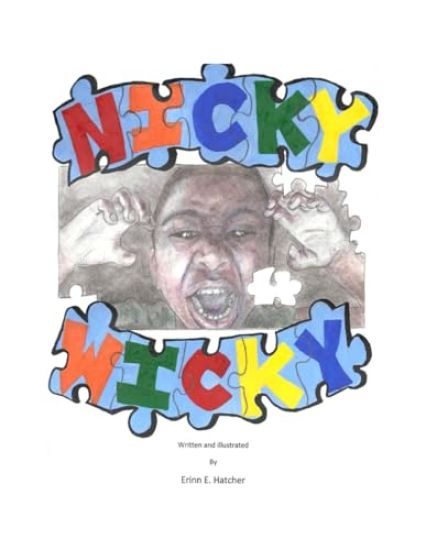
Nicky Wicky

Nicky Wicky

Erinn E Hatcher

Hatchers Ink L.L.C.
2025
pokkari
NICKY WICKY is the story of an autistic child, his relationship with family, and challenges they must overcome. The book was created with not only the diagnosed in mind, but more so the families, friends, case workers, care workers, and co-workers in an effort to raise awareness about autism and similar disorders as well as its effect on the community. It is easy reading for all, from the young eager eared audience in circle time to the developing new reader designed to captivate, educate, entertain, and more importantly enlighten allowing readers to empathize and attempt to better understand the difficulty of living with autism.
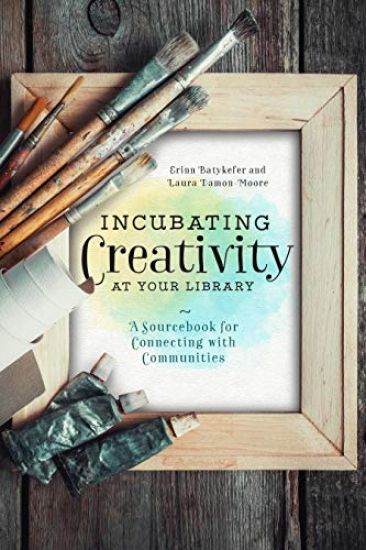
Incubating Creativity at Your Library: A Sourcebook for Connecting with Communities

Incubating Creativity at Your Library: A Sourcebook for Connecting with Communities

Erinn Batykefer; Laura Damon-Moore

AMERICAN LIBRARY ASSOCIATION
2019
nidottu
Creativity needs a platform. As technology consultant David Weinberger puts it, “A platform provides resources that lets other people build things.” The library is an ideal platform, and in this book Batykefer and Damon-Moore, creators of the Library as Incubator Project, share the experiences of numerous creative library workers and artists who are making it happen. Their stories will show you how to move beyond merely responding to community needs towards actively building a platform with your community. And best of all, you don’t need to start from scratch—rather, you amplify what’s already working. Filled with ideas and initiatives that can be customized to suit your library and its community, this bookdiscusses the four elements (Resources, Invitations, Partnerships & Engagement, and Staff) and the two lenses (Community-Led and Evaluation) of the Creative Library platform;outlines six steps for surveying your community’s artistic landscape;gives methods for expanding partnerships and connections with individuals and organizations through exploration, hands-on learning, and engagement with the community;shares perspectives on the “ideal library” from several artists, with three examples of artist-in-residence programs;offers examples of community invitations in action, such as the Pittsburgh Fiberarts Guild workshops on creating flowers using recycled materials;shows how to use “orphan photos” from your archives for creative inspiration;advises on using qualitative evaluations to effectively “weed” your initiatives; andshares tips for encouraging library staff to express their creativity, turning avocations into library initiatives like Handmade Crafternoons, the Yahara Music Library, or BOOKLESS.By building on existing elements at your library and filling in the gaps with community-driven additions, your library can be a space that cultivates creativity in both its users and staff.
Ziggy the Silly Pitty

Ziggy the Silly Pitty

Erinn Foglesong; Max Foglesong

IngramSpark
2023
pokkari
Meet Ziggy, the Silly Pitty Join Ziggy's playful adventures as he pounces, jumps, and wags through a joyful day. With colorful pictures and over 20 of the most commonly used sight words, this book is paw-fect for young readers
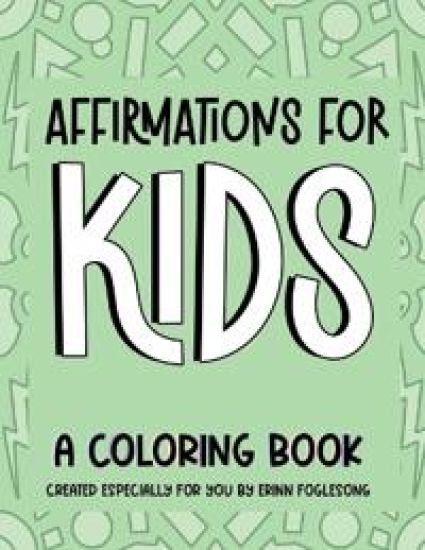
Affirmations for Kids

Affirmations for Kids

Erinn Foglesong

IngramSpark
2023
pokkari
"Discover a world of positive vibes and creativity with our Affirmations for Kids: A Coloring Book This delightful book combines the magic of coloring with uplifting affirmations to boost self-esteem, foster creativity, and fill young hearts with happiness. Watch as your child's imagination comes to life while they color enchanting illustrations and repeat empowering affirmations. It's a colorful journey of self-discovery and confidence-building for every little dreamer."
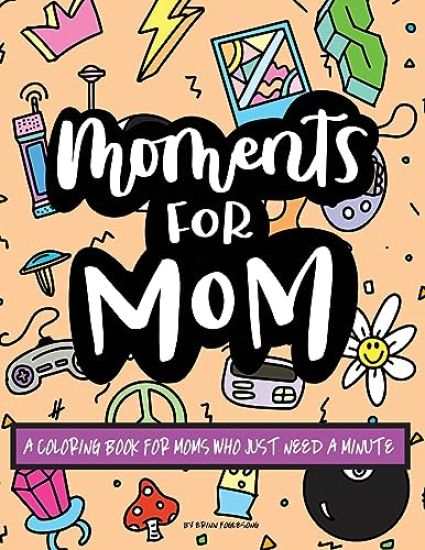
Moments for Mom

Moments for Mom

Erinn Foglesong

IngramSpark
2023
pokkari
"Moments for Mom" is an uproarious coloring book packed with carefully selected quotes and whimsical illustrations that capture the comical moments and relatable chaos of being a mom.Unwind, laugh, and embrace the joy of coloring with fellow moms who understand the hilarious rollercoaster ride of parenting. This coloring book is your license to indulge in some well-deserved laughter, empathy, understanding, and to connect with other moms who share your sense of humor.Perfect as a gift for the supermoms in your life or as a treat for yourself, "Moments for Mom" is here to remind you that even on the craziest days, laughter is the best medicine. Grab your favorite coloring tools and prepare for a giggle-filled journey that celebrates the quirks and camaraderie of motherhood like never before. Let the coloring hilarity begin
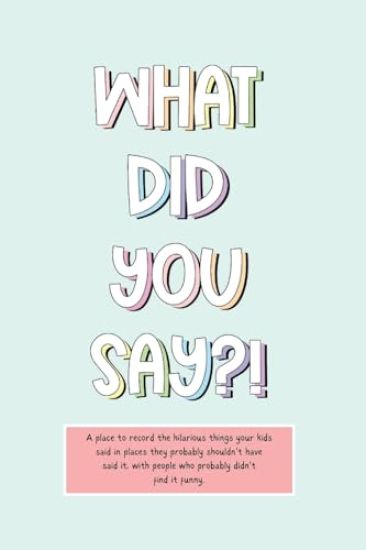
What Did You Say?!

What Did You Say?!

Erinn Foglesong

IngramSpark
2023
pokkari
"What Did You Say? " is a journal to help parents preserve their kids' most uproarious remarks. From the adorably innocent to the hilariously unexpected, our children's comedic timing can be impeccable, especially when it's at the most inopportune moments "What Did You Say? " gives you an opportunity to document the gems your son drops during family dinners, or your daughter blares out at restaurants. Capture the essence of the joy, innocence, and *not-so-occasional* mischief that comes with raising children.Celebrate the unpredictable charm of parenthood by creating a collection of treasured memories. Whether it's a brilliantly timed punchline or a charming mispronunciation, looking back on these laugh-out-loud moments will warm your heart and bring a smile to your face.Embrace the hilarity of parenthood and the extraordinary power of a child's words in "What Did You Say?" - a must-have journal that reminds us to find humor in life's little surprises and hold onto those priceless memories forever."
The Ethics of Vulnerability

The Ethics of Vulnerability

Erinn Gilson

Routledge
2016
nidottu
As concerns about violence, war, terrorism, sexuality, and embodiment have garnered attention in philosophy, the concept of vulnerability has become a shared reference point in these discussions. As a fundamental part of the human condition, vulnerability has significant ethical import: how one responds to vulnerability matters, whom one conceives as vulnerable and which criteria are used to make such demarcations matters, how one deals with one’s own vulnerability matters, and how one understands the meaning of vulnerability matters. Yet, the meaning of vulnerability is commonly taken for granted and it is assumed that vulnerability is almost exclusively negative, equated with weakness, dependency, powerlessness, deficiency, and passivity. This reductively negative view leads to problematic implications, imperiling ethical responsiveness to vulnerability, and so prevents the concept from possessing the normative value many theorists wish it to have. When vulnerability is regarded as weakness and, concomitantly, invulnerability is prized, attentiveness to one’s own vulnerability and ethical response to vulnerable others remain out of reach goals. Thus, this book critiques the ideal of invulnerability, analyzes the problems that arise from a negative view of vulnerability, and articulates in its stead a non-dualistic concept of vulnerability that can remedy these problems.