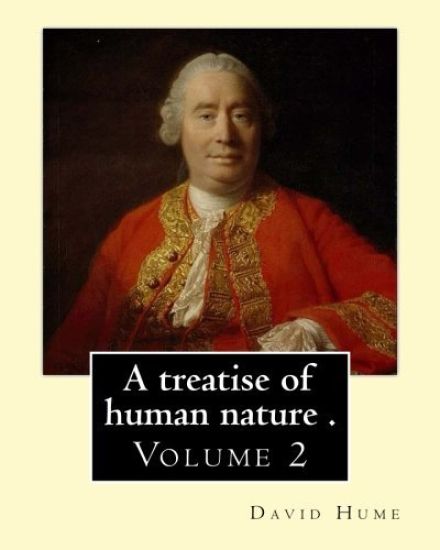
A Treatise of Human Nature (1738-40) is a book by Scottish philosopher David Hume, considered by many to be Hume's most important work and one of the most influential works in the history of philosophy. The Treatise is a classic statement of philosophical empiricism, skepticism, and naturalism. In the introduction Hume presents the idea of placing all science and philosophy on a novel foundation: namely, an empirical investigation into human nature. Impressed by Isaac Newton's achievements in the physical sciences, Hume sought to introduce the same experimental method of reasoning into the study of human psychology, with the aim of discovering the "extent and force of human understanding". Against the philosophical rationalists, Hume argues that passion rather than reason governs human behaviour. He introduces the famous problem of induction, arguing that inductive reasoning and our beliefs regarding cause and effect cannot be justified by reason; instead, our faith in induction and causation is the result of mental habit and custom. Hume defends a sentimentalist account of morality, arguing that ethics is based on sentiment and passion rather than reason, and famously declaring that "reason is, and ought only to be the slave to the passions". Hume also offers a skeptical theory of personal identity and a compatibilist account of free will. Contemporary philosophers have written of Hume that "no man has influenced the history of philosophy to a deeper or more disturbing degree", and that Hume's Treatise is "the founding document of cognitive science" and the "most important philosophical work written in English." However, the public in Britain at the time did not agree, and the Treatise was a commercial failure. Deciding that the Treatise had problems of style rather than of content, Hume reworked some of the material for more popular consumption in An Enquiry Concerning Human Understanding (1748) and An Enquiry Concerning the Principles of Morals (1751), which Hume wrote is "of all my writings, historical, philosophical, or literary, incomparably the best."........... Hector Hugh Munro (18 December 1870 - 14 November 1916), better known by the pen name Saki, and also frequently as H. H. Munro, was a British writer whose witty, mischievous and sometimes macabre stories satirize Edwardian society and culture. He is considered a master of the short story, and often compared to O. Henry citation needed] and Dorothy Parker citation needed]. Influenced by Oscar Wilde, Lewis Carroll and Rudyard Kipling, he himself influenced A. A. Milne, No l Coward and P. G. Wodehouse. Besides his short stories (which were first published in newspapers, as was customary at the time, and then collected into several volumes), he wrote a full-length play, The Watched Pot, in collaboration with Charles Maude; two one-act plays; a historical study, The Rise of the Russian Empire, the only book published under his own name; a short novel, The Unbearable Bassington; the episodic The Westminster Alice (a parliamentary parody of Alice in Wonderland); and When William Came, subtitled A Story of London Under the Hohenzollerns, a fantasy about a future German invasion and occupation of Britain....... Ernest Percival Rhys ( 17 July 1859 - 25 May 1946) was a Welsh-English writer, best known for his role as founding editor of the Everyman's Library series of affordable classics. He wrote essays, stories, poetry, novels and plays............
Ernest Gruening is perhaps best known for his vehement fight against U.S. military involvement in Vietnam, where he set himself apart by casting one of two votes against the Tonkin Gulf Resolution in 1964. However, as Robert Johnson shows in this political biography, it's Gruening's sixty-year public career in its entirety that provides an opportunity for historians to explore continuity and change in dissenting thought, on both domestic and international affairs, in twentieth-century America.Gruening's outlook on domestic affairs took shape in the intellectual milieu of Progressive-era Boston, where he first devoted attention to foreign affairs in crusades against aggressive U.S. policies toward Haiti and Mexico. In the late 1920s, he was appointed editor of a reform newspaper in Portland, Maine, and moved from there to The Nation. By the early 1930s he had built a national reputation as an expert on Latin American affairs, prompting Franklin Roosevelt to appoint him chief U.S. policymaker for Puerto Rico. In 1939, Roosevelt named Gruening governor of Alaska, where for fourteen years he played a key role in the political development of the territory. In 1958 Alaskan voters elected him to the U.S. Senate, where he articulated a dissenting outlook in inter-American affairs, foreign aid policy, and the relationship between the federal government, the economy, and the issue of monopoly.Throughout his life, Gruening struggled to reconcile his ideological perspective, which drew on dissenting ideas long embedded in American history, with a desire for political effectiveness.
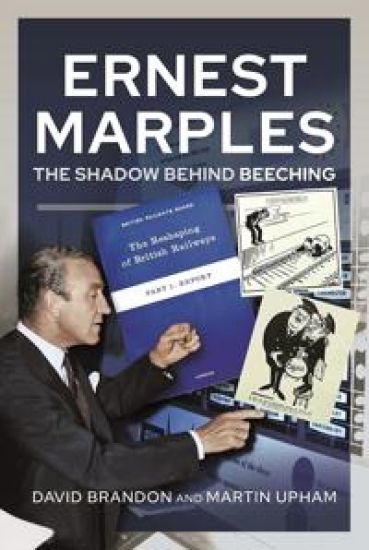
Ernest Marples revolutionised three UK government departments. At Transport (1959-1964) he appointed Dr Beeching chairman of British Railways and commissioned him to produce his infamous report, inaugurated motorways and introduced significant regulations for motorists. At Housing (1951-1954) he delivered 300,000 new houses annually and as Postmaster General (1957-1959), he reformed Post Office accounting systems and launched postcodes and Subscriber Trunk Dialling. This first biography of Marples uses newly-available archives to examine public and private transport policy, the growing power of the pro-road lobby and the identification of personal freedom with driving. Railway sentimentalism was no match for these. Marples was lucky not to be implicated in the Profumo Affair which rocked the Conservative Party but his political career was over soon afterwards. Questionable business practices caused his 1975 flight to Monaco hotly pursued by the Inland Revenue. Beeching, unhappy under a Labour government, returned to private industry although he later chaired a Royal Commission. Labour, despite promises, proved little friendlier to the railways but a more positive approach to loss-making passenger services eventually emerged under Barbara Castle. This book should appeal to those interested in Britain's railways and in mid-Twentieth Century British politics.
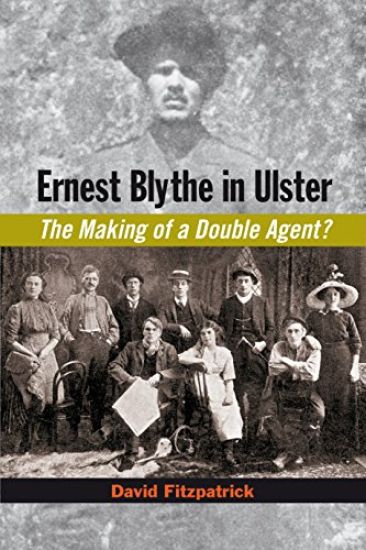
Ernest Blythe (1889-1975) was a central figure in the Irish revolution and the first decade of the Irish Free State. He was a leading republican organiser before 1916, a Dail minister from 1919, and a controversial member of Cosgrave's executive council, becoming vice-president after the murder of O'Higgins. He was widely regarded with interest and sometimes suspicion because of his Protestant and unionist background, a rarity in modern Irish republicanism. His judgements and opinions were typically intelligent and well-informed as well as unconventional. This project originated in David Fitzpatrick's discovery that Blythe, already a leading member of the IRB, joined the Orange Order while reporting for a unionist newspaper in County Down (1909-13). Had that fact become known, Blythe's political ambitions would have been dashed. Nowhere in his writings does he allude to this episode, though he indicated clearly his need to lead `a double life' in the sense of appearing all things to all men. Blythe's account of his `double life' is utterly inadequate. This book unveils the reality of his double life in Ulster, explains how it may have originated, and relates this episode to his subsequent views on partition, Ulster, and Fascism. Blythe may be regarded as a double agent, who sought to enlighten republicans about unionism, and unionists about Irish nationality. More broadly, the book uncovers important affinities between militant republicanism and unionism, especially during the pre-war crisis over Home Rule, when Ulster loyalists seemed the group best prepared and most likely to initiate an armed revolution in Ireland.
Ten-year-old Ernest is a pigeon fanatic. He spends his days watching them fly over his home and dreams of racing his own pigeon, if only he had one. At last, Ernest's wish comes true when he stumbles across a pigeon easy enough to catch. The only problem is... this pigeon doesn't like to fly. Ernest soon realises flying pigeons isn't as easy as he had thought...
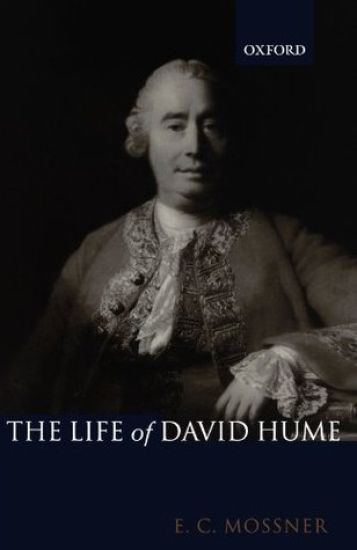
Mossner's Life of David Hume remains the standard biography of this great thinker and writer. First published in 1954, and updated in 1980, it is now reissued in paperback, in response to increased interest in Hume. E. C. Mossner was Emeritus Professor of English at the University of Texas at Austin. 'Mossner's work is a quite remarkable scholarly achievement; it will be an indispensable tool for Hume scholars and a treasure-trove of information for all students of the intellectual and literary history of the eighteenth century' Richard H. Popkin in the Philological Quarterly 'This magnificent and exemplary work...has more than a biographical value. It is a study of intellectual reaction in the eighteenth century: a book for many readers, and not only for those of a philosophical turn.' C. E. Vulliamy in The Observer 'This is the work of a man thoroughly in love with his subject...this biography is the product of long and happy research. The length and the happiness both contribute to its merits.' The Times Literary Supplement
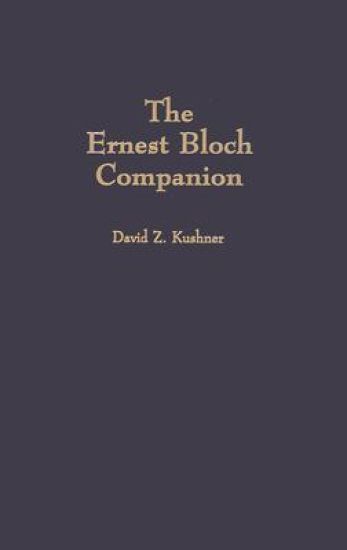
The evolution of Ernest Bloch's music is traced throughout his travels in Europe and America. A complete picture of Bloch emerges from this integrated study of his life and his music. The opening biographical chapter provides a brief, personal history from which Bloch's career and many interests follow, including his pursuits in photography. The biographical information provides the framework for addressing the Jewish Question, a common focus of Bloch's work. Bloch emerges, from this multifaceted study, as a composer whose music must be examined within both its Jewish heritage and in a larger, universal context.Musicians, scholars, and Bloch enthusiasts will welcome this volume examining Ernest Bloch's life, career and major works which are enhanced throughout by musical examples. Bloch's professional development is easily traced through the chronological organization of the book.