
Kirjahaku
Etsi kirjoja tekijän nimen, kirjan nimen tai ISBN:n perusteella.
1000 tulosta hakusanalla Ernst Haffner
This clear, comprehensive reference guide highlights the major events in Ernst Krenek's life in the context of his musical and literary works. An insightful biography carefully puts the man and his work into perspective. Next, a list of compositions is organized in generally chronological order. Publications, manuscript, recording, and performance data are included under each entry in this list. A bibliography of Krenek's writings covers both manuscripts and published writings, while a bibliography of writings about the composer traces his career. This clear, comprehensive reference guide in four major sections details Ernst Krenek's prolific work as both composer and author. The insightful biography provides the reader with guide posts to his life and points out his significant musical and literary achievements. The comprehensive catalog of musical compositions, organized in chronological order according to Krenek's own 237 opus number, includes 105 previously undocumented compositions without opus numbers. Publication, manuscript, recording, and performance data are included under each entry in this list. The bibliography of Krenek's writings is arranged in chronological order and covers both his manuscript and published writings. Appendices, including title, genera, and first line indexes, complement the lists of his works. The fourth section, a selective bibliography of writings about the composer arranged by author, traces his career. The book's thorough index provides access to all people, organizations, and general subjects mentioned. This book is invaluable for everyone interested in Krenek's life and work.
As a result of both his political reputation--destroyed by false charges of Nazism after World War II--and his rejection of avant-garde techniques, the recordings and compositions of Ernst von Dohnányi went largely ignored for most of the 20th century. In recent years, however, musicians have begun to revise their interpretations of 20th century music to include compositional and performance styles that, like Dohnányi's, adhered more closely to 19th century aesthetics. Although performers and audiences worldwide have started to rediscover his musical legacy, scholarship has not kept pace with their growing interest. This bio-bibliography corrects that. As the first scholarly examination in English of Dohnányi's life and work, it serves as the perfect introduction to an unfairly neglected 20th century artist. A brief but insightful biography is followed by a list of works that reflects the most current research of Dohnányi's creative output. It includes nearly 200 entries, each of which collects such information as the date of composition, the instrumentation of the work, the publisher of its first edition, the location of the manuscript, and the date and location of its premiere. The discography lists 400 sound recordings of the composer's work, and the annotated bibliography includes 500 entries, emphasizing performance reviews that offer substantial information about Dohnányi's works and style.

Ernst Troeltsch, who was born in 1865 and died suddenly and prematurely in 1923, on the eve of a visit to Britain, is undoubtedly one of the most important theologians and philosophers of the twentieth century. Having suffered a loss of prestige with the eclipse of liberal theology after his death and the predominance of Karl Barth in a world overshadowed by Nazi Germany and the Second World War, he has now come into his own again, so that this first full-length biography is particularly welcome. Hans-Georg Drescher traces Troeltsch's life from his birth in Augsburg, distinguished university career and meteoric rise to be professor of theology in Bonn, through his twenty-year activity as professor of theology in Heidelberg to his final change of faculty and appointment as professor of philosophy in Berlin. In connection with each major period of Troeltsch's life he analyses Troeltsch's major theological and philosophical work, much of which has never been translated, and the impact of his study is heightened by a series of contemporary photographs. Here, then, is a vivid picture, not only of the thinker who was virtually the first to tackle on a broad front the many problems for religious belief and practice raised by the rise of the modern historical consciousness and the relativity that goes with it, but also of German university life in all its facets before, during and immediately after the First World War.

Ernst Toller's Poems 1918-1921 contain his complete ""Poems of the Prisoners"" and his first play ""Die Wandlung"" (Transformation). Ernst Toller was born in Samotschin, Province of Posen, Prussia in 1893 into a Jewish family. At the outbreak of World War I, he volunteered for military duty, spent thirteen months on the Western Front, and suffered a complete physical and psychological collapse. His first drama, Transformation (Die Wandlung), was to be inspired by his wartime experiences.
This book examines the work of Ernst Jünger and its effect on the development of Martin Heidegger’s influential philosophy of technology. Vincent Blok offers a unique treatment of Jünger’s philosophy and his conception of the age of technology, in which both world and man appear in terms of their functionality and efficiency. The primary objective of Jünger’s novels and essays is to make the transition from the totally mobilized world of the 20th century toward a world in which a new type of man represents the gestalt of the worker and is responsive to this new age. Blok proceeds to demonstrate Jünger’s influence on Heidegger’s analysis of the technological age in his later work, as well as Heidegger’s conceptions of will, work and gestalt at the beginning of the 1930s. At the same time, Blok evaluates Heidegger’s criticism of Jünger and provides a novel interpretation of the Jünger-Heidegger connection: that Jünger’s work in fact testifies to a transformation of our relationship to language and conceptualizes the future in terms of the Anthropocene. This book, which arrives alongside several new English-language translations of Jünger’s work, will interest scholars of 20th-century continental philosophy, Heidegger, and the history of philosophy of technology.
Ernst Bloch is perhaps best known for his subtle and imaginative investigation of utopias and utopianism, but his work also provides a comprehensive and insightful analysis of western culture, politics and society. Yet, because he has not been one of easiest of writers to read his full contribution has not been widely acknowledged. Block developed a complex conceptual framework, and presented this in a prose style which many have found to verge on the impenetrable. In this critical and accessible introduction to one of the most fascinating thinkers of the twentieth century, Vincent Geoghegan unravels much of the mystery of the man and his ideas.
Ernst Bloch is perhaps best known for his subtle and imaginative investigation of utopias and utopianism, but his work also provides a comprehensive and insightful analysis of western culture, politics and society. Yet, because he has not been one of easiest of writers to read his full contribution has not been widely acknowledged. Block developed a complex conceptual framework, and presented this in a prose style which many have found to verge on the impenetrable. In this critical and accessible introduction to one of the most fascinating thinkers of the twentieth century, Vincent Geoghegan unravels much of the mystery of the man and his ideas.

Ernst & Young's Retirement Planning Guide
JOHN WILEY SONS INC
2001
nidottu
Use the New Tax Law to Retire on Your Terms Are you planning your retirement with the Economic Growth and Tax Relief Reconciliation Act of 2001 in mind? If not, you could be missing out on important changes that could help you build a larger nest egg or even retire early. Drawing on the experience of the nations premier tax and financial planners, Ernst & Youngs Retirement Planning Guide, Special Tax Edition shows you how to use the new tax law to plan for a secure futurewhether youre just getting started or on the verge of retirement. This practical guide highlights key financial and personal issues you need to consider during your pre-retirement and retirement years, including essential information on how the new tax law will affect your retirement. From guidance on portfolio diversification and Social Security to the new tax rules that will impact IRAs and 401(k) plans, Ernst & Youngs Retirement Planning Guide, Special Tax Edition provides the insight and assistance you need to take advantage of the new tax law and plan for a financially secure future. *The effect the new tax law will have on your retirement planfrom pension withdrawals to IRA limits and new tax-deferred plans *The latest financial instruments for retirement savings *Worksheets, tips, and action items, as well as additional resources, including Web sites *Strategies to overcome adverse financial events *Wealth-building techniques to help you retire early *Practical ideas and easy-to-understand charts and tables

Ernst Haas
Thames Hudson Ltd
2010
nidottu
This addition to the affordable Photofile series brings together the best work of Ernst Haas, one of the world's greatest photographers. One of the early pioneers of colour photography, Haas began his photographic career in the 1940s in Vienna, rising to fame following the publication of his photo essay on returning prisoners of war from Russia. In 1951, Haas decided to make his home in NewYork, and became renowned for his work with motion photography and advertising campaigns for companies such as Marlboro, Chrysler and Volkswagen. With a selection of his most representative images and a bibliography for further reading, this is an ideal introduction to the photographer.
Ernst Mach: His Work, Life, and Influence aims to bring attention to the important yet often overlooked figure of Ernst Mach, a physicist, philosopher, and psychologist whose contributions span multiple disciplines. The book seeks to provide new biographical information to help the educated public better understand Mach, emphasizing his significant influence on modern physics and philosophy of science. Not merely a physicist, Mach's work also impacted psychology and physiology, and his philosophical ideas, particularly his attempt to base modern physics on a presentationalist epistemology, remain a subject of both admiration and controversy. The book highlights how Mach's ideas, though often opposed by later scientists, laid the groundwork for key developments in science and philosophy, making him a figure deserving of recognition alongside figures like Max Planck and Albert Einstein. The book also addresses the reasons why Mach’s legacy has remained somewhat obscure, despite his profound impact. A combination of Mach’s own reluctance for a biography and the philosophical battles surrounding his views, especially his critique of Newtonian physics, has led to his ideas being misunderstood or neglected. His intellectual life was marked by intense controversies with figures like Max Planck, Ludwig Boltzmann, and even Albert Einstein, which contributed to his personal and professional struggles. Despite his later life being marked by personal tragedy and physical decline, Mach continued to defend his ideas with remarkable tenacity. His scientific contributions, such as his work on shock waves, are still widely acknowledged today, with terms like Mach number becoming part of the scientific lexicon. However, the book argues that it is time for Mach’s full philosophical and scientific influence to be more widely recognized and understood, shedding light on his controversial yet crucial role in shaping 20th-century thought. This title is part of UC Press's Voices Revived program, which commemorates University of California Press’s mission to seek out and cultivate the brightest minds and give them voice, reach, and impact. Drawing on a backlist dating to 1893, Voices Revived makes high-quality, peer-reviewed scholarship accessible once again using print-on-demand technology. This title was originally published in 1972.

Ernst Mach: His Work, Life, and Influence aims to bring attention to the important yet often overlooked figure of Ernst Mach, a physicist, philosopher, and psychologist whose contributions span multiple disciplines. The book seeks to provide new biographical information to help the educated public better understand Mach, emphasizing his significant influence on modern physics and philosophy of science. Not merely a physicist, Mach's work also impacted psychology and physiology, and his philosophical ideas, particularly his attempt to base modern physics on a presentationalist epistemology, remain a subject of both admiration and controversy. The book highlights how Mach's ideas, though often opposed by later scientists, laid the groundwork for key developments in science and philosophy, making him a figure deserving of recognition alongside figures like Max Planck and Albert Einstein. The book also addresses the reasons why Mach’s legacy has remained somewhat obscure, despite his profound impact. A combination of Mach’s own reluctance for a biography and the philosophical battles surrounding his views, especially his critique of Newtonian physics, has led to his ideas being misunderstood or neglected. His intellectual life was marked by intense controversies with figures like Max Planck, Ludwig Boltzmann, and even Albert Einstein, which contributed to his personal and professional struggles. Despite his later life being marked by personal tragedy and physical decline, Mach continued to defend his ideas with remarkable tenacity. His scientific contributions, such as his work on shock waves, are still widely acknowledged today, with terms like Mach number becoming part of the scientific lexicon. However, the book argues that it is time for Mach’s full philosophical and scientific influence to be more widely recognized and understood, shedding light on his controversial yet crucial role in shaping 20th-century thought. This title is part of UC Press's Voices Revived program, which commemorates University of California Press’s mission to seek out and cultivate the brightest minds and give them voice, reach, and impact. Drawing on a backlist dating to 1893, Voices Revived makes high-quality, peer-reviewed scholarship accessible once again using print-on-demand technology. This title was originally published in 1972.
This book provides a selection of annotated translations from Ernst Kurth's three best-known publications: Grundlagen des linearen Kontrapunkts (1917), Romantische Harmonik und ihre Krise in Wagners 'Tristan' (1920), and Bruckner (1925). Kurth's contemporaries considered these books to be pioneering studies in the music of J. S. Bach, Wagner and Bruckner. Professor Rothfarb's extensive introductory essay discusses the intellectual and socio-cultural environment in which Kurth was writing, referring to aspects of the early twentieth-century cultural renewal movements and to intellectual developments of the day in phenomenology, aesthetics and psychology. By reading Kurth against the cultural-intellectual background provided in the essay and commentaries, today's music historians and theorists can round out their picture of music theory in the early twentieth century.
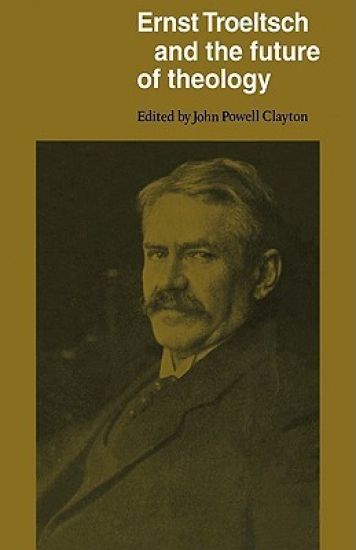
Ernst Troeltsch and the Future of Theology
Cambridge University Press
2009
pokkari
A reassessment of the theology of the German Protestant theologian, Ernst Troeltsch (1865–1923) and of his significance for contemporary theology. The six papers here presented were originally delivered at an international colloquium on Troeltsch held at the University of Lancaster. The contributors focus on the fundamental issues raised by Troeltsch which remain central to theology today and seek to engage him as a discussion partner in a continuing debate. Troeltsch has been unduly neglected as a theologian, a fact which is due partly to the dominance of the 'dialectical' theology of Barth and Bultmann in Germany after the First World War. This book seeks to remedy this state of affairs by dealing critically with Troeltsch's theology as well as constructively with the issues. The papers fall into three groups: in the first Troeltsch is considered as a Christian theologian; in the second are studied the possibilities of systematic and historical theology along Troeltschian lines; in the third the questions of what makes Christianity Christian and of Christian claims to exclusive truth are examined in the light of Troeltsch's work. Each of the contributors is a noted Troeltsch scholar and the book contains an extensive bibliography, which adds to its usefulness to students and scholars alike.
This book provides a selection of annotated translations from Ernst Kurth's three best-known publications: Grundlagen des linearen Kontrapunkts (1917), Romantische Harmonik und ihre Krise in Wagners 'Tristan' (1920), and Bruckner (1925). Kurth's contemporaries considered these books to be pioneering studies in the music of J. S. Bach, Wagner and Bruckner. Professor Rothfarb's extensive introductory essay discusses the intellectual and socio-cultural environment in which Kurth was writing, referring to aspects of the early twentieth-century cultural renewal movements and to intellectual developments of the day in phenomenology, aesthetics and psychology. By reading Kurth against the cultural-intellectual background provided in the essay and commentaries, today's music historians and theorists can round out their picture of music theory in the early twentieth century.
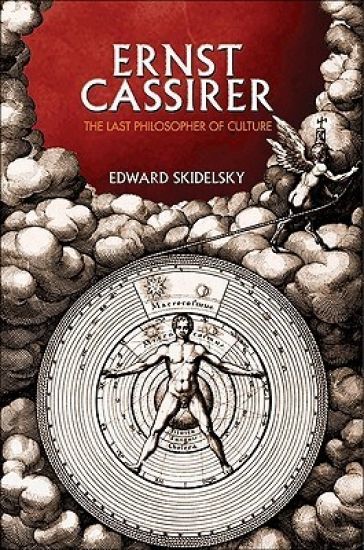
This is the first English-language intellectual biography of the German-Jewish philosopher Ernst Cassirer (1874-1945), a leading figure on the Weimar intellectual scene and one of the last and finest representatives of the liberal-idealist tradition. Edward Skidelsky traces the development of Cassirer's thought in its historical and intellectual setting. He presents Cassirer, the author of The Philosophy of Symbolic Forms, as a defender of the liberal ideal of culture in an increasingly fragmented world, and as someone who grappled with the opposing forces of scientific positivism and romantic vitalism. Cassirer's work can be seen, Skidelsky argues, as offering a potential resolution to the ongoing conflict between the "two cultures" of science and the humanities--and between the analytic and continental traditions in philosophy. The first comprehensive study of Cassirer in English in two decades, this book will be of great interest to analytic and continental philosophers, intellectual historians, political and cultural theorists, and historians of twentieth-century Germany.
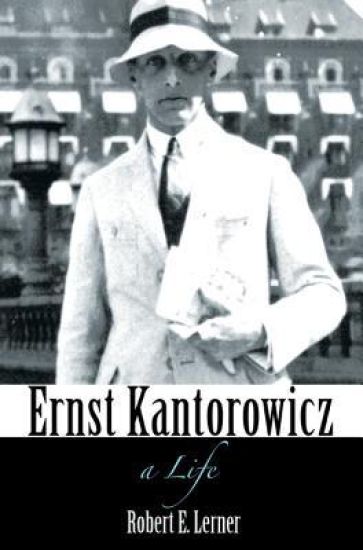
This is the first complete biography of Ernst Kantorowicz (1895-1963), an influential and controversial German-American intellectual whose colorful and dramatic life intersected with many of the great events and thinkers of his time. A medieval historian whose ideas exerted an influence far beyond his field, he is most famous for two books--a notoriously nationalistic 1927 biography of the Holy Roman Emperor Frederick II and The King's Two Bodies (1957), a classic study of medieval politics. Born into a wealthy Prussian-Jewish family, Kantorowicz fought on the Western Front in World War I, was wounded at Verdun, and earned an Iron Cross; later, he earned an Iron Crescent for service in Anatolia before an affair with a general's mistress led to Kantorowicz being sent home. After the war, he fought against Poles in his native Posen, Spartacists in Berlin, and communists in Munich. An ardent German nationalist during the Weimar period, Kantorowicz became a member of the elitist Stefan George circle, which nurtured a cult of the "Secret Germany." Yet as a professor in Frankfurt after the Nazis came to power, Kantorowicz bravely spoke out against the regime before an overflowing crowd. Narrowly avoiding arrest after Kristallnacht, he fled to England and then the United States, where he joined the faculty at Berkeley, only to be fired in 1950 for refusing to sign an anticommunist "loyalty oath." From there, he "fell up the ladder" to Princeton's Institute for Advanced Study, where he stayed until his death. Drawing on many new sources, including numerous interviews and unpublished letters, Robert E. Lerner tells the story of a major intellectual whose life and times were as fascinating as his work.
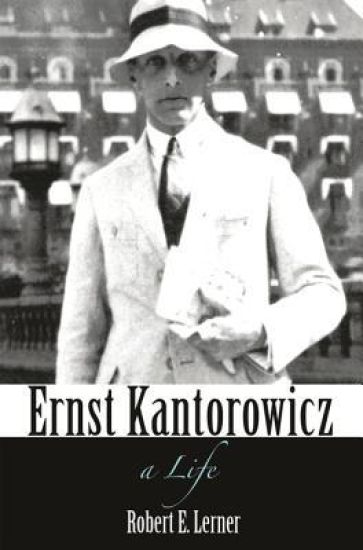
The first complete biography of an influential historian whose dramatic life intersected with many great events and thinkers of the twentieth centuryThis is the first complete biography of Ernst Kantorowicz (1895–1963), an influential German-American medieval historian whose colorful life intersected with many of the great events and thinkers of his time. Born into a wealthy Prussian-Jewish family, he fought in World War I—earning an Iron Cross and an Iron Crescent—before being sent home following an affair with a general’s mistress. Though he was an ardent German nationalist during the Weimar period, after the Nazis came to power he bravely spoke out against the regime before an overflowing crowd in Frankfurt. He narrowly avoided arrest after Kristallnacht, fleeing to England and then the United States, where he joined the faculty at Berkeley, only to be fired in 1950 for refusing to sign an anticommunist “loyalty oath.” From there, he “fell up the ladder” to Princeton’s Institute for Advanced Study, where he wrote his masterwork, The King’s Two Bodies.Drawing on many new sources, including numerous interviews and unpublished letters, Robert E. Lerner tells the story of a major intellectual whose life and times were as fascinating as his work.
Ernst Cassirer and the Autonomy of Language examines the central arguments in Cassirer’s first volume of the Philosophy of Symbolic Forms. Gregory Moss demonstrates both how Cassirer defends language as an autonomous cultural form and how he borrows the concept of the “concrete universal” from G. W. F. Hegel in order to develop a concept of cultural autonomy. While Cassirer rejected elements of Hegel’s methodology in order to preserve the autonomy of language, he also found it necessary to incorporate elements of Hegel’s method to save the Kantian paradigm from the pitfalls of skepticism. Moss advocates for the continuing relevance of Cassirer’s work on language by situating it within in the context of contemporary linguistics and contemporary philosophy. This book provides a new program for investigating Cassirer’s work on the other forms of cultural symbolism in his Philosophy of Symbolic Forms, by showing how the autonomy of culture is one of the leading questions motivating Cassirer’s philosophy of culture. With a thorough comparison of Cassirer’s theory of symbolism to other dominant theories from the twentieth century, including Heidegger and Wittgenstein, this book provides valuable insight for studies in philosophy of language, semiotics, epistemology, pyscholinguistics, continental philosophy, Neo-Kantian philosophy, and German idealism.
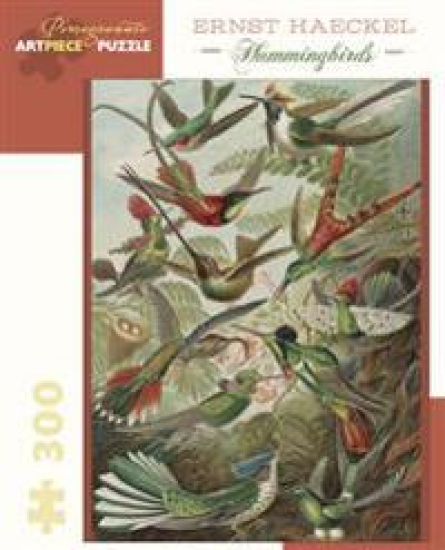
Ernst Haeckel Hummingbirds 300 Piece Jigsaw Puzzle
Pomegranate Communications Inc,US
2017
muu