Kirjojen hintavertailu. Mukana 11 424 844 kirjaa ja 12 kauppaa.

Kirjahaku

Etsi kirjoja tekijän nimen, kirjan nimen tai ISBN:n perusteella.

1000 tulosta hakusanalla Ernst Rodenwaldt

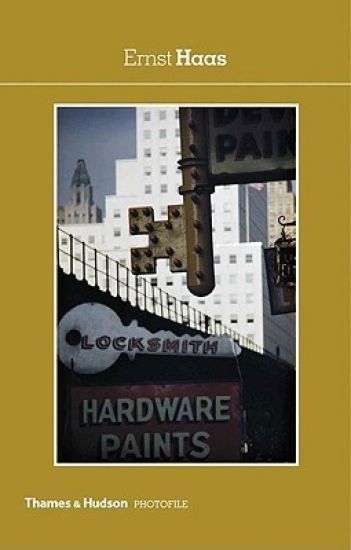
Ernst Haas

Ernst Haas

Thames Hudson Ltd
2010
nidottu
This addition to the affordable Photofile series brings together the best work of Ernst Haas, one of the world's greatest photographers. One of the early pioneers of colour photography, Haas began his photographic career in the 1940s in Vienna, rising to fame following the publication of his photo essay on returning prisoners of war from Russia. In 1951, Haas decided to make his home in NewYork, and became renowned for his work with motion photography and advertising campaigns for companies such as Marlboro, Chrysler and Volkswagen. With a selection of his most representative images and a bibliography for further reading, this is an ideal introduction to the photographer.
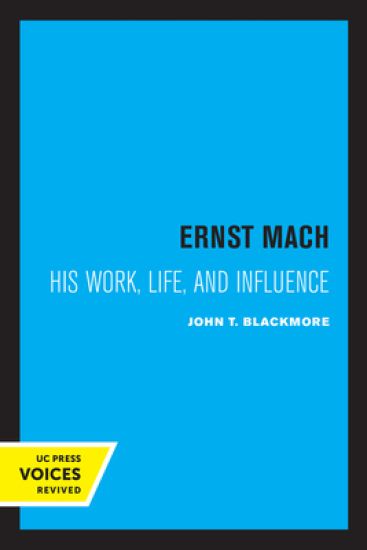
Ernst Mach

Ernst Mach

John T. Blackmore

University of California Press
2021
pokkari
Ernst Mach: His Work, Life, and Influence aims to bring attention to the important yet often overlooked figure of Ernst Mach, a physicist, philosopher, and psychologist whose contributions span multiple disciplines. The book seeks to provide new biographical information to help the educated public better understand Mach, emphasizing his significant influence on modern physics and philosophy of science. Not merely a physicist, Mach's work also impacted psychology and physiology, and his philosophical ideas, particularly his attempt to base modern physics on a presentationalist epistemology, remain a subject of both admiration and controversy. The book highlights how Mach's ideas, though often opposed by later scientists, laid the groundwork for key developments in science and philosophy, making him a figure deserving of recognition alongside figures like Max Planck and Albert Einstein. The book also addresses the reasons why Mach’s legacy has remained somewhat obscure, despite his profound impact. A combination of Mach’s own reluctance for a biography and the philosophical battles surrounding his views, especially his critique of Newtonian physics, has led to his ideas being misunderstood or neglected. His intellectual life was marked by intense controversies with figures like Max Planck, Ludwig Boltzmann, and even Albert Einstein, which contributed to his personal and professional struggles. Despite his later life being marked by personal tragedy and physical decline, Mach continued to defend his ideas with remarkable tenacity. His scientific contributions, such as his work on shock waves, are still widely acknowledged today, with terms like Mach number becoming part of the scientific lexicon. However, the book argues that it is time for Mach’s full philosophical and scientific influence to be more widely recognized and understood, shedding light on his controversial yet crucial role in shaping 20th-century thought. This title is part of UC Press's Voices Revived program, which commemorates University of California Press’s mission to seek out and cultivate the brightest minds and give them voice, reach, and impact. Drawing on a backlist dating to 1893, Voices Revived makes high-quality, peer-reviewed scholarship accessible once again using print-on-demand technology. This title was originally published in 1972.
Ernst Mach

Ernst Mach

John T. Blackmore

University of California Press
2021
sidottu
Ernst Mach: His Work, Life, and Influence aims to bring attention to the important yet often overlooked figure of Ernst Mach, a physicist, philosopher, and psychologist whose contributions span multiple disciplines. The book seeks to provide new biographical information to help the educated public better understand Mach, emphasizing his significant influence on modern physics and philosophy of science. Not merely a physicist, Mach's work also impacted psychology and physiology, and his philosophical ideas, particularly his attempt to base modern physics on a presentationalist epistemology, remain a subject of both admiration and controversy. The book highlights how Mach's ideas, though often opposed by later scientists, laid the groundwork for key developments in science and philosophy, making him a figure deserving of recognition alongside figures like Max Planck and Albert Einstein. The book also addresses the reasons why Mach’s legacy has remained somewhat obscure, despite his profound impact. A combination of Mach’s own reluctance for a biography and the philosophical battles surrounding his views, especially his critique of Newtonian physics, has led to his ideas being misunderstood or neglected. His intellectual life was marked by intense controversies with figures like Max Planck, Ludwig Boltzmann, and even Albert Einstein, which contributed to his personal and professional struggles. Despite his later life being marked by personal tragedy and physical decline, Mach continued to defend his ideas with remarkable tenacity. His scientific contributions, such as his work on shock waves, are still widely acknowledged today, with terms like Mach number becoming part of the scientific lexicon. However, the book argues that it is time for Mach’s full philosophical and scientific influence to be more widely recognized and understood, shedding light on his controversial yet crucial role in shaping 20th-century thought. This title is part of UC Press's Voices Revived program, which commemorates University of California Press’s mission to seek out and cultivate the brightest minds and give them voice, reach, and impact. Drawing on a backlist dating to 1893, Voices Revived makes high-quality, peer-reviewed scholarship accessible once again using print-on-demand technology. This title was originally published in 1972.
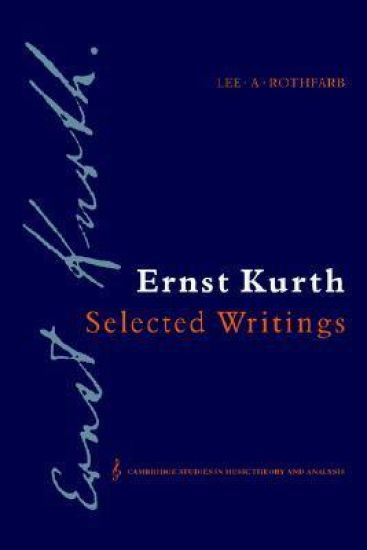
Ernst Kurth: Selected Writings

Ernst Kurth: Selected Writings

Kurth Ernst

Cambridge University Press
2006
pokkari
This book provides a selection of annotated translations from Ernst Kurth's three best-known publications: Grundlagen des linearen Kontrapunkts (1917), Romantische Harmonik und ihre Krise in Wagners 'Tristan' (1920), and Bruckner (1925). Kurth's contemporaries considered these books to be pioneering studies in the music of J. S. Bach, Wagner and Bruckner. Professor Rothfarb's extensive introductory essay discusses the intellectual and socio-cultural environment in which Kurth was writing, referring to aspects of the early twentieth-century cultural renewal movements and to intellectual developments of the day in phenomenology, aesthetics and psychology. By reading Kurth against the cultural-intellectual background provided in the essay and commentaries, today's music historians and theorists can round out their picture of music theory in the early twentieth century.
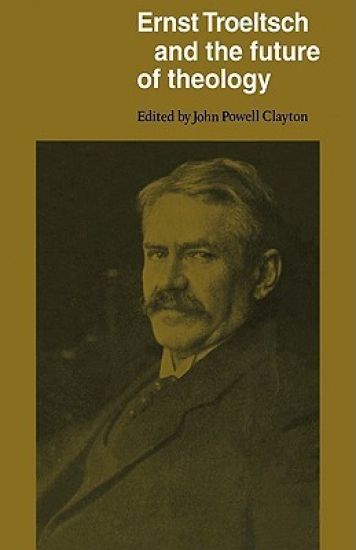
Ernst Troeltsch and the Future of Theology
A reassessment of the theology of the German Protestant theologian, Ernst Troeltsch (1865–1923) and of his significance for contemporary theology. The six papers here presented were originally delivered at an international colloquium on Troeltsch held at the University of Lancaster. The contributors focus on the fundamental issues raised by Troeltsch which remain central to theology today and seek to engage him as a discussion partner in a continuing debate. Troeltsch has been unduly neglected as a theologian, a fact which is due partly to the dominance of the 'dialectical' theology of Barth and Bultmann in Germany after the First World War. This book seeks to remedy this state of affairs by dealing critically with Troeltsch's theology as well as constructively with the issues. The papers fall into three groups: in the first Troeltsch is considered as a Christian theologian; in the second are studied the possibilities of systematic and historical theology along Troeltschian lines; in the third the questions of what makes Christianity Christian and of Christian claims to exclusive truth are examined in the light of Troeltsch's work. Each of the contributors is a noted Troeltsch scholar and the book contains an extensive bibliography, which adds to its usefulness to students and scholars alike.
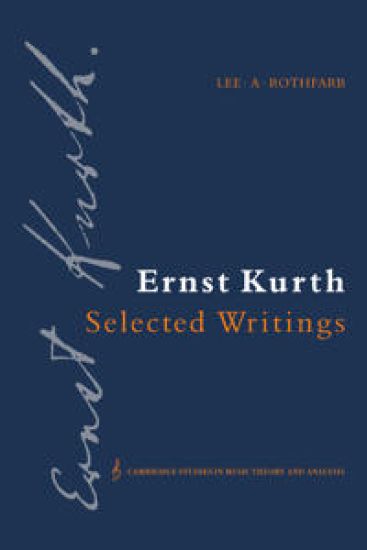
Ernst Kurth: Selected Writings

Ernst Kurth: Selected Writings

Ernst Kurth

Cambridge University Press
1991
sidottu
This book provides a selection of annotated translations from Ernst Kurth's three best-known publications: Grundlagen des linearen Kontrapunkts (1917), Romantische Harmonik und ihre Krise in Wagners 'Tristan' (1920), and Bruckner (1925). Kurth's contemporaries considered these books to be pioneering studies in the music of J. S. Bach, Wagner and Bruckner. Professor Rothfarb's extensive introductory essay discusses the intellectual and socio-cultural environment in which Kurth was writing, referring to aspects of the early twentieth-century cultural renewal movements and to intellectual developments of the day in phenomenology, aesthetics and psychology. By reading Kurth against the cultural-intellectual background provided in the essay and commentaries, today's music historians and theorists can round out their picture of music theory in the early twentieth century.
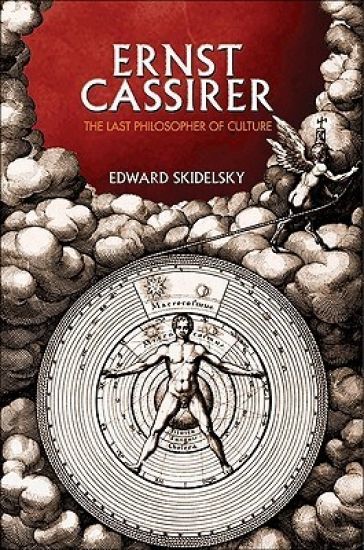
Ernst Cassirer

Ernst Cassirer

Edward Skidelsky

Princeton University Press
2011
pokkari
This is the first English-language intellectual biography of the German-Jewish philosopher Ernst Cassirer (1874-1945), a leading figure on the Weimar intellectual scene and one of the last and finest representatives of the liberal-idealist tradition. Edward Skidelsky traces the development of Cassirer's thought in its historical and intellectual setting. He presents Cassirer, the author of The Philosophy of Symbolic Forms, as a defender of the liberal ideal of culture in an increasingly fragmented world, and as someone who grappled with the opposing forces of scientific positivism and romantic vitalism. Cassirer's work can be seen, Skidelsky argues, as offering a potential resolution to the ongoing conflict between the "two cultures" of science and the humanities--and between the analytic and continental traditions in philosophy. The first comprehensive study of Cassirer in English in two decades, this book will be of great interest to analytic and continental philosophers, intellectual historians, political and cultural theorists, and historians of twentieth-century Germany.
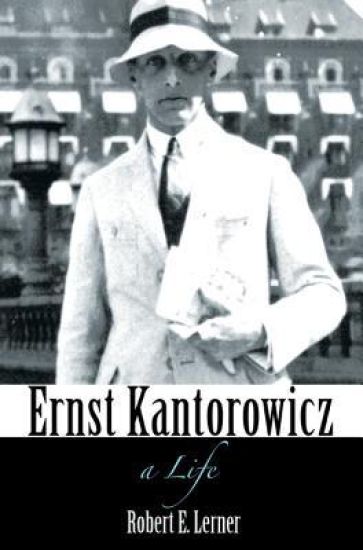
Ernst Kantorowicz

Ernst Kantorowicz

Robert Lerner

PRINCETON UNIVERSITY PRESS
2017
sidottu
This is the first complete biography of Ernst Kantorowicz (1895-1963), an influential and controversial German-American intellectual whose colorful and dramatic life intersected with many of the great events and thinkers of his time. A medieval historian whose ideas exerted an influence far beyond his field, he is most famous for two books--a notoriously nationalistic 1927 biography of the Holy Roman Emperor Frederick II and The King's Two Bodies (1957), a classic study of medieval politics. Born into a wealthy Prussian-Jewish family, Kantorowicz fought on the Western Front in World War I, was wounded at Verdun, and earned an Iron Cross; later, he earned an Iron Crescent for service in Anatolia before an affair with a general's mistress led to Kantorowicz being sent home. After the war, he fought against Poles in his native Posen, Spartacists in Berlin, and communists in Munich. An ardent German nationalist during the Weimar period, Kantorowicz became a member of the elitist Stefan George circle, which nurtured a cult of the "Secret Germany." Yet as a professor in Frankfurt after the Nazis came to power, Kantorowicz bravely spoke out against the regime before an overflowing crowd. Narrowly avoiding arrest after Kristallnacht, he fled to England and then the United States, where he joined the faculty at Berkeley, only to be fired in 1950 for refusing to sign an anticommunist "loyalty oath." From there, he "fell up the ladder" to Princeton's Institute for Advanced Study, where he stayed until his death. Drawing on many new sources, including numerous interviews and unpublished letters, Robert E. Lerner tells the story of a major intellectual whose life and times were as fascinating as his work.
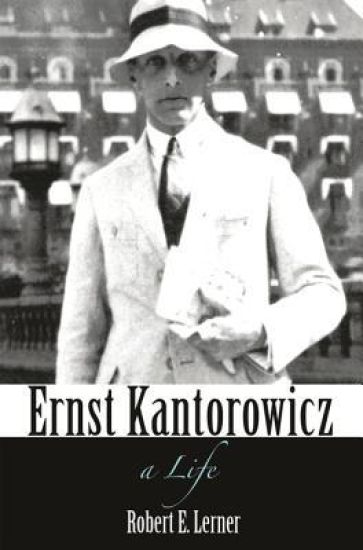
Ernst Kantorowicz

Ernst Kantorowicz

Robert Lerner

Princeton University Press
2018
pokkari
The first complete biography of an influential historian whose dramatic life intersected with many great events and thinkers of the twentieth centuryThis is the first complete biography of Ernst Kantorowicz (1895–1963), an influential German-American medieval historian whose colorful life intersected with many of the great events and thinkers of his time. Born into a wealthy Prussian-Jewish family, he fought in World War I—earning an Iron Cross and an Iron Crescent—before being sent home following an affair with a general’s mistress. Though he was an ardent German nationalist during the Weimar period, after the Nazis came to power he bravely spoke out against the regime before an overflowing crowd in Frankfurt. He narrowly avoided arrest after Kristallnacht, fleeing to England and then the United States, where he joined the faculty at Berkeley, only to be fired in 1950 for refusing to sign an anticommunist “loyalty oath.” From there, he “fell up the ladder” to Princeton’s Institute for Advanced Study, where he wrote his masterwork, The King’s Two Bodies.Drawing on many new sources, including numerous interviews and unpublished letters, Robert E. Lerner tells the story of a major intellectual whose life and times were as fascinating as his work.
Ernst Cassirer and the Autonomy of Language

Ernst Cassirer and the Autonomy of Language

Gregory S. Moss

Lexington Books
2014
sidottu
Ernst Cassirer and the Autonomy of Language examines the central arguments in Cassirer’s first volume of the Philosophy of Symbolic Forms. Gregory Moss demonstrates both how Cassirer defends language as an autonomous cultural form and how he borrows the concept of the “concrete universal” from G. W. F. Hegel in order to develop a concept of cultural autonomy. While Cassirer rejected elements of Hegel’s methodology in order to preserve the autonomy of language, he also found it necessary to incorporate elements of Hegel’s method to save the Kantian paradigm from the pitfalls of skepticism. Moss advocates for the continuing relevance of Cassirer’s work on language by situating it within in the context of contemporary linguistics and contemporary philosophy. This book provides a new program for investigating Cassirer’s work on the other forms of cultural symbolism in his Philosophy of Symbolic Forms, by showing how the autonomy of culture is one of the leading questions motivating Cassirer’s philosophy of culture. With a thorough comparison of Cassirer’s theory of symbolism to other dominant theories from the twentieth century, including Heidegger and Wittgenstein, this book provides valuable insight for studies in philosophy of language, semiotics, epistemology, pyscholinguistics, continental philosophy, Neo-Kantian philosophy, and German idealism.
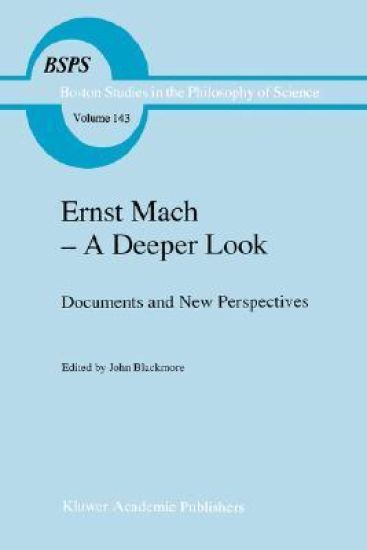
Ernst Mach — A Deeper Look
Ernst Mach -- A Deeper Look has been written to reveal to English-speaking readers the recent revival of interest in Ernst Mach in Europe and Japan. The book is a storehouse of new information on Mach as a philosopher, historian, scientist and person, containing a number of biographical and philosophical manuscripts publihsed for the first time, along with correspondence and other matters published for the first time in English. The book also provides English translations of Mach's controversies with leading physicists and psychologists, such as Max Planck and Carl Stumpf, and offers basic evidence for resolving Mach's position on atomism and Einstein's theory of relativity. Mach's scientific, philosophical and personal influence in a number of countries -- Austria, Germany, Bohemia and Yugoslavia among them -- has been carefully explored and many aspects detailed for the first time. All of the articles are eminently readable, especially those written by Mach's sister. They are deeply researched, new interpretations abound, and the bibliography includes recent works by and about Mach from over a dozen countries. The book also contains many articles by or about Mach's contemporaries, including Ostwald, Dingler, Weichert and, especially, Einstein. Finally, and most intriguingly, the original ideas of Japanese scholars are presented, built on Mach's philosophy. These demonstrate how Mach's world view is currently contributing to the solution of contemporary philosophical problems.
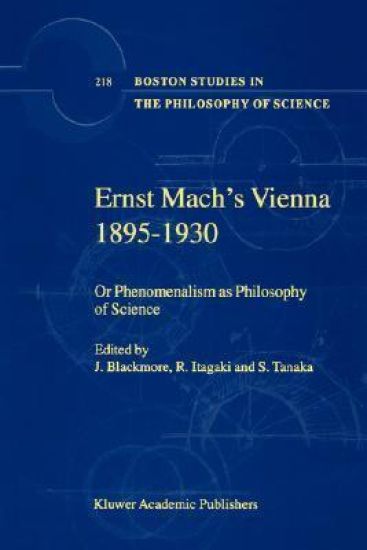
Ernst Mach's Vienna 1895-1930
Section Guide 1. Prolegomena 2. Biographical Sketch 3. Epistemology 4. Textbook Ontology 1. PROLEGOMENA While both philosophers and historians almost always love truth and the search for truth, and both often carry out extensive research, there can be noticeable differences when historians write about the history of philosophy and when philosophers write about it. Philosophers often look at the past with categories and interests taken from the present or at the least from the recent past, but many historians, especially those who love research for its own sake, will try to look at the past from a perspective either from that period or from even earlier. Both camps look for roots, but view them with different lenses and presupposi tions. This prolegomena has been added to prepare some philosophers for what will hopefully only be the mildest of shocks, for seeing the history of philosophy in a way which does not treat what is recent or latest as best, but which loves the context of ideas for its own sake, a context which can be very foreign to contemporary likes and dislikes. To be sure, we historians can deceive ourselves as easily as philosophers, but we tend to do so about different things.
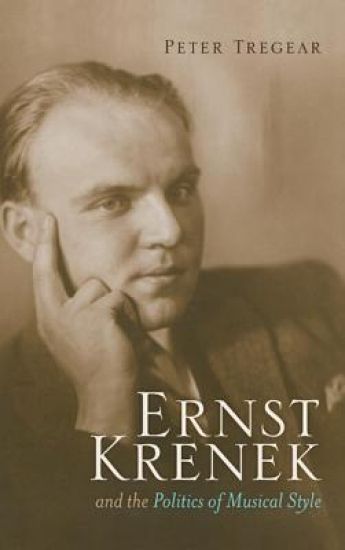
Ernst Krenek and the Politics of Musical Style
Ernst Krenek has been described as a “one-man history of twentieth-century music.” His vast compositional output encompasses many of its extremes and expresses many of its contradictions. Few have attempted, however, to contextualize Krenek’s compositional output because our understanding of classical music in the first half of the twentieth century still largely remains focused on the music of a few canonical figures. Responding to renewed interest from performers in Krenek’s work, particularly his operas, Peter Tregear’s Ernst Krenek and the Politics of Musical Style addresses this gap in the scholarly literature and makes an important contribution to our comprehension of the ways in which his music reflected and informed broader social and political debates in Austria and Germany at the time. Focusing on Krenek’s compositional path from the eclectic musical language of Jonny spielt auf to the austere twelve-tone technique of Karl V, Tregear provides an historical and critical context to this most historically significant period of Krenek’s creative life. His study also enriches our understanding of many of Krenek’s contemporaries, such as Alban Berg and Arnold Schoenberg. This book should interest students, scholars and practitioners with an interest in modern opera, and contemporary classical music as well as early-20th-century German history more generally.
Ernst Kurth As Theorist and Analyst

Ernst Kurth As Theorist and Analyst

Lee A. Rothfarb

University of Pennsylvania Press
1989
sidottu
Ernst Kurth as Theorist and Analyst is the first book length study devoted to the writings of one of this century's most important music theorists. In contrast to previous discussions, Lee A. Rothfarb's study explains Kurth's theories in light of his analyses of specific musical examples. Unlike many of his contemporaries, Kurth approached music primarily from a cognitive rather than a purely technical viewpoint. In a unique kind of experiential analysis, he examined the psychological foundations of counterpoint, harmony, and form, and considered the affective, as opposed to solely structural or syntactic, effects of melody, chord, interval, and tone. The introduction provides a biographical sketch of Kurth, based on archival research and personal interview with his widow, son, and many of his doctoral students. Rothfarb also discusses the intellectual currents of the late nineteenth and early twentieth centuries, both musical and nonmusical, which shaped Kurth's outlook. Eight chapters summarize the main ideas of Grundlagen des linearen Kontrapunkts and Romantische Harmonik and show the directions Kurth took in his later works, Bruckner and Musikpsychologie. A final chapter identified his influence on several of his well-known contemporaries. Ernst Kurth as Theorist and Analyst will interest music theorists, musicologists, and advanced students of music theory.
Ernst Cassirer and the Critical Science of Germany, 1899–1919
Recovering a lost world of the politics of science in Imperial Germany, Gregory B. Moynahan approaches the life and work of the philosopher and historian Ernst Cassirer (1874–1945) from a revisionist perspective, using this framework to redefine the origins of twentieth-century critical historicism and critical theory. The only text in English to focus on the first half of the polymath Cassirer’s career and his role in the Marburg School, this volume illuminates one of the most important – and in English, least-studied – reform movements in Imperial Germany.
Ernst L. Freud, Architect

Ernst L. Freud, Architect

Volker M. Welter

Berghahn Books
2011
pokkari
Ernst L. Freud (1892–1970) was a son of Sigmund Freud and the father of painter Lucian Freud and the late Sir Clement Freud, politician and broadcaster. After his studies in Munich and Vienna, where he and his friend Richard Neutra attended Adolf Loos’s private Bauschule, Freud practiced in Berlin and, after 1933, in London. Even though his work focused on domestic architecture and interiors, Freud was possibly the first architect to design psychoanalytical consulting rooms—including the customary couches—a subject dealt with here for the first time. By interweaving an account of Freud’s professional and personal life in Vienna, Berlin, and London with a critical discussion of selected examples of his domestic architecture, interior designs, and psychoanalytic consulting rooms, the author offers a rich tapestry of Ernst L. Freud’s world. His clients constituted a “Who’s Who” of the Jewish and non-Jewish bourgeoisie in 1920s Berlin and later in London, among them the S. Fischer publisher family, Melanie Klein, Ernest Jones, the Spenders, and Julian Huxley. While moving within a social class known for its cultural and avant-garde activities, Freud refrained from spatial, formal, or technological experiments. Instead, he focused on creating modern homes for his bourgeois clients.