

Kirjahaku
Etsi kirjoja tekijän nimen, kirjan nimen tai ISBN:n perusteella.
1000 tulosta hakusanalla Ernst Zahn





Wenzel, E: Untersuchungen über die Entwickelung der Zahnsubs
Ernst Friedrich Wenzel
Antigonos Verlag
2024
nidottu

Das Unternehmen in der Gesellschaft
Hanns Martin Schleyer; Joachim Zahn; Ernst Cramer; Ernst Mommsen; Eberhard Von Brauchitsch; Paul Gert Von Beckerath; Otto Brenner; Otto A. Friedrich; Hans Matthöfer; Ernst Helmstädter; Christian Watrin
Gabler Verlag
1974
nidottu
Die Idee zu dem vorliegenden Band der USW-Schriften ist beim dritten USW-Sym posium in Berlin 1972 entstanden. Dieses Symposium machte deutlich, daß das Wort von der gesellschaftlichen Verantwortung des Unternehmens nicht ein neuer Slogan der Fortbildungsinstitute ist, sondern daß es konkrete Gestalt gewinnt im Selbst verständnis der leitenden Angestellten der Unternehmen: Sie sind es, die in ihren Unternehmen Verantwortung zu übernehmen gewohnt sind. Sie sind aber auch die Nahtstelle zwischen Vorstand und Belegschaft, wo in besonderem Maße spürbar wird, daß sich ändernde gesellschaftliche Wertvorstellungen auf die Bewältigung innerbetrieblicher Führungsaufgaben durchschlagen. Der zweite Teil des vorliegenden Bandes analysiert diese innerbetriebliche Naht stelle zwischen Gesellschaftspolitik und Führungsverantwortung. Er soll deutlich machen, daß entscheidende Führungsfehler die Folge mangelnder Kenntnis gesell schaftspolitischer Wertvorstellungen und ihres Niederschlages in der Erwartungshal tung der Belegschaft gegenüber dem modernen Unternehmen sind. Die Beiträge die ses Teils kreisen um das Verhältnis von Führungsverantwortung und Führungslegiti mation in einer dynamischen, freiheitlich auf den selbstverantwortlichen, mündigen Staatsbürger hin angelegten Gesellschaft. Bei aller Unterschiedlichkeit der Stand punkte ist dies das Fundament und das verbindende Element dieser Beiträge. Der erste und der dritte Teil sind vor diesem Hintergrund und von diesem zentra len Thema moderner Unternehmensführung her zu verstehen. Der erste Teil macht deutlich, in welchem Maße sich die Unternehmensleitungen der Verzahnung von Ge sellschaftspolitik und Unternehmenspolitik bewußt sind. Als ein Schnittpunkt die ser Dimension menschlicherVerantwortung erscheint vor allem die Umweltpolitik.

Lehrbuch der Physiologie für Studierende der Zahnheilkunde
Enst Fischer; Emil Lehnartz
Springer-Verlag Berlin and Heidelberg GmbH Co. K
1934
nidottu
Dieser Buchtitel ist Teil des Digitalisierungsprojekts Springer Book Archives mit Publikationen, die seit den Anfängen des Verlags von 1842 erschienen sind. Der Verlag stellt mit diesem Archiv Quellen für die historische wie auch die disziplingeschichtliche Forschung zur Verfügung, die jeweils im historischen Kontext betrachtet werden müssen. Dieser Titel erschien in der Zeit vor 1945 und wird daher in seiner zeittypischen politisch-ideologischen Ausrichtung vom Verlag nicht beworben.

Ernst Bakker (1924) stond oog in oog met Churchill, Truman, Attlee en Stalin, werd als basketballer acht keer landskampioen en maakte al zakenreizen door Afghanistan toen de meeste Nederlanders nog nooit van dat land hadden gehoord. In deze biografie vol mooie verhalen toont hij zich een rasverteller met een fenomenaal geheugen.

This is a discussion of the ethical implications of German liberal theology in the early years of the 20th century. It avoids pejorative interpretative categories (such as "culture protestantism"), seeking instead to understand the period on its own terms. The leading figure, Ernst Troeltsch (1865-1923), is treated as a "public theologian", engaging at many different levels with his social and political context and trying to ensure that religion could continue to shape the future course of history. To understand his context he made use of the tools of the emergent discipline of sociology and also entered into dialogue with philosophers and historians. Troeltsch's public theology is contrasted with other liberal models of theology, particularly those of the New Testament scholar Wilhelm Bousset and the systematic theologian Wilhelm Herrmann, who were far more reluctant to engage seriously with their context and as a result isolated religion from its wider social and intellectual setting.

This is the first discussion in English of the ethical implications of German liberal theology in the early years of the twentieth century. It avoids pejorative interpretative categories (such as `culture protestantism'), seeking instead to understand a much neglected period on its own terms. The leading figure, Ernst Troeltsch (1865-1923), is treated as a `public theologian', engaging at many different levels with his social and political context and trying to ensure that religion could continue to shape the future course of history. To understand his context he made use of the tools of the emergent discipline of sociology and also entered into dialogue with philosophers and historians. Troeltsch's public theology is contrasted with other liberal models of theology, particularly those of the New Testament scholar Wilhelm Bousset and the systematic theologian Wilhelm Herrmann, who were far more reluctant to engage seriously with their context and as a result isolated religion from its wider social and intellectual setting. Troeltsch's theological solution is also compared with Max Weber's sociological response to the problems of modernity: Troeltsch's ideas of cultural synthesis are seen as both constructive and critical and as having much to contribute to contemporary social and political theology.
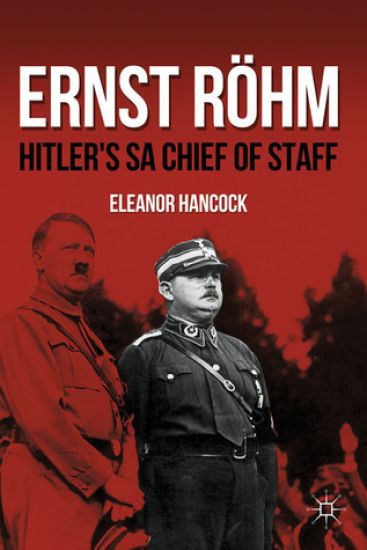
The first biography of Ernst Julius Röhm - German military officer, commander of the Nazi Stormtroopers, and homosexual.

Ernst Cassirer on Form and Technology
Palgrave Macmillan
2012
sidottu
Ernst Cassirer's thought-provoking essay Form and Technology (1930) ascribes to technology a new dignity as a genuine tool of the mind in equal company with language and art. Translated here into English it is accompanied by critical essays that explore its current relevance.

The first biography of Ernst Julius Röhm - German military officer, commander of the Nazi Stormtroopers, and homosexual.
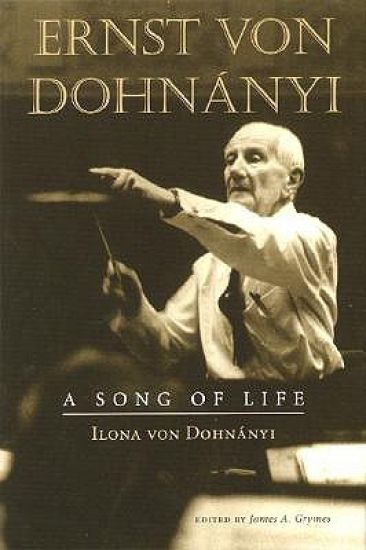
Ernst Von Dohnányi
Indiana University Press
2002
sidottu
" . . . a rare kind of biography and autobiography: a clear and elegant exposition of fact, as well as a humane portrait of a great piano virtuoso, composer, teacher, and democratic soul, as told to and seen through the eyes of one close to him." —Mark Mitchell Ernst von Dohnányi (1877–1960) was one of the most highly respected musicians of his time. The young Dohnányi enjoyed an international prestige that brought him into contact with such 19th-century masters as Johannes Brahms and Eugène d'Albert. He is remembered for his technique and interpretive skills as a pianist and conductor, as well as for the masterpieces he composed for piano, chamber ensembles, and orchestra. As a teacher and administrator, Dohnányi was responsible for the training of an entire generation of musicians in Hungary, and for helping to shape the country's musical culture. After World War II, his career foundered when he was falsely accused of being a Nazi sympathizer. In 1953, at the age of 76, Dohnányi returned to international prominence with a triumphant "re-debut" at Carnegie Hall. Ernst von Dohnányi: A Song of Life, written from a firsthand perspective by Dohnányi's widow, is the first full English-language biography of the artist.

For this second edition, Seymour has written a new introduction and has added a new retrospective essay. Ernst Cassirer: Scientific Knowledge and the Concept of Man by Seymour W. Itzkoff is currently one of the few books available in the English language that discusses the philosophy of twentieth-century German philosopher Ernst Cassirer. Itzkoff's study brings Cassirer's perspective directly into the contemporary debate over the evolution of human thought and its relationship to animal life. Further, Itzkoff places Cassirer directly in the context of recent philosophical thought, arguing for the importance of his Kantian perspective, a significance that is amply vindicated by the current interest in Cassirer's ideas.


This clear, comprehensive reference guide highlights the major events in Ernst Krenek's life in the context of his musical and literary works. An insightful biography carefully puts the man and his work into perspective. Next, a list of compositions is organized in generally chronological order. Publications, manuscript, recording, and performance data are included under each entry in this list. A bibliography of Krenek's writings covers both manuscripts and published writings, while a bibliography of writings about the composer traces his career. This clear, comprehensive reference guide in four major sections details Ernst Krenek's prolific work as both composer and author. The insightful biography provides the reader with guide posts to his life and points out his significant musical and literary achievements. The comprehensive catalog of musical compositions, organized in chronological order according to Krenek's own 237 opus number, includes 105 previously undocumented compositions without opus numbers. Publication, manuscript, recording, and performance data are included under each entry in this list. The bibliography of Krenek's writings is arranged in chronological order and covers both his manuscript and published writings. Appendices, including title, genera, and first line indexes, complement the lists of his works. The fourth section, a selective bibliography of writings about the composer arranged by author, traces his career. The book's thorough index provides access to all people, organizations, and general subjects mentioned. This book is invaluable for everyone interested in Krenek's life and work.

As a result of both his political reputation--destroyed by false charges of Nazism after World War II--and his rejection of avant-garde techniques, the recordings and compositions of Ernst von Dohnányi went largely ignored for most of the 20th century. In recent years, however, musicians have begun to revise their interpretations of 20th century music to include compositional and performance styles that, like Dohnányi's, adhered more closely to 19th century aesthetics. Although performers and audiences worldwide have started to rediscover his musical legacy, scholarship has not kept pace with their growing interest. This bio-bibliography corrects that. As the first scholarly examination in English of Dohnányi's life and work, it serves as the perfect introduction to an unfairly neglected 20th century artist. A brief but insightful biography is followed by a list of works that reflects the most current research of Dohnányi's creative output. It includes nearly 200 entries, each of which collects such information as the date of composition, the instrumentation of the work, the publisher of its first edition, the location of the manuscript, and the date and location of its premiere. The discography lists 400 sound recordings of the composer's work, and the annotated bibliography includes 500 entries, emphasizing performance reviews that offer substantial information about Dohnányi's works and style.

Ernst Troeltsch, who was born in 1865 and died suddenly and prematurely in 1923, on the eve of a visit to Britain, is undoubtedly one of the most important theologians and philosophers of the twentieth century. Having suffered a loss of prestige with the eclipse of liberal theology after his death and the predominance of Karl Barth in a world overshadowed by Nazi Germany and the Second World War, he has now come into his own again, so that this first full-length biography is particularly welcome. Hans-Georg Drescher traces Troeltsch's life from his birth in Augsburg, distinguished university career and meteoric rise to be professor of theology in Bonn, through his twenty-year activity as professor of theology in Heidelberg to his final change of faculty and appointment as professor of philosophy in Berlin. In connection with each major period of Troeltsch's life he analyses Troeltsch's major theological and philosophical work, much of which has never been translated, and the impact of his study is heightened by a series of contemporary photographs. Here, then, is a vivid picture, not only of the thinker who was virtually the first to tackle on a broad front the many problems for religious belief and practice raised by the rise of the modern historical consciousness and the relativity that goes with it, but also of German university life in all its facets before, during and immediately after the First World War.