Kirjojen hintavertailu. Mukana 12 390 323 kirjaa ja 12 kauppaa.

Kirjahaku

Etsi kirjoja tekijän nimen, kirjan nimen tai ISBN:n perusteella.

91 tulosta hakusanalla Ethyene Andrade Costa

Ethylene in Plants
This book focuses on recent advances in our understanding of the signal transduction pathway of ethylene, its interaction with other hormones and its roles in biological processes. It discusses at which point plants could have acquired ethylene signaling from an evolutionary perspective. Ethylene was the first gaseous hormone to be identified and triggers various responses in higher plants. Our grasp of ethylene signaling has rapidly expanded over the past two decades, due in part to the isolation of the components involved in the signal transduction pathway. The book offers a helpful guide for plant scientists and graduate students in related areas.
Ethylene in Plants
This book focuses on recent advances in our understanding of the signal transduction pathway of ethylene, its interaction with other hormones and its roles in biological processes. It discusses at which point plants could have acquired ethylene signaling from an evolutionary perspective. Ethylene was the first gaseous hormone to be identified and triggers various responses in higher plants. Our grasp of ethylene signaling has rapidly expanded over the past two decades, due in part to the isolation of the components involved in the signal transduction pathway. The book offers a helpful guide for plant scientists and graduate students in related areas.
Poly(Ethylene Glycol) Chemistry

Poly(Ethylene Glycol) Chemistry

Kluwer Academic/Plenum Publishers
1992
sidottu
The idea for this book came from discussions among participants in a symposium on biotechnical applications at the "Pacifichem 89" meeting in Honolulu. It was the majority opinion of this group that a volume dedicated to biotechnical and biomedical applications of PEG chemistry would enhance research and development in this area. Though the book was conceived at the Honolulu meeting, it is not a proceedings of this symposium. Several groups who did not participate in this meeting are repre­ sented in the book, and the book incorporates much work done after the meeting. The book does not include contributions in all related areas to which PEG chemistry has been applied. Several invited researchers declined to parti.:ipate, and there is not enough space in this single volume to properly cover all submissions. Chapter I-an overview of the topic-discusses in brief applications not given detailed coverage in specifically devoted chapters. The following topics are covered: introduction to and fundamental properties of PEG and derivatives in Chapters 1-3; separations using aqueous polymer two-phase partitioning in Chapters 4-6; PEG-proteins as catalysts in biotechnical applications in Chapters 7 and 8; biomedical applications of PEG-proteins in Chapters 9-13; PEG­ modified surfaces for a variety of biomedical and biotechnical applications in Chapters 14-20; and synthesis of new PEG derivatives in Chapters 21 and 22.
Poly(Ethylene Terephthalate) Based Blends, Composites and Nanocomposites
Poly(Ethylene Terephthalate) (PET) is an industrially important material which is not treated specifically in any other book. Poly(Ethylene Terephthalate) Based Blends, Composites and Nanocomposites fills this gap and systematically guides the reader through all aspects of PET and its blends, composites and nanocomposites. It covers theoretical fundamentals, nanocomposites preparation, modification techniques, structure-property relationships, characterisation of the different blends and composites, and material choice for specific applications. Consisting of contributions from experts in the field this book is a useful reference for the researchers and engineers working on the development and characterization of PET materials as well as on implementing them in real-world products. It can also be used as a standard reference for deeper insight in the mechanical, thermal, thermo-mechanical and visco-elastic aspects in product design decisions.
Poly(Ethylene Glycol) Chemistry

Poly(Ethylene Glycol) Chemistry

Springer-Verlag New York Inc.
2013
nidottu
The idea for this book came from discussions among participants in a symposium on biotechnical applications at the "Pacifichem 89" meeting in Honolulu. It was the majority opinion of this group that a volume dedicated to biotechnical and biomedical applications of PEG chemistry would enhance research and development in this area. Though the book was conceived at the Honolulu meeting, it is not a proceedings of this symposium. Several groups who did not participate in this meeting are repre­ sented in the book, and the book incorporates much work done after the meeting. The book does not include contributions in all related areas to which PEG chemistry has been applied. Several invited researchers declined to parti.:ipate, and there is not enough space in this single volume to properly cover all submissions. Chapter I-an overview of the topic-discusses in brief applications not given detailed coverage in specifically devoted chapters. The following topics are covered: introduction to and fundamental properties of PEG and derivatives in Chapters 1-3; separations using aqueous polymer two-phase partitioning in Chapters 4-6; PEG-proteins as catalysts in biotechnical applications in Chapters 7 and 8; biomedical applications of PEG-proteins in Chapters 9-13; PEG­ modified surfaces for a variety of biomedical and biotechnical applications in Chapters 14-20; and synthesis of new PEG derivatives in Chapters 21 and 22.
Auxin-ethylene interactions during tomato fruit development

Auxin-ethylene interactions during tomato fruit development

Liyan Su

LAP Lambert Academic Publishing
2018
pokkari
The interaction between auxin and ethylene are complex and control various processes of plant development, such as root elongation or differentiation of secondary roots. But there are few studies showing the role of interactions between these two hormones during development and maturation of the fruit. The color change in the tomato fruit is a feature of the maturation that is associated with the degradation of the chlorophyll and carotenoid accumulation. In this work, the application of exogenous auxin and ethylene showed the impact of these two hormones in the tomato ripening and in particular the change of fruit color. We have shown that indole-acetic acid (IAA) delays the transition from green to orange / red, while ethylene, supplied as 1-aminocyclopropane-1-carboxylic acid form (ACC), its precursor, accelerated this transition. However the auxin inhibition by p-chlorophenoxy isobutyic acid (PCIB), an auxin antagonist, caused the same effects similar to ethylene. The carotenoid analysis showed that the ACC and PCIB increase the lycopene content and reduced the carotene content while IAA causes the opposite effect.
The Plant Hormone Ethylene

The Plant Hormone Ethylene

ELSEVIER SCIENCE TECHNOLOGY
2022
nidottu
The Plant Hormone Ethylene: Stress Acclimation and Agricultural Applications presents current knowledge on our understanding of ethylene perception and signaling, its role in the regulation of plant physiological processes, and its contribution to acclimation in stressful environments. Plants regularly face environmental constraints due to their immobile nature. In persistently changing environmental conditions, several stress factors influence cellular metabolism, ultimately causing reduced plant growth and development with a significant loss in agricultural productivity. Sustainable agriculture depends on the acclimation of plant processes to the changing environment through altered physiological and molecular responses, which are controlled by plant hormones, including ethylene. Ethylene interacts with other plant hormones and signaling molecules to regulate several cellular processes, plant growth and development, and, ultimately, crop productivity. This book begins with an introduction to ethylene before providing a detailed study of the latest findings on the role of ethylene in plants, including its role in photosynthetic processes, flower development, leaf senescence, nutrients acquisition, and regulation of abiotic stress responses as well as its application in agriculture. The book is an ideal guide for researchers exploring plant physiology and biochemistry as well as for those investigating the use of ethylene knowledge in agriculture in persistently changing environmental conditions.
Influence of Ethylene on the Biochemical and Breadmaking Properties of Freshly Harvested Wheat
This work has been selected by scholars as being culturally important and is part of the knowledge base of civilization as we know it.This work is in the public domain in the United States of America, and possibly other nations. Within the United States, you may freely copy and distribute this work, as no entity (individual or corporate) has a copyright on the body of the work.Scholars believe, and we concur, that this work is important enough to be preserved, reproduced, and made generally available to the public. To ensure a quality reading experience, this work has been proofread and republished using a format that seamlessly blends the original graphical elements with text in an easy-to-read typeface.We appreciate your support of the preservation process, and thank you for being an important part of keeping this knowledge alive and relevant.
Hazard Assessment Of Ethylene Oxide
Hazard assessment of EO has involved consideration of the chemical composition, characteristics, and reactivity of this material. Teratogenic effects of EO are only seen under extreme conditions that render the result questionable. Reproductive effects or minor severity occur only at high levels of exposer. Epidemiological and other studies of occupational exposure to EO in men and women have revealed no substantial evidence of potential to produce cancer in the work place.
The Plant Hormone Ethylene

The Plant Hormone Ethylene

A. K. Mattoo

CRC Press
2017
sidottu
The breadth and depth of knowledge concerning ethylene synthesis and action, coupled with the rapid pace of new progress makes a survey of the field a daunting task. Therefore, experts who were actively engaged in different aspects of ethylene research from different countries, spanning four continents were enlisted to complete this monograph. This book discusses a historical perspective as well as future trends and possibilities in this field.
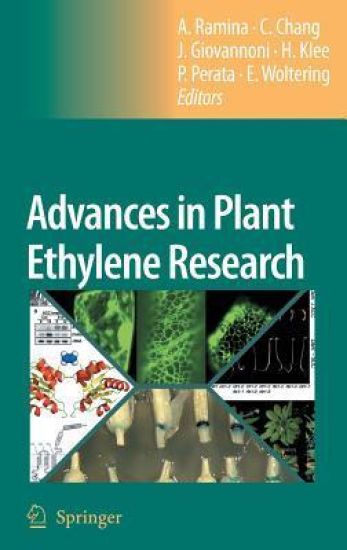
Advances in Plant Ethylene Research

Advances in Plant Ethylene Research

Springer-Verlag New York Inc.
2007
sidottu
This volume contains the main lectures and poster contributions presented at the 7th International Symposium on the Plant Hormone Ethylene held in Pisa (Italy), June 18-22, 2006. This international scientific event was organized by the University of Padova and the Scuola Superiore Sant’Anna of Pisa and took place on the premises of the Scuola Superiore Sant’Anna. We would like to thank the Ministry of Agriculture and Forestry, the Ministry of University and Scientific Research of Italy, the University of Padova and the Scuola Superiore Sant’Anna of Pisa for partially funding this symposium. Appreciation is also extended to a number of local insti- tions that generously contributed to the success of this important event. We are indebted to the members of the scientific committee. A special appreciation goes to the local organizing committee headed by Prof. Giovanni Serra. Finally, we gratefully acknowledge Dr. Alessandro Botton for handling all the editorial aspects concerning the publication of this volume. The Editorial Board
Significant New Use Rules - Ethylene Glycol Ethers (US Environmental Protection Agency Regulation) (EPA) (2018 Edition)
Significant New Use Rules - Ethylene Glycol Ethers (US Environmental Protection Agency Regulation) (EPA) (2018 Edition) The Law Library presents the complete text of the Significant New Use Rules - Ethylene Glycol Ethers (US Environmental Protection Agency Regulation) (EPA) (2018 Edition). Updated as of May 29, 2018 Under the Toxic Substances Control Act (TSCA), EPA is promulgating a significant new use rule (SNUR) for seven ethylene glycol ethers (also known as glymes). This rule will require persons who intend to manufacture (including import) or process any of the seven ethylene glycol ethers for an activity that is designated as a significant new use by this rule to notify EPA at least 90 days before commencing such manufacture or processing. The required notifications would provide EPA with the opportunity to evaluate the intended use and, if necessary based on the information available at that time, an opportunity to protect against potential unreasonable risks, if any, from that activity before it occurs. EPA is also making a technical amendment to the codified list of control numbers for approved information collection activities so that it includes the control number assigned by the Office of Management and Budget (OMB) to the information collection activities contained in this rule. This book contains: - The complete text of the Significant New Use Rules - Ethylene Glycol Ethers (US Environmental Protection Agency Regulation) (EPA) (2018 Edition) - A table of contents with the page number of each section
Impact on Ethylene Propylene Diene Rubber Particles on Nano Resins
Sanjeev Kumar's work "Impact on Ethylene Propylene Diene Rubber Particles on Nano Resins" delves into the complex field of material science. This ground-breaking book opens up a world of possibilities for advanced materials engineering by taking readers on a fascinating trip through the interesting interaction between ethylene propylene diene rubber (EPDM) particles and nano resins.Renowned expert in materials engineering and polymer science Sanjeev Kumar offers a thorough analysis of how EPDM rubber particles affect the characteristics and functionality of nano resins. This intelligent work provides a thorough investigation of the improvements and synergies that result from the convergence of these two materials, going beyond conventional material research.Important characteristics: - A thorough analysis of how EPDM rubber particles affect nanoresinsInvestigating how this special mix affects mechanical, thermal, and chemical characteristics.- Useful information on how EPDM-nano resin composites are used in different sectors.- Sophisticated developments in polymer science and materials engineering.- Expert advice from Sanjeev Kumar, a well-known authority in the subject.This book is an invaluable tool for everyone interested in materials science, be it a researcher, engineer, or student, in comprehending the revolutionary impacts of EPDM rubber particles on nano resins. Because of his experience, Kumar enhances the conversation and provides an outlook on materials engineering going forward. This comprehensive tutorial on the effects of EPDM rubber particles on nano resins will help you stay ahead of the competition.
Polymerisation of Ethylene

Polymerisation of Ethylene

Paul Allemeersch

De Gruyter
2015
sidottu
This book presents all information necessary to understand the functioning of a slurry loop reactor for the polymerisation of ethylene into high density polyethylene, and to operate it accordingly. All discussions are based on experimental data from the operation of full scale commercial loop reactors. Methods for off-line modelling and scaling-up from lab to full scale are included, as well as the answers to important questions on the running of two loop reactors in series. Building knowledge from full scale industrial experience. This highly accessible book makes one understand the functioning of slurry loop reactors for the polymerisation of ethylene, and how to operate them. Its methods include off-line modelling, scaling-up and running reactors in series. It is inspiring for all production and process engineers, showing, for the first time, how with full scale reactor data the link is made between firm basic theory and the most practical operating guidelines.