

Kirjahaku
Etsi kirjoja tekijän nimen, kirjan nimen tai ISBN:n perusteella.
1000 tulosta hakusanalla Eugene Debs



Facing the Chair
John Dos Passos; Eugene V (Eugene Victor) Debs; Anatole France
Anson Street Press
2025
pokkari

Facing the Chair
John Dos Passos; Eugene V (Eugene Victor) Debs; Anatole France
Anson Street Press
2025
sidottu

Eugene Debs (1855-1926) is regarded by many as American history's premier labor advocate. He was the leader of the Socialist party, five-time Socialist candidate for president, outspoken on the rights of all workers, and a persistent defender of America's democratic traditions. Nick Salvatore's acclaimed biography offers a major reevaluation of Debs, the movements he launched, and his belief in American Socialism as an extension of the nation's democratic traditions. He also shows the relationship between Debs's public image and his private life as child, sibling, husband, and lover. Salvatore's Debs--weaknesses intact--emerges as a complex man, frustrated and angered by the glaring inequities of a new economic order, and willing to risk his freedom to preserve the essence of democratic society.

Eugene V. Debs Reader
The Merlin Press Ltd
2014
nidottu
A collection of writings and speeches by one of the most radical of America's early 20th century labour leaders which brings to life a once powerful socialist movement. Eugene Victor Debs (1855-1926), one of America's most famous socialists, was an important figure on the American political landscape. He ran as the Socialist Party's (SP) presidential candidate five times and obtained nearly a million votes in 1912 and 1920.

Eugene V. Debs: Socialist for President. --
H. Wayne (Howard Wayne) Morgan
Hassell Street Press
2021
sidottu
This work has been selected by scholars as being culturally important and is part of the knowledge base of civilization as we know it.This work is in the public domain in the United States of America, and possibly other nations. Within the United States, you may freely copy and distribute this work, as no entity (individual or corporate) has a copyright on the body of the work.Scholars believe, and we concur, that this work is important enough to be preserved, reproduced, and made generally available to the public. To ensure a quality reading experience, this work has been proofread and republished using a format that seamlessly blends the original graphical elements with text in an easy-to-read typeface.We appreciate your support of the preservation process, and thank you for being an important part of keeping this knowledge alive and relevant.
Eugene V. Debs: Socialist for President. --
H. Wayne (Howard Wayne) Morgan
Hassell Street Press
2021
nidottu

Eugene V. Debs: Socialist For President is a biography of Eugene V. Debs, an American labor leader and socialist politician who ran for president five times. The book, written by H. Wayne Morgan, provides a comprehensive account of Debs' life, from his early years as a railroad worker to his leadership of the American Railway Union and his eventual political career as a socialist.Morgan delves into Debs' political ideology, which was rooted in his belief in the power of the working class to effect change through collective action. He also explores Debs' role in the labor movement, including his involvement in the Pullman Strike of 1894 and his founding of the Industrial Workers of the World.The book also provides a detailed account of Debs' presidential campaigns, including his famous 1912 campaign, in which he won almost a million votes despite being in prison at the time. Morgan analyzes Debs' political strategy and the impact of his campaigns on American politics.Overall, Eugene V. Debs: Socialist For President is a well-researched and engaging biography that sheds light on the life and legacy of one of America's most influential socialist leaders.This scarce antiquarian book is a facsimile reprint of the old original and may contain some imperfections such as library marks and notations. Because we believe this work is culturally important, we have made it available as part of our commitment for protecting, preserving, and promoting the world's literature in affordable, high quality, modern editions, that are true to their original work.


Eugene V. Debs: The Life and Legacy of America's Most Famous Socialist Political Leader
Charles River
Createspace Independent Publishing Platform
2018
nidottu
*Includes pictures *Includes contemporary accounts *Includes online resources and a bibliography for further reading "When great changes occur in history, when great principles are involved, as a rule the majority are wrong." - Eugene V. Debs History is full of tales of men who were in the right place at the right time and thereby rose to greatness, but rarely is the story told of a man who was in the right place at the wrong time. The life of Eugene V. Debs is such a tale. Debs was born in Middle America just before the outbreak of the Civil War, and had he been born a century later, or in a large city on one of the coasts, his story might have been much different. As he grew, he had the restlessness that often indicates greatness, but he lacked the crisis that might have allowed him to hone and use his leadership skills. He saw the needs of those less fortunate around him, and at first, like so many others, he thought that he could work within the system to correct them. However, when he ultimately concluded that he could best serve others through firebrand speeches and increasingly controversial actions, he was unable to convince enough people to follow him to make the massive changes he desired. Instead, he found himself thwarted time and again by those with more power and more established views. Of course, this is not to discount the profound impact Debs had on the country; after all, he was one of the most famous men in America during the late 19th and early 20th century. Indeed, he was able to give to the nation a new understanding of the values and power of industrial workers, helping organize them into some of the first industrial unions in the country. He also taught the men themselves to think as a unit, and to act with a united front that allowed them to make their voices heard and to earn for themselves and their families a living wage and benefits commiserate with their work's value. As one early 20th century socialist put it, "Something was in Debs, seemingly, that did not come out unless you saw him. I'm told that even those speeches of his which seem to any reader indifferent stuff, took on vitality from his presence. A hard-bitten socialist told me once, "Gene Debs is the only one who can get away with the sentimental flummery that's been tied onto Socialism in this country. Pretty nearly always it gives me a swift pain to go around to meetings and have people call me 'comrade.' That's a lot of bunk. But the funny part of it is that when Debs says 'comrade' it is all right. He means it. That old man with the burning eyes actually believes that there can be such a thing as the brotherhood of man. And that's not the funniest part of it. As long as he's around I believe it myself." In the course of his work, Debs also changed the political scene in America. He established the Socialist Party, and when he ran for president in 1912, he attracted a noticeable percentage of the popular vote. No Socialist politician has been as successful on the national level before or since. However, even as he garnered popularity, the times in which he lived hampered his work, for the outbreak of World War I, along with the Bolshevik Revolution in Russia, brought socialism under suspicion. Most controversially, Debs was arrested and imprisoned during World War I on charges of sedition, and while that episode has justly marred President Woodrow Wilson's legacy, prison damaged Debs' health even as his spirit strove on for one last victory. In many ways, his end seems tragic, but for those who benefited through the years from his practical work for organized labor and his theoretical work for socialism, his death marked neither a tragedy nor an end, just a new type of beginning. Eugene V. Debs: The Life and Legacy of America's Most Famous Socialist Political Leader chronicles the life and work that made him one of America's most influential men.
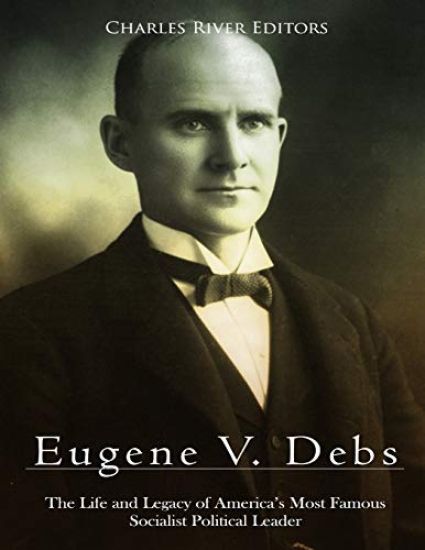
Eugene V. Debs: The Life and Legacy of America's Most Famous Socialist Political Leader
Charles River
Createspace Independent Publishing Platform
2018
nidottu
*Includes pictures *Includes contemporary accounts *Includes online resources and a bibliography for further reading "When great changes occur in history, when great principles are involved, as a rule the majority are wrong." - Eugene V. Debs History is full of tales of men who were in the right place at the right time and thereby rose to greatness, but rarely is the story told of a man who was in the right place at the wrong time. The life of Eugene V. Debs is such a tale. Debs was born in Middle America just before the outbreak of the Civil War, and had he been born a century later, or in a large city on one of the coasts, his story might have been much different. As he grew, he had the restlessness that often indicates greatness, but he lacked the crisis that might have allowed him to hone and use his leadership skills. He saw the needs of those less fortunate around him, and at first, like so many others, he thought that he could work within the system to correct them. However, when he ultimately concluded that he could best serve others through firebrand speeches and increasingly controversial actions, he was unable to convince enough people to follow him to make the massive changes he desired. Instead, he found himself thwarted time and again by those with more power and more established views. Of course, this is not to discount the profound impact Debs had on the country; after all, he was one of the most famous men in America during the late 19th and early 20th century. Indeed, he was able to give to the nation a new understanding of the values and power of industrial workers, helping organize them into some of the first industrial unions in the country. He also taught the men themselves to think as a unit, and to act with a united front that allowed them to make their voices heard and to earn for themselves and their families a living wage and benefits commiserate with their work's value. As one early 20th century socialist put it, "Something was in Debs, seemingly, that did not come out unless you saw him. I'm told that even those speeches of his which seem to any reader indifferent stuff, took on vitality from his presence. A hard-bitten socialist told me once, "Gene Debs is the only one who can get away with the sentimental flummery that's been tied onto Socialism in this country. Pretty nearly always it gives me a swift pain to go around to meetings and have people call me 'comrade.' That's a lot of bunk. But the funny part of it is that when Debs says 'comrade' it is all right. He means it. That old man with the burning eyes actually believes that there can be such a thing as the brotherhood of man. And that's not the funniest part of it. As long as he's around I believe it myself." In the course of his work, Debs also changed the political scene in America. He established the Socialist Party, and when he ran for president in 1912, he attracted a noticeable percentage of the popular vote. No Socialist politician has been as successful on the national level before or since. However, even as he garnered popularity, the times in which he lived hampered his work, for the outbreak of World War I, along with the Bolshevik Revolution in Russia, brought socialism under suspicion. Most controversially, Debs was arrested and imprisoned during World War I on charges of sedition, and while that episode has justly marred President Woodrow Wilson's legacy, prison damaged Debs' health even as his spirit strove on for one last victory. In many ways, his end seems tragic, but for those who benefited through the years from his practical work for organized labor and his theoretical work for socialism, his death marked neither a tragedy nor an end, just a new type of beginning. Eugene V. Debs: The Life and Legacy of America's Most Famous Socialist Political Leader chronicles the life and work that made him one of America's most influential men.

Eugene Victor Debs led the Socialist Party in the early twentieth-century to federal and state office across the country, helped to pioneer a fighting union politics that organized all workers, and became the beloved figurehead of American radicalism. Imprisoned for speaking out against World War I, Debs ran for president from prison, receiving over one million votes. Debs's story is the story of labor battles in industrializing America, of a socialist politics grown directly out of the American Midwest heartland, and of a distinctly American vision of socialism.With the campaign of Bernie Sanders, the rise of mass movements like Occupy and Black Lives Matter, and the Wall Street Crash of 2008, socialism has once again made itself felt in American politics. This graphic biography, published in collaboration with the Democratic Socialists of America-whose growing membership, spurred by Trump's election and Bernie Sanders' campaign, has reached heights not seen among socialist parties since the 1920s-is geared toward a new generation exploring socialist and working-class radicalism in the past and the present.Noah Van Sciver's dynamic illustrations are paired with short, accessible framing essays by Paul Buhle, noted historian of the U.S. left, with Dave Nance and Steve Max.

The Selected Works of Eugene V. Debs, Vol. I
Haymarket Books
2019
sidottu
An extensive compilation of articles, speeches, press statements, and open letters by American socialist Eugene V. Debs, this book is the first in a five volume series that assembles much of Debs’s work for the first time in a single place. The collection makes readily accessible approximately 150 documents by one of the pivotal figures in the labor movement. Illuminating nineteenth century working-class history, particularly the complex and shifting situation in the transportation industry, this volume provides a basis for deeper understanding of Debs and his role later during the glory days of the Socialist Party of America.

The Selected Works of Eugene V. Debs Volume II
Haymarket Books
2020
pokkari
Tim Davenport and David Walters have extracted the essential core of Debs’s life work, illustrating his intellectual journey from conservative editor of the magazine of a racially segregated railway brotherhood to his role as the public face and outstanding voice of social revolution in early twentieth-century America. Well over 1,000 Debs documents will be republished as part of this monumental project, the vast majority seeing print again for the first time since the date of their original publication. Eugene V. Debs (1855–1926) was a trade unionist, magazine editor, and public orator widely regarded as one of the most important figures in the history of American socialism.
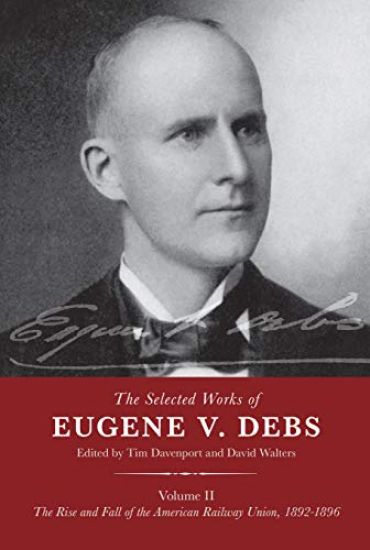
The Selected Works of Eugene V. Debs Volume II
Haymarket Books
2020
sidottu
Tim Davenport and David Walters have extracted the essential core of Debs’s life work, illustrating his intellectual journey from conservative editor of the magazine of a racially segregated railway brotherhood to his role as the public face and outstanding voice of social revolution in early twentieth-century America. Well over 1,000 Debs documents will be republished as part of this monumental project, the vast majority seeing print again for the first time since the date of their original publication. Eugene V. Debs (1855–1926) was a trade unionist, magazine editor, and public orator widely regarded as one of the most important figures in the history of American socialism.
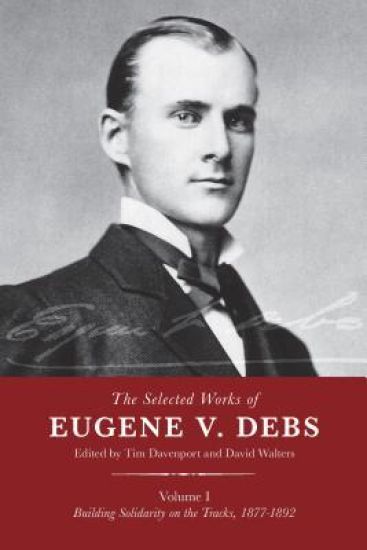
The Selected Works Of Eugene V. Debs, Vol. 1
Haymarket Books
2019
nidottu
An extensive compilation of articles, speeches, press statements, and open letters by American socialist Eugene V. Debs, this book is the first in a six volume series that assembles much of Debs's work for the first time in a single place.
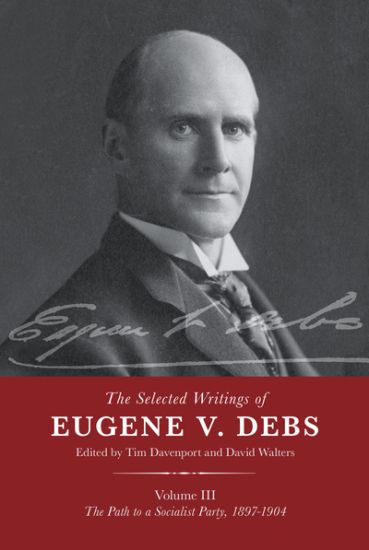
The Selected Works of Eugene V. Debs Vol. III
Haymarket Books
2021
pokkari
Eugene V. Debs exploded upon the national scene in 1894 as the leader of a sensational strike by his American Railway Union (ARU) against the Pullman Parlor Car Company—a job stoppage which paralyzed the country's transportation network for nearly two weeks. On January 1, 1897, the polarizing public figure Debs declared his allegiance to international socialism, emerging as the most widely recognized socialist in America. He would thereafter tour the country relentlessly, speaking to large audiences and writing hundreds of articles on political and economic themes over the ensuing three decades. Debs almost singlehandedly established a new political party, the Social Democracy of America, in the summer of 1897, building upon the remnants of the depleted ARU. The organization advanced a double agenda, seeking to promote both electoral politics and the construction of socialist colonies on the frontier—a dual focus which led to internal tensions and a bitter split. In 1898 Debs cast his lot with Milwaukee publisher Victor L. Berger in a new organization dedicated to political action, the Social Democratic Party of America. After a split of the older and larger Socialist Labor Party of America in 1899, protracted unity discussions between the Debs group and an organized body of former SLP dissidents ensued. This unity effort was marked by Debs's first run for president of the United States on a joint Social Democratic ticket in November 1900. After heated on-again off-again negotiation between the two groups, a marriage was finally brokered in the summer of 1901 and the Socialist Party of America was launched. The party would soon grow to become the third biggest in American politics, with Debs enthusiastically heading the Socialist ticket in 1904 in the second of his five runs for the presidency.

The Selected Works of Eugene V. Debs Vol. III
Haymarket Books
2021
sidottu
Eugene V. Debs exploded upon the national scene in 1894 as the leader of a sensational strike by his American Railway Union (ARU) against the Pullman Parlor Car Company—a job stoppage which paralyzed the country's transportation network for nearly two weeks. On January 1, 1897, the polarizing public figure Debs declared his allegiance to international socialism, emerging as the most widely recognized socialist in America. He would thereafter tour the country relentlessly, speaking to large audiences and writing hundreds of articles on political and economic themes over the ensuing three decades. Debs almost singlehandedly established a new political party, the Social Democracy of America, in the summer of 1897, building upon the remnants of the depleted ARU. The organization advanced a double agenda, seeking to promote both electoral politics and the construction of socialist colonies on the frontier—a dual focus which led to internal tensions and a bitter split. In 1898 Debs cast his lot with Milwaukee publisher Victor L. Berger in a new organization dedicated to political action, the Social Democratic Party of America. After a split of the older and larger Socialist Labor Party of America in 1899, protracted unity discussions between the Debs group and an organized body of former SLP dissidents ensued. This unity effort was marked by Debs's first run for president of the United States on a joint Social Democratic ticket in November 1900. After heated on-again off-again negotiation between the two groups, a marriage was finally brokered in the summer of 1901 and the Socialist Party of America was launched. The party would soon grow to become the third biggest in American politics, with Debs enthusiastically heading the Socialist ticket in 1904 in the second of his five runs for the presidency.