Kirjojen hintavertailu. Mukana 11 244 527 kirjaa ja 12 kauppaa.

Kirjahaku

Etsi kirjoja tekijän nimen, kirjan nimen tai ISBN:n perusteella.

1000 tulosta hakusanalla Evripides

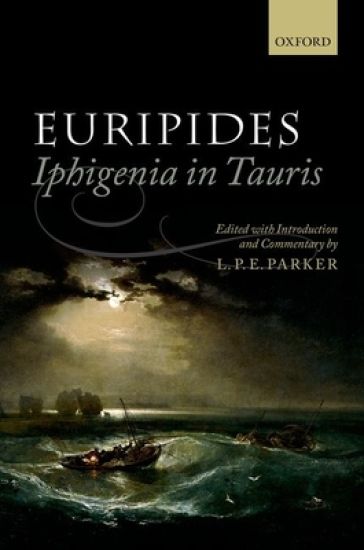
Euripides: Iphigenia in Tauris

Euripides: Iphigenia in Tauris

Oxford University Press
2016
nidottu
Euripides' Iphigenia in Tauris is the tale of how two children of Agamemnon whose lives have been blighted in youth are brought together for mutual salvation and for the healing of the calamitous house of Pelops. Aristotle makes more complimentary references to the play than any other Attic tragedy, apart from Sophocles' Oedipus the King, and even less favourable critics recognize the extraordinary skill of its construction. Comprising an introduction, the Greek text, and commentary, this volume is designed to be useful to a wide range of readers, facilitating a close and accurate reading of one of Euripides' more frequently studied plays. The introduction explores earlier and later re-interpretations of the story of Iphigenia, the adoption of narrative motifs in New Comedy, Roman comedy, and the ancient novel, differing critical assessments, and more technical information on metre and textual transmission. The commentary features guidance on vocabulary and syntax, while more advanced material, including textual discussion, is included in parenthesis.
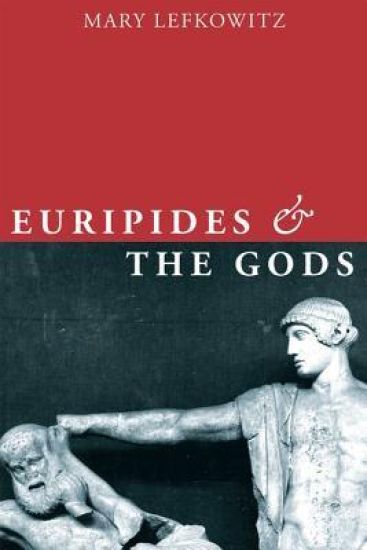
Euripides and the Gods

Euripides and the Gods

Mary Lefkowitz

Oxford University Press Inc
2016
sidottu
Many modern readers believe that, in his dramas, Euripides was questioning the nature and sometimes even the existence of the gods. In Euripides and the Gods, eminent classicist Mary K. Lefkowitz shows that the tragedian is not undermining ancient religion, but rather describing with a brutal realism what the gods are like, reminding his mortal audience of the limitations of human understanding. Although some scholars have begun to express similar views about the theology of individual plays, no one so far has written an extended treatment of these issues for a general audience who do not necessarily know ancient Greek. Lefkowitz will provide a book that will deal with all of his dramas, accessible to non-specialist readers, containing a more tolerant and nuanced understanding of ancient Greek religion: Euripides, like Homer, is making "a statement about the nature of the world and human life, terrible and dispassionate." That view of divinity was well known and understood in Euripides' own time. In spite of what has seemed to later critics his brutally realistic characterization of the gods, he was selected in virtually every year of his adult life to be one of the three poets allowed to put on a set of plays at the festival of Dionysus, and even after his death he remained the most popular and influential of the great playwrights in the Greek-speaking world. This would hardly have been the case if his portrayal of the gods appeared impious to the majority of his audiences. Like most of the author's distinguished publications in this field, the book will discuss a number of important related topics, including religion, philosophy, the surviving works of Euripides' contemporaries, and the theater and its significance to Greek society. The result will be a compelling invitation to return to the dramatic masterpieces of Euripides with fresh eyes.
Euripides II

Euripides II

University of Chicago Press
2013
sidottu
Sixty years ago, the University of Chicago Press undertook a momentous project: a new translation of the Greek tragedies that would be the ultimate resource for teachers, students, and readers. They succeeded. Under the expert management of eminent classicists David Grene and Richmond Lattimore, those translations combined accuracy, poetic immediacy, and clarity of presentation to render the surviving masterpieces of Aeschylus, Sophocles, and Euripides in an English so lively and compelling that they remain the standard translations. Today, Chicago is taking pains to ensure that our Greek tragedies remain the leading English-language versions throughout the twenty-first century. In this highly anticipated third edition, Mark Griffith and Glenn W. Most have carefully updated the translations to bring them even closer to the ancient Greek while retaining the vibrancy for which our English versions are famous. This edition also includes brand-new translations of Euripides' "Medea", "The Children of Heracles", "Andromache", and "Iphigenia among the Taurians", fragments of lost plays by Aeschylus, and the surviving portion of Sophocles' satyr-drama "The Trackers". New introductions for each play offer essential information about its first production, plot, and reception in antiquity and beyond. In addition, each volume includes an introduction to the life and work of its tragedian, as well as notes addressing textual uncertainties and a glossary of names and places mentioned in the plays. In addition to the new content, the volumes have been reorganized both within and between volumes to reflect the most up-to-date scholarship on the order in which the plays were originally written. The result is a set of handsome paperbacks destined to introduce new generations of readers to these foundational works of Western drama, art, and life.
Euripides II

Euripides II

University of Chicago Press
2013
nidottu
Sixty years ago, the University of Chicago Press undertook a momentous project: a new translation of the Greek tragedies that would be the ultimate resource for teachers, students, and readers. They succeeded. Under the expert management of eminent classicists David Grene and Richmond Lattimore, those translations combined accuracy, poetic immediacy, and clarity of presentation to render the surviving masterpieces of Aeschylus, Sophocles, and Euripides in an English so lively and compelling that they remain the standard translations. Today, Chicago is taking pains to ensure that our Greek tragedies remain the leading English-language versions throughout the twenty-first century. In this highly anticipated third edition, Mark Griffith and Glenn W. Most have carefully updated the translations to bring them even closer to the ancient Greek while retaining the vibrancy for which our English versions are famous. This edition also includes brand-new translations of Euripides' "Medea", "The Children of Heracles", "Andromache", and "Iphigenia among the Taurians", fragments of lost plays by Aeschylus, and the surviving portion of Sophocles' satyr-drama "The Trackers". New introduction for each play offer essential information about its first production, plot, and reception in antiquity and beyond. In addition, each volume includes an introduction to the life and work of its tragedian, as well as notes addressing textual uncertainties and a glossary of names and places mentioned in the plays. In addition to the new content, the volumes have been reorganized both within and between volumes to reflect the most up-to-date scholarship on the order in which the plays were originally written. The result is a set of handsome paperbacks destined to introduce new generations of readers to these foundational works of Western drama, art, and life.
Euripides I

Euripides I

University of Chicago Press
2013
sidottu
Sixty years ago, the University of Chicago Press undertook a momentous project: a new translation of the Greek tragedies that would be the ultimate resource for teachers, students, and readers. They succeeded. Under the expert management of eminent classicists David Grene and Richmond Lattimore, those translations combined accuracy, poetic immediacy, and clarity of presentation to render the surviving masterpieces of Aeschylus, Sophocles, and Euripides in an English so lively and compelling that they remain the standard translations. Today, Chicago is taking pains to ensure that our Greek tragedies remain the leading English-language versions throughout the twenty-first century. In this highly anticipated third edition, Mark Griffith and Glenn W. Most have carefully updated the translations to bring them even closer to the ancient Greek while retaining the vibrancy for which our English versions are famous. This edition also includes brand-new translations of Euripides' "Medea", "The Children of Heracles", "Andromache", and "Iphigenia among the Taurians", fragments of lost plays by Aeschylus, and the surviving portion of Sophocles' satyr-drama "The Trackers". New introductions for each play offer essential information about its first production, plot, and reception in antiquity and beyond. In addition, each volume includes an introduction to the life and work of its tragedian, as well as notes addressing textual uncertainties and a glossary of names and places mentioned in the plays. In addition to the new content, the volumes have been reorganized both within and between volumes to reflect the most up-to-date scholarship on the order in which the plays were originally written. The result is a set of handsome paperbacks destined to introduce new generations of readers to these foundational works of Western drama, art, and life.
Euripides I

Euripides I

University of Chicago Press
2013
nidottu
Sixty years ago, the University of Chicago Press undertook a momentous project: a new translation of the Greek tragedies that would be the ultimate resource for teachers, students, and readers. They succeeded. Under the expert management of eminent classicists David Grene and Richmond Lattimore, those translations combined accuracy, poetic immediacy, and clarity of presentation to render the surviving masterpieces of Aeschylus, Sophocles, and Euripides in an English so lively and compelling that they remain the standard translations. Today, Chicago is taking pains to ensure that our Greek tragedies remain the leading English-language versions throughout the twenty-first century. In this highly anticipated third edition, Mark Griffith and Glenn W. Most have carefully updated the translations to bring them even closer to the ancient Greek while retaining the vibrancy for which our English versions are famous. This edition also includes brand-new translations of Euripides' "Medea", "The Children of Heracles", "Andromache", and "Iphigenia among the Taurians", fragments of lost plays by Aeschylus, and the surviving portion of Sophocles' satyr-drama "The Trackers". New introductions for each play offer essential information about its first production, plot, and reception in antiquity and beyond. In addition, each volume includes an introduction to the life and work of its tragedian, as well as notes addressing textual uncertainties and a glossary of names and places mentioned in the plays. In addition to the new content, the volumes have been reorganized both within and between volumes to reflect the most up-to-date scholarship on the order in which the plays were originally written. The result is a set of handsome paperbacks destined to introduce new generations of readers to these foundational works of Western drama, art, and life.
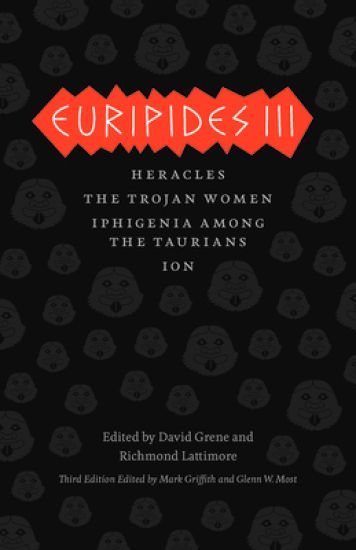
Euripides III

Euripides III

University of Chicago Press
2013
sidottu
Sixty years ago, the University of Chicago Press undertook a momentous project: a new translation of the Greek tragedies that would be the ultimate resource for teachers, students, and readers. They succeeded. Under the expert management of eminent classicists David Grene and Richmond Lattimore, those translations combined accuracy, poetic immediacy, and clarity of presentation to render the surviving masterpieces of Aeschylus, Sophocles, and Euripides in an English so lively and compelling that they remain the standard translations. Today, Chicago is taking pains to ensure that our Greek tragedies remain the leading English-language versions throughout the twenty-first century. In this highly anticipated third edition, Mark Griffith and Gleen W. Most have carefully updated the translations to bring them even closer to the ancient Greek while retaining the vibrancy for which our English versions are famous. This edition also includes brand-new translations of Euripides' "Medea", "The Children of Heracles", "Andromache", and "Iphigenia among the Taurians", fragments of lost plays by Aeschylus, and the surviving portion of Sophocles' satyr-drama "The Trackers". New introductions for each play offer essential information about its first production, plot, and reception in antiquity and beyond. In addition, each volume includes an introduction to the life and work of its tragedian, as well as notes addressing textual uncertainties and a glossary of names and places mentioned in the plays. In addition to the new content, the volumes have been reorganized both within and between volumes to reflect the most up-to-date scholarship on the order in which the plays were originally written. The result is a set of handsome paperbacks destined to introduce new generations of readers to these foundational works of Western drama, art, and life.
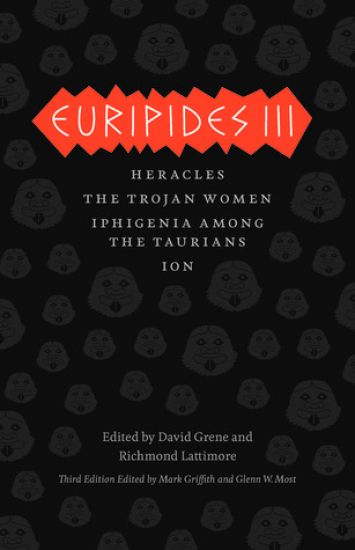
Euripides III

Euripides III

University of Chicago Press
2013
nidottu
Sixty years ago, the University of Chicago Press undertook a momentous project: a new translation of the Greek tragedies that would be the ultimate resource for teachers, students, and readers. They succeeded. Under the expert management of eminent classicists David Grene and Richmond Lattimore, those translations combined accuracy, poetic immediacy, and clarity of presentation to render the surviving masterpieces of Aeschylus, Sophocles, and Euripides in an English so lively and compelling that they remain the standard translations. Today, Chicago is taking pains to ensure that our Greek tragedies remain the leading English-language versions throughout the twenty-first century. In this highly anticipated third edition, Mark Griffith and Glenn W. Most have carefully updated the translations to bring them even closer to the ancient Greek while retaining the vibrancy for which our English versions are famous. This edition also includes brand-new translations of Euripides' "Medea", "The Children of Heracles", "Andromache", and "Iphigenia among the Taurians", fragments of lost plays by Aeschylus, and the surviving portion of Sophocles' satyr-drama "The Trackers". New introductions for each play offer essential information about its first production, plot, and reception in antiquity and beyond. In addition, each volume includes an introduction to the life and work of its tragedian, as well as notes addressing textual uncertainties and a glossary of names and places mentioned in the plays. In addition to the new content, the volumes have been reorganized both within and between volumes to reflect the most up-to-date scholarship on the order in which the plays were originally written. The result is a set of handsome paperbacks destined to introduce new generations of readers to these foundational works of Western drama, art, and life.
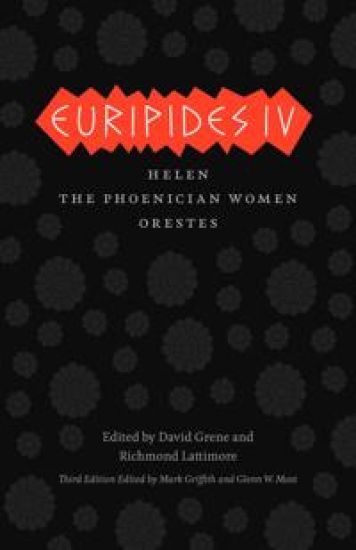
Euripides IV

Euripides IV

University of Chicago Press
2013
sidottu
Sixty years ago, the University of Chicago Press undertook a momentous project: a new translation of the Greek tragedies that would be the ultimate resource for teachers, students, and readers. They succeeded. Under the expert management of eminent classicists David Grene and Richmond Lattimore, those translations combined accuracy, poetic immediacy, and clarity of presentation to render the surviving masterpieces of Aeschylus, Sophocles, and Euripides in an English so lively and compelling that they remain the standard translations. Today, Chicago is taking pains to ensure that our Greek tragedies remain the leading English-language versions throughout the twenty-first century. In this highly anticipated third edition, Mark Griffith and Glenn W. Most have carefully updated the translations to bring them even closer to the ancient Greek while retaining the vibrancy for which our English versions are famous. This edition also includes brand-new translations of Euripides' "Medea", "The Children of Heracles", "Andromache", and "Iphigenia among the Taurians", fragments of lost plays by Aeschylus, and the surviving portion of Sophocles' satyr-drama "The Trackers". New introductions for each play offer essential information about its first production, plot, and reception in antiquity and beyond. In addition, each volume includes an introduction to the life and work of its tragedian, as well as notes addressing textual uncertainties and a glossary of names and places mentioned in the plays. In addition to the new content, the volumes have been reorganized both within and between volumes to reflect the most up-to-date scholarship on the order in which the plays were originally written. The result is a set of handsome paperbacks destined to introduce new generations of readers to these foundational works of Western drama, art, and life.
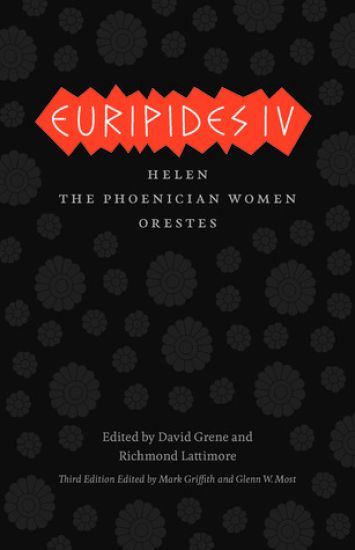
Euripides IV

Euripides IV

University of Chicago Press
2013
nidottu
Sixty years ago, the University of Chicago Press undertook a momentous project: a new translation of the Greek tragedies that would be the ultimate resource for teachers, students, and readers. They succeeded. Under the expert management of eminent classicists David Grene and Richmond Lattimore, those translations combined accuracy, poetic immediacy, and clarity of presentation to render the surviving masterpieces of Aeschylus, Sophocles, and Euripides in an English so lively and compelling that they remain the standard translations. Today, Chicago is taking pains to ensure that our Greek tragedies remain the leading English-language versions throughout the twenty-first century. In this highly anticipated third edition, Mark Griffith and Glenn W. Most have carefully updated the translations to bring them even closer to the ancient Greek while retaining the vibrancy for which our English versions are famous. This edition also includes brand-new translations of Euripides' "Medea", "The Children of Heracles", "Andromache", and "Iphigenia among the Taurians", fragments of lost plays by Aeschylus, and the surviving portion of Sophocles' satyr-drama "The Trackers". New introductions for each play offer essential information about its first production, plot, and reception in antiquity and beyond. In addition, each volume includes an introduction to the life and work of its tragedian, as well as notes addressing textual uncertainties and a glossary of names and places mentioned in the plays. In addition to the new content, the volumes have been reorganized both within and between volumes to reflect the most up-to-date scholarship on the order in which the plays were originally written. The result is a set of handsome paperbacks destined to introduce new generations of readers to these foundational works of Western drama, art, and life.
Euripides V

Euripides V

University of Chicago Press
2013
sidottu
Sixty years ago, the University of Chicago Press undertook a momentous project: a new translation of the Greek tragedies that would be the ultimate resource for teachers, students, and readers. They succeeded. Under the expert management of eminent classicists David Grene and Richmond Lattimore, those translations combined accuracy, poetic immediacy, and clarity of presentation to render the surviving masterpieces of Aeschylus, Sophocles, and Euripides in an English so lively and compelling that they remain the standard translations. Today, Chicago is taking pains to ensure that our Greek tragedies remain the leading English-language versions throughout the twenty-first century. In this highly anticipated third edition, Mark Griffith and Glenn W. Most have carefully updated the translations to bring them even closer to the ancient Greek while retaining the vibrancy for which our English versions are famous. This edition also includes brand-new translations of Euripides' "Medea", "The Children of Heracles", "Andromache", and "Iphigenia among the Taurians", fragments of lost plays by Aeschylus, and the surviving portion of Sophocles' satyr-drama "The Trackers". New introductions for each play offer essential information about its first production, plot, and reception in antiquity and beyond. In addition, each volume includes an introduction to the life and work of its tragedian, as well as notes addressing textual uncertainties and a glossary of names and places mentioned in the plays. In addition to the new content, the volumes have been reorganized both within and between volumes to reflect the most up-to-date scholarship on the order in which the plays were originally written. The result is a set of handsome paperbacks destined to introduce new generations of readers to these foundational works of Western drama, art, and life.
Euripides V

Euripides V

University of Chicago Press
2013
nidottu
Sixty years ago, the University of Chicago Press undertook a momentous project: a new translation of the Greek tragedies that would be the ultimate resource for teachers, students, and readers. They succeeded. Under the expert management of eminent classicists David Grene and Richmond Lattimore, those translations combined accuracy, poetic immediacy, and clarity of presentation to render the surviving masterpieces of Aeschylus, Sophocles, and Euripides in an English so lively and compelling that they remain the standard translations. Today, Chicago is taking pains to ensure that our Greek tragedies remain the leading English-language versions throughout the twenty-first century. In this highly anticipated third edition, Mark Griffith and Glenn W. Most have carefully updated the translations to bring them even closer to the ancient Greek while retaining the vibrancy for which our English versions are famous. This edition also includes brand-new translations of Euripides' "Medea", "The Children of Heracles", "Andromache", and "Iphigenia among the Taurians", fragments of lost plays by Aeschylus, and the surviving portion of Sophocles' satyr-drama "The Trackers". New introductions for each play offer essential information about its first production, plot, and reception in antiquity and beyond. In addition, each volume includes an introduction to the life and work of its tragedian, as well as notes addressing textual uncertainties and a glossary of names and places mentioned in the plays. In addition to the new content, the volumes have been reorganized both within and between volumes to reflect the most up-to-date scholarship on the order in which the plays were originally written. The result is a set of handsome paperbacks destined to introduce new generations of readers to these foundational works of Western drama, art, and life.
Euripides’ Hippolytus

Euripides’ Hippolytus

Hilary J. Deighton

Lulu.com
2019
nidottu
This new and complete translation is intended to meet the needs of Classics students, Drama students and as a working text for production. This powerful and compelling drama is frequently staged and adapted to different media, but to understand it fully it should be studied in the context of its own time. This edition contains introductory sections on the poet, the play and its social, religious and political context; on the origin, development and production of Greek tragedy; notes on staging, and a glossary. It includes a section often omitted in translations. Hilary J. Deighton has a long association with the play, having studied it as an undergraduate and later teaching it to her own students. She taught Classical Studies at university, college and school level. She has also published books on daily life in Athens and Rome, and on Bronze Age religion in Anatolia.
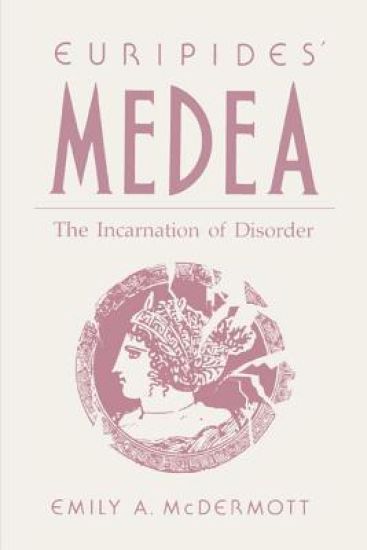
Euripides’ Medea

Euripides’ Medea

Emily McDermott

Pennsylvania State University Press
1990
sidottu
Euripides' Medea, produced in the year that the Peloponnesian War began, presents the first in a parade of vivid female tragic protagonists across the Euripidean stage. Throughout the centuries it has been regarded as one of the most powerful of the Greek tragedies.McDermott's starting point is an assessment of the character of Medea herself. She confronts the question: What does an audience do with a tragic protagonist who is at once heroic, sympathetic, and morally repugnant? We see that the play portrays a world from which all order has been deliberately and pointedly removed and in which the very reality or even potentiality of order is implicitly denied. Euripides' plays invert, subvert, and pervert traditional assertions of order; they challenge their audience's most basic tenets and assumptions about the moral, social, and civic fabric of mankind and replace them with a new vision based on clearly articulated values of his own.One who seeks for "meaning" in this tragedy will come closest to finding it by examining everything in the play (characters, their actions, choruses, mythic plots and allusions to myth, place within literary traditions and use of conventions) in close conjunction with a feasible reconstruction of the audience's expectations in each regard, for we see that it is a keynote of Euripides' dramaturgy to fail to fulfill these expectations. This study proceeds from the premise that Medea's murder of her children is the key to the play. We see that the introduction of this murder into the Medea-saga was Euripides' own innovation. We see that the play's themes include the classic opposition of Man and Woman. Finally, we see that in Greek culture the social order is maintained by strict adherence within the family to the rule that parents and children reciprocally nurture one another in their respective ages of helplessness. Through the heroine's repeated assaults on this fundamental and sacred value, the playwright most persuasively portrays her as an incarnation of disorder.This book is for all students and scholars of Greek literature, whether in departments of Classics or English or Comparative Literature, as well as those concerned with the role of women in literature.
Euripides’ Medea

Euripides’ Medea

Emily McDermott

Pennsylvania State University Press
1989
pokkari
Euripides' Medea, produced in the year that the Peloponnesian War began, presents the first in a parade of vivid female tragic protagonists across the Euripidean stage. Throughout the centuries it has been regarded as one of the most powerful of the Greek tragedies.McDermott's starting point is an assessment of the character of Medea herself. She confronts the question: What does an audience do with a tragic protagonist who is at once heroic, sympathetic, and morally repugnant? We see that the play portrays a world from which all order has been deliberately and pointedly removed and in which the very reality or even potentiality of order is implicitly denied. Euripides' plays invert, subvert, and pervert traditional assertions of order; they challenge their audience's most basic tenets and assumptions about the moral, social, and civic fabric of mankind and replace them with a new vision based on clearly articulated values of his own.One who seeks for "meaning" in this tragedy will come closest to finding it by examining everything in the play (characters, their actions, choruses, mythic plots and allusions to myth, place within literary traditions and use of conventions) in close conjunction with a feasible reconstruction of the audience's expectations in each regard, for we see that it is a keynote of Euripides' dramaturgy to fail to fulfill these expectations. This study proceeds from the premise that Medea's murder of her children is the key to the play. We see that the introduction of this murder into the Medea-saga was Euripides' own innovation. We see that the play's themes include the classic opposition of Man and Woman. Finally, we see that in Greek culture the social order is maintained by strict adherence within the family to the rule that parents and children reciprocally nurture one another in their respective ages of helplessness. Through the heroine's repeated assaults on this fundamental and sacred value, the playwright most persuasively portrays her as an incarnation of disorder.This book is for all students and scholars of Greek literature, whether in departments of Classics or English or Comparative Literature, as well as those concerned with the role of women in literature.
Euripides and the Tragic Tradition

Euripides and the Tragic Tradition

Anne Michelini

University of Wisconsin Press
2006
nidottu
'The most extensive scholarship to appear on this Greek dramatist in many years, Michelini's work will be important to specialists and students of classical literature, literary theory, and both English and comparative literature.' - Modern Greek Studies
Euripides Plays: 2

Euripides Plays: 2

Euripides

Methuen Drama
1991
nidottu
Published in the new Methuen Classical Dramatists series Euripides' searching, poetic voice probes the waste and suffering of war in these plays which are set wake of the Trojan defeat to reflect the playwright's changing attitude to the real war between Athens and Sparta in his own day - 4th century BC. Hecuba is a play of ghosts and shadowy death; The Women of Troy is a searing indictment of the aftermath of defeat; Iphigenia at Aulis shows a human tragedy at the heart of the mechanics of war; and Cyclops is a satyr play which offers a comic antidote to the tragedies.With an introduction by J. Michael Walton