Kirjojen hintavertailu. Mukana 11 627 576 kirjaa ja 12 kauppaa.

Kirjahaku

Etsi kirjoja tekijän nimen, kirjan nimen tai ISBN:n perusteella.

1000 tulosta hakusanalla F. Scott Spencer

F. Scott Fitzgerald

F. Scott Fitzgerald

Michael Glenday

Red Globe Press
2011
sidottu
From his first novel, This Side of Paradise, which brought him a blaze of youthful fame, to his last, unfinished novel, The Last Tycoon, F. Scott Fitzgerald's appeal as one of America's most quintessential artists has continued to maintain its hold on twenty-first century readers.In this reader-friendly study of Fitzgerald's major fiction, Michael K. Glenday:- Offers new readings of the author's canonical works, including The Great Gatsby and Tender Is the Night- Draws on the very latest research in his reassessment of the ideas and significance of Fitzgerald's major novels- Explores the core themes of the novels, as well as their considerable contribution to the spirit and complexity of modern-day American cultureAssuming no prior knowledge, this book is ideal for those seeking a lively, informed introduction to Fitzgerald's fiction, as well as those looking for fresh and original insights into his extraordinary work.
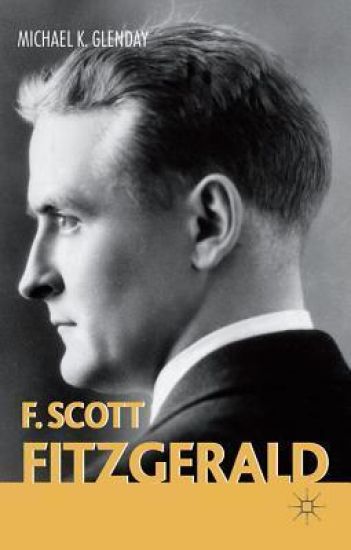
F. Scott Fitzgerald

F. Scott Fitzgerald

Michael Glenday

Red Globe Press
2011
nidottu
From his first novel, This Side of Paradise, which brought him a blaze of youthful fame, to his last, unfinished novel, The Last Tycoon, F. Scott Fitzgerald's appeal as one of America's most quintessential artists has continued to maintain its hold on twenty-first century readers.In this reader-friendly study of Fitzgerald's major fiction, Michael K. Glenday:- Offers new readings of the author's canonical works, including The Great Gatsby and Tender Is the Night- Draws on the very latest research in his reassessment of the ideas and significance of Fitzgerald's major novels- Explores the core themes of the novels, as well as their considerable contribution to the spirit and complexity of modern-day American cultureAssuming no prior knowledge, this book is ideal for those seeking a lively, informed introduction to Fitzgerald's fiction, as well as those looking for fresh and original insights into his extraordinary work.
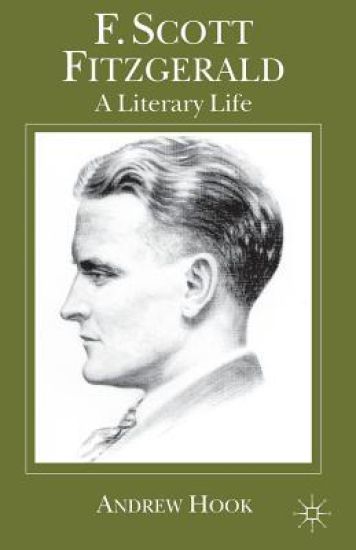
F. Scott Fitzgerald

F. Scott Fitzgerald

A. Hook

Palgrave Macmillan
2002
nidottu
Often seen as a mirroring the contemporary movement of American history itself, Scott Fitzgerald's literary life was a roller-coaster ride from early success in the 1920s to apparent oblivion by the end of the 1930s. This study attempts to account for such a problematic career by focusing on Fitzgerald's struggle to sustain a perilous balancing act between his commitment to a totally involving life on the one hand, and his parallel commitment to the serious business of art on the other.
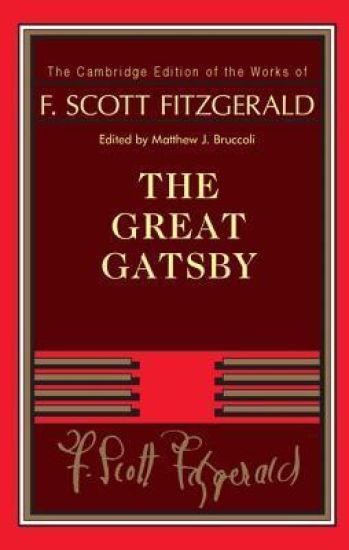
F. Scott Fitzgerald: The Great Gatsby

F. Scott Fitzgerald: The Great Gatsby

F. Scott Fitzgerald

Cambridge University Press
1991
sidottu
Since its publication in 1925, The Great Gatsby, F. Scott Fitzgerald’s account of the American dream gone awry, has established itself as one of the most popular and widely read novels in the English language. Until now, however, no edition has printed the novel exactly as Fitzgerald himself wrote it. From its first edition onward, the text has been subject to rigorous house-styling that has distorted the characteristic rhythms and structure of his sentences. This critical edition draws on the manuscript and surviving proofs of the novel, together with Fitzgerald’s subsequent revisions to key passages, to provide the first authoritative text of The Great Gatsby. This volume also includes a detailed account of the genesis, composition, and publication of the novel; a full textual apparatus; crucial early draft material; helpful glosses on the peculiar geography and chronology of the book; and explanatory notes on topical allusions and historical references that contemporary readers might otherwise miss. Fitzgerald’s great masterpiece is thus brought closer to a cross-section of readers, more accessibly and more authentically than ever before.
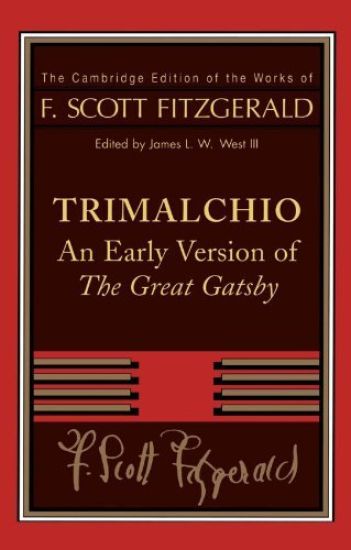
F. Scott Fitzgerald: Trimalchio

F. Scott Fitzgerald: Trimalchio

F. Scott Fitzgerald

Cambridge University Press
2002
pokkari
This first edition ever published of Trimalchio, an early and complete version of F. Scott Fitzgerald’s classic novel The Great Gatsby now appears in paperback. Fitzgerald wrote the novel as Trimalchio and submitted it to Maxwell Perkins, his editor at Scribner’s, who had the novel set in type and the galleys sent to Fitzgerald in France. Fitzgerald then virtually rewrote the novel in galleys, producing the book we know as The Great Gatsby. This ur-version, Trimalchio, has never been published and is markedly different from The Great Gatsby: two chapters were completely rewritten for the published novel, and the rest of the book was heavily revised. Characterization is different, the narrative voice of Nick Carraway is altered and, most importantly, the revelation of Jay Gatsby’s past is handled in a wholly different way.
The Short Stories of F. Scott Fitzgerald

The Short Stories of F. Scott Fitzgerald

F. Scott Fitzgerald; Matthew J. Bruccoli

Scribner Book Company
1995
nidottu
Today F. Scott Fitzgerald is better known for his novels, but in his own time, his fame rested squarely on his prolific achievement as one of America's most gifted writers of stories and novellas. Now, a half-century after the author's death, the premier Fitzgerald scholar and biographer, Matthew J. Bruccoli, has assembled in one volume the full scope of Fitzgerald's best short fiction: forty-three sparkling masterpieces, ranging from such classic novellas as "The Rich Boy," "May Day," and "The Diamond as Big as the Ritz" to his commercial work for the Saturday Evening Post and its sister "slicks." For the reader, these stories will underscore the depth and extraordinary range of Fitzgerald's literary talents. Furthermore, Professor Bruccoli's illuminating preface and introductory headnotes establish the literary and biographical settings in which these stories now shine anew with brighter luster than ever.
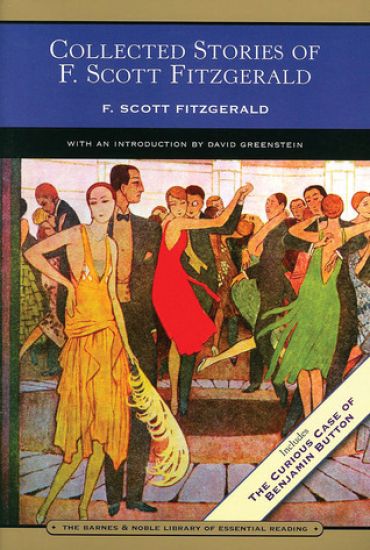
Collected Stories of F. Scott Fitzgerald (Barnes & Noble Library of Essential Reading)
Known today primarily as the author of "The Great Gatsby", F. Scott Fitzgerald was famous in the 1920s and 1930s as a short-story writer. The nineteen stories in this volume were so popular that hardcover collections, "Flappers and Philosophers" and "Tales of the Jazz Age", came out almost immediately after the stories had appeared in magazines. He portrayed the emotional depth of a society devoted to excess and racing heedlessly towards catastrophe that was only a few years ahead.
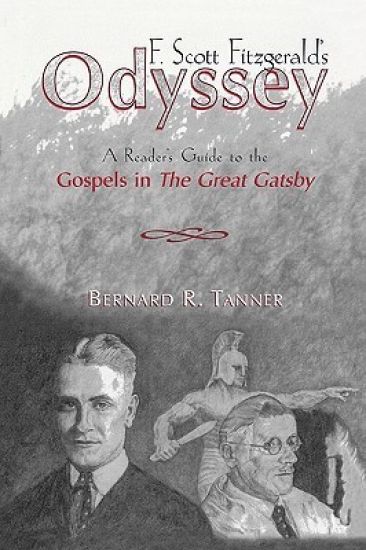
F. Scott Fitzgerald's Odyssey

F. Scott Fitzgerald's Odyssey

Bernard R. Tanner

University Press of America
2003
nidottu
Here for the first time a reader can understand The Great Gatsby as F. Scott Fitzgerald wrote it. Fitzgerald wanted praise for showing skills like those of James Joyce in Ulysses. He set the table for a party to which no one came. No reviewers or interpreters of his novel until now have fully explained its structure, its individual chapter topics, biblical parodies, puns, games with numbers, and burlesques hidden in images. He drew from The Gospel According to John, a 5th century apocryphal book (The Gospel of Nicodemus), The Epistle of James, The Acts of the Apostles, and legends of the saints in ways similar to Joyce's use of adventures in Homer's The Odyssey.
F. Scott Fitzgerald's "The Beautiful and Damned

F. Scott Fitzgerald's "The Beautiful and Damned

LOUISIANA STATE UNIVERSITY PRESS
2022
sidottu
F. Scott Fitzgerald's second novel, The Beautiful and Damned, has frequently been dismissed as an outlier and curiosity in his oeuvre, a transitional work from the coming-of-age plot of This Side of Paradise to the masterful critique of American aspiration in The Great Gatsby.The Beautiful and Damned belongs to a genre that is widely misunderstood, the "bright young things" novel in which spoiled and wealthy characters succumb to decay because of their privilege and lack of purpose. Set between 1913 and 1922, Fitzgerald's longest novel touches on many of the decisive issues that mark the passage from the Gilded Age and the Progressive Era into the Jazz Age: conspicuous consumption, income inequality, yellow journalism, the Great War, the rise of the movie industry, automobile travel, Wall Street stock scams, immigration and xenophobia, and the fixation with youth and aging. Published to coincide with the novel's centennial in 2022, this collection approaches The Beautiful and Damned for its insights more than its faults. Prominent Fitzgerald scholars analyze major themes and reveal unappreciated issues with attention to history, biography, literary influence, gender studies, and narratology. While acknowledging the novel's shortcomings, the essayists illustrate that The Beautiful and Damned has much more to say about its milieu than previously recognized. This collection provides a guide for understanding Fitzgerald's aims while demonstrating the richness of ideas that this novel explores, alongside the anxieties and ambitions that reverberate within it.
F. Scott Fitzgerald's "the Beautiful and Damned

F. Scott Fitzgerald's "the Beautiful and Damned

LOUISIANA STATE UNIVERSITY PRESS
2022
pokkari
F. Scott Fitzgerald's second novel, The Beautiful and Damned, has frequently been dismissed as an outlier and curiosity in his oeuvre, a transitional work from the coming-of-age plot of This Side of Paradise to the masterful critique of American aspiration in The Great GatsbyThe Beautiful and Damned belongs to a genre that is widely misunderstood, the "bright young things" novel in which spoiled and wealthy characters succumb to decay because of their privilege and lack of purpose. Set between 1913 and 1922, Fitzgerald's longest novel touches on many of the decisive issues that mark the passage from the Gilded Age and the Progressive Era into the Jazz Age: conspicuous consumption, income inequality, yellow journalism, the Great War, the rise of the movie industry, automobile travel, Wall Street stock scams, immigration and xenophobia, and the fixation with youth and aging. Published to coincide with the novel's centennial in 2022, this collection approaches The Beautiful and Damned for its insights more than its faults. Prominent Fitzgerald scholars analyze major themes and reveal unappreciated issues with attention to history, biography, literary influence, gender studies, and narratology. While acknowledging the novel's shortcomings, the essayists illustrate that The Beautiful and Damned has much more to say about its milieu than previously recognized. This collection provides a guide for understanding Fitzgerald's aims while demonstrating the richness of ideas that this novel explores, alongside the anxieties and ambitions that reverberate within it.
The Best Early Stories of F. Scott Fitzgerald

The Best Early Stories of F. Scott Fitzgerald

F. Scott Fitzgerald; Roxana Robinson

Modern Library Inc
2005
pokkari
Edited and with an Introduction by Bryant MangumForeword by Roxana Robinson Benediction - Head and Shoulders - Bernice Bobs Her Hair - The Ice Palace - The Offshore Pirate - May Day - The Jelly Bean - The Diamond as Big as the Ritz - Winter Dreams - Absolution In the euphoric months before and after the publication of "This Side of Paradise, F. Scott Fitzgerald, the flapper's historian and poet laureate of the Jazz Age, wrote the ten stories that appear in this unique collection. Exploring characters and themes that would appear in his later works, such as "The Beautiful and Damned and "The Great Gatsby, these early selections are among the very best of Fitzgerald's many short stories. This Modern Library Paperback Classic includes notes, an appendix of nonfiction essays by Scott and Zelda Fitzgerald and their contemporaries, and vintage magazine illustrations.
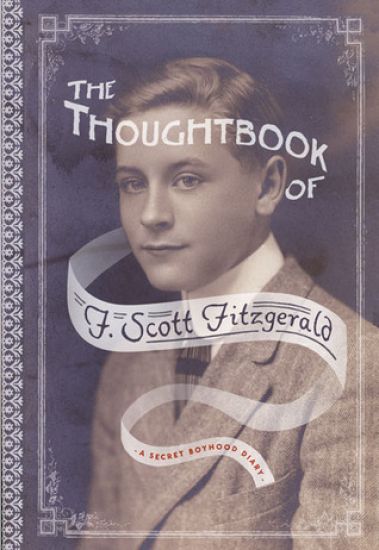
The Thoughtbook of F. Scott Fitzgerald

The Thoughtbook of F. Scott Fitzgerald

F. Scott Fitzgerald

University of Minnesota Press
2013
nidottu
When F. Scott Fitzgerald was fourteen and living in the Crocus Hill neighborhood of St. Paul, he began keeping a short diary of his exploits among his friends, friendly rivals, and crushes. He gave the journal a title page-Thoughtbook of Francis Scott Key Fitzgerald of St. Paul Minn. U.S.A.-and kept it securely locked in a box under his bed. He would later use The Thoughtbook as the basis for “The Book of Scandal” in his Basil Lee Duke stories, and brief sections were copied over the years for use by scholars and even published in Life magazine. “Are you going to the Ordways’? the Herseys’? the Schultzes’?” Here, for the first time, is a complete transcription of this charming, twenty-seven-page diary highlighting Fitzgerald’s escapades among the children of some of St. Paul’s most influential families-models for the families described in The Great Gatsby. Presented in a simple format for both scholars and general readers alike, The Thoughtbook of F. Scott Fitzgerald includes a new introduction by Dave Page that covers the history and provenance of the diary, its place and meaning in Fitzgerald’s literary development, and its revelations about his life and writing process.One of the earliest known works by F. Scott Fitzgerald, The Thoughtbook provides a unique glimpse of Fitzgerald as a young boy and his social circle as they played among the grand homes of Summit Avenue, making up games, starting secret societies, competing with rivals, and (at all times) staying up-to-date on who exactly is vying for whose attention.
F. Scott Fitzgerald at Work

F. Scott Fitzgerald at Work

Horst H. Kruse

The University of Alabama Press
2014
sidottu
F. Scott Fitzgerald at Work probes the complex story behind the sources that inspired Fitzgerald, his writing of the novel, and the enduring legacy of The Great Gatsby.F. Scott Fitzgerald’s The Great Gatsby occupies a preeminent place in American letters. Scholars have argued that Jay Gatsby is, in fact, the embodiment of American culture and social aspiration. Though The Great Gatsby has been studied in detail since its publication, both readers and scholars have continued to speculate about Fitzgerald’s sources of inspiration.The essays in F. Scott Fitzgerald at Work examine fresh facts that illuminate the experiences and source materials upon which Fitzgerald based this quintessentially American masterpiece. They confirm author Horst Kruse’s view that Fitzgerald’s flights of fancy, even at their most spectacular, are firmly grounded in biographical experience as well as in the social, literary, and philosophical circumstances of his era.In the first essay, Kruse reconstructs the life story of the individual who allegedly inspired the character of Jay Gatsby: Max von Gerlach. Kruse recounts his journeys to various archives and libraries in the United States as well as in Germany to unearth new facts about the genesis of the Gatsby characters. In another journey, readers travel with Kruse to Long Island to explore its physical and moral geography in relation to Fitzgerald, specifically the role of certain elite Long Island families in the advancement of the “science of eugenics” movement. The final two essays take Kruse across the globe to various destinations to consider the broader place of The Great Gatsby in American and international intellectual history.Replete with fascinating discoveries and insights, F. Scott Fitzgerald at Work both corrects previous assumptions about The Great Gatsby and deepens our appreciation and understanding of Fitzgerald‘s imagination.
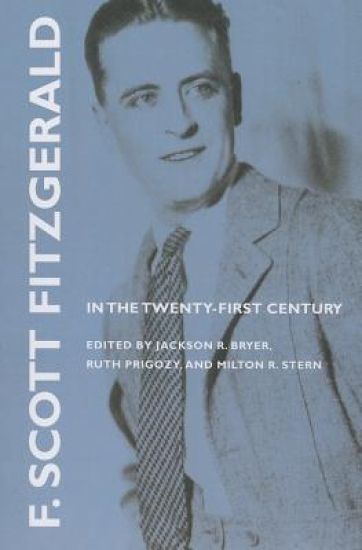
F. Scott Fitzgerald in the Twenty-first Century
This thought-provoking collection explores significant new facets of an American author of lasting international stature. As the author of some of the most compelling short stories ever written, two of the central novels in American literature, and some of the most beautiful prose ever penned, F. Scott Fitzgerald is read and studied all over the world. Sixty-two years after his death, his works - protean, provocative, multilayered, and rich - continue to elicit spirited responses. This collection grew out of the F. Scott Fitzgerald Conference that convened in Princeton at the centennial of this author's birth. Bringing together dozens of the world's leading scholars and commentators, the conference and the book celebrate the ever-growing legacy of Fitzgerald's art. The subjects of these 19 essays reflect the contributors' wish to shine new light on less-frequently discussed aspects of Fitzgerald's work. Topics include Fitzgerald's Princeton influences and his expression of Catholic romanticism; his treatments of youth culture, the devil, and waste; parallels in the work of Mencken, Cather, and Murakami; and the ways gender, pastoral mode, humor, and the Civil War are variously presented in his work. One illustrated summary examines Fitzgerald's effect on popular culture through his appearance in the comics. Two broad overviews - one on Fitzgerald's career and another on the final developments in the author's style - round out the collection. The international scope of the contributors to this volume reflects Fitzgerald's worldwide reputation and appeal. With extensive treatments of This Side of Paradise, The Beautiful and Damned, The Last Tycoon, and the Pat Hobby stories, this collection makes an unusual and significant contribution to the field of Fitzgerald studies.
F. Scott Fitzgerald at Work

F. Scott Fitzgerald at Work

Horst H. Kruse

The University of Alabama Press
2017
nidottu
F. Scott Fitzgerald’s The Great Gatsby occupies a preeminent place in American letters. Scholars have argued that Jay Gatsby is, in fact, the embodiment of American cultural and social aspiration. Though The Great Gatsby has been studied in detail since its publication, both readers and scholars have continued to speculate about Fitzgerald’s sources of inspiration. The essays in F. Scott Fitzgerald at Work examine fresh facts that illuminate the experiences and source materials upon which Fitzgerald based this quintessentially American masterpiece. They confirm author Horst Kruse’s view that Fitzgerald’s flights of fancy, even at their most spectacular, are firmly grounded in biographical experience as well as in the social, literary, and philosophical circumstances of his era. In the first essay, Kruse reconstructs the life story of the individual who allegedly inspired the character of Jay Gatsby: Max von Gerlach. Kruse recounts his journeys to various archives and libraries in the United States as well as in Germany to unearth new facts about the genesis of the Gatsby characters. In another journey, readers travel with Kruse to Long Island to explore its physical and moral geography in relation to Fitzgerald, specifically the role of certain elite Long Island families in the advancement of the ?science of eugenics” movement. The final two essays take Kruse across the globe to various destinations to consider the broader place of The Great Gatsby in American and international intellectual history. Replete with fascinating discoveries and insights, F. Scott Fitzgerald at Work both corrects previous assumptions about The Great Gatsby and deepens our appreciation and understanding of Fitzgerald?s imagination.
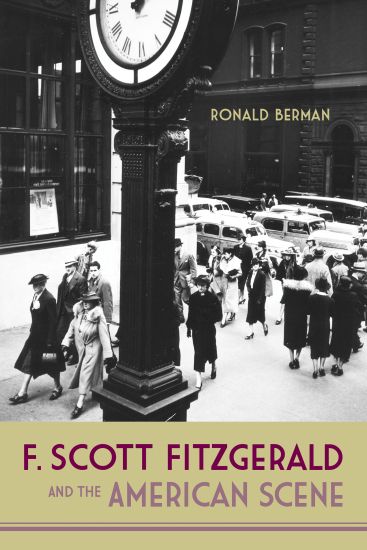
F. Scott Fitzgerald and the American Scene

F. Scott Fitzgerald and the American Scene

Ronald Berman

The University of Alabama Press
2019
nidottu
A study of the philosophical, intellectual, and political influences on the artistic creations of Fitzgerald and key early American modernist writers.F. Scott Fitzgerald and the American Scene continues Ronald Berman’s lifelong study of the philosophical, intellectual, and political influences on the artistic creations of key early American modernist writers. Each chapter in this volume elaborates on a crucial aspect of F. Scott Fitzgerald’s depiction of American society, specifically through the lens of the social sciences that most influenced his writing and thinking.Berman addresses, among other subjects, Fitzgerald’s use of philosophy, cultural analyses, and sociology—all enriched by the insights of his own experience living an American life. He was especially interested in how life had changed from 1910 to 1920. Many Americans were unable to navigate between the 1920s and their own memories of a very different world before the Great War; especially Daisy Buchanan who evolves from girlhood (as typified in sentimental novels of the time) to wifehood (as actually experienced in the new decade). There is a profound similarity between what happens to Fitzgerald’s characters and what happened to the nation.Berman revisits classics like The Great Gatsby but also looks carefully at Fitzgerald’s shorter fictions, analyzing a stimulating spectrum of scholars from more contemporary critics like Thomas Piketty to George Santayana, John Maynard Keynes, John Dewey, and Walter Lippmann. This fascinating addition to F. Scott Fitzgerald scholarship, although broad in its content, is accessible to a wide audience. Scholars and students of Fitzgerald and twentieth-century American literature, as well as dedicated Fitzgerald readers, will enjoy Berman’s take on a long-debated and celebrated author.
F. Scott Fitzgerald

F. Scott Fitzgerald

University of Georgia Press
2004
pokkari
Years after his death, F. Scott Fitzgerald continues to captivate both the popular and the critical imagination. This collection of essays presents fresh insights into his writing, discussing neglected texts and approaching familiar works from new perspectives.Seventeen scholarly articles deal not only with Fitzgerald's novels but with his stories and essays as well, considering such topics as the Roman Catholic background of The Beautiful and Damned and the influence of Mark Twain on Fitzgerald's work and self-conception. The volume also features four personal essays by Fitzgerald's friends Budd Schulberg, Frances Kroll Ring, publisher Charles Scribner III, and writer George Garrett that shed new light on his personal and professional lives. Together these contributions demonstrate the continued vitality of Fitzgerald's work and establish new directions for ongoing discussions of his life and writing.
F. Scott Fitzgerald: The Great Gatsby

F. Scott Fitzgerald: The Great Gatsby

F. Scott Fitzgerald

Cambridge University Press
2022
pokkari
Since its publication in 1925, The Great Gatsby, F. Scott Fitzgerald's account of the American dream gone awry, has established itself as one of the most popular and widely read novels in the English language. Until now, however, no edition has printed the novel exactly as Fitzgerald himself wrote it. From its first edition onward, the text has been subject to rigorous house-styling that has distorted the characteristic rhythms and structure of his sentences. This critical edition draws on the manuscript and surviving proofs of the novel, together with Fitzgerald's subsequent revisions to key passages, to provide the first authoritative text of The Great Gatsby. This volume also includes a detailed account of the genesis, composition, and publication of the novel; a full textual apparatus; crucial early draft material; helpful glosses on the peculiar geography and chronology of the book; and explanatory notes on topical allusions and historical references that contemporary readers might otherwise miss. Fitzgerald's great masterpiece is thus brought closer to a cross-section of readers, more accessibly and more authentically than ever before.