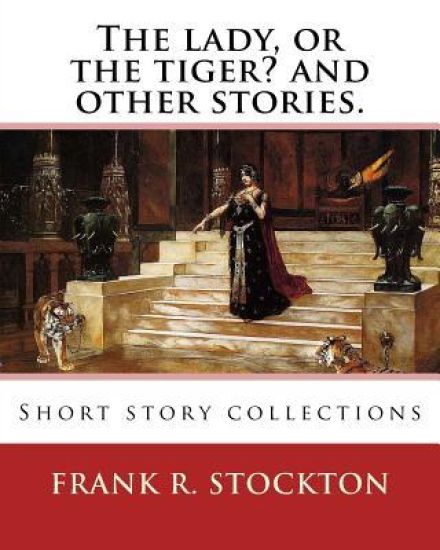
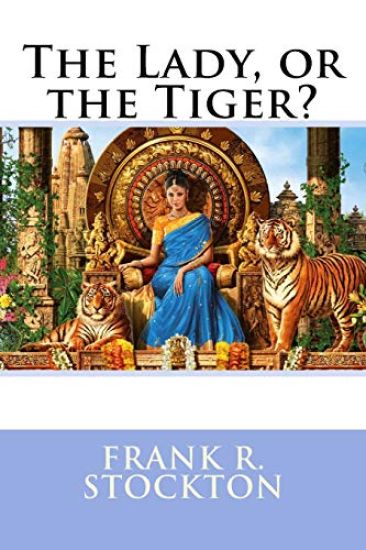
"The Lady, or the Tiger?" is a much-anthologized short story written by Frank R. Stockton for publication in the magazine The Century in 1882. "The Lady, or the Tiger?" has entered the English language as an allegorical expression, a shorthand indication or signifier, for a problem that is unsolvable.The short story takes place in a land ruled by a semi-barbaric king. Some of the king's ideas are progressive, but others cause people to suffer. One of the king's innovations is the use of a public trial by ordeal as an agent of poetic justice, with guilt or innocence decided by the result of chance. A person accused of a crime is brought into a public arena and must choose one of two doors. 1] Behind one door is a lady whom the king has deemed an appropriate match for the accused; behind the other is a fierce, hungry tiger. Both doors are heavily soundproofed to prevent the accused from hearing what is behind each one. If he chooses the door with the lady behind it, he is innocent and must immediately marry her, but if he chooses the door with the tiger behind it, he is deemed guilty and is immediately devoured by it. The king learns that his daughter has a lover, a handsome and brave youth who is of lower status than the princess, and has him imprisoned to await trial. By the time that day comes, the princess has used her influence to learn the positions of the lady and the tiger behind the two doors. She has also discovered that the lady is someone whom she hates, thinking her to be a rival for the affections of the accused. When he looks to the princess for help, she discreetly indicates the door on his right, which he opens. The outcome of this choice is not revealed. Instead, the narrator departs from the story to summarize the princess's state of mind and her thoughts about directing the accused to one fate or the other, as she will lose him to either death or marriage. The story ends with the question, "And so I leave it with all of you: Which came out of the opened door - the lady, or the tiger?".... Frank Richard Stockton (April 5, 1834 - April 20, 1902) was an American writer and humorist, best known today for a series of innovative children's fairy tales that were widely popular during the last decades of the 19th century.Born in Philadelphia in the year 1834, Stockton was the son of a prominent Methodist minister who discouraged him from a writing career. After he married Mary Ann Edwards Tuttle, they moved to Burlington, New Jersey.where he produced some of his first literary work. The couple then moved to Nutley, New Jersey. For years he supported himself as a wood engraver until his father's death in 1860; in 1867, he moved back to Philadelphia to write for a newspaper founded by his brother. His first fairy tale, "Ting-a-ling," was published that year in The Riverside Magazine; his first book collection appeared in 1870. He was also an editor for Hearth and Home magazine in the early 1870s. He died in 1902 of cerebral hemorrhage and is buried at The Woodlands in Philadelphia.
Frank Richard Stockton (April 5, 1834 - April 20, 1902) was an American writer and humorist, best known today for a series of innovative children's fairy tales that were widely popular during the last decades of the 19th century.Born in Philadelphia in the year 1834, Stockton was the son of a prominent Methodist minister who discouraged him from a writing career. After he married Mary Ann Edwards Tuttle, they moved to Burlington, New Jersey.where he produced some of his first literary work. The couple then moved to Nutley, New Jersey. For years he supported himself as a wood engraver until his father's death in 1860; in 1867, he moved back to Philadelphia to write for a newspaper founded by his brother. His first fairy tale, "Ting-a-ling," was published that year in The Riverside Magazine; his first book collection appeared in 1870. He was also an editor for Hearth and Home magazine in the early 1870s. He died in 1902 of cerebral hemorrhage and is buried at The Woodlands in Philadelphia.... Stockton avoided the didactic moralizing common to children's stories of the time, instead using clever humor to poke at greed, violence, abuse of power and other human foibles, describing his fantastic characters' adventures in a charming, matter-of-fact way in stories like "The Griffin and the Minor Canon" (1885) and "The Bee-Man of Orn" (1887), which were republished in 1963 and 1964, respectively, in editions illustrated by Maurice Sendak. "The Griffin and the Minor Canon" won a Lewis Carroll Shelf Award in 1963. His most famous fable is "The Lady, or the Tiger?" (1882), about a man sentenced to an unusual punishment for having a romance with a king's beloved daughter. Taken to the public arena, he is faced with two doors, behind one of which is a hungry tiger that will devour him. Behind the other is a beautiful lady-in-waiting, whom he will have to marry, if he finds her. While the crowd waits anxiously for his decision, he sees the princess among the spectators, who points him to the door on the right. The lover starts to open the door and ... the story ends abruptly there. Did the princess save her love by pointing to the door leading to the lady-in-waiting, or did she prefer to see her lover die rather than see him marry someone else? That discussion hook has made the story a staple in English classes in American schools, especially since Stockton was careful never to hint at what he thought the ending would be (according to Hiram Collins Haydn in The Thesaurus of Book Digests, ISBN 0-517-00122-5). He also wrote a sequel to the story, "The Discourager of Hesitancy." His 1895 adventure novel The Adventures of Captain Horn was the third-best selling book in the United States in 1895.The Bee Man and several other tales were incorporated in a book published in 1887 by Charles Scribner's Sons entitled The Queen's Museum and Other Fanciful Tales, illustrated by Frederick Richardson. Stories included "The Queen's Museum", "The Christmas Truants", "The Griffin and the Minor Canon", "Old Pipes and The Dryad", "The Bee-man of Orn", "The Clocks of Rondaine", "Christmas Before Last", "Prince Hassak's March", "The Philopena", and "Accommodating Circumstance".
Called the most famous riddle mystery of all time, this very short story poses a dilemma. A man is sentenced to an unusual punishment for having a romance with a king's beloved daughter. Taken to the public arena, he is faced with two doors, behind one of which is a hungry tiger that will devour him. Behind the other is a beautiful lady-in-waiting, whom he will have to marry if he finds her. While the crowd waits anxiously for his decision, he sees the princess among the spectators, who points him to the door on the right with a slight movement of her hand. The lover starts to open the door and ... Did the princess save her lover's life by pointing to the door leading to the lady-in-waiting, or did she prefer to see her lover die rather than see him marry someone else?
Kate Bonnet: The romance of a pirate's daughter (1901).......... Frank Richard Stockton (April 5, 1834 - April 20, 1902) was an American writer and humorist, best known today for a series of innovative children's fairy tales that were widely popular during the last decades of the 19th century. Life: Born in Philadelphia in 1834, Stockton was the son of a prominent Methodist minister who discouraged him from a writing career. After marrying Mary Ann Edwards Tuttle, he and his wife moved to Burlington, New Jersey, where he produced some of his first literary work. The couple then moved to Nutley, New Jersey. For years he supported himself as a wood engraver until his father's death in 1860. In 1867, he moved back to Philadelphia to write for a newspaper founded by his brother. His first fairy tale, "Ting-a-ling," was published that year in The Riverside Magazine; his first book collection appeared in 1870. He was also an editor for Hearth and Home magazine in the early 1870s.Around 1899, he moved to Charles Town, West Virginia. He died in 1902 of cerebral hemorrhage and is buried at The Woodlands in Philadelphia. Writings: Stockton avoided the didactic moralizing common to children's stories of the time. Instead, he humorously poked fun at greed, violence, abuse of power and other human foibles, describing his fantastic characters' adventures in a charming, matter-of-fact way in stories like "The Griffin and the Minor Canon" (1885) and "The Bee-Man of Orn" (1887). These last two stories were republished in 1963 and 1964, respectively, in editions illustrated by Maurice Sendak. "The Griffin and the Minor Canon" won a Lewis Carroll Shelf Award in 1963. His most famous fable, "The Lady, or the Tiger?" (1882), is about a man sentenced to an unusual punishment for having a romance with a king's beloved daughter. Taken to the public arena, he is faced with two doors, behind one of which is a hungry tiger that will devour him. Behind the other is a beautiful lady-in-waiting, whom he will have to marry, if he opens that door. While the crowd waits anxiously for his decision, he sees the princess among the spectators, who points him to the door on the right. The lover starts to open the door and ... the story ends abruptly there. Did the princess save her love by pointing to the door leading to the lady-in-waiting, or did she prefer to see her lover die rather than see him marry someone else? That quandary has made the story a staple in English classes in American schools, especially since Stockton was careful never to hint at what he thought the ending would be (according to Hiram Collins Haydn in The Thesaurus of Book Digests, ISBN 0-517-00122-5). He also wrotea sequel to the story, "The Discourager of Hesitancy." His 1895 adventure novel The Adventures of Captain Horn was the third-best selling book in the United States in 1895. The Bee Man of Orn and several other tales were incorporated in a book published in 1887 by Charles Scribner's Sons entitled The Bee Man of Orn. Stories included "The Bee-man of Orn", "The Griffin and the Minor Canon", "Old Pipes and The Dryad", "The Queen's Museum", "Christmas Before Last", "Prince Hassak's March", "The Battle of the Third Cousins", "The Banished King", and "Philopena". Like his contemporary Mark Twain, Stockton often pokes gentle fun at people's credulity and irrationality. For instance, the protagonist of his "A Story of Seven Devils" (1888) is a resourceful, illiterate, preacher. One Sunday, following a scolding from his overbearing wife, he stands at the pulpit and tells his parishioners that "the Bible declared that every woman in this world was possessed by seven devils." The women are incensed, and after prolonged discussions, the community resolves to dismiss him from his unpaid post-unless he provides Biblical authority for his claim. Next sermon he asks the villagers: Didn't Jesus cast seven devils from Mary Magdalene?...
Frank Richard Stockton (April 5, 1834 - April 20, 1902) was an American writer and humorist, best known today for a series of innovative children's fairy tales that were widely popular during the last decades of the 19th century. Life: Born in Philadelphia in 1834, Stockton was the son of a prominent Methodist minister who discouraged him from a writing career. After marrying Mary Ann Edwards Tuttle, he and his wife moved to Burlington, New Jersey, where he produced some of his first literary work. The couple then moved to Nutley, New Jersey. For years he supported himself as a wood engraver until his father's death in 1860. In 1867, he moved back to Philadelphia to write for a newspaper founded by his brother. His first fairy tale, "Ting-a-ling," was published that year in The Riverside Magazine; his first book collection appeared in 1870. He was also an editor for Hearth and Home magazine in the early 1870s.Around 1899, he moved to Charles Town, West Virginia. He died in 1902 of cerebral hemorrhage and is buried at The Woodlands in Philadelphia. Writings: Stockton avoided the didactic moralizing common to children's stories of the time. Instead, he humorously poked fun at greed, violence, abuse of power and other human foibles, describing his fantastic characters' adventures in a charming, matter-of-fact way in stories like "The Griffin and the Minor Canon" (1885) and "The Bee-Man of Orn" (1887). These last two stories were republished in 1963 and 1964, respectively, in editions illustrated by Maurice Sendak. "The Griffin and the Minor Canon" won a Lewis Carroll Shelf Award in 1963. His most famous fable, "The Lady, or the Tiger?" (1882), is about a man sentenced to an unusual punishment for having a romance with a king's beloved daughter. Taken to the public arena, he is faced with two doors, behind one of which is a hungry tiger that will devour him. Behind the other is a beautiful lady-in-waiting, whom he will have to marry, if he opens that door. While the crowd waits anxiously for his decision, he sees the princess among the spectators, who points him to the door on the right. The lover starts to open the door and ... the story ends abruptly there. Did the princess save her love by pointing to the door leading to the lady-in-waiting, or did she prefer to see her lover die rather than see him marry someone else? That quandary has made the story a staple in English classes in American schools, especially since Stockton was careful never to hint at what he thought the ending would be (according to Hiram Collins Haydn in The Thesaurus of Book Digests, ISBN 0-517-00122-5). He also wrotea sequel to the story, "The Discourager of Hesitancy." His 1895 adventure novel The Adventures of Captain Horn was the third-best selling book in the United States in 1895..........................
Frank Richard Stockton (April 5, 1834 - April 20, 1902) was an American writer and humorist, best known today for a series of innovative children's fairy tales that were widely popular during the last decades of the 19th century. Life: Born in Philadelphia in 1834, Stockton was the son of a prominent Methodist minister who discouraged him from a writing career. After marrying Mary Ann Edwards Tuttle, he and his wife moved to Burlington, New Jersey, where he produced some of his first literary work. The couple then moved to Nutley, New Jersey. For years he supported himself as a wood engraver until his father's death in 1860. In 1867, he moved back to Philadelphia to write for a newspaper founded by his brother. His first fairy tale, "Ting-a-ling," was published that year in The Riverside Magazine; his first book collection appeared in 1870. He was also an editor for Hearth and Home magazine in the early 1870s.Around 1899, he moved to Charles Town, West Virginia. He died in 1902 of cerebral hemorrhage and is buried at The Woodlands in Philadelphia. Writings: Stockton avoided the didactic moralizing common to children's stories of the time. Instead, he humorously poked fun at greed, violence, abuse of power and other human foibles, describing his fantastic characters' adventures in a charming, matter-of-fact way in stories like "The Griffin and the Minor Canon" (1885) and "The Bee-Man of Orn" (1887). These last two stories were republished in 1963 and 1964, respectively, in editions illustrated by Maurice Sendak. "The Griffin and the Minor Canon" won a Lewis Carroll Shelf Award in 1963. His most famous fable, "The Lady, or the Tiger?" (1882), is about a man sentenced to an unusual punishment for having a romance with a king's beloved daughter. Taken to the public arena, he is faced with two doors, behind one of which is a hungry tiger that will devour him. Behind the other is a beautiful lady-in-waiting, whom he will have to marry, if he opens that door. While the crowd waits anxiously for his decision, he sees the princess among the spectators, who points him to the door on the right. The lover starts to open the door and ... the story ends abruptly there. Did the princess save her love by pointing to the door leading to the lady-in-waiting, or did she prefer to see her lover die rather than see him marry someone else? That quandary has made the story a staple in English classes in American schools, especially since Stockton was careful never to hint at what he thought the ending would be (according to Hiram Collins Haydn in The Thesaurus of Book Digests, ISBN 0-517-00122-5). He also wrotea sequel to the story, "The Discourager of Hesitancy." His 1895 adventure novel The Adventures of Captain Horn was the third-best selling book in the United States in 1895. The Bee Man of Orn and several other tales were incorporated in a book published in 1887 by Charles Scribner's Sons entitled The Bee Man of Orn. Stories included "The Bee-man of Orn", "The Griffin and the Minor Canon", "Old Pipes and The Dryad", "The Queen's Museum", "Christmas Before Last", "Prince Hassak's March", "The Battle of the Third Cousins", "The Banished King", and "Philopena". Like his contemporary Mark Twain, Stockton often pokes gentle fun at people's credulity and irrationality. For instance, the protagonist of his "A Story of Seven Devils" (1888) is a resourceful, illiterate, preacher. One Sunday, following a scolding from his overbearing wife, he stands at the pulpit and tells his parishioners that "the Bible declared that every woman in this world was possessed by seven devils." The women are incensed, and after prolonged discussions, the community resolves to dismiss him from his unpaid post-unless he provides Biblical authority for his claim. Next sermon he asks the villagers: Didn't Jesus cast seven devils from Mary Magdalene?...............
Frank Richard Stockton (April 5, 1834 - April 20, 1902) was an American writer and humorist, best known today for a series of innovative children's fairy tales that were widely popular during the last decades of the 19th century. The story told in this book is based upon legendary history, and the statements on which it is founded appear in the chronicles of Abou-djafar Mohammed Tabari.
Frank Richard Stockton (April 5, 1834 - April 20, 1902) was an American writer and humorist, best known today for a series of innovative children's fairy tales that were widely popular during the last decades of the 19th century.Born in Philadelphia in 1834, Stockton was the son of a prominent Methodist minister who discouraged him from a writing career. After marrying Mary Ann Edwards Tuttle, he and his wife moved to Burlington, New Jersey, where he produced some of his first literary work. The couple then moved to Nutley, New Jersey. For years he supported himself as a wood engraver until his father's death in 1860. In 1867, he moved back to Philadelphia to write for a newspaper founded by his brother. His first fairy tale, "Ting-a-ling," was published that year in The Riverside Magazine; his first book collection appeared in 1870. He was also an editor for Hearth and Home magazine in the early 1870s. Around 1899, he moved to Charles Town, West Virginia.