Kirjojen hintavertailu. Mukana 11 473 896 kirjaa ja 12 kauppaa.

Kirjahaku

Etsi kirjoja tekijän nimen, kirjan nimen tai ISBN:n perusteella.

505 tulosta hakusanalla Fateha Patterson

The Fatiha and the Culture of Hate: Interpretation of the 7th Verse Through the Centuries

The Fatiha and the Culture of Hate: Interpretation of the 7th Verse Through the Centuries

Sami a. Aldeeb Abu-Sahlieh

Createspace Independent Publishing Platform
2015
nidottu
Prayer is one of the five pillars of Islam, which are: the attestation of faith, prayer, fasting, almsgiving and pilgrimage. In Islamic law, whoever denies the obligation to pray is considered apostate, punishable by death. And whoever does not pray out of laziness is considered a sinner, and must be forced to pray. Then, if he refuses, he may be put to death. This obligation to pray and the death penalty is confirmed in a book of Ibn Rushd, the famous philosopher and jurist known as Averroes.According to Islamic law, the five daily prayers to be performed by the Muslim are only valid if the Fatiha is recited. It is also recited at the conclusion of the marriage contract, during visits to cemeteries and on other occasions.The aspect that interests us in this study is the interpretation that has been given to this invocation through the centuries, especially concerning the two groups: "Those who are angered upon" and "Those who are misguided."The answer to this question can be summarized in one sentence: in the overwhelming majority of exegetes: "Those who are angered upon" are the Jews, and "Those who are misguided" are the Christians.If indeed the meaning advanced by exegetes is the one we have just mentioned, one wonders how Muslims can coexist in peace and harmony with the Jews and the Christians as they repeat this chapter at least seventeen times in their daily prayers?The AuthorSami A. Aldeeb Abu-Sahlieh. Christian of Palestinian origin. Swiss citizen. Doctor in law. Habilitated to direct researches. Professor of universities (CNU-France). Responsible for Arab and Islamic Law at the Swiss Institute of Comparative Law (1980-2009). Visiting professor at different French, Italian and Swiss universities. Director of the Centre of Arab and Islamic Law. Author of many books, including a French, English and Italian translation of the Quran.
Die Fatiha Und Die Kultur Des Hasses: Interpretation Des 7. Verses Durch Die Jahrhunderte

Die Fatiha Und Die Kultur Des Hasses: Interpretation Des 7. Verses Durch Die Jahrhunderte

Sami a. Aldeeb Abu-Sahlieh

Createspace Independent Publishing Platform
2015
nidottu
Nach islamischem Recht sind die f nf t glichen Gebete, die der Muslim verrichten muss, nur dann g ltig, wenn die Fatiha zitiert wird. Sie wird auch beim Abschluss des Heiratsvertrags, beim Besuch des Friedhofs und bei anderen Gelegenheiten zitiert.Der Aspekt, der uns in dieser Studie interessiert, ist die Interpretation dieser Anrufung durch die Jahrhunderte und insbesondere das, was die beiden Gruppen kennzeichnet: die Menschen, denen Gott z rnt, und die Irregehenden.Die Antwort auf diese Frage kann in einem Satz zusammengefasst werden: bei der berw ltigenden Mehrheit der Exegeten sind die Menschen, denen Gott z rnt, die Juden, und die Irregehenden sind die Christen.Wenn die von den Exegeten vertretene Bedeutung tats chlich die ist, die wir gerade wiedergegeben haben, fragt man sich, wie die Muslime mit den Juden und den Christen in Frieden und Harmonie zusammenleben k nnen, da sie doch dieses Kapitel mindestens 17 Mal t glich wiederholen?Der AutorSami A. Aldeeb Abu-Sahlieh: Christ pal stinensischer Herkunft, Schweizer B rger. Doktor der Rechte. Habilitation in Rechtswissenschaften (HDR). Universit tsprofessor (CNU-Frankreich). Verantwortlich f r arabisches und islamisches Recht am Schweizer Institut f r vergleichendes Recht (1980-2009). Als Professor erhielt er zahlreiche Einladungen an verschiedene Universit ten in Frankreich, Italien und der Schweiz. Direktor des Zentrums f r arabisches und islamisches Recht. Verfasser zahlreicher Werke, darunter eine bersetzung des Korans in die franz sische, italienische und englische Sprache.
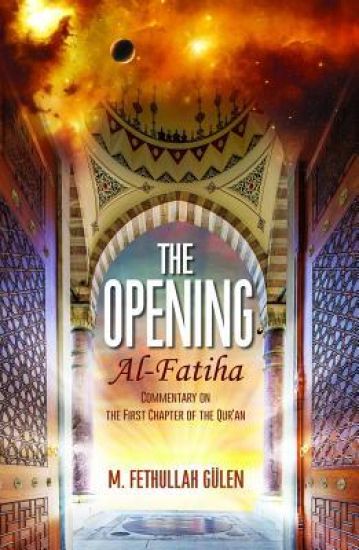
The Opening (Al-Fatiha)

The Opening (Al-Fatiha)

M Fethullah Gülen

The Light Inc
2017
nidottu
The principles of Islamic faith are not some abstract ideas. They are vital values to be known, reflected upon, believed and internalized, and with which one should achieve the true submission to God the Almighty. These values will be deepened with reflection and remembrance and nourished by worship in the broadest sense of the terms. If we consider them in our human relations and daily affairs, we will not be overcome by our desires and immoralities. In this way, a believer can stay in the sphere of faith all the time, revolving around its main axis. Matters of faith and its practice are reflected in the first Qur'anic chapter al-Fatiha (the Opening) in a great harmony. In this book, Fehullah Gulen interprets the verses of the most important chapter of the Qur'an for a deeper understanding of its relevance to the essence of Islam. Gulen's analysis is well grounded in the Islamic tradition yet provides fresh insights into the message of the Qur'an for today's readers.
Le Pacte de Sourate Fatiha
Tout musulman conna t la sourate Fatiha. Premi re sourate du Coran. La sourate obligatoire dans la salat, la pri re rituelle quotidienne. Parce qu'elle est populaire, la Fatiha est peu tudi e et peu comprise. Le pacte de Sourate Fatiha est une analyse moderne, contemporaine et spirituelle qui d veloppe le statut particulier de cette sourate dans le Coran et dans l'islam. Ce livre montre que la Fatiha est un pacte bilat ral dont les partis sont le musulman et Dieu. Un contrat spirituel o chacun des partis prend un engagement. Ce livre propose une m thode de m ditation pour approcher l' nergie des versets coraniques.
Let's Learn Surah Al-Fatiha: Islam for Kids

Let's Learn Surah Al-Fatiha: Islam for Kids

Ali Haider

Independently Published
2018
nidottu
This is an illustrated book designed to help kids know the meanings of the most important and greatest surah of the Glorious Quran, Al-Fatiha. It uses simple language and real-life examples to embed the correct belief in Allaah. Surah Al-Fatiha is referred to as the "mother of the Quran" and in it, there are the general meanings of the Quran. This book is based on the works of the great scholar of Islaam, Muhammad Bin Salih Al-Uthaymeen.