Kirjojen hintavertailu. Mukana 12 390 323 kirjaa ja 12 kauppaa.

Kirjahaku

Etsi kirjoja tekijän nimen, kirjan nimen tai ISBN:n perusteella.

1000 tulosta hakusanalla Federico Gonzalez Suarez

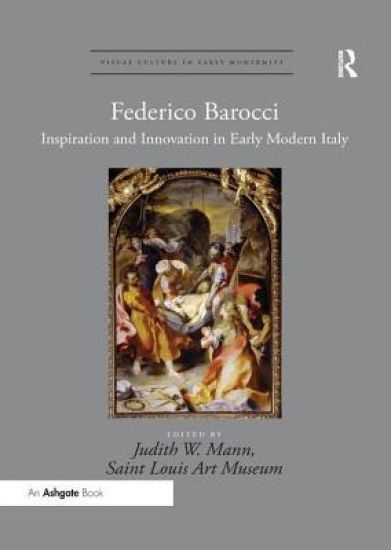
Federico Barocci
Reviewers of a recent exhibition termed Federico Barocci (ca. 1533–1612), 'the greatest artist you’ve never heard of'. One of the first original iconographers of the Counter Reformation, Barocci was a remarkably inventive religious painter and draftsman, and the first Italian artist to incorporate extensive color into his drawings. The purpose of this volume is to offer new insights into Barocci’s work and to accord this artist, the dates of whose career fall between the traditional Renaissance and Baroque periods, the critical attention he deserves. Employing a range of methodologies, the essays include new ideas on Barocci’s masterpiece, the Entombment of Christ; fresh thinking about his use of color in his drawings and innovative design methods; insights into his approach to the nude; revelations on a key early patron; a consideration of the reasons behind some of his most original iconography; an analysis of his unusual approach to the marketing of his pictures; an exploration of some little-known aspects of his early production, such as his reliance on Italian majolica and contemporary sculpture in developing his compositions; and an examination of a key Barocci document, the post mortem inventory of his studio. A translated transcription of the inventory is included as an appendix.
Federico García Lorca

Federico García Lorca

Maria M. Delgado

Routledge
2008
sidottu
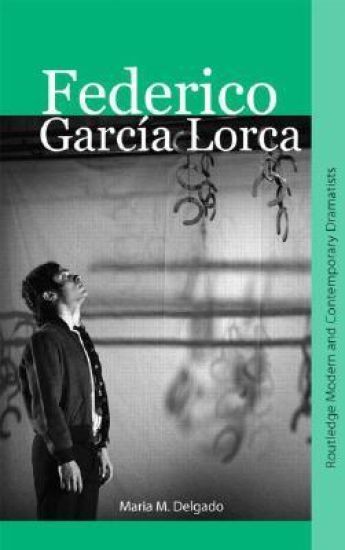
Immortalized in death by The Clash, Pablo Neruda, Salvador Dalí, Dmitri Shostakovich and Lindsay Kemp, Federico García Lorca's spectre haunts both contemporary Spain and the cultural landscape beyond. This study offers a fresh examination of one of the Spanish language’s most resonant voices; exploring how the very factors which led to his emergence as a cultural icon also shaped his dramatic output.The works themselves are also awarded the space that they deserve, combining performance histories with incisive textual analysis to restate Lorca’s presence as a playwright of extraordinary vision, in works such as:Blood WeddingThe PublicThe House of Bernarda AlbaYerma.Federico García Lorca is an invaluable new resource for those seeking to understand this complex and multifaceted figure: artist, playwright, director, poet, martyr and in the eyes of many, Spain’s ‘national dramatist’.
Federico García Lorca

Federico García Lorca

Maria M. Delgado

Routledge
2008
nidottu
Immortalized in death by The Clash, Pablo Neruda, Salvador Dalí, Dmitri Shostakovich and Lindsay Kemp, Federico García Lorca's spectre haunts both contemporary Spain and the cultural landscape beyond. This study offers a fresh examination of one of the Spanish language’s most resonant voices; exploring how the very factors which led to his emergence as a cultural icon also shaped his dramatic output.The works themselves are also awarded the space that they deserve, combining performance histories with incisive textual analysis to restate Lorca’s presence as a playwright of extraordinary vision, in works such as:Blood WeddingThe PublicThe House of Bernarda AlbaYerma.Federico García Lorca is an invaluable new resource for those seeking to understand this complex and multifaceted figure: artist, playwright, director, poet, martyr and in the eyes of many, Spain’s ‘national dramatist’.
Federico Garcia Lorca: A Life

Federico Garcia Lorca: A Life

Ian Gibson

Faber Faber
1990
pokkari
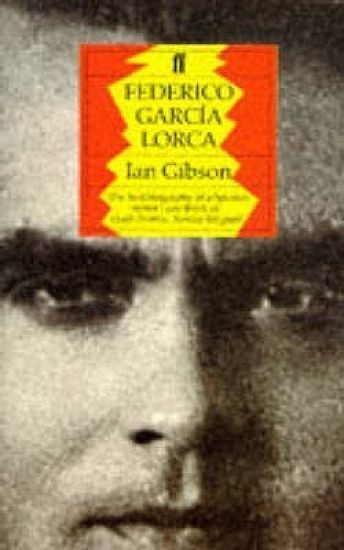
Known primarily as a poet and dramatist, Spanish writer Federico Garcia Lorca published four books before his early death in the Spanish Civil War. This biography gives an account of his family, his homosexuality and his mysterious death, as well as tracing his literary development.
Federico Garcia Lorca and the Culture of Male Homosexuality
Spain in the twentieth century gave birth to an array of astounding artistic and literary talent, including the passionately iconoclastic writer Federico Garcia Lorca. But his works were ill received in the homophobic atmosphere of institutionalized Spanish criticism. Because of this atmosphere, even today's critics have effectively marginalized and disavowed intimations of homo-affectivity and homoeroticism in the great Spanish works. This book first appeared in Spain in 1991 as counter-discourse against those prevailing ideological structures. Before its appearance, no significant work had focused on the position of Spanish culture towards homosexuality or on how homosexuality could affect the works of canonical writers. Engaging with homosexuality as an imperative source of meaning in artistic work, this volume rigorously studies the works of Federico Garcia Lorca and several of his marginalized homosexual contemporaries, including Emilio Prados, Luis Cernuda, Juan Gil-Albert, and Salvador Dali. The study relies on the textual evidence presented by these authors to define the homosexual culture as one plagued by the realities of rejection, fear of the law, self-doubts, the lack of an authorized language with which to convey emotions, the awareness of disgust around the individual, the need to accept marginality to find sexual or emotional satisfaction, and the knowledge of one's own social divergence, all of which have an enormous influence on any artist's work. With this new and updated translation, this work offers English-speaking readers the opportunity to focus on formal aspects of literary expressions of homosexuality.
Federico Fellini

Federico Fellini

University of Toronto Press
2002
sidottu
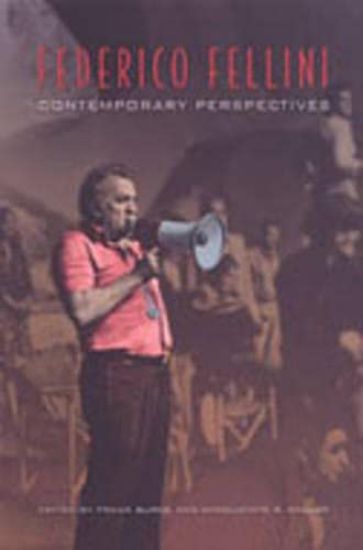
Federico Fellini remains the best known of the postwar Italian directors. This collection of essays brings Fellini criticism up to date, employing a range of recent critical filters, including semiotic, psychoanalytical, feminist and deconstructionist. Accordingly, a number of important themes arise - the reception of fascism, the crisis of the subject, the question of agency, homo-eroticism, feminism, and constructions of gender. Since the early 1970s, a slide in critical and theoretical attention to Fellini's work has corresponded with an assumption that his films are self-indulgent and lacking in political value. This volume moves the discussion towards a politics of signification, contending that Fellini's evolving self-reflexivity is not mere solipsism but rather a critique of both aesthetics and signification. The essays presented here are almost all new - the two exceptions being important signifiers in Fellini studies. The first, Frank Burke's "Federico Fellini: Reality/Representation/Signification" laid the foundation in the late 1980s for considering Fellini's work in the light of postmodernism. The second, Marguerite Waller's "Whose Dolce Vita is this Anyway?: The Language of Fellini's Cinema" (1990), provides a contemporary re-reading of Fellini's most successful film. This lively and ambitious collection brings a new critical language to bear on Fellini's films, offering fresh insights into their underlying issues and meaning. In bringing Fellini criticism up to date, it will have a significant impact on film studies, reclaiming this important director for a contemporary audience.
Federico Fellini

Federico Fellini

University of Toronto Press
2002
pokkari
Federico Fellini remains the best known of the postwar Italian directors. This collection of essays brings Fellini criticism up to date, employing a range of recent critical filters, including semiotic, psychoanalytical, feminist and deconstructionist. Accordingly, a number of important themes arise - the reception of fascism, the crisis of the subject, the question of agency, homo-eroticism, feminism, and constructions of gender. Since the early 1970s, a slide in critical and theoretical attention to Fellini's work has corresponded with an assumption that his films are self-indulgent and lacking in political value. This volume moves the discussion towards a politics of signification, contending that Fellini's evolving self-reflexivity is not mere solipsism but rather a critique of both aesthetics and signification. The essays presented here are almost all new - the two exceptions being important signifiers in Fellini studies. The first, Frank Burke's "Federico Fellini: Reality/Representation/Signification" laid the foundation in the late 1980s for considering Fellini's work in the light of postmodernism. The second, Marguerite Waller's "Whose Dolce Vita is this Anyway?: The Language of Fellini's Cinema" (1990), provides a contemporary re-reading of Fellini's most successful film. This lively and ambitious collection brings a new critical language to bear on Fellini's films, offering fresh insights into their underlying issues and meaning. In bringing Fellini criticism up to date, it will have a significant impact on film studies, reclaiming this important director for a contemporary audience.
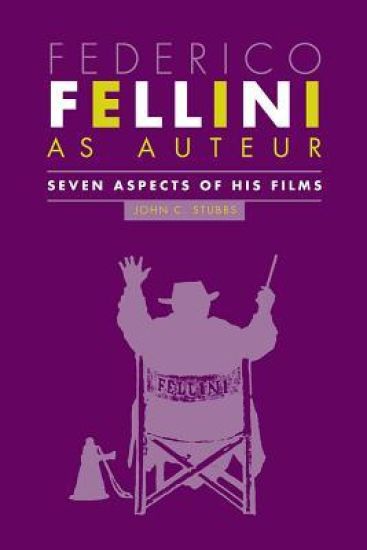
Federico Fellini as Auteur

Federico Fellini as Auteur

John C. Stubbs

Southern Illinois University Press
2015
sidottu
Federico Fellini as Auteur: Seven Aspects of His Films offers a comprehensive auteurist study of the renowned Italian director. Film scholar John C. Stubbs dispenses with a traditional filmcareer review of the man, focusing instead on the key elements of the filmmaker’s style, the influence of Carl Jung and dreams, the autobiographical depiction of childhood and adolescence, the portrait of the artist, the filmmaker’s working relationship with his wife, Fellini’s comic strategies, and his adaptation of works by others. Each of the aspects is fully contextualized. This examination of the critical elements in Fellini films offers a better understanding of the artistry that is uniquely Fellini.
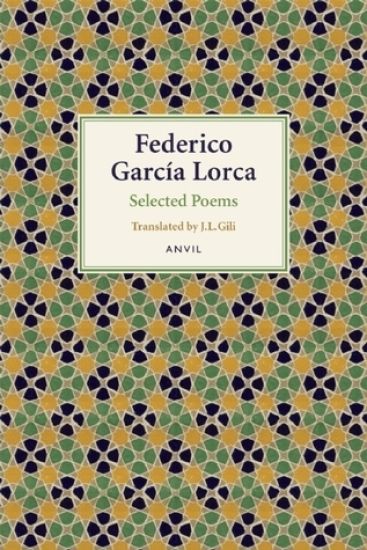
Federico Garcia Lorca

Federico Garcia Lorca

Federico Garcia Lorca

Anvil Press Poetry
2010
nidottu
J.L. Gili's selection of Lorca's poems in Spanish, with his own unassuming prose versions as guides to the originals, first appeared in 1960. With its excellent introduction and selection it remains a perfect introductory guide to the great poet. The book is ideal for newcomers to Lorca who know, or are prepared to grapple with, a little Spanish. It influenced a generation of readers and poets, including Ted Hughes who first encountered Lorca through this book.
Federico Fellini: His Life and Work

Federico Fellini: His Life and Work

Tullio Kezich

Farrar, Straus and Giroux
2007
nidottu
"Trenchant in its critical analysis, absorbing and sympathetic in its account of his private life, Kezich's Fellini is a revelation. It effaces virtually everything written to date about the Italian maestro . . . This engrossing biography mirrors its subject. It's affectionate, garrulous and often rambling, and in sudden flashes of brilliance it offers a penetrating view of Fellini's life and art." --Peter Cowie, The Nation "Few writers are able to approach Fellini with the privilege of intimate experience and friendship . . . Kezich fills the pages of this biography with uncommon detail and artistry, presenting a chronicle that weaves life with film, fact with fantasy, in a style reminiscent of the great director's avant-garde style . . . For the aficionado of Fellini's works, this narrative of his life provides a sea of subtle, precious anecdotes. To those yet unacquainted with the Italian master, the book is an introduction not only to the man's life, but his art, also. It's a captivating read." --Karoun Demirjian, The Christian Science Monitor "Kezich's forty-year friendship with the maestro allows him to offer up an intimate and lively portrait of Fellini filled with revealing anecdotes and psychological insight." --Michel Ciment, author of Kubrick and Kazan on Kazan
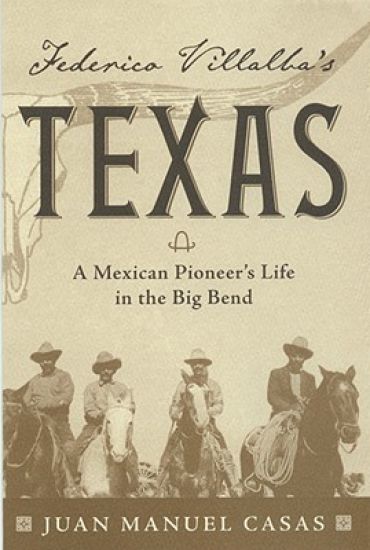
Federico Villalba's Texas

Federico Villalba's Texas

Juan Manuel Casas

Iron Mountain Press
2008
pokkari
In the 1880s Federico Villalba left old San Ger nimo (Aldama, Chihuahua) and began ranching near the village of San Carlos, about fifteen miles south of the Lajitas ford of the Rio Grande. Villalba prospered and eventually crossed the international boundary to settle and ranch in Burro Mesa. Over the bight of Santa Elena Canyon greeting the dawn of each day, Villalba built his herd of cattle and angora goats; eventually a store and talabarter a, or leather goods shop, was opened at Cerro Villalba (later Study Butte). "Fred" Villalba's life was filled with excitement, challenges, victories, and tragedies affecting pioneering families of West Texas. The indelible trails left by this noble cattle baron and industrious entrepreneur in an unforgiving region are legendary.Juan Manuel Casas narrates the history of his great-grandfather Federico Villalba and his family. This is a significant addition to the ­historical record of the Big Bend and West Texas literature ... from a Mexican national's point of view during its early years of settlement and statehood.
Federico García Lorca

Federico García Lorca

Simon Breden

TAYLOR FRANCIS LTD
2024
nidottu
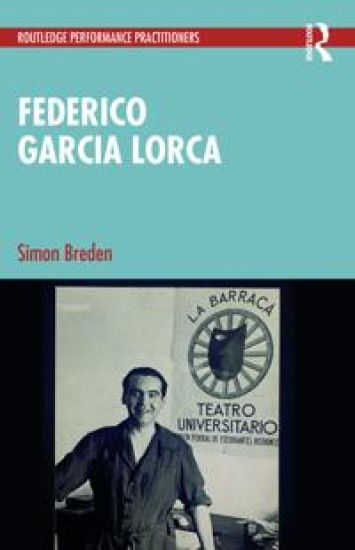
Lauded as one of the most important poets and playwrights of the twentieth century, Federico García Lorca was also an accomplished theatre director with a clear process and philosophy of how drama should be staged. Directing both his own work and that of others, Lorca was also closely involved in the rehearsals for productions of many of his plays, and from his own writings and those of his collaborators, a determined agenda to stimulate audiences and renovate theatre can be seen.This is the first book in English to fully consider Lorca as a director and his rehearsal methodology. The book combines:- A biographical account of Lorca’s work as a director and rehearsal leader, revealing his techniques and methods of approach texts;- An exploration of his key writings on and around theatre, drawing on his talks, play introductions, and some of the dramatic works themselves;- The first translation into English of his fragment Dragón;- A detailed discussion of Lorca’s key productions, Lope de Vega’s Fuente Ovejuna (1933) for La Barraca, and his own Yerma (1934).- Specific focus on the practical applications that we can draw from Lorca’s methods, both from what survives of his own work and from the accounts of his close collaborators.As a first step towards critical understanding, and as an initial exploration before going on to further, primary research, Routledge Performance Practitioners offer unbeatable value for today’s student.
Federico García Lorca

Federico García Lorca

Simon Breden

TAYLOR FRANCIS LTD
2024
sidottu
Lauded as one of the most important poets and playwrights of the twentieth century, Federico García Lorca was also an accomplished theatre director with a clear process and philosophy of how drama should be staged. Directing both his own work and that of others, Lorca was also closely involved in the rehearsals for productions of many of his plays, and from his own writings and those of his collaborators, a determined agenda to stimulate audiences and renovate theatre can be seen.This is the first book in English to fully consider Lorca as a director and his rehearsal methodology. The book combines:- A biographical account of Lorca’s work as a director and rehearsal leader, revealing his techniques and methods of approach texts;- An exploration of his key writings on and around theatre, drawing on his talks, play introductions, and some of the dramatic works themselves;- The first translation into English of his fragment Dragón;- A detailed discussion of Lorca’s key productions, Lope de Vega’s Fuente Ovejuna (1933) for La Barraca, and his own Yerma (1934).- Specific focus on the practical applications that we can draw from Lorca’s methods, both from what survives of his own work and from the accounts of his close collaborators.As a first step towards critical understanding, and as an initial exploration before going on to further, primary research, Routledge Performance Practitioners offer unbeatable value for today’s student.
Federico - Il mio Libro dei Bambini: Il libro dei bambini personalizzato per Federico, come libro per genitori o diario, per testi, immagini, disegni,
Il libro dei bambini personalizzato Federico qualcosa di molto speciale, perch porta il nome di battesimo di Federico sulla copertina quindi un'attenzione molto personale e individuale per i nuovi arrivati.La mamma, il pap , i nonni, la famiglia e gli amici di Federico da personalizzare a piacimento. All'interno, il libro dei bambini semplice: pagine vuote e incorniciate si alternano a pagine a righe, lasciando spazio a pensieri, esperienze condivise, foto, disegni e altro ancora.Il libro del bambino con copertina morbida flessibile con maniglia morbidaIl nome si trova sulla parte anteriore della busta e sulla prima pagina del libroFormato pratico 6x9 (15,2x22,9 cm)120 PagineIl libro per bambini personalizzato come regalo per beb Il libro dei bambini un bel regalo attento e personale per genitori appena sposati, una nascita, compleanno, festa per bambini o battesimo.I piccoli crescono velocemente ed difficile tenere traccia delle molte impressioni, dei piccoli dettagli e delle grandi caratteristiche. Tanto meglio se hai la possibilit di catturare i ricordi in un album. Dalla prima foto ad ultrasuoni alle descrizioni dei primi viaggi insieme, passando per la conoscenza con amici e parenti - fino ai primi esperimenti di disegni e scrittura. Cattura i momenti grazie a questo libro dei bambini personalizzato. Un libro nostalgico pieno di avvenimenti da ricordare.