
Kirjahaku
Etsi kirjoja tekijän nimen, kirjan nimen tai ISBN:n perusteella.
1000 tulosta hakusanalla Fouad Chafaa

A practical starting point for Christians to share the hope of Jesus with Muslims.Since September 11th, 2001, relationships between Christians and Muslims have been defined by fear. Increasing violence in the Middle East has caused Islam to be associated with persecution and terrorism and has led many Christians to view Muslims as the enemy. But the Bible provides clear instruction to move past fear and share the Gospel with all peoples, including Muslims. Every Christian can be an ambassador of Christ to Muslims, even without becoming an expert on Islam.In Sharing Jesus with Muslims, Fouad Masri encourages Christians to set aside fear, excuses, and differences and share the good news of Jesus. Rich with stories and conversation starters, the book gives readers tangible and respectful ways to initiate friendships and minister to the felt needs of Muslims.Sharing Jesus with Muslims serves as a step-by-step guide for effective witnessing, and includes:Conversation startersInsight into Muslim culture, including do's and don'tsBiblical responses to issues relevant to IslamStories with practical application from Masri's forty years of ministry to MuslimsDiscipleship materials for ministering to MuslimsVoid of judgement or guilt trips, pastors, ministry leaders, and everyday Christians will find their relationships with Muslims enhanced by the principles in this book. Pick up Sharing Jesus with Muslims and discover the joy of serving and relating to Muslims.
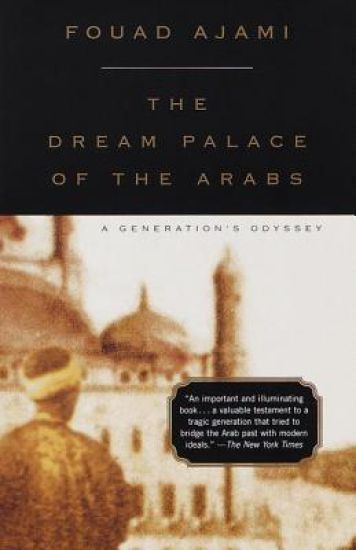
From Fouad Ajami, an acclaimed author and chronicler of Arab politics, comes a compelling account of how a generation of Arab intellectuals tried to introduce cultural renewals in their homelands through the forces of modernity and secularism. Ultimately, they came to face disappointment, exile, and, on occasion, death. Brilliantly weaving together the strands of a tumultuous century in Arab political thought, history, and poetry, Ajami takes us from the ruins of Beirut's once glittering metropolis to the land of Egypt, where struggle rages between a modernist impulse and an Islamist insurgency, from Nasser's pan-Arab nationalist ambitions to the emergence of an uneasy Pax Americana in Arab lands, from the triumphalism of the Gulf War to the continuing anguished debate over the Israeli-Palestinian peace accords.For anyone who seeks to understand the Middle East, here is an insider's unflinching analysis of the collision between intellectual life and political realities in the Arab world today.

Intended for nonspecialists with some knowledge of physics or engineering, The Quantum Beat covers a wide range of salient topics relevant to atomic clocks, treated in a broad intuitive manner with a minimum of mathematical formalism. Detailed descriptions are given of the design principles of the rubidium, cesium, hydrogen maser, and mercury ion standards; the revolutionary changes that the advent of the laser has made possible, such as laser cooling, optical pumping, the formation of "optical molasses," and the cesium "fountain" standard; and the time-based global navigation systems, Loran-C and the Global Positioning System. Also included are topics that bear on the precision and absolute accuracy of standards, such as noise, resonance line shape, the relativistic Doppler effect as well as more general relativistic notions of time relevant to synchronization of remote clocks, and time reversal symmetry. This edition retains the essentially didactic approach to the treatment of the development of atomic clocks in the first edition, but brings up to date the extraordinary developments in recent years, culminating in clocks based on quantum resonance at optical frequency in individual ions confined in miniature electromagnetic traps. These, together with advances in the generation of wide-band coherent frequency combs spanning the spectrum as far as the optical range, has made possible the direct measurement of phenomena occurring at optical frequencies! As a result of these recent advances, in addition to the time-based GPS and LORAN C navigation systems treated in the first edition, other important applications of a fundamental scientific interest have become feasible. These include satellite-borne tests of the theory of general relativity and the equivalence principle on which it is based.

How have Arab political ideas and institutions evolved since the 1967 War? How have the Arabs contended with the external influences to which their wealth has exposed them? What are the implications of the rise of Islamic fundamentalism? Fouad Ajami seeks to answer these and related questions in his illuminating study of the constraints and possibilities facing the Arab world. The book documents the political and intellectual response to the defeat of 1967 and surveys the choices facing the Arab world as exemplified by the case of Egypt. It seeks to explain the resurgence of Islamic fundamentalism and locates its roots in the failures of the dominant political order, and the stalemate of secular political ideas. This revised edition, first published in 1992, was updated and renewed the book's status as an indispensable guide to the politics of the Arab world.
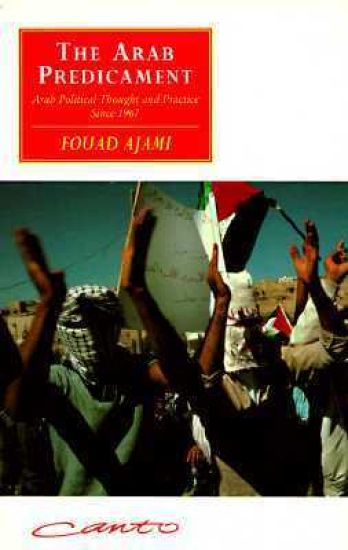
How have Arab political ideas and institutions evolved since the 1967 War? How have the Arabs contended with the external influences to which their wealth has exposed them? What are the implications of the rise of Islamic fundamentalism? Fouad Ajami seeks to answer these and related questions in his illuminating study of the constraints and possibilities facing the Arab world today. The book documents the political and intellectual response to the defeat of 1967 and surveys the choices facing the Arab world as exemplified by the case of Egypt. It seeks to explain the resurgence of Islamic fundamentalism and locates its roots in the failures of the dominant political order, and the stalemate of secular political ideas. This revised edition of Ajami's acclaimed study has been updated and renews the book’s status as an indispensable guide to the politics of the Arab world.

First published in 1990. A country’s development does not take place in a vacuum and it was therefore essential in this earlier work that the main subject (the Kingdom of Saudi Arabia’s development) should be set into an historical, political and social context. The original edition includes a summary of this background information, starting with the Kingdom’s geographical location and proceeding with a brief account of its history, its political importance and its role in the world economy. Within this context, is described the development and progress of what the Kingdom had achieved, outlining the country’s governmental structure, its administrative divisions, its available investment potential, its prevailing legal and commercial regulations, and its future plans and ambitions. This new book, which has been structured to encompass all aspects of the Kingdom’s development, contains the latest statistical data on the Kingdom’s progress, together with the newly revised background information of the former book. Thus each of the books complements the other, for each records the relevant information at a particular stage in the Kingdom of Saudi Arabia’s continuing developmental process.

Myth and Reality in the Contemporary Islamist Movement
Fouad Zakariyya; Ibrahim M. Abu-Rabi
Pluto Press
2005
sidottu
This classic book explores the intellectual, political and social foundations of Islamism, and current Islamist groups across the Arab and Muslim worlds. Written by Egyptian philosopher and leading Arab intellectual, Fouad Zakariyya, and now available for the first time in English, this thoughtful book has no rival as a critical introduction to the nature of contemporary Islamism. The book was written in the aftermath of the assassination of Egyptian president Anwar Sadat, and at the height of global debates about the relevance of Islamism in contemporary Muslim societies - especially in the light of Iran's Islamic revolution in 1979. Zakariyya offers an important analysis of the multiple voices of current Islamism. He explores various recent attempts to construct an Islamic social and political order, presenting a sustained critique of modern ideological currents and theological worldviews. He delves into the sensitive question of Shari'ah, civil society and democracy in the Arab world. Ultimately, Zakariyya argues for a secular and democratic civil society that is unconstrained by past interpretations of the Shari'ah.
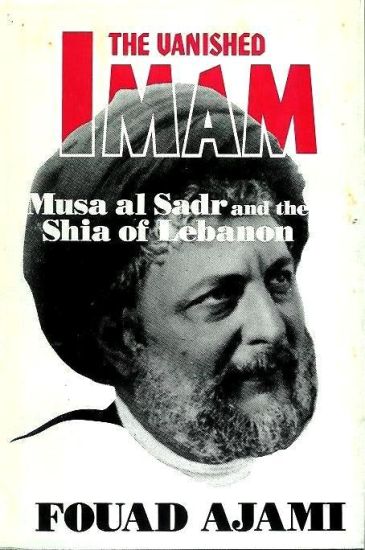
In the summer of 1978, Musa al Sadr, the spiritual leader of the Muslim Shia sect in Lebanon, disappeared mysteriously while on a visit to Libya. As in the Shia myth of the "Hidden Imam," this modern-day Imam left his followers upholding his legacy and awaiting his return. Considered an outsider when he had arrived in Lebanon in 1959 from his native Iran, he gradually assumed the role of charismatic mullah, and was instrumental in transforming the Shia, a quiescent and downtrodden Islamic minority, into committed political activists. What sort of person was Musa al Sadr? What beliefs in the Shia doctrine did his life embody? Where did he fit into the tangle of Lebanon's warring factions? What was behind his disappearance? In this fascinating and compelling narrative, Fouad Ajami resurrects the Shia's neglected history, both distant and recent, and interweaves the life and work of Musa al Sadr with the larger strands of the Shia past.
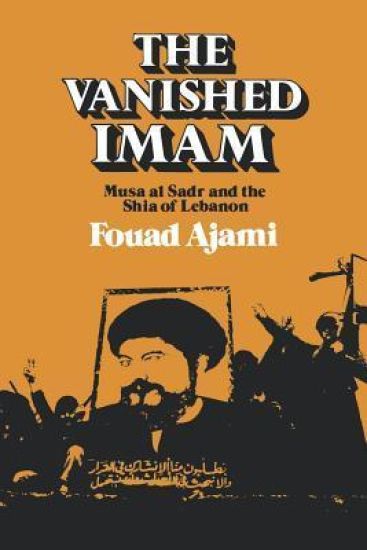
In the summer of 1978, Musa al Sadr, the spiritual leader of the Muslim Shia sect in Lebanon, disappeared mysteriously while on a visit to Libya. As in the Shia myth of the "Hidden Imam," this modern-day Imam left his followers upholding his legacy and awaiting his return. Considered an outsider when he had arrived in Lebanon in 1959 from his native Iran, he gradually assumed the role of charismatic mullah, and was instrumental in transforming the Shia, a quiescent and downtrodden Islamic minority, into committed political activists. What sort of person was Musa al Sadr? What beliefs in the Shia doctrine did his life embody? Where did he fit into the tangle of Lebanon's warring factions? What was behind his disappearance? In this fascinating and compelling narrative, Fouad Ajami resurrects the Shia's neglected history, both distant and recent, and interweaves the life and work of Musa al Sadr with the larger strands of the Shia past.
Connecting with Muslims – A Guide to Communicating Effectively
Fouad Masri; Josh McDowell
Inter-Varsity Press,US
2014
nidottu
12th Annual Outreach Resource of the Year (Cross-Cultural) How can we build bridges with Muslims? Muslims are our coworkers, neighbors and friends. But Christians don't always know how to build relationships with Muslims. Fouad Masri provides practical ways for Christians to initiate conversations and develop relationships with Muslims. He offers insights into Muslim culture and helps Christians understand and relate their Muslim friends. Masri addresses seven common questions that Muslims ask about Jesus and the Christian faith, providing sensitive answers that winsomely guide Muslims to Jesus without arguing or awkward debating. With real-life stories of fruitful conversations and genuine relationships, Masri helps readers see Muslims as Jesus sees them, without fear, with love, hope and expectation. You don't need a Ph.D. in Islam to share your faith with a Muslim. You just need the heart of an ambassador. Discover how.
The Shi'is of Saudi Arabia offers a comprehensive overview of the evolution of Shi'i opposition in the Eastern Province of Saudi Arabia, from the Iranian Revolution in 1979 to the ascension of Abdullah to the throne in August 2005. Fouad Ibrahim examines the Reform Movement, which replaced the Islamic Revolution Organization following the Shi'i uprisings in al-Hasa and Qatif. Since its initiation, the Movement has campaigned for an Islamic state similar to the Iranian model. It became more moderate in the early nineties, when it began advocating democracy, human rights and civil society. It also succeeded in bringing issues of political and individual liberty in Saudi Arabia to the attention of human rights organizations, Western governments and political parties throughout the world. The late King Fahd decreed a general amnesty in 1993, allowing Shi'i dissidents who had fled to return to the country. In return, the Shi'is were required to abandon their political programme of reform. This marked a new era for the Shi'is in the Eastern Province. Ibrahim assesses the leaders' considerable efforts to formulate a new discourse, participating in activities throughout the country with the aim of bringing about political change in the kingdom.

This work has been selected by scholars as being culturally important and is part of the knowledge base of civilization as we know it.This work is in the public domain in the United States of America, and possibly other nations. Within the United States, you may freely copy and distribute this work, as no entity (individual or corporate) has a copyright on the body of the work.Scholars believe, and we concur, that this work is important enough to be preserved, reproduced, and made generally available to the public. To ensure a quality reading experience, this work has been proofread and republished using a format that seamlessly blends the original graphical elements with text in an easy-to-read typeface.We appreciate your support of the preservation process, and thank you for being an important part of keeping this knowledge alive and relevant.
Saudi Arabia (1986) is a major study of the political and administrative development of Saudi Arabia following its establishment as a leading world exporter of oil. It looks at the status of oil in the development of the state, as well as the political systems of government in the Kingdom.

Saudi Arabia (1986) is a major study of the political and administrative development of Saudi Arabia following its establishment as a leading world exporter of oil. It looks at the status of oil in the development of the state, as well as the political systems of government in the Kingdom.

The latest edition of a perennial bestseller, Multistage Separation Processes, Fourth Edition provides a clear and thorough presentation of the theoretical foundation, and understanding of the development, evaluation, design, and optimization steps of these processes, from both an academic and industrial perspective. The book’s emphasis on starting with theoretical models and their role in computer simulation, followed by practical applications, sets it apart from other texts on this topic. The author also highlights the importance of relating fundamental concepts to intuitive understanding of the processes.See What’s New in the Fourth Edition:Chapter on fluid-solid operationsExpanded development of theories and methods for many applications Adds numerous industry-related examples and end-of-chapter problemsCase studies combined with examplesUpdated and enhanced figuresThe book includes a generous number of examples from a wide variety of applications to relate theory to actual results, and to demonstrate the performance of process under varying conditions. The chapter topics follow a logical path that starts with basics and theoretical concepts, and progresses systematically into the various separation processes. Each chapter provides the information relevant to a specific topic, and refers to appropriate chapters in the book as needed. These features combine to give you the understanding required to make the best selections of property prediction and simulation techniques and avoid the cost incurred by the use of improper simulations.
First published in 1990. A country’s development does not take place in a vacuum and it was therefore essential in this earlier work that the main subject (the Kingdom of Saudi Arabia’s development) should be set into an historical, political and social context. The original edition includes a summary of this background information, starting with the Kingdom’s geographical location and proceeding with a brief account of its history, its political importance and its role in the world economy. Within this context, is described the development and progress of what the Kingdom had achieved, outlining the country’s governmental structure, its administrative divisions, its available investment potential, its prevailing legal and commercial regulations, and its future plans and ambitions. This new book, which has been structured to encompass all aspects of the Kingdom’s development, contains the latest statistical data on the Kingdom’s progress, together with the newly revised background information of the former book. Thus each of the books complements the other, for each records the relevant information at a particular stage in the Kingdom of Saudi Arabia’s continuing developmental process.