Kirjahaku
Etsi kirjoja tekijän nimen, kirjan nimen tai ISBN:n perusteella.
1000 tulosta hakusanalla François-Régis Fine
This work has been selected by scholars as being culturally important and is part of the knowledge base of civilization as we know it.This work is in the public domain in the United States of America, and possibly other nations. Within the United States, you may freely copy and distribute this work, as no entity (individual or corporate) has a copyright on the body of the work.Scholars believe, and we concur, that this work is important enough to be preserved, reproduced, and made generally available to the public. To ensure a quality reading experience, this work has been proofread and republished using a format that seamlessly blends the original graphical elements with text in an easy-to-read typeface.We appreciate your support of the preservation process, and thank you for being an important part of keeping this knowledge alive and relevant.
Traditionally economic anthropology has been studied by sociologists, anthropologists, and philosophers seeking to highlight the social foundations of economic action. Meanwhile, anthropological questions have remained largely untreated in economics, despite the prominence given to the individual in microeconomics. And there is very little in the way of dialogue between the two sides. This book argues for a new economic anthropology which goes beyond the conflict of economics and anthropology to show the complementarity of the two approaches. Economics needs to go beyond the stage of homo oeconomicus and be open to broader ideas about the person. Equally, anthropology can be enriched through the methods and models of economic theory. This new economic anthropology goes beyond a simple observation of societies. It is new because it introduces the responsible person with a wider range of characteristics, in particular vulnerability and suffering, as a subject of economics. It is a particular interpretation of economic anthropology calling for a broadening of the subject (moving from the individual to the person), range of values (admission of negative values for altruism, social capital, responsibility), and disciplinary references. Through this approach, both economics and anthropology can be enriched. This book will be of great interest to those working in the fields of economics, anthropology, philosophy, and development studies.
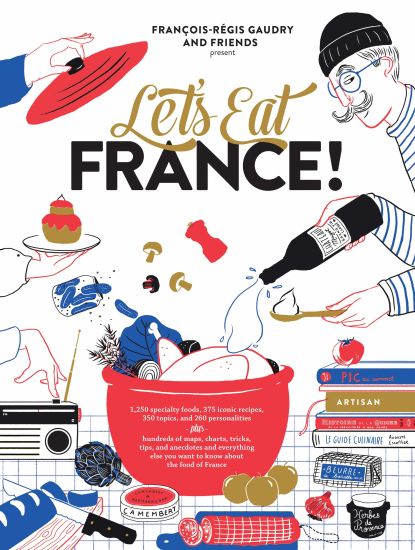
Named a Best Food Book of the Year / Best Book to Gift by the New York Times Book Review, National Geographic, Houston Chronicle, The Guardian, Real Simple, and more There's never been a book about food like Let's Eat France! A book that feels literally larger than life, it is a feast for food lovers and Francophiles, combining the completist virtues of an encyclopaedia and the obsessive visual pleasures of infographics with an enthusiast's unbridled joy. Here are classic recipes, including how to make a pot-au-feu, eight essential composed salads, pâté en croûte, blanquette de veau, choucroute, and the best ratatouille. Profiles of French food icons like Colette and Curnonsky, Brillat-Savarin and Bocuse, the Troigros dynasty and Victor Hugo. A region-by-region index of each area's famed cheeses, charcuterie, and recipes. Poster-size guides to the breads of France, the wines of France, the oysters of France-even the frites of France. You'll meet endive, the belle of the north; discover the croissant timeline; understand the art of tartare; find a chart of wine bottle sizes, from the tiny split to the Nebuchadnezzar (the equivalent of 20 standard bottles); and follow the family tree of French sauces. Adding to the overall delight of the book is the random arrangement of its content (a tutorial on mayonnaise is next to a list of places where Balzac ate), making each page a found treasure. It's a book you'll open anywhere-and never want to close.
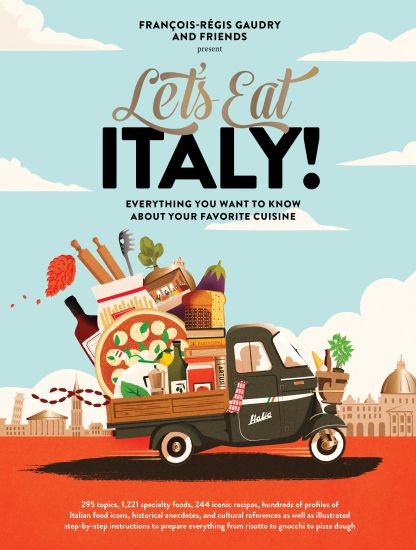
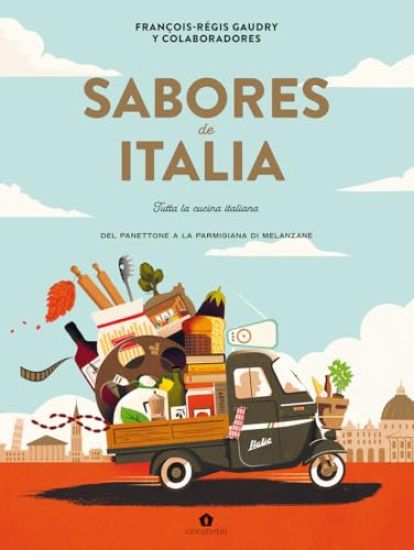
"A fantastic read for foodies and a luscious culinary reference."-Booklist From the same team that created Let's Eat France! comes this celebration of Italian food in the form of an oversized, obsessively complete, visual feast of a book. With a mix of gastronomy, food science, history, cultural references, legend, lore, charts, graphs, photos, and illustrations, every one of the 400 pages in Let's Eat Italy! is an alluring and amusing journey into Italian food.Readers will find recipes for classic Italian dishes spanning all regions, like pappa al pomodoro, Bolognese, risi e bisi, risotto, focaccia, frittata, and so much more-all accompanied by photos and delightfully entertaining information on the origins and modern uses of the foods. There's an ode to the panettone, the traditional Christmas sweet delight. A dedication to the magic of basil, Italy's "royal" herb. A love story between pasta and potatoes that examines the many dishes that marry these two starches in delicious harmony. And, of course, pasta information aplenty; it's featured in guides like that on the ultimate noodle, spaghetti, which includes all the different forms, the top spaghetti artisans in Italy, and the semolina flour mills and farmers. True Italians speak espresso, so readers will delight in the poster-like graphic that depicts 27 different types of espresso drinks. Tips for the kitchen include cooking beans in a chianti bottle-a trick Tuscan nonnas have been using for ages in the dish known as fagioli al fiasco. Learn how contemporary food trends (like the oh-so-hip orange wine, which Italians have been drinking for nearly 8,000 years) trace their roots to Italy. But the influence of Italian food doesn't stop at the table-an entire spread looks at the Italian Mafia's favourite dishes as seen in Hollywood, through the lenses of Scorsese, Leone, and Coppola. Let's Eat Italy! is a splendid exploration of this beloved cuisine, from pizza to gelato, Milan to Sicily, and from the many kitchens of Italy to your own.
Paris is the second-most visited city in the world-and food-wise, it has no peer. The cafés, the bistros, the bakeries, the grand old restaurants. And the shops, from chocolate and macarons to wine and cheese, from copper cookware to one-of-a-kind china-there's nothing like it. Not to mention the culinary culture of the French capital, with its writers, artists, movie stars, expatriates, and more, all of whom made food and drink central to their lives. How natural then, and how perfect for the reader, that the author of Let's Eat France! and Let's Eat Italy! now turns his attention to his hometown. Chockful of infographics, recipes, photographs and illustrations, biographies, anecdotes, and quirky takes on unexpected trends, present and historical, Let's Eat Paris! is the ultimate food lover's guide to the ultimate food lover's city. Read a timeline of the brasserie. An ode to the frites of Paris. Profiles of iconic restaurants: Tour d'Argent, Fouquets, L'ami Louis, La Coupole, Le Procope. Behold the sacred croissant and the twelve best places to find one. The tradition of hidden private dining rooms and other love nooks. Café Flore vs. Les Deux Magots. Best imports: kebabs, burgers, pizza. Recipes for Leeks Vinaigrette, Tournedos Rossini, Boeuf Bourguignon, Jambon-Beurre (and where to find the ones worth eating). A Hemingway tour. A guide to street markets. Art Nouveau or Art Deco? And tres, tres more.
Passez me voir d s votre retour . C'est par ces mots que commence la descente aux enfers de Vincent Douvre, licenci brutalement par son nouveau patron am ricain, avec la complicit d'un de ses coll gues. Sa d ch ance va le conduire jusqu'au fond d'une cellule o , soutenu par l'aum nier de la prison, il fait le point sur sa vie et s'efforce de rester parmi les vivants.Tout juste lib r , un incroyable coup du sort lui permet de reconqu rir les tres aim s et assouvir, implacablement, sa soif de vengeance. Paris ou en Champagne, des coteaux de l'Ombrie ou en plein coeur du Massachusetts, Vincent Douvre laisse libre cours ses fantasmes, avec l'aide de son meilleur ami, le pittoresque Arthur Desvin de Ch tillon. Entre thriller corporate, histoire sentimentale et r cit d'aventure, ce roman, la fois poignant et jubilatoire, invite le lecteur suivre le h ros sur un chemin pas vraiment pav de bonnes intentions...
Notice Sur Les Eaux Thermales de Néris
Louis-François-Régis-Adolphe Richond Des Brus
Hachette Livre - BNF
2016
pokkari
de l'Influence Du Plaisir Dans Le Traitement Des Maladies
Louis-François-Régis-Adolphe Richond Des Brus
Hachette Livre - BNF
2014
pokkari
De l'Influence du plaisir dans le traitement des maladies, par M. Richond Des Brus, ...Date de l'edition originale: 1844Ce livre est la reproduction fidele d'une oeuvre publiee avant 1920 et fait partie d'une collection de livres reimprimes a la demande editee par Hachette Livre, dans le cadre d'un partenariat avec la Bibliotheque nationale de France, offrant l'opportunite d'acceder a des ouvrages anciens et souvent rares issus des fonds patrimoniaux de la BnF.Les oeuvres faisant partie de cette collection ont ete numerisees par la BnF et sont presentes sur Gallica, sa bibliotheque numerique.En entreprenant de redonner vie a ces ouvrages au travers d'une collection de livres reimprimes a la demande, nous leur donnons la possibilite de rencontrer un public elargi et participons a la transmission de connaissances et de savoirs parfois difficilement accessibles.Nous avons cherche a concilier la reproduction fidele d'un livre ancien a partir de sa version numerisee avec le souci d'un confort de lecture optimal. Nous esperons que les ouvrages de cette nouvelle collection vous apporteront entiere satisfaction.Pour plus d'informations, rendez-vous sur www.hachettebnf.fr
de l'Influence Du Plaisir Dans Le Traitement Des Maladies, Par M. Richond Des Brus, ...
Louis-François-Régis-Adolphe Richond Des Brus
Hachette Livre - BNF
2014
pokkari
De l'Influence du plaisir dans le traitement des maladies, par M. Richond Des Brus, ...Date de l'edition originale: 1854Ce livre est la reproduction fidele d'une oeuvre publiee avant 1920 et fait partie d'une collection de livres reimprimes a la demande editee par Hachette Livre, dans le cadre d'un partenariat avec la Bibliotheque nationale de France, offrant l'opportunite d'acceder a des ouvrages anciens et souvent rares issus des fonds patrimoniaux de la BnF.Les oeuvres faisant partie de cette collection ont ete numerisees par la BnF et sont presentes sur Gallica, sa bibliotheque numerique.En entreprenant de redonner vie a ces ouvrages au travers d'une collection de livres reimprimes a la demande, nous leur donnons la possibilite de rencontrer un public elargi et participons a la transmission de connaissances et de savoirs parfois difficilement accessibles.Nous avons cherche a concilier la reproduction fidele d'un livre ancien a partir de sa version numerisee avec le souci d'un confort de lecture optimal. Nous esperons que les ouvrages de cette nouvelle collection vous apporteront entiere satisfaction.Pour plus d'informations, rendez-vous sur www.hachettebnf.fr
de l'Influence Du Plaisir Dans Le Traitement Des Maladies
Louis-François-Régis-Adolphe Richond Des Brus
Hachette Livre - BNF
2017
pokkari
de l'Influence Du Plaisir Dans Le Traitement Des Maladies
Louis-François-Régis-Adolphe Richond Des Brus
Hachette Livre - BNF
2017
pokkari
Panégyriques 2e Mille. Saint Martin de Tours. Saint Vincent de Paul. Le Bienheureux Perboyre.
Joseph-François-Régis Rozier
Hachette Livre - BNF
2016
pokkari
Panegyriques prononces par Mgr Rozier, ... 2e mille. Saint Martin de Tours. Saint Vincent de Paul. Le Bienheureux Perboyre. Saint Pierre Claver. Saint Jean Berkmans. Saint Alphonse Rodriguez. Saint Charles Borromee. Saint Francois d'Assise. Saint Louis de Gonzague. Le Bienheureux J.-B. de La Salle. Saint MauriceDate de l'edition originale: 1893Ce livre est la reproduction fidele d'une oeuvre publiee avant 1920 et fait partie d'une collection de livres reimprimes a la demande editee par Hachette Livre, dans le cadre d'un partenariat avec la Bibliotheque nationale de France, offrant l'opportunite d'acceder a des ouvrages anciens et souvent rares issus des fonds patrimoniaux de la BnF.Les oeuvres faisant partie de cette collection ont ete numerisees par la BnF et sont presentes sur Gallica, sa bibliotheque numerique.En entreprenant de redonner vie a ces ouvrages au travers d'une collection de livres reimprimes a la demande, nous leur donnons la possibilite de rencontrer un public elargi et participons a la transmission de connaissances et de savoirs parfois difficilement accessibles.Nous avons cherche a concilier la reproduction fidele d'un livre ancien a partir de sa version numerisee avec le souci d'un confort de lecture optimal. Nous esperons que les ouvrages de cette nouvelle collection vous apporteront entiere satisfaction.Pour plus d'informations, rendez-vous sur www.hachettebnf.fr