Kirjojen hintavertailu. Mukana 11 244 527 kirjaa ja 12 kauppaa.

Kirjahaku

Etsi kirjoja tekijän nimen, kirjan nimen tai ISBN:n perusteella.

1000 tulosta hakusanalla Francis Alua

Francis

Francis

D. a. Groves

Createspace Independent Publishing Platform
2018
nidottu
Francis made a mistake. He stole thinking he would get away with it. But his mistake cost him his job, his family and nearly his life. His mistake tips him onto the streets of Dublin and he joins the homeless of Ireland's capital city. He is alone and desperate. The city rips away his self esteem and self worth and plunges him into a world of death and suffering. To survive he must fight to help those who have gone before him. Their survival and recognition will mean life and a second chance for him.
Francis

Francis

Ann Wroe

Jonathan Cape Ltd
2018
sidottu
**LONGLISTED FOR THE RATHBONES FOLIO PRIZE 2019****SHORTLISTED FOR THE CATHOLIC HERALD BOOK AWARDS 2019**A life of St Francis in verseThroughout her career Ann Wroe has constantly confounded expectations, following her own unique path. Now, in Francis, she turns to verse to tell the life of St Francis of Assisi. This is a sequence only Ann Wroe could write, combining a troubadour's musicality with full grasp of the moment, and a luminous sense of Francis as both myth and man, across history and culture, in nature and community. It is a remarkable and immensely beautiful book.St Francis was one of the most compelling spirits the world has seen. He was also a poet, a musician and a dancer. His world was coloured by troubadour lays, brightened by birdsong, ordered by the bells and chants of the Church and transfigured by the angel-lyres he heard about him. For Ann Wroe, this seems a good reason to write his life in songs. It is also an excuse to record, in songs, the many ways his presence and his music still linger round us. They surprise us in chance encounters in city streets; they waylay us amid the humdrum banalities of working life; they persist in the beauties of nature. Great spirits never leave us. They echo on and on.
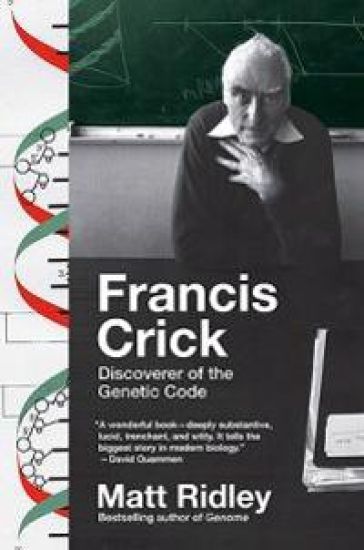
Francis Crick

Francis Crick

Matt Ridley

HARPERCOLLINS PUBLISHERS
2008
nidottu
Acclaimed author Matt Ridley traces the colourful life of the man who discovered the structure of DNA, the building blocks of life. Building on a biographical tradition that can be traced back to Aubrey's ‘Brief Lives’, Dr Johnson's ‘Lives of the Poets’ and Lytton Strachey's ‘Eminent Victorians’, this exciting and ground-breaking new series pairs great biographers, historians and novelists with iconic subjects, the writing bristling with original and distinctive points of view. On 28 February 1953, Francis Crick walked into the Eagle pub in Cambridge and announced that he and his American colleague James Watson ‘had found the secret of life’. In fact, they had indeed done so. That morning, Crick and Watson had worked out the structure of DNA (deoxyribonucleic acid). They had discovered its 'double helix' form, one which could replicate itself, confirming theories that it carried life's hereditary information. Matt Ridley's life of Crick begins with his birth in 1916 at the home of a shoe factory owner, his early explosive experiments at primary school and time developing torpedoes in the Navy. After his seismic DNA discovery, which won him the Nobel Prize before he'd even gained a PhD, the scientist's later work was rarely uncontroversial. From California, he proposed that life began when micro-organisms from another planet were dropped here by a spaceship sent to Earth, and maintained that the 'human soul' was entirely explicable in terms of brain activity. Matt Ridley's entertaining account traces the colourful and entirely original work behind one of mankind's greatest discoveries and displays the life of a scientist considered of the very first rank.
Francis Bacon

Francis Bacon

Mark Stevens; Annalyn Swan

HARPERCOLLINS PUBLISHERS
2022
pokkari
The Times Art Book of the Year 2021 'Must surely be the definitive life of Francis Bacon ... A biography that no Bacon fan - or indeed foe - can afford to overlook ... Mesmerising' THE TIMES 'A magnificent triumph ... I was captivated by every line' OBSERVER
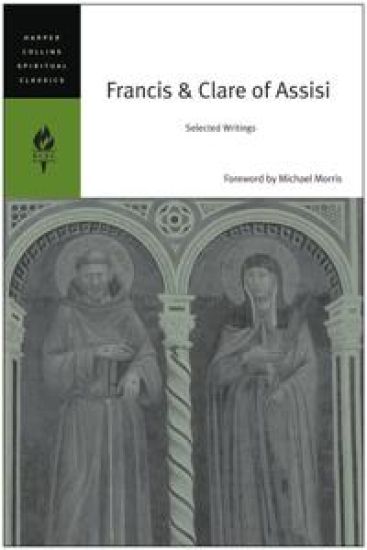
Francis And Clare Of Assisi

Francis And Clare Of Assisi

E (Ed) Griffin

HarperOne
2006
nidottu
A collection of writings by two individuals who shaped the spirituality of early thirteenth-century Europe includes the works of St. Francis and St. Clare of Assisi, two extraordinary spiritual leaders who rejected their families' wealth to found religious orders renowned for their emphasis on humility, generosity, and devoted faith. Original.
Francis Crick: Discoverer of the Genetic Code
Part of the acclaimed Eminent Lives series, Francis Crick is the first biography of the eminent scientist, co-discoverer of the double helix structure of DNA. Written by Matt Ridley, the award-winning author of the national bestseller Genome, Francis Crick traces his life from middle class mediocrity in the English Midlands through a lackluster education and six years designing magnetic mines for the Royal Navy to his leap into biology at the age of 31 and his enormous success, providing "a considerably more complete and colorful portrait of Crick than has existed before." (New York Times)
Francis I: The Maker of Modern France
The bestselling author of Catherine de Medici returns to sixteenth-century Europe in this evocative and entertaining biography that recreates a remarkable era of French history and brings to life a great monarch--Francis I--who turned France into a great nation.Catherine de Medici's father-in-law, King Francis of France, was the perfect Renaissance knight, the movement's exemplar and its Gallic interpreter. An aesthete, diplomat par excellence, and contemporary of Machiavelli, Francis was the founder of modern France, whose sheer force of will and personality molded his kingdom into the first European superpower. Arguably the man who introduced the Renaissance to France, Francis was also the prototype Frenchman--a national identity was modeled on his character. So great was his stamp, that few countries even now are quite so robustly patriotic as is France. Yet as Leonie Frieda reveals, Francis did not always live up to his ideal; a man of grand passions and vision, he was also a flawed husband, father, lover, and king.With access to private archives that have never been used in a study of Francis I, Frieda explores the life of a man who was the most human of the monarchs of the period--and yet, remains the most elusive.
Francis I: The Maker of Modern France

Francis I: The Maker of Modern France

Leonie Frieda

HARPER PERENNIAL
2019
nidottu
The bestselling author of Catherine de Medici returns to sixteenth-century Europe in this evocative and entertaining biography that recreates a remarkable era of French history and brings to life a great monarch--Francis I--who turned France into a great nation.Catherine de Medici's father-in-law, King Francis of France, was the perfect Renaissance knight, the movement's exemplar and its Gallic interpreter. An aesthete, diplomat par excellence, and contemporary of Machiavelli, Francis was the founder of modern France, whose sheer force of will and personality molded his kingdom into the first European superpower. Arguably the man who introduced the Renaissance to France, Francis was also the prototype Frenchman--a national identity was modeled on his character. So great was his stamp, that few countries even now are quite so robustly patriotic as is France. Yet as Leonie Frieda reveals, Francis did not always live up to his ideal; a man of grand passions and vision, he was also a flawed husband, father, lover, and king.With access to private archives that have never been used in a study of Francis I, Frieda explores the life of a man who was the most human of the monarchs of the period--and yet, remains the most elusive.
The Oxford Francis Bacon VI

The Oxford Francis Bacon VI

Francis Bacon

Clarendon Press
1996
sidottu
This volume inaugurates a new critical edition of the writings of the great English philosopher and sage Francis Bacon (1561-1626) - the first such complete edition for more than a hundred years. It contains six of Bacon's Latin scientific works, each accompanied by entirely new facing-page translations which, together with the extensive introduction and commentaries, offer fresh insights into one of the great minds of the early seventeenth century.
The Oxford Francis Bacon IV

The Oxford Francis Bacon IV

Francis Bacon

Clarendon Press
2000
sidottu
This is the first critical edition since the nineteenth century of Bacon's principal philosophical work in English, The Twoo Bookes of Francis Bacon. Of the proficience and advancement of Learning, divine and humane - traditionally known as The Advancement of Learning.
Francis Poulenc

Francis Poulenc

Mellers Wilfrid

Oxford University Press
1995
nidottu
Once considered as little more than the froth in the wake of the First World War, a witty boy-hedonist who, in the giddy Twenties, tweaked the noses of moribund establishmentarians, Poulenc has in fact proved unexpectedly durable - more so than any of his colleagues among Les Six, including those who developed more grandiose ambitions. Here is a survey of Poulenc's music, based on careful selection of his works, and written by an authoritative guide. Having placed Poulenc in the context of French life and society after the First World War and considered him in relation to his masters and mentors, especially Satie and Chabrier, Mellers turns to Poulenc's Diaghilev ballet, Les Biches, to important sequels to it, such as Concert champêtre and Aubade, and to works of transition, such as the Concerto for two pianos and orchestra. The next section discusses the `social' music of Poulenc's middle years - especially the music for piano (for Poulenc a domestic instrument), written during the Thirties, and the centrality of song in his work; some account is offered of his relationship with his main poets, Guillaume Apollinaire, Paul Eluard, and Louise de Vilmorin. Mellers mext considers the impact on Poulenc of the Second World War, especially as manifest in the great choral work Quatre Motets de Pénitence and the Organ Concerto. Separate chapters deal with the three main operatic pieces and Poulenc's relationship to Bernanos and Jean Cocteau; with the late devotional works, especially the Stabat Mater, the Gloriam and the Sept Répons des Ténèbres; and with the chamber works of the last few years. The chapters are illustrated througout with music examples. Adopting a broadly chronological approach, Mellers traces Poulenc's development as a composer from enfant terrible to a mature composer both for secular Society and for the liturgy of the Catholic Church; in so doing he points to the reasons for the durability and pertinacity of his appeal. Mellers further assesses Poulenc's place in the French tradition, and, in a Postlude, pays tribute to the warm regard with which Poulenc was held by so many of his fellow musicians.
The Oxford Francis Bacon XIII

The Oxford Francis Bacon XIII

Francis Bacon

Clarendon Press
2000
sidottu
This volume belongs to the first new critical edition of the works of Francis Bacon (1561-1626) to have been produced since the nineteenth century. The edition presents the works in broadly chronological order and according to the best principles of modern textual scholarship. The seven works in the present volume belong to the final completed stages (Parts III-V) of Bacon's hugely ambitious six-part sequence of philosophical works, collectively entitled Instauratio magna (1620-6). All are presented in the original Latin with new facing-page translations. Three of the seven texts (substantial works in two cases, and all sharing a startlingly improbable textual history) are published and translated here for the first time: these are an early version of the Historia densi, the 'lost' Abecedarium, and the Historia de animato & inanimato. Another - the Prodromi sive anticipationes philosophiae secundae - has likewise never been translated before. Together with their commentaries and the introduction they open the way to important new understandings of Bacon's mature philosophical thought.
The Oxford Francis Bacon XV

The Oxford Francis Bacon XV

Francis Bacon

Clarendon Press
2000
sidottu
Bacon's essays reflect the experience and wide reading of a Renaissance man - philosopher, historian, judge, politician, adviser to the Prince - above all, astute observer of human nature. With uncompromising candour, he exposes man as he is, not as he ought to be, examining such givens of Renaissance power as negotiating for position, expediting a personal suit, speaking effectively, and the role of dissimulation in social and political situations. He scrutinizes judicial prerogatives and probes the causes and dangers of atheism and superstition. Even such topics as boldness or love or deformity have a practical bent. In Bacon's own phrase, these essays 'come home to Mens Businesse and Bosomes.' It is especially through their matchless style that they come home–with imaginative vigour, concrete language, and the colloquial force of individual sentences. An introduction places the essays in their original context, examines their evolution over Bacon's lifetime, and elucidates their form and prose style; a commentary examines his sources and relates essays to his other writings; a glossary and index are also included.
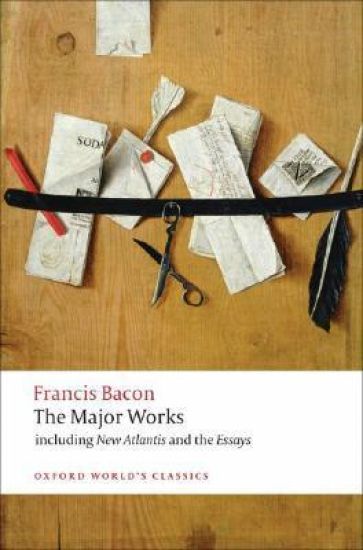
Francis Bacon

Francis Bacon

Francis Bacon

Oxford University Press
2008
nidottu
This authoritative edition was originally published in the acclaimed Oxford Authors series under the general editorship of Frank Kermode. It brings together an extensive collection of Bacon's writing - the major prose in full, together with sixteen other pieces not otherwise available - to give the essence of his work and thinking. Although he had a distinguished career as a lawyer and statesman, Francis Bacon's lifelong goal was to improve and extend human knowledge. In The Advancement of Learning (1605) he made a brilliant critique of the deficiencies of previous systems of thought and proposed improvements to knowledge in every area of human life. He conceived the Essays (1597, much enlarged in 1625) as a study of the formative influences on human behaviour, psychological and social. In The New Atlantis (1626) he outlined his plan for a scientific research institute in the form of a Utopian fable. In addition to these major English works this edition includes 'Of Tribute', an important early work here printed complete for the first time, and a revealing selection of his legal and political writings, together with his poetry. A special feature of the edition is its extensive annotation which identifies Bacon's sources and allusions, and glosses his vocabulary. ABOUT THE SERIES: For over 100 years Oxford World's Classics has made available the widest range of literature from around the globe. Each affordable volume reflects Oxford's commitment to scholarship, providing the most accurate text plus a wealth of other valuable features, including expert introductions by leading authorities, helpful notes to clarify the text, up-to-date bibliographies for further study, and much more.
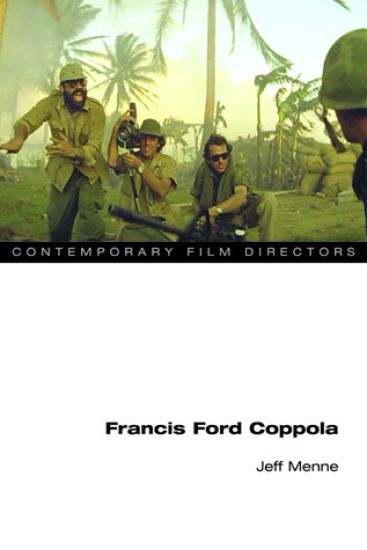
Francis Ford Coppola

Francis Ford Coppola

Jeff Menne

University of Illinois Press
2014
sidottu
Acclaimed as one of the most influential and innovative American directors, Francis Ford Coppola is also lionized as a maverick auteur at war with Hollywood's power structure and an ardent critic of the postindustrial corporate America it reflects. However, Jeff Menne argues that Coppola exemplifies the new breed of creative corporate person and sees the director's oeuvre as vital for reimagining the corporation in the transformation of Hollywood. Reading auteur theory as the new American business theory, Menne reveals how Coppola's vision of a new kind of company has transformed the worker into a liberated and well-utilized artist, but has also commodified individual creativity at a level unprecedented in corporate history. Coppola negotiated the contradictory roles of shrewd businessman and creative artist by recognizing the two roles are fused in a postindustrial economy. Analyzing films like The Godfather (1970) and the overlooked Tucker: The Man and His Dream (1988) through Coppola's use of opera, Menne illustrates how Coppola developed a defining musical aesthetic while making films that reflected the idea of a corporation as family--and how his studio American Zoetrope came to represent a new brand of auteurism and the model for post-Fordist Hollywood.
Francis Ford Coppola

Francis Ford Coppola

Jeff Menne

University of Illinois Press
2014
nidottu
Acclaimed as one of the most influential and innovative American directors, Francis Ford Coppola is also lionized as a maverick auteur at war with Hollywood's power structure and an ardent critic of the postindustrial corporate America it reflects. However, Jeff Menne argues that Coppola exemplifies the new breed of creative corporate person and sees the director's oeuvre as vital for reimagining the corporation in the transformation of Hollywood. Reading auteur theory as the new American business theory, Menne reveals how Coppola's vision of a new kind of company has transformed the worker into a liberated and well-utilized artist, but has also commodified individual creativity at a level unprecedented in corporate history. Coppola negotiated the contradictory roles of shrewd businessman and creative artist by recognizing the two roles are fused in a postindustrial economy. Analyzing films like The Godfather (1970) and the overlooked Tucker: The Man and His Dream (1988) through Coppola's use of opera, Menne illustrates how Coppola developed a defining musical aesthetic while making films that reflected the idea of a corporation as family--and how his studio American Zoetrope came to represent a new brand of auteurism and the model for post-Fordist Hollywood.