Kirjojen hintavertailu. Mukana 11 699 587 kirjaa ja 12 kauppaa.

Kirjahaku

Etsi kirjoja tekijän nimen, kirjan nimen tai ISBN:n perusteella.

1000 tulosta hakusanalla Francis Bacon

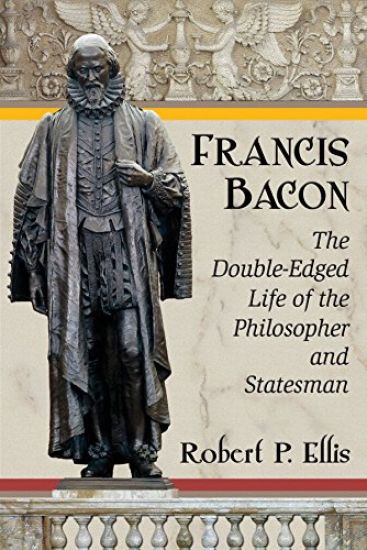
Francis Bacon

Francis Bacon

Robert P. Ellis

McFarland Co Inc
2015
pokkari
Around the time Shakespeare inaugurated the golden age of English drama, the young Francis Bacon proposed to take "all knowledge to be my province." He soon realized the difficulty of that but in the process he posed two related questions, which he understood better than any other man of his time: Can human beings respect and obey nature, and Can they also command nature? He asked many other questions considered useless and impractical in his time but vital in ours. After a busy career as an English parliamentarian, judge and advisor of King James I, Bacon published in his final years The Advancement of Learning, which included his New Atlantis, with its prescient vision of human accomplishments, many achieved only in the past century. The first important book of English essays, it is an investigation of civil and moral problems that continue to engage and perplex us.
Francis Bacon

Francis Bacon

Gilles Deleuze

University of Minnesota Press
2005
nidottu
Translated and with an Introduction by Daniel W. Smith Afterword by Tom Conley Gilles Deleuze had several paintings by Francis Bacon hanging in his Paris apartment, and the painter's method and style as well as his motifs of seriality, difference, and repetition influenced Deleuze's work. This first English translation shows us one of the most original and important French philosophers of the twentieth century in intimate confrontation with one of that century's most original and important painters. In considering Bacon, Deleuze offers implicit and explicit insights into the origins and development of his own philosophical and aesthetic ideas, ideas that represent a turning point in his intellectual trajectory. First published in French in 1981, Francis Bacon has come to be recognized as one of Deleuze's most significant texts in aesthetics. Anticipating his work on cinema, the baroque, and literary criticism, the book can be read not only as a study of Bacon's paintings but also as a crucial text within Deleuze's broader philosophy of art. In it, Deleuze creates a series of philosophical concepts, each of which relates to a particular aspect of Bacon's paintings but at the same time finds a place in the "general logic of sensation." Illuminating Bacon's paintings, the nonrational logic of sensation, and the act of painting itself, this work—presented in lucid and nuanced translation—also points beyond painting toward connections with other arts such as music, cinema, and literature. Francis Bacon is an indispensable entry point into the conceptual proliferation of Deleuze's philosophy as a whole. Gilles Deleuze (1925–1995) was professor of philosophy at the University of Paris, Vincennes–St. Denis. He coauthored Anti-Oedipus and A Thousand Plateaus with Félix Guattari. These works, as well as Cinema 1, Cinema 2, The Fold, Proust and Signs, and others, are published in English by Minnesota. Daniel W. Smith teaches in the Department of Philosophy at Purdue University.
Francis Bacon

Francis Bacon

Catherine Drinker Bowen

Fordham University Press
1993
sidottu
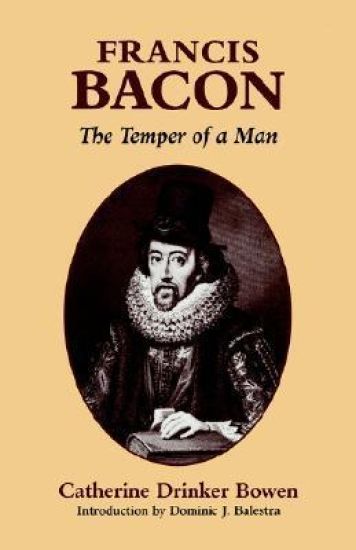
The portrait Bowen paints of this controversial man, Francis Bacon (1561-1626), balances the outward life and actions of Bacon with the seemingly contradictory aspects of his refined philosophical reflections. When Bacon's more notorious attributes are set in historical context, his actions seem less personally vindictive against the backdrop of an entire age seemingly devoted to the very vanity and ingenuousness with which he is so often accused. As Lord Chancellor of England, Bacon was impeached by Parliament for taking bribes in office, convicted, and banished from London an the law courts. In a prayer Bacon composed during the interval following his punishment, he reveals that the dichotomy of his existence was no more deeply felt than by himself, and he readily admits that his obligations to society were not as suited to his nature as the study of philosophy, science and law. Modem scholars hold Bacon's philosophical works, "Novum Organum", "Advancement of Learning" and "New Atlantis" as his greatest achievements. Bowen's story reveals a man whose genius it was not to immerse himself in the rigour of scientific experimentation, but to realise what questions science should ask, and thereby reach beyond the status quo and appeal to the wider imagination of his generation. In his writings, Bacon challenged established social and religious orders, raised questions about mind/body relation and the role of dreams, and foresaw the day when scientists at colleges and universities would share experimentation. It is Bacon's legacy to have gone beyond his age and, out of pure intuition, anticipate the concerns of future generations.
Francis Bacon

Francis Bacon

Catherine Drinker Bowen

Fordham University Press
1993
pokkari
The portrait Bowen paints of this controversial man, Francis Bacon (1561-1626), balances the outward life and actions of Bacon with the seemingly contradictory aspects of his refined philosophical reflections. When Bacon's more notorious attributes are set in historical context, his actions seem less personally vindictive against the backdrop of an entire age seemingly devoted to the very vanity and ingenuousness with which he is so often accused. As Lord Chancellor of England, Bacon was impeached by Parliament for taking bribes in office, convicted, and banished from London an the law courts. In a prayer Bacon composed during the interval following his punishment, he reveals that the dichotomy of his existence was no more deeply felt than by himself, and he readily admits that his obligations to society were not as suited to his nature as the study of philosophy, science and law. Modem scholars hold Bacon's philosophical works, "Novum Organum", "Advancement of Learning" and "New Atlantis" as his greatest achievements. Bowen's story reveals a man whose genius it was not to immerse himself in the rigour of scientific experimentation, but to realise what questions science should ask, and thereby reach beyond the status quo and appeal to the wider imagination of his generation. In his writings, Bacon challenged established social and religious orders, raised questions about mind/body relation and the role of dreams, and foresaw the day when scientists at colleges and universities would share experimentation. It is Bacon's legacy to have gone beyond his age and, out of pure intuition, anticipate the concerns of future generations.
Francis Bacon

Francis Bacon

Gilles Deleuze

BLOOMSBURY PUBLISHING PLC
2003
sidottu
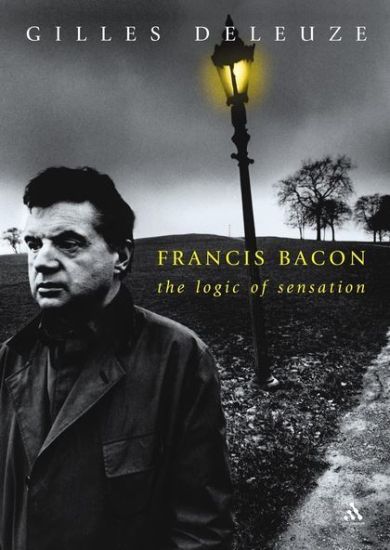
Gilles Deleuze was one of the most influential and revolutionary philosophers of the twentieth century. Francis Bacon: The Logic of Sensation is his long-awaited work on Bacon,widely regarded as one of the most radical painters of the twentieth century.The book presents a deep engagement with Bacon's work and the nature of art. Deleuze analyzes the distinctive innovations that came to mark Bacon's style: the isolation of the figure, the violation deformations of the flesh, the complex use of color, the method of chance, and the use of the triptych form. Along the way, Deleuze introduces a number of his own famous concepts, such as the 'body without organs' and the 'diagram,' and contrasts his own approach to painting with that of both the phenomenological and the art historical traditions.Deleuze links Bacon's work to CTzanne's notion of a 'logic' of sensation, which reaches its summit in color and the 'coloring sensation.' Investigating this logic, Deleuze explores Bacon's crucial relation to past painters such as Velasquez, CTzanne, and Soutine, as well as Bacon's rejection of expressionism and abstract painting.Long awaited in translation, Francis Bacon is destined to become a classic philosophical reflection on the nature of painting.
The Works of Francis Bacon

The Works of Francis Bacon

Francis Bacon

Cambridge University Press
2011
pokkari
Francis Bacon (1561–1626), the English philosopher, statesman and jurist, is best known for developing the empiricist method which forms the basis of modern science. Bacon's writings concentrated on philosophy and judicial reform. His most significant work is the Instauratio Magna comprising two parts - The Advancement of Learning and the Novum Organum. The first part is noteworthy as the first major philosophical work published in English (1605). James Spedding (1808–81) and his co-editors arranged this fourteen-volume edition, published in London between 1857 and 1874, not in chronological order but by subject matter, so that different volumes would appeal to different audiences. The material is divided into three parts: philosophy and general literature; legal works; and letters, speeches and tracts relating to politics. Volume 1, published 1857, contains the biography by Bacon's secretary, William Rawley (c.1588–1667), and part 1 of the philosophical works included in the Instauratio Magna.
The Works of Francis Bacon

The Works of Francis Bacon

Francis Bacon

Cambridge University Press
2011
pokkari
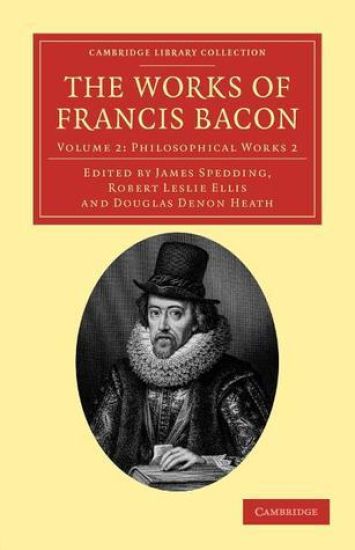
Francis Bacon (1561–1626), the English philosopher, statesman and jurist, is best known for developing the empiricist method which forms the basis of modern science. Bacon's writings concentrated on philosophy and judicial reform. His most significant work is the Instauratio Magna comprising two parts - The Advancement of Learning and the Novum Organum. The first part is noteworthy as the first major philosophical work published in English (1605). James Spedding (1808–81) and his co-editors arranged this fourteen-volume edition, published in London between 1857 and 1874, not in chronological order but by subject matter, so that different volumes would appeal to different audiences. The material is divided into three parts: philosophy and general literature; legal works; and letters, speeches and tracts relating to politics. Volume 2, published in 1857, continues part 1 of Bacon's Latin writings intended to be included as part of the Instauratio Magna.
The Works of Francis Bacon

The Works of Francis Bacon

Francis Bacon

Cambridge University Press
2011
pokkari
Francis Bacon (1561–1626), the English philosopher, statesman and jurist, is best known for developing the empiricist method which forms the basis of modern science. Bacon's writings concentrated on philosophy and judicial reform. His most significant work is the Instauratio Magna comprising two parts - The Advancement of Learning and the Novum Organum. The first part is noteworthy as the first major philosophical work published in English (1605). James Spedding (1808–81) and his co-editors arranged this fourteen-volume edition, published in London between 1857 and 1874, not in chronological order but by subject matter, so that different volumes would appeal to different audiences. The material is divided into three parts: philosophy and general literature; legal works; and letters, speeches and tracts relating to politics. Volume 3, published in 1857, contains Bacon's philosophical works in Latin that either were not intended to be part of the Instauratio Magna or were abandoned.
The Works of Francis Bacon

The Works of Francis Bacon

Francis Bacon

Cambridge University Press
2011
pokkari
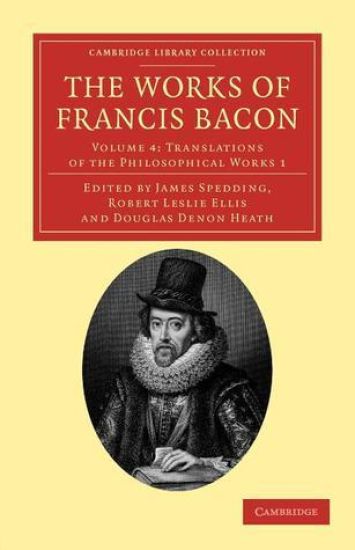
Francis Bacon (1561–1626), the English philosopher, statesman and jurist, is best known for developing the empiricist method which forms the basis of modern science. Bacon's writings concentrated on philosophy and judicial reform. His most significant work is the Instauratio Magna comprising two parts - The Advancement of Learning and the Novum Organum. The first part is noteworthy as the first major philosophical work published in English (1605). James Spedding (1808–81) and his co-editors arranged this fourteen-volume edition, published in London between 1857 and 1874, not in chronological order but by subject matter, so that different volumes would appeal to different audiences. The material is divided into three parts: philosophy and general literature; legal works; and letters, speeches and tracts relating to politics. Volume 4, published in 1858, contains the English translation of Bacon's philosophical works that formed part of the Instauratio Magna.
The Works of Francis Bacon

The Works of Francis Bacon

Francis Bacon

Cambridge University Press
2011
pokkari
Francis Bacon (1561–1626), the English philosopher, statesman and jurist, is best known for developing the empiricist method which forms the basis of modern science. Bacon's writings concentrated on philosophy and judicial reform. His most significant work is the Instauratio Magna comprising two parts - The Advancement of Learning and the Novum Organum. The first part is noteworthy as the first major philosophical work published in English (1605). James Spedding (1808–81) and his co-editors arranged this fourteen-volume edition, published in London between 1857 and 1874, not in chronological order but by subject matter, so that different volumes would appeal to different audiences. The material is divided into three parts: philosophy and general literature; legal works; and letters, speeches and tracts relating to politics. Volume 5, published in 1858, contains the English translations of the remainder of the Instauratio Magna and his other philosophical writings.
The Works of Francis Bacon

The Works of Francis Bacon

Francis Bacon

Cambridge University Press
2011
pokkari
Francis Bacon (1561–1626), the English philosopher, statesman and jurist, is best known for developing the empiricist method which forms the basis of modern science. Bacon's writings concentrated on philosophy and judicial reform. His most significant work is the Instauratio Magna comprising two parts - The Advancement of Learning and the Novum Organum. The first part is noteworthy as the first major philosophical work published in English (1605). James Spedding (1808–81) and his co-editors arranged this fourteen-volume edition, published in London between 1857 and 1874, not in chronological order but by subject matter, so that different volumes would appeal to different audiences. The material is divided into three parts: philosophy and general literature; legal works; and letters, speeches and tracts relating to politics. Volume 6, published in 1858, contains the first part of Bacon's literary works, including his histories in English and Essays or Counsels Civil and Moral in Latin.
The Works of Francis Bacon

The Works of Francis Bacon

Francis Bacon

Cambridge University Press
2011
pokkari
Francis Bacon (1561–1626), the English philosopher, statesman and jurist, is best known for developing the empiricist method which forms the basis of modern science. Bacon's writings concentrated on philosophy and judicial reform. His most significant work is the Instauratio Magna comprising two parts - The Advancement of Learning and the Novum Organum. The first part is noteworthy as the first major philosophical work published in English (1605). James Spedding (1808–81) and his co-editors arranged this fourteen-volume edition, published in London between 1857 and 1874, not in chronological order but by subject matter, so that different volumes would appeal to different audiences. The material is divided into three parts: philosophy and general literature; legal works; and letters, speeches and tracts relating to politics. Volume 7, published in 1859, continues Bacon's literary works including his writings on religion, and contains his professional works on the law.