

Kirjahaku
Etsi kirjoja tekijän nimen, kirjan nimen tai ISBN:n perusteella.
1000 tulosta hakusanalla Francis H Chun


The Manufacture of Lake Pigmets from Artificial Colors
Francis H. Jennison
Kessinger Pub
2007
pokkari




A Brief Introduction to the General Principles of Therapeutics
Francis H McCrudden
Trieste Publishing
2018
nidottu
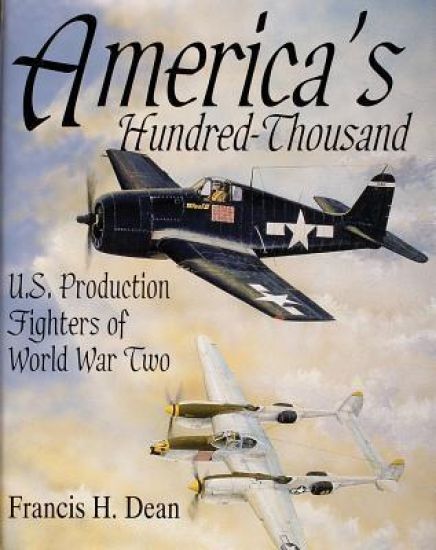
America's Hundred Thousand covers in detail the eleven U.S. fighter aircraft types produced just before and during World War II - with a combined production total of just over 100,000 aircraft. Covered are the Army Lockheed P-38 Lightning, P-39 Airacobra, Curtiss P-40 Tomahawk/Kittyhawk/Warhawk, P-47 Thunderbolt, North American P-51 Mustang, Northrop P-61 Black Widow, and the Navy F2A - Buffalo, F4F - Wildcat, F4U - Corsair, and F6F - Hellcat fighters. The text is supplemented by more than 650 photographs, and 200 tables and graphs. Fighter production figures are also included. After an introduction of each type, a heavily illustrated overview of earlier inter-war production from 1920-on, along with a discussion and illustration of wartime experimental types, is provided. A lengthy section considering several technical factors affecting fighter performance follows. These include engine models, supercharger types, propellers, aerodynamic thrust, lift and drag, aircraft weight, balance, stability and control, and armament. America's Hundred Thousand also provides details of each U.S. World War II production fighter in terms of models and changes, numbers produced, and major engine and aircraft performance aspects - in tabular and graphical form - details of weights, discussion of handling qualities and general comments, along with detailed descriptions containing many illustrations of aircraft structures and systems showing the technology of that time. In addition a comprehensive week-to-week and month-to-month chronology of development and wartime combat operational life for each fighter is provided, including many photos. This study concludes with comparisons of the eleven types in terms of program milestones, aircraft drag, power available at various altitudes, speed, climb, rolling and turning, acceleration, and diving performance, as well as general evaluations by World War II pilots.
A must for the World War II fighter buff, this book is a fascinating look into the minds of U.S. and British engineers, company and NACA test pilots, and Army and Navy/Marine Corps combat pilots, and presents their late 1944 views of then-current and possible future fighter aircraft. This report is an official verbatim transcript of the proceedings of a Joint Fighter Conference held at the U.S. Navy’s Patuxent River test center for eight days in October 1944, and includes frank discussion on the operational and technical capabilities of the P-39, P-47, P-51, P-38, Corsair, Hellcat, P-61, YP-59, Mosquito, Spitfire, and other Allied aircraft, as well as the Japanese Zero. Participants include: Charles Lindbergh, Lloyd Child, Allen Chilton, Lt. Peter Twiss, Maj. Thomas Lanphier, Jack Woolams, Boone Guyton and scores of others. This conference is believed to be the last of several conducted in wartime in an effort to promote cross-talk between manufacturers, military servicearms, and Allies, in order to obtain the best possible fighter aircraft.

This book provides a pictorial overview of the progress of American military airplane design from approximately the end of World War I to the present time. It covers all types including attack, pursuit or fighter, cargo, trainer, and other models via a series of type sections. There are introductions to each section followed by photographic coverage along with extensive photo captioning providing highlights of characteristics and service use. Thus over three quarters of a century of Army and Air Force airplanes are displayed. Primary sections include production airplanes and variants, and a following photo gallery section covers experimental models. A few important export military types are also included. The illustrations and text portray in quite dramatic fashion the advances in U.S. military plane design over the period, including progress from “stick and wire” craft to the latest sleek turbine powered types.

This book is a lavishly illustrated story of Curtiss Wright Corporation's 1950s and 1960s efforts in developing a vertical takeoff (VTOL) aircraft. The author, an insider who headed preliminary design work, gives a brief history of Curtiss Wright, and of the Curtiss Propeller Division that spawned the program, then follows with the development details of the X-100 concept demonstrator and the follow-on X-19 military aircraft. Photos and detailed design descriptions are provided, as well as test flights and test pilot's reports, and finally, never before seen advanced military and civil VTOL aircraft concepts studies.
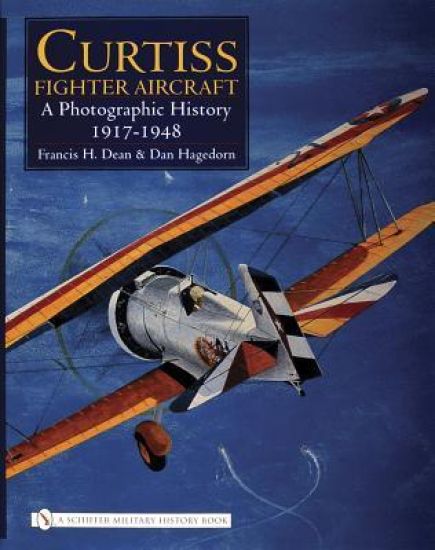
Making use of primary Curtiss documents, as well as the combined resources of the world's leading historians of the subject, the authors have skillfully resolved myths and woven a comprehensive study of the often very confusing story of these classic airplanes. Making use of previously unpublished documents and photographs, this massive, life-long work will stand as a legacy to the memory of those wonderful shapes, the men and women who built them, flew them and took them to war, and the lasting contributions they have made, collectively, to aviation history and the defense of democracy.


Decades before Americans became familiar with the term ""embedded journalist,"" a young cartoonist named Francis Webster embodied that role when he served as a volunteer infantryman during World War I. Using his skills as an illustrator, he documented firsthand the harsh realities of combat life and regularly submitted visual dispatches of his experiences back to an Iowa newspaper. The first published collection of Webster's wartime chronicles, Somewhere Over There presents a unique view of World War I through a rare compilation of letters, diary entries, cartoons, sketches, and watercolors. As editor Darrek D. Orwig explains in his introduction, Webster gained valuable training as an illustrator when he worked for famed political cartoonist Jay ""Ding"" Darling during the early years of World War I. When the United States entered the conflict in 1917, Webster volunteered with the Iowa National Guard as it prepared for deployment on the western front. His regiment would be part of the Forty-Second Rainbow Division, one of the first American units to arrive in France. Webster's accounts, rendered in words and pictures, capture the daily life of a citizen-soldier who trained in stateside camps, traversed the submarine-infested waters of the Atlantic Ocean, fought in muddy trenches, and recovered in hospitals from poisonous gas exposure. Webster suffered a mortal wound during the Meuse-Argonne Offensive in 1918, when he placed a fellow soldier's safety before his own. Webster's illustrations for the Des Moines Capital helped readers of the time learn what American soldiers were experiencing ""over there"" by bringing news from the western front to the home front. For nearly ninety years following his death, Webster's family treasured his collection of artwork and writings before donating it to the Iowa Gold Star Military Museum at Camp Dodge, where it resides today. This wartime assemblage is amplified by Orwig's enlightening commentary based on extensive research that places Webster's story within the wider narrative of American involvement in the ""war to end all wars.

Bottled water is a part of everyday life for millions of Americans. Per capita consumption in the United States now tops fifteen gallons per year with sales over $5 billion in 2002. Even as fuel prices climb, many people are still willing to pay more for a gallon of bottled water than they are for the equivalent in gasoline. At the same time, bottled water has become a symbol of refined taste and a healthy lifestyle. But despite its growing popularity, many people cannot quite put their finger on just why they prefer bottled water to the much less expensive tap variety. Some have a vague notion that bottled water is "healthier," some prefer the convenience and more consistent taste, and others are simply content to follow the trend. The fact is most people know very little about the natural beverage that they drink and enjoy. It is reasonable to wonder, therefore, just what differentiates bottled water from other water? Is it really better or healthier than tap water? Why is it that different brands seem to have subtle variations in taste?As Francis H. Chapelle reveals in this delightful and informative volume, a complex story of geology, hydrology, and history lies behind every bottle of spring water. The book chronicles the history of the bottled water industry in America from its beginnings in Europe hundreds of years ago to the present day. Subsequent chapters describe the chemical characteristics that make some waters desirable, and provide an overview of the geologic circumstances that produce them. Wellsprings explains how these geologic conditions vary throughout the country, and how this affects the kinds and quality of bottled water that are available. Finally, Chapelle shows how the bottled water industry uses this natural history, together with the perceived health benefits of spring waters, to market their products.Accessibly written and well illustrated, Wellsprings is both a revealing account and a user’s guide to natural spring waters. Regardless of your drinking preference, this timely exploration will make your next drink of water refreshingly informed.
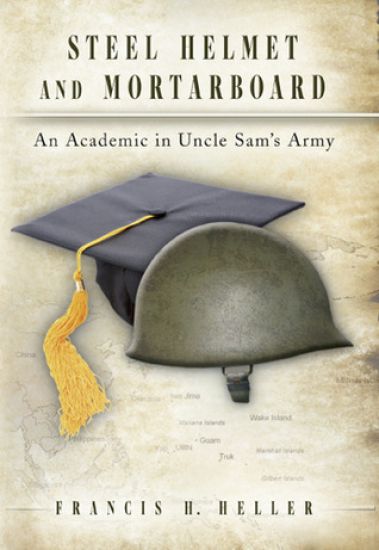
As a young officer candidate in the Austrian army in 1938, Francis Heller put himself at risk by refusing to swear an oath of allegiance to Adolf Hitler. Had he stayed in Vienna, he would have been arrested by the Gestapo as a supporter of Austrian independence and an enemy of the Nazis. But he managed to escape into Czechoslovakia under cover of darkness. He subsequently made his way to America, where he finally pursued the academic career that military service had interrupted. ""Steel Helmet and Mortarboard"" is the story of this Austrian refugee who earned an American law degree in 1941 and set his sights on studying political science but a year later was drafted into the U.S. Army. In his second military career, Heller opted for service as an enlisted man in a combat unit. After basic training, he was assigned as a private in a regular army division.Then in a field artillery unit, he so distinguished himself in combat in the Pacific theater that he received a battlefield commission and went on to serve in the early months of the occupation of Japan - and on one assignment, escorting German nationals home from the Far East, found himself back in Europe and witnessing evidence of the horrors at Dachau that he himself had barely managed to escape. Heller's account of those years recalls how an upper-middle-class emigre adjusted to military life while serving in such combat zones as New Guinea and the Philippines, then how he later resumed his academic career, earned his Ph.D., and went on to teach at the University of Kansas.But Heller's return to academic life was anything but final: recalled to active duty for the Korean War, he also served in later years with the U.S. Army Command and General Staff School at Forth Leavenworth. After a lifetime of changing hats - mortarboard for helmet and back again - Heller, now in his nineties, has recorded his unique perceptions as an educated observer of the world. ""Steel Helmet and Mortarboard"" is an absorbing narrative of one individual's experiences across a spectrum of personal and professional challenges, written with wry humor and insight that reflect a keen ability to master whatever circumstances life brings.

A study of Zen Buddhist enlightenment in nine chapters of Shobogenzo Dogen.Sounds of Valley Streams is a study of Zen Buddhist enlightenment in nine chapters of Shobogenzo Dogen. Francis H. Cook has translated the nine chapters and has preceded them with four chapters of discussion. These essays show Dogen bringing his religious intensity, philosophical depth, and poetic power to bear on a number of different facets of enlightenment. Using striking images and poetical expressions such as "one bright pearl," "dragon song," "beyond Buddha," and "a painting of a rice cake,"Dogen explores such fundamental matters as the relationship between enlightenment and compassion, the dynamic nature of the enlightened life, the need to go beyond enlightenment, the nature of illusion and enlighten-ment, and what it is like to live the awakened life.The centerpiece of the translation is Genjokoan ("Manifesting Absolute Reality"). It is a manifesto of the Zen life in which Dogen proclaims the religious insight that stands at the core of everything he wrote subsequently. Cook's translation of Genjokoan is as accurate as possible, faithful to the original, and readable.

A chronicle of the development of canes, and the staggering variety of materials employed in their construction, illustrated with over 1200 color photos. This book chronicles the development of canes throughout the ages, defines their parts, the staggering variety of materials employed in their construction, and the dazzling array of gadgetry and weaponry hidden in many. Integral to the text are engaging stories of the author's experiences in hunting for the often elusive and rare sticks he has found over decades of collecting. He also provides advice that will give new collectors a much needed edge when entering the marketplace. Accompanying the text are over 1200 color photographs and illustrations. Invaluable information on the repair of damaged canes is also presented. An exhaustive index listing over 1580 cane patents from the United States, Britain, and Germany is provided as well as a very complete bibliography. Two illustrated auctioneer's catalogues and the prices received are included.

Pottery of Santa Ana Pueblo
Francis H Harlow; Duane Anderson; Dwight P Lanmon
Museum of New Mexico Press
2005
sidottu
The small village of Santa Ana Pueblo in north-central New Mexico has for centuries made distinctive pottery for domestic and ritual use. In this book, the authors relate new ideas about the evolution of pottery styles made at Santa Ana and compare these styles with those found elsewhere in the Pueblo ceramic tradition. In particular, this richly visual study describes the chronological sequence of forms and designs based on evidence not heretofore available. The book analyses the sequence from the earliest date, circa 1760, when positive evidence of Santa Ana origin can be identified, through the end of pottery making for local use about 1925 through various revivals to the present time. The pottery of Santa Ana Pueblo exemplifies the fine artistic achievement that has brought Pueblo ceramics worldwide acclaim. In this study, Pueblo pottery authority Francis H Harlow, along with anthropologist Duane Anderson and historian Dwight P Lanmon, provides an original and groundbreaking investigation into the origins and evolution of this pueblo's exemplary pottery. The result furnishes criteria for dating any vessel that comes to hand. A chapter on the recognised potters of the twentieth and twenty-first centuries recounts efforts to keep pottery traditions alive for future working potters.

Francis H Harlow (1928-present) is a world class physicist, an expert on Pueblo Indian pottery and Southwest sea fossils, an accomplished painter and cellist. In this memoir, the retired Los Alamos scientist and scholar looks back on his life and career, including his fifty years as a theoretical physicist at one of the U.S.'s top research facilities. He considers his study of Pueblo pottery a "hobby", though it draws on archaeology, history and ethnography, as well as interactions and interviews with living and deceased potters (including Maria Martinez). This book highlights the Museum of Indian Art (Santa Fe) Harlow Pottery Collection.