Max Brod, a successful novelist, was a boyhood companion of Kafka's and remained closely tied to him until Kafka's death in 1924. He was undoubtedly the one man whom Kafka trusted more than any other, and it is to Brod, as his literary executor and editor, that we are indebted for rescuing and bringing to light Kafka's work. Out of a lifelong devoted friendship, Brod drew this account of Kafka's youth, family and friends, his struggle to recognize himself as a writer, his sickness, and his last days. Franz Kafka gives us not only a more vivid and lifelike picture of Kafka than that painted by any of his contemporaries, but also a fascinating portrayal of the complicated interaction between two writers of different temperaments but similar backgrounds who together helped shape the future of twentieth-century literature.
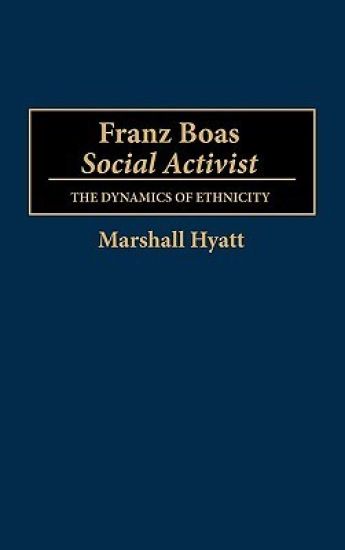
Considered the father of modern American anthropology, Franz Boas introduced the relativistic, culture-centered methods and principles of inquiry that continue to dominate the field. This study analyzes the development of his thought and his contributions to racial and ethnic theory in the context of his own ethnicity and personal experience with persecution. The author focuses primarily on Boas's attempt to fuse science with political and social activism--an effort to insure that his ideological contributions to science had practical relevance to the difficult issues facing American society.Hyatt fills in the details of Boas's background, from his early years in Germany to his emigration to the United States in the late 1880s, and discusses his pivotal role in transforming anthropology from an amateur pursuit into a rigorous academic discipline. The author examines Boas's attacks on those who used science to promulgate theories of racial inferiority based on alleged differences in mental ability. He traces the origins of Boas's own theories and the use he made of them in working for equal rights for immigrants and African Americans. This is the first biographical study to focus on the historical meaning of Boas's contributions and the motivating forces that shaped his work. Essential for courses in race and ethnicity, sociology, the history of anthropology, 20th-century American history, American intellectual history, theories of culture, and related subjects.
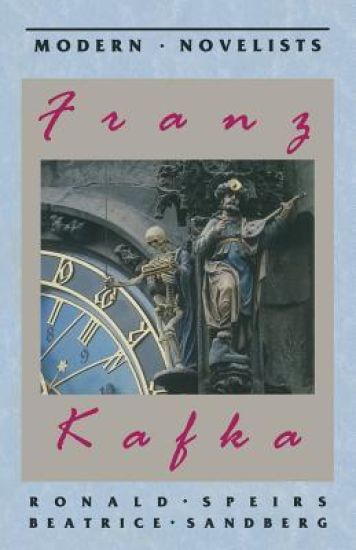
The Missing Person, The Trial and The Castle are known throughout the world as great works of modern fiction, admired for the originality of their technique, subtlety of language and multiple suggestiveness. The present study takes power in its social, psychological and moral complexity and follows this thematic thread through the labyrinth of imagery and motif in each novel. The detailed analyses of the novel are preceded by an account of Kafka's life and a survey of critical approaches to his work.
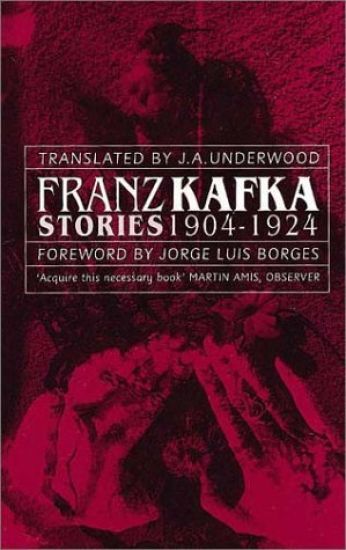
These stories cover the whole span of Kafka's writing career, from "Looking to See" written in his twenties, to his last work, "Josephine", and culminating in "The Metamorphosis"
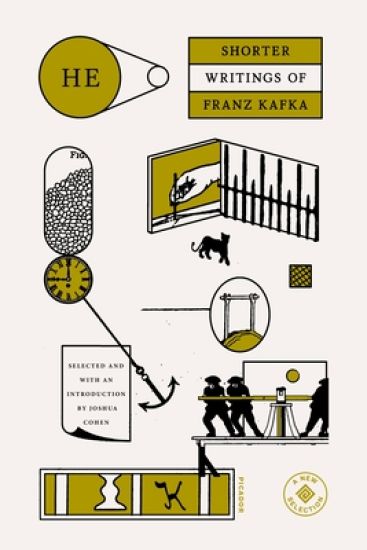
A new selection of Franz Kafka's shorter fiction and nonfiction work, selected and with a preface by Book of Numbers author Joshua Cohen. "Being asked to write about Kafka is like being asked to describe the Great Wall of China by someone who's standing just next to it. The only honest thing to do is point." --Joshua Cohen, from his foreword to He: Shorter Writings of Franz Kafka This is a Kafka emergency kit, a congregation of the brief, the minor works that are actually major. Joshua Cohen has produced a frame that refuses distinctions between what is a story, a letter, a workplace memo, and a diary entry, also including popular favorites like The Bucket Rider, The Penal Colony, and The Burrow. Here we see Kafka's preoccupations in writing about animals, messiah variations, food, and exercise, each in his signature style. Cohen's selection emphasizes the stately structure of utterly coherent logic within an utterly incoherent and illogical world, showing how Kafka harnessed the humblest grammar to metamorphic power, until the predominant effect ceases to be the presence of an unreliable narrator but the absence of the universe's only reliable narrator--God.
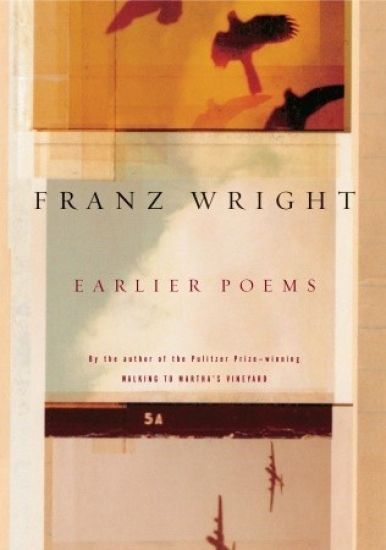
The haunting collection of poems that gathers the first four books of Pulitzer winner Franz Wright under one cover, where "fans old and new will find a feast amid famine" (Publishers Weekly), and discover how large this poet's gift was from the start.
Franz Liszt: A Research and Information Guide is an annotated bibliography concerning both the nature of primary sources related to the composer and the scope and significance of the secondary sources which deal with him, his compositions, and his influence as a composer and performer. The second edition includes research published since the publication of the first edition and provide electronic resources.
This is the first book about Kafka that uses the writer's medical records. Gillman explores the relation of the body to cultural myths, and brings a unique and fascinating perspective to Kafka's life and writings.
Franz Liszt: A Research and Information Guide is an annotated bibliography concerning both the nature of primary sources related to the composer and the scope and significance of the secondary sources which deal with him, his compositions, and his influence as a composer and performer. The second edition includes research published since the publication of the first edition and provide electronic resources. Franz Liszt was born on 22 October 1811 at Raiding, today located in Austria’s Burgenland. He received his first piano lessons from his father, Adam Liszt, an employee of the celebrated Eszterházy family. Young Franz was quickly acclaimed a prodigy, and in 1820 a group of Hungarian magnates offered to underwrite his musical education. Shortly thereafter the Liszts moved to Vienna, where Franz studied piano and composition with Carl Czerny and Anton Salieri. Performances there earned Liszt local fame; even Beethoven expressed interest in him.
Franz Kafka: Subversive Dreamer is an attempt to identify and properly contextualize the social critique in Kafka’s biography and work that links father-son antagonisms, heterodox Jewish religious thinking, and anti-authoritarian or anarchist protest against the rising power of bureaucratic modernity. The book proceeds chronologically, starting with biographical facts often neglected or denied relating to Kafka’s relations with the Anarchist circles in Prague, followed by an analysis of the three great unfinished novels—Amerika, The Trial, The Castle—as well as some of his most important short stories. Fragments, parables, correspondence, and his diaries are also used in order to better understand the major literary works. Löwy’s book grapples with the critical and subversive dimension of Kafka’s writings, which is often hidden or masked by the fabulistic character of the work. Löwy’s reading has already generated controversy because of its distance from the usual canon of literary criticism about the Prague writer, but the book has been well received in its original French edition and has been translated into Spanish, Italian, Portuguese, Greek, and Turkish.
This 1973 text provides a critical introduction to the writings of Franz Kafka. Within it Ronald Gray surveys the novels and short stories, and glances also at the religious or confessional writings. He presents a persuasive and coherent account of Kafka's personal and artistic development and its meaning and value for us. Dr Gray argues that the early short stories are most finished and controlled; here Kafka recognised and managed to find a form exactly fitting his own condition, and the writing is less compulsive and obsessional than it became later. Dr Gray quotes extensively, translating specifically for the purpose. He writes for all whose who read Kafka, especially the many who read him in translation and would like a helpful and shrewd guide to understanding. Kafka's work hauntingly expresses one whole area of the modern mind - its anguish, dissociation and guilt - and this sane and sympathetic book puts him into a humane perspective.
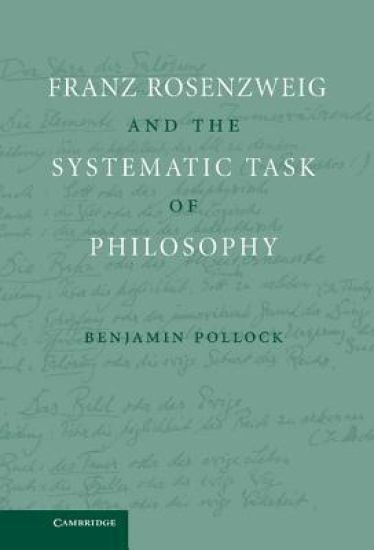
Benjamin Pollock argues that Franz Rosenzweig's The Star of Redemption is devoted to a singularly ambitious philosophical task: grasping 'the All' - the whole of what is - in the form of a system. In asserting Rosenzweig's abiding commitment to a systematic conception of philosophy, this book breaks rank with the assumptions about Rosenzweig's thought that have dominated recent scholarship. Indeed, the Star's importance is often claimed to lie precisely in the way it opposes philosophy's traditional drive for systematic knowledge and upholds instead a 'new thinking' attentive to the existential concerns, the alterity, and even the revelatory dimension of concrete human life. Pollock shows that these very innovations in Rosenzweig's thought are in fact to be understood as part and parcel of the Star's systematic program. But this is only the case, Pollock claims, because Rosenzweig approaches philosophy's traditional task of system in a radically original manner.
This is the first book to examine Schubert’s songs as active shaping forces in the culture of their era rather than as mere reflections of it. Responding to rising new forms of social organisation, Schubert discovered that songs could serve as a medium for shuffling and reshuffling the basic building blocks of identity and desire, especially sexual desire. His songs project a kaleidoscopic array of unexpected human types, all of whom are eligible for a sympathetic response, even the strangest and most disconcerting. Schubert sought to validate these subjective types without subordinating them to a central social or sexual norm. The book describes and contextualises this process and tracks it concretely in a wide variety of songs. Combining close attention to both music and poetry, the book addresses both specialists and non-specialists in a lively, accessible style unburdened by excessive jargon.
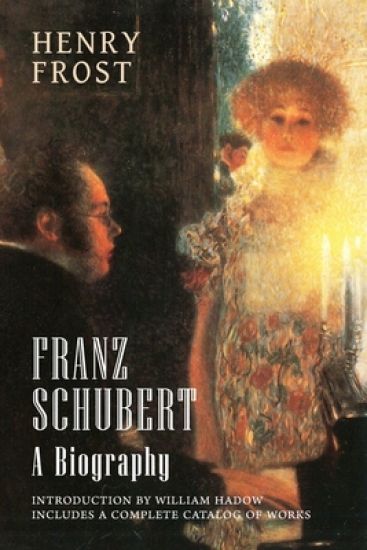
Clarity of outline, conciseness, and formal beauty are excellent things in musical works, but an exquisite fancy, a noble imagination, and a lofty poetic spirit are of infinitely greater account; and no one ever possessed these inestimable gifts in greater measure than Franz Schubert.This new edition of Henry Frost's 1892 biography of Franz Schubert has been edited and revised. The original references to pieces by Opus number have been replaced with the more commonly used D numbers. Many illustrations of places and people have been added throughout the text, and a complete catalog of Schubert's works has been included.Contents1Introduction and overview by William Henry Hadow.2- Schubert's unique position among composers.- Birth and parentage.- Early instruction in music, and evidence of extraordinary talent.- Admission to the Imperial Chapel and Stadtconvict.- School experiences and first compositions.- Salieri.- Symphony No. 1 in D.- He decides to leave the Convict.3- Schubert's experience as a school teacher.- Friendship with Mayrhofer.- Works from 1814; Des Teufels Lustschloss, Mass in F, etc.- Extraordinary productiveness in 1815.- Operas, symphonies, masses, and songs.- Characteristics of Schubert's Lieder.- Diary kept in 1816.- Der Erlk nig.- Cantatas and symphonies.- He applies for a position.- Franz von Schober.- He leaves his father's school.4- Johann Michael Vogl.- Josef Huttenbrenner.- Piano sonatas.- Overtures in Italian style.- He becomes music teacher to the Esterhazy family.- His residence with Mayrhofer.- Excursion in upper Austria.- Rossini.- Goethe.- His first commissions for the stage.- Die Zwillingsbruder.- Die Zauberharfe.- Contemporary criticism.- The oratorio Lazarus.- The Fantasia in C.5- The first publications.- Enthusiasm of his friends.- Schubertiaden.- The symphony in E.- Schubert and Beethoven.- Alfonso and Estrella; performance at Weimar.- The mass in A flat.- The unfinished symphony in B minor.- Schubert and Weber.- Rosamunde.- Fierabras.- Die Verschwornen, or Der hauslicne Krieg.- Die schone Mullerin.- Publications in 1823.6- Schubert's temporary depression.- Diary and letters.- Second visit to Zelesz.- Love for Caroline Esterhazy.- Compositions; the duet sonata in C.- Travels in Steyr.- Restored cheerfulness.- Efforts to gain employment.- Schindler's singular story.- Negotiations with foreign publishers.- Present from the Musikfreunde.- Beethoven's funeral.- Visit to the Pachlers at Gratz.- Failing health.- Rochlitz and Der Erste Ton7- Great productiveness in 1828.- Symphony in C.- Mass in E flat.- Schwanengesang.- Last sonatas.- Disappointments.- His last illness and death.8- Posthumous honours.- Personal qualities.- Schubert's position in music.- General survey of works
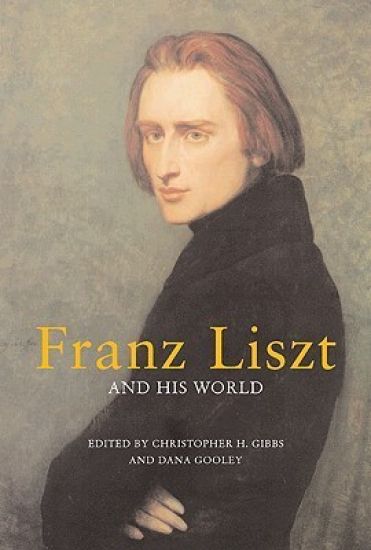
No nineteenth-century composer had more diverse ties to his contemporary world than Franz Liszt (1811-1886). At various points in his life he made his home in Vienna, Paris, Weimar, Rome, and Budapest. In his roles as keyboard virtuoso, conductor, master teacher, and abbe, he reinvented the concert experience, advanced a progressive agenda for symphonic and dramatic music, rethought the possibilities of church music and the oratorio, and transmitted the foundations of modern pianism. The essays brought together in Franz Liszt and His World advance our understanding of the composer with fresh perspectives and an emphasis on historical contexts. Rainer Kleinertz examines Wagner's enthusiasm for Liszt's symphonic poem Orpheus; Christopher Gibbs discusses Liszt's pathbreaking Viennese concerts of 1838; Dana Gooley assesses Liszt against the backdrop of antivirtuosity polemics; Ryan Minor investigates two cantatas written in honor of Beethoven; Anna Celenza offers new insights about Liszt's experience of Italy; Susan Youens shows how Liszt's songs engage with the modernity of Heinrich Heine's poems; James Deaville looks at how publishers sustained Liszt's popularity; and Leon Botstein explores Liszt's role in the transformation of nineteenth-century preoccupations regarding religion, the nation, and art. Franz Liszt and His World also includes key biographical and critical documents from Liszt's lifetime, which open new windows on how Liszt was viewed by his contemporaries and how he wished to be viewed by posterity. Introductions to and commentaries on these documents are provided by Peter Bloom, Jose Bowen, James Deaville, Allan Keiler, Rainer Kleinertz, Ralph Locke, Rena Charnin Mueller, and Benjamin Walton.