Kirjahaku
Etsi kirjoja tekijän nimen, kirjan nimen tai ISBN:n perusteella.
1000 tulosta hakusanalla Fred Dervin



This book continues the author’s long-term reflections (over 20 years of scholarship and experience in intercultural communication education) around the fascinating and yet contestable notion of interculturality in education. As an unstable and polysemic notion, interculturality deserves to be opened up again and again and there is a need to engage with it continuously, observing, critiquing and problematizing its complexities. This book urges researchers, students and interculturalists to take the time to think carefully and deeply about interculturality and to find inspiration beyond the dominating ‘Western’ ideological world of intercultural research and education. This book starts from short fragments written by the author for himself over a period of one year. In these short statements and notes about interculturality, the author reflects creatively on the questions he had in mind at the time of writing and offers some (temporary) answers, which, in turn, are questionedand revised. Over the 1000 fragments that the author wrote, he selected about 100, for which he wrote commentaries, referring to and reviewing current research and debates on interculturality in the process. One of the specificities of the book is to be highly multidisciplinary to help us get used to looking for inspiration in other fields of research and creativity. The fragments can be read randomly – the reader may open the book at any page and pick any fragment. The author suggests reading each individual fragment first and then the accompanying explanatory texts. While reading them, the reader is also invited to reflect on any potential addition to what the author wrote – anything they might dis-/agree with, anything they would have wanted to discuss with the author. Questions have been added at the end of each chapter for readers to reflect on and to enrich their own criticality and reflexivity. The book serves as continuous guidance for engaging with interculturality.
This book continues the author’s long-term reflections (over 20 years of scholarship and experience in intercultural communication education) around the fascinating and yet contestable notion of interculturality in education. As an unstable and polysemic notion, interculturality deserves to be opened up again and again and there is a need to engage with it continuously, observing, critiquing and problematizing its complexities. This book urges researchers, students and interculturalists to take the time to think carefully and deeply about interculturality and to find inspiration beyond the dominating ‘Western’ ideological world of intercultural research and education. This book starts from short fragments written by the author for himself over a period of one year. In these short statements and notes about interculturality, the author reflects creatively on the questions he had in mind at the time of writing and offers some (temporary) answers, which, in turn, are questionedand revised. Over the 1000 fragments that the author wrote, he selected about 100, for which he wrote commentaries, referring to and reviewing current research and debates on interculturality in the process. One of the specificities of the book is to be highly multidisciplinary to help us get used to looking for inspiration in other fields of research and creativity. The fragments can be read randomly – the reader may open the book at any page and pick any fragment. The author suggests reading each individual fragment first and then the accompanying explanatory texts. While reading them, the reader is also invited to reflect on any potential addition to what the author wrote – anything they might dis-/agree with, anything they would have wanted to discuss with the author. Questions have been added at the end of each chapter for readers to reflect on and to enrich their own criticality and reflexivity. The book serves as continuous guidance for engaging with interculturality.
Interculturologies: Moving Forward with Interculturality in Research and Education
Fred Dervin
SPRINGER VERLAG, SINGAPORE
2024
sidottu
This book showcases 100 terms related to the scientific, educational and political notion of interculturality. Each term is presented with its specific multilingual discussions, scientific origins, multifaceted content, and short reviews of the global literature in English. Some myths, imaginaries and ideologies (‘interculturologies’ in the book) that they have led to construct are also introduced. Questions at the end of each entry encourage readers to think further regarding the notion of interculturality in research and education. Based on the author's decades-long experience in researching and teaching in the interdisciplinary field of intercultural communication education in different parts of the world, his constant reflexive and critical engagement with the notion of interculturality, and in-depth reviews of current research, the author has carefully selected (recurrent) concepts, notions, and ideas to be deconstructed in order to challenge readers to think further with him, especially beyond ‘Western’ and certain static and resistant ideological positions. These represent a complex body of concepts and notions, but also involve myths and imaginaries that can prevent us from moving forward in our thinking and in acting interculturally in research and education. This book serves as a reading guide for further interculturologies that the reader might identify in the future or as they engage with the book.
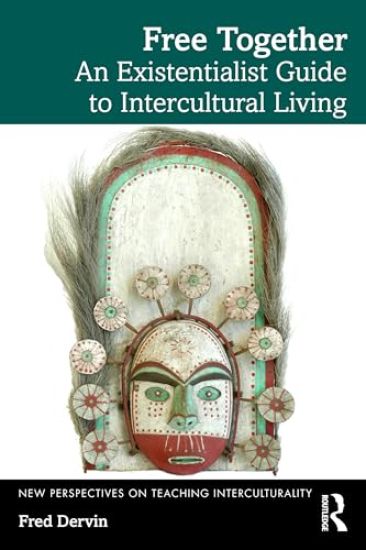
In Free Together: An Existentialist Guide to Intercultural Living, Fred Dervin offers another radical rethink of how we encounter others interculturally. Drawing on existentialist writings, the book argues that interculturality is not a problem of knowledge or competence, but rather an existential challenge: how can we meet others as free beings when no guarantee of understanding exists? Written in an accessible tone, the book combines theoretical reflection, personal narrative and reflexive exercises. It invites readers to recognise bad faith — pretending that one’s choices are forced by external circumstances — and to confront the gaze of others. Ultimately, it encourages readers to embrace the freedom and responsibility of intercultural encounters. The book's originality lies in its refusal of easy solutions, its assertion that uncertainty is not failure, but rather the foundation of connection and its timely call to reclaim our shared humanity in a polarised and divided world. Fundamentally, the book contributes to decolonial thinking by demonstrating how questions of freedom, anxiety and responsibility resonate globally and by engaging with voices that challenge assumptions about selfhood and encounters. Designed for students, educators, researchers and anyone who has ever struggled in conversation with a stranger, this book is an invaluable companion for intercultural living.

In Free Together: An Existentialist Guide to Intercultural Living, Fred Dervin offers another radical rethink of how we encounter others interculturally. Drawing on existentialist writings, the book argues that interculturality is not a problem of knowledge or competence, but rather an existential challenge: how can we meet others as free beings when no guarantee of understanding exists? Written in an accessible tone, the book combines theoretical reflection, personal narrative and reflexive exercises. It invites readers to recognise bad faith — pretending that one’s choices are forced by external circumstances — and to confront the gaze of others. Ultimately, it encourages readers to embrace the freedom and responsibility of intercultural encounters. The book's originality lies in its refusal of easy solutions, its assertion that uncertainty is not failure, but rather the foundation of connection and its timely call to reclaim our shared humanity in a polarised and divided world. Fundamentally, the book contributes to decolonial thinking by demonstrating how questions of freedom, anxiety and responsibility resonate globally and by engaging with voices that challenge assumptions about selfhood and encounters. Designed for students, educators, researchers and anyone who has ever struggled in conversation with a stranger, this book is an invaluable companion for intercultural living.
Interculturality and the Political within Education
Fred Dervin; Ashley Simpson
TAYLOR FRANCIS LTD
2023
nidottu
This innovative book problematises the internal relationships within and between the intercultural and the political in education. It engages in a critical dialogue with current practices and discourses, and the focus on ‘the political’ offers an alternative trajectory to explore interculturality within education.Drawing on international research and consolidated with application of top interdisciplinary theories in the field, Dervin and Simpson alert us to the current dangers of treating interculturality loosely in education. The authors engage in a dialogue to encourage readers to examine the meaning of interculturality and the state of research in education today, suggesting that we move beyond merely rehearsing theories, concepts and methods. More importantly they urge researchers, teachers and students to question Western-centric ideologies of interculturality.Intercultural and the Political Within Education is a must read for those who are dissatisfied with current intercultural research and education. It will be of great interest to researchers and students of the philosophy of education and those interested in the contemporary debates concerning ideologies, definitions and ownership of interculturality.
China is often seen as a monolith outside its borders. However, heterogeneity and interculturality have characterized the Middle Kingdom for centuries. Today, China’s take on diversity is too easily disparaged or perceived as ambiguous – as if China was not legitimate to take part in conversations about it. The authors wish to contribute to global discussions about interculturality in education, which have often been dominated by ‘Western’ voices, by problematizing a very specific Chinese perspective called Minzu (‘ethnic’) education. Minzu is presented as a potential companion to other forms of diversity education (multicultural, intercultural, transcultural, cross-cultural, global education). Without claiming that they have found a miraculous and one-size-fits all recipe, they argue that the lessons learnt from researching various aspects of Minzu in Chinese education can also help students, researchers, educators, and decision-makers unthink and rethink the central issue of interculturality. As such the book introduces the complexity, contradictions and benefits of Minzu while helping the reader consider how compatible and complementary it could be with discussions of interculturality in other parts of the world. The book also aims at making readers observe critically their own contexts. This book was written with an open mind and it should be read with the same.
China is often seen as a monolith outside its borders. However, heterogeneity and interculturality have characterized the Middle Kingdom for centuries. Today, China’s take on diversity is too easily disparaged or perceived as ambiguous – as if China was not legitimate to take part in conversations about it. The authors wish to contribute to global discussions about interculturality in education, which have often been dominated by ‘Western’ voices, by problematizing a very specific Chinese perspective called Minzu (‘ethnic’) education. Minzu is presented as a potential companion to other forms of diversity education (multicultural, intercultural, transcultural, cross-cultural, global education). Without claiming that they have found a miraculous and one-size-fits all recipe, they argue that the lessons learnt from researching various aspects of Minzu in Chinese education can also help students, researchers, educators, and decision-makers unthink and rethink the central issue of interculturality. As such the book introduces the complexity, contradictions and benefits of Minzu while helping the reader consider how compatible and complementary it could be with discussions of interculturality in other parts of the world. The book also aims at making readers observe critically their own contexts. This book was written with an open mind and it should be read with the same.
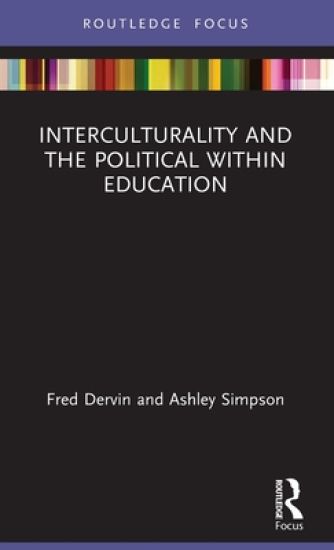
Interculturality and the Political within Education
Fred Dervin; Ashley Simpson
Routledge
2021
sidottu
This innovative book problematises the internal relationships within and between the intercultural and the political in education. It engages in a critical dialogue with current practices and discourses, and the focus on ‘the political’ offers an alternative trajectory to explore interculturality within education.Drawing on international research and consolidated with application of top interdisciplinary theories in the field, Dervin and Simpson alert us to the current dangers of treating interculturality loosely in education. The authors engage in a dialogue to encourage readers to examine the meaning of interculturality and the state of research in education today, suggesting that we move beyond merely rehearsing theories, concepts and methods. More importantly they urge researchers, teachers and students to question Western-centric ideologies of interculturality.Intercultural and the Political Within Education is a must read for those who are dissatisfied with current intercultural research and education. It will be of great interest to researchers and students of the philosophy of education and those interested in the contemporary debates concerning ideologies, definitions and ownership of interculturality.
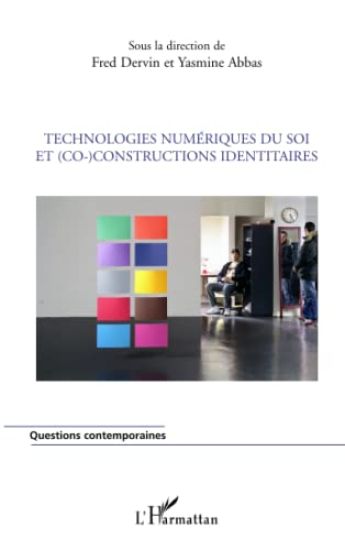
Technologies numériques du soi et (co)-constructions identitaires
Fred Dervin; Yasmine Abbas
Questions contemporaines
2020
nidottu

Anthropologies de l'interculturalité
Fred Dervin; Anahy Gajardo; Anne Lavanchy
Logiques sociales
2020
nidottu