Kirjojen hintavertailu. Mukana 11 244 527 kirjaa ja 12 kauppaa.

Kirjahaku

Etsi kirjoja tekijän nimen, kirjan nimen tai ISBN:n perusteella.

1000 tulosta hakusanalla Frederick Beiser

German Idealism

German Idealism

Frederick C. Beiser

Harvard University Press
2008
nidottu
One of the very few accounts in English of German idealism, this ambitious work advances and revises our understanding of both the history and the thought of the classical period of German philosophy. As he traces the structure and evolution of idealism as a doctrine, Frederick Beiser exposes a strong objective, or realist, strain running from Kant to Hegel and identifies the crucial role of the early romantics—Hölderlin, Schlegel, and Novalis—as the founders of absolute idealism.
The Fate of Reason

The Fate of Reason

Frederick C. Beiser

Harvard University Press
1993
nidottu
The Fate of Reason is the first general history devoted to the period between Kant and Fichte, one of the most revolutionary and fertile in modern philosophy. The philosophers of this time broke with the two central tenets of the modern Cartesian tradition: the authority of reason and the primacy of epistemology. They also witnessed the decline of the Aufklärung, the completion of Kant’s philosophy, and the beginnings of post-Kantian idealism.Thanks to Frederick C. Beiser we can newly appreciate the influence of Kant’s critics on the development of his philosophy. Beiser brings the controversies, and the personalities who engaged in them, to life and tells a story that has uncanny parallels with the debates of the present.
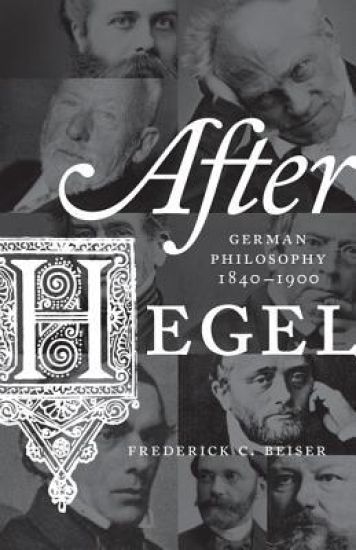
After Hegel

After Hegel

Frederick C. Beiser

Princeton University Press
2016
pokkari
Histories of German philosophy in the nineteenth century typically focus on its first half--when Hegel, idealism, and Romanticism dominated. By contrast, the remainder of the century, after Hegel's death, has been relatively neglected because it has been seen as a period of stagnation and decline. But Frederick Beiser argues that the second half of the century was in fact one of the most revolutionary periods in modern philosophy because the nature of philosophy itself was up for grabs and the very absence of certainty led to creativity and the start of a new era. In this innovative concise history of German philosophy from 1840 to 1900, Beiser focuses not on themes or individual thinkers but rather on the period's five great debates: the identity crisis of philosophy, the materialism controversy, the methods and limits of history, the pessimism controversy, and the Ignorabimusstreit. Schopenhauer and Wilhelm Dilthey play important roles in these controversies but so do many neglected figures, including Ludwig Buchner, Eugen Duhring, Eduard von Hartmann, Julius Fraunstaedt, Hermann Lotze, Adolf Trendelenburg, and two women, Agnes Taubert and Olga Pluemacher, who have been completely forgotten in histories of philosophy. The result is a wide-ranging, original, and surprising new account of German philosophy in the critical period between Hegel and the twentieth century.
The Sovereignty of Reason

The Sovereignty of Reason

Frederick C. Beiser

Princeton University Press
2014
pokkari
The Sovereignty of Reason is a survey of the rule of faith controversy in seventeenth-century England. It examines the arguments by which reason eventually became the sovereign standard of truth in religion and politics, and how it triumphed over its rivals: Scripture, inspiration, and apostolic tradition. Frederick Beiser argues that the main threat to the authority of reason in seventeenth-century England came not only from dissident groups but chiefly from the Protestant theology of the Church of England. The triumph of reason was the result of a new theology rather than the development of natural philosophy, which upheld the orthodox Protestant dualism between the heavenly and earthly. Rationalism arose from a break with the traditional Protestant answers to problems of salvation, ecclesiastical polity, and the true faith. Although the early English rationalists were not able to defend all their claims on behalf of reason, they developed a moral and pragmatic defense of reason that is still of interest today. Beiser's book is a detailed examination of some neglected figures of early modern philosophy, who were crucial in the development of modern rationalism. There are chapters devoted to Richard Hooker, the Great Tew Circle, the Cambridge Platonists, the early ethical rationalists, and the free-thinkers John Toland and Anthony Collins. Originally published in 1996. The Princeton Legacy Library uses the latest print-on-demand technology to again make available previously out-of-print books from the distinguished backlist of Princeton University Press. These editions preserve the original texts of these important books while presenting them in durable paperback and hardcover editions. The goal of the Princeton Legacy Library is to vastly increase access to the rich scholarly heritage found in the thousands of books published by Princeton University Press since its founding in 1905.
The Sovereignty of Reason

The Sovereignty of Reason

Frederick C. Beiser

Princeton University Press
2016
sidottu
The Sovereignty of Reason is a survey of the rule of faith controversy in seventeenth-century England. It examines the arguments by which reason eventually became the sovereign standard of truth in religion and politics, and how it triumphed over its rivals: Scripture, inspiration, and apostolic tradition. Frederick Beiser argues that the main threat to the authority of reason in seventeenth-century England came not only from dissident groups but chiefly from the Protestant theology of the Church of England. The triumph of reason was the result of a new theology rather than the development of natural philosophy, which upheld the orthodox Protestant dualism between the heavenly and earthly. Rationalism arose from a break with the traditional Protestant answers to problems of salvation, ecclesiastical polity, and the true faith. Although the early English rationalists were not able to defend all their claims on behalf of reason, they developed a moral and pragmatic defense of reason that is still of interest today. Beiser's book is a detailed examination of some neglected figures of early modern philosophy, who were crucial in the development of modern rationalism. There are chapters devoted to Richard Hooker, the Great Tew Circle, the Cambridge Platonists, the early ethical rationalists, and the free-thinkers John Toland and Anthony Collins. Originally published in 1996. The Princeton Legacy Library uses the latest print-on-demand technology to again make available previously out-of-print books from the distinguished backlist of Princeton University Press. These editions preserve the original texts of these important books while presenting them in durable paperback and hardcover editions. The goal of the Princeton Legacy Library is to vastly increase access to the rich scholarly heritage found in the thousands of books published by Princeton University Press since its founding in 1905.
The Berlin Antisemitism Controversy

The Berlin Antisemitism Controversy

Frederick C. Beiser

TAYLOR FRANCIS LTD
2024
nidottu
After a long struggle, Jewish emancipation was formally completed in Germany in 1871, when Wilhelm I abolished religious discrimination across the entire Reich. Yet the very same decade witnessed a new wave of antisemitism, one more vicious and virulent than anything before. At its centre was what is known as ‘The Berlin Antisemitism Controversy’. How can this rise of antisemitism be explained when further liberal reform was expected? Can it help us understand the tide of antisemitism that was to engulf Germany fifty years later?In this outstanding book by a leading scholar of German philosophy, Frederick C. Beiser argues that to understand modern antisemitism we must go back in history. Beginning with the background of the controversy and examining the most important antisemitic thinkers of the 1870s and 1880s, he brilliantly analyses the beginnings of modern antisemitism in Germany. Beiser challenges received scholarship that the rise of antisemitism was caused by a failure of the Jews to assimilate and criticises the view, held by Hannah Arendt, that antisemitism was at its peak when Jews were perceived to be powerless and had lost their roles in government and finance. He argues instead that it was fuelled by a fear of Jewish domination that took multiple forms. Exploring antisemitism from both a historical and philosophical perspective, he situates antisemitism in relation to such fundamental questions as the conditions for citizenship in the modern state, what is meant by nationality and what role religion should play in the state. He also vividly and expertly analyses the writings and arguments of those involved in the antisemitism crisis of the 1870s, including Wilhelm Marr, Constantin Frantz and Adolf Treitschke and thinkers who are here examined in English for the first time.The Berlin Antisemitism Controversy sheds much-needed light on an episode whose shockwaves resonate today. It is a superb account of a crucial period of not only German but also European and Jewish history and essential reading for anyone interested in the causes and roots of antisemitism in Germany and beyond.
The Berlin Antisemitism Controversy

The Berlin Antisemitism Controversy

Frederick C. Beiser

TAYLOR FRANCIS LTD
2024
sidottu
After a long struggle, Jewish emancipation was formally completed in Germany in 1871, when Wilhelm I abolished religious discrimination across the entire Reich. Yet the very same decade witnessed a new wave of antisemitism, one more vicious and virulent than anything before. At its centre was what is known as ‘The Berlin Antisemitism Controversy’. How can this rise of antisemitism be explained when further liberal reform was expected? Can it help us understand the tide of antisemitism that was to engulf Germany fifty years later?In this outstanding book by a leading scholar of German philosophy, Frederick C. Beiser argues that to understand modern antisemitism we must go back in history. Beginning with the background of the controversy and examining the most important antisemitic thinkers of the 1870s and 1880s, he brilliantly analyses the beginnings of modern antisemitism in Germany. Beiser challenges received scholarship that the rise of antisemitism was caused by a failure of the Jews to assimilate and criticises the view, held by Hannah Arendt, that antisemitism was at its peak when Jews were perceived to be powerless and had lost their roles in government and finance. He argues instead that it was fuelled by a fear of Jewish domination that took multiple forms. Exploring antisemitism from both a historical and philosophical perspective, he situates antisemitism in relation to such fundamental questions as the conditions for citizenship in the modern state, what is meant by nationality and what role religion should play in the state. He also vividly and expertly analyses the writings and arguments of those involved in the antisemitism crisis of the 1870s, including Wilhelm Marr, Constantin Frantz and Adolf Treitschke and thinkers who are here examined in English for the first time.The Berlin Antisemitism Controversy sheds much-needed light on an episode whose shockwaves resonate today. It is a superb account of a crucial period of not only German but also European and Jewish history and essential reading for anyone interested in the causes and roots of antisemitism in Germany and beyond.
The Philosophy of Georg Simmel

The Philosophy of Georg Simmel

Frederick C. Beiser

TAYLOR FRANCIS LTD
2025
nidottu
In this ground-breaking work, Frederick Beiser argues that Georg Simmel was one of the foremost yet overlooked philosophers of the late nineteenth and early twentieth centuries. Whilst Simmel’s work was crucial in laying foundations for sociology, his several books, including The Philosophy of Money, were deeply philosophical. Simmel's doctorate was on Kant's philosophy and that his intellectual outlook was greatly influenced by his lifelong love of philosophy.It is this philosophical Simmel that Frederick C. Beiser, a renowned scholar of German philosophy, explores in this fascinating and important book. Beginning with a helpful overview of Simmel's early intellectual life, Beiser considers the formation of Simmel's sociology and his views on ethics, before examining his theories of historical knowledge; the arguments contained in his most important work, The Philosophy of Money; the role of Kant's philosophy in his thinking; his critique of pessimism and his philosophy of religion. The second part of the book explores the deeper philosophical importance of Simmel's work, by considering his theories of the method and essence of philosophy, the philosophy of life and his important work on aesthetics.An outstanding and path-breaking book, The Philosophy of Georg Simmel will be of interest to students and researchers in philosophy and sociology alike, particularly those studying nineteenth century philosophy and the history of sociology.
The Philosophy of Georg Simmel

The Philosophy of Georg Simmel

Frederick C. Beiser

TAYLOR FRANCIS LTD
2025
sidottu
In this ground-breaking work, Frederick Beiser argues that Georg Simmel was one of the foremost yet overlooked philosophers of the late nineteenth and early twentieth centuries. Whilst Simmel’s work was crucial in laying foundations for sociology, his several books, including The Philosophy of Money, were deeply philosophical. Simmel's doctorate was on Kant's philosophy and that his intellectual outlook was greatly influenced by his lifelong love of philosophy.It is this philosophical Simmel that Frederick C. Beiser, a renowned scholar of German philosophy, explores in this fascinating and important book. Beginning with a helpful overview of Simmel's early intellectual life, Beiser considers the formation of Simmel's sociology and his views on ethics, before examining his theories of historical knowledge; the arguments contained in his most important work, The Philosophy of Money; the role of Kant's philosophy in his thinking; his critique of pessimism and his philosophy of religion. The second part of the book explores the deeper philosophical importance of Simmel's work, by considering his theories of the method and essence of philosophy, the philosophy of life and his important work on aesthetics.An outstanding and path-breaking book, The Philosophy of Georg Simmel will be of interest to students and researchers in philosophy and sociology alike, particularly those studying nineteenth century philosophy and the history of sociology.
John H. Burdakin and the Grand Trunk Western Railroad

John H. Burdakin and the Grand Trunk Western Railroad

Mary Sharp; Frederick J. Beier

Michigan State University Press
2016
sidottu
John H. Burdakin and the Grand Trunk Western Railroad provides a look at the principles and personal values that guided John H. Burdakin through a long, successful career as a top manager at three railroads—the Pennsylvania, the Penn Central, and finally the Grand Trunk Western, where he was president of the regional carrier from 1974 to 1986. The book, written from interviews with Burdakin before his death in 2014, gives real-life examples of how Burdakin’s management principles and personal qualities helped him solve labor- management problems, update railroad technology, protect worker safety, and improve employee morale while managing a four thousand–person workforce. It introduces colorful characters who were involved in American railroads, as well as the serious, life-threatening issues that confronted railroads in the last half of the twentieth century in America. This book will provide insights for managers of any business as well as for those seeking to balance a successful career and a rewarding home life.
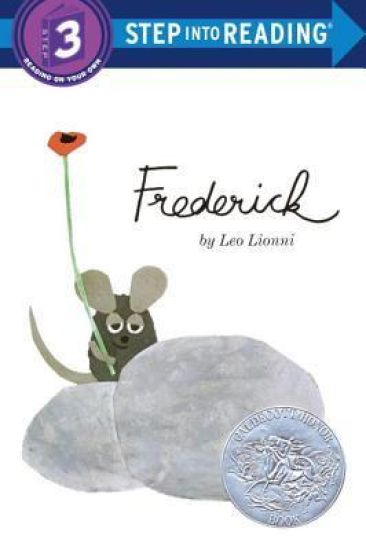
Frederick

Frederick

Leo Lionni

Random House Books for Young Readers
2014
nidottu
Leo Lionni's Caldecott Honor-winning story is now available as a Step 3 Step into Reading book--perfect for children who are ready to read on their own. Winter is coming, and all the mice are gathering food . . . except for Frederick. But when the days grow short and the snow begins to fall, it's Frederick's stories that warm the hearts and spirits of his fellow field mice. Lionni's enduringly popular tale makes a winning addition to the Step into Reading line, letting young children enjoy this classic all by themselves.
Frederick

Frederick

Leo Lionni

Alfred A. Knopf Books for Young Readers
1967
sidottu
Leo Lionni's Caldecott Honor-winning story about a little mouse who gathers something unusual for the long winter is celebrating its fiftieth birthday Winter is coming, and all the mice are gathering food . . . except for Frederick. But when the days grow short and the snow begins to fall, it's Frederick's stories that warm the hearts and spirits of his fellow field mice. Winner of a 1967 Caldecott Honor, Frederick has been cherished by generations of readers. "A splendid achievement." --School Library Journal, starred review "In Frederick, a mouse who is a poet from the tip of his nose to the end of his tail demonstrates that a seemingly purposeless life is indeed far from that--and that we need not live by bread alone " --Eric Carle
Frederick

Frederick

Leo Lionni

Dragonfly Books
2017
nidottu
Leo Lionni's Caldecott Honor-winning story about a little mouse who gathers something unusual for the long winter is turning fifty Celebrate this beloved favorite, which now includes a special introduction from noted children's book historian Leonard Marcus. Winter is coming, and all the mice are gathering food . . . except for Frederick. But when the days grow short and the snow begins to fall, it's Frederick's stories that warm the hearts and spirits of his fellow field mice. Winner of a 1967 Caldecott Honor, Frederick has been cherished by generations of readers. "A splendid achievement." --School Library Journal, starred review "In Frederick, a mouse who is a poet from the tip of his nose to the end of his tail demonstrates that a seemingly purposeless life is indeed far from that--and that we need not live by bread alone " --Eric Carle