Kirjojen hintavertailu. Mukana 12 390 323 kirjaa ja 12 kauppaa.

Kirjahaku

Etsi kirjoja tekijän nimen, kirjan nimen tai ISBN:n perusteella.

1000 tulosta hakusanalla Frederick Douglas

Life and Times of Frederick Douglass

Life and Times of Frederick Douglass

Frederick Douglass

Oxford University Press
2022
nidottu
'It will be seen in these pages that I have lived several lives in one: first, the life of slavery; secondly, the life of a fugitive from slavery; thirdly, the life of comparative freedom; fourthly, the life of conflict and battle; and, fifthly, the life of victory, if not complete, at least assured.' First published in 1892, Life and Times of Frederick Douglass Written By Himself is the final autobiography written by Frederick Douglass (1818-1895), a man who was born into slavery in Talbot County, Maryland. Securing his self-liberation at twenty years of age in 1838, he went on to become the most renowned antislavery activist, social justice campaigner, author, orator, philosopher, essayist, historian, intellectual, statesman, and liberator in U.S. history. A powerful literary work, Douglass' final autobiography shares the stories of his 'several lives in one.' Beginning with his war against 'the hell-black system of human bondage,' Douglass bears witness to his personal experiences of mind-body-and soul-destroying tragedies. Living a new life as a 'fugitive from slavery,' he tells his audiences of his decades-long labours as a world-leading freedom-fighter. Ever vigilant in his protest against the discriminatory persecutions endured by millions of 'my people,' he testifies to the terrible reality that his 'life of comparative freedom' necessitated a lifelong fight against the inhumane injustices of 'American prejudice against colour.' Living a death-defying 'life of conflict and battle' during the Civil War, Douglass celebrates the 'life of victory' promised by post-war civil rights legislation only to condemn the failures of the U.S. nation either to exterminate slavery or secure equal rights for all. All too painfully aware that the 'conflict between the spirit of liberty and the spirit of slavery' was far from over and would become the unending struggle for 'aftercoming generations' in the ongoing war against white supremacy, Douglass remained a fearless fighter against the 'infernal and barbarous spirit of slavery' 'wherever I find it' to the day that he died. This new edition examines Douglass' memorialization of his own and his mother Harriet Bailey's first-hand experiences of enslavement and of their 'mental' liberation through a 'love of letters'; his representation of Civil War Black combat heroism; his conviction that 'education means emancipation'; and finally, his 'unending battle' with white publishers for the freedom to 'tell my story.' This volume reproduces Frederick Douglass' emotionally powerful and politically hard-hitting anti-lynching speech, Lessons of the Hour, published in 1894. ABOUT THE SERIES: For over 100 years Oxford World's Classics has made available the widest range of literature from around the globe. Each affordable volume reflects Oxford's commitment to scholarship, providing the most accurate text plus a wealth of other valuable features, including expert introductions by leading authorities, helpful notes to clarify the text, up-to-date bibliographies for further study, and much more.
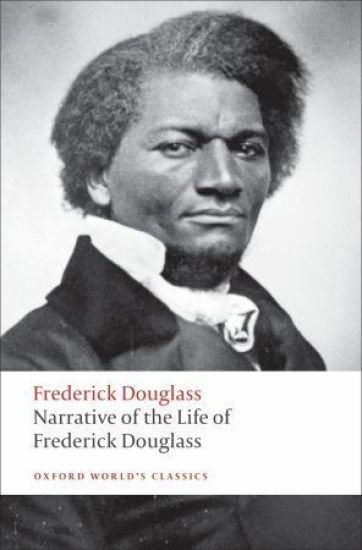
Narrative of the Life of Frederick Douglass, an American Slave

Narrative of the Life of Frederick Douglass, an American Slave

Frederick Douglass

Oxford University Press
2009
nidottu
'I was born in Tuckahoe I have no accurate knowledge of my age, never having seen any authentic record containing it. By far the larger part of the slaves know as little of their ages as horses know of theirs, and it is the wish of most masters within my knowledge to keep their slaves thus ignorant.' Thus begins the autobiography of Frederick Douglass (1818-1895) who was born into slavery in Maryland and after his escape to Massachusetts in 1838 became an ardent abolitionist and campaigner for women's rights. His Narrative, which became an instant bestseller on publication in 1845, describes his life as a slave, the cruelty he suffered at the hands of his masters, his struggle to educate himself and his fight for freedom. Passionately written, often using striking biblical imagery, the Narrative came to assume epic proportions as a founding anti-slavery text in which Douglass carefully crafted both his life story and his persona. This new edition examines Douglass, the man and the myth, his complex relationship with women and the enduring power of his book. It includes extracts from Douglass's primary sources and examples of his writing on women's rights. ABOUT THE SERIES: For over 100 years Oxford World's Classics has made available the widest range of literature from around the globe. Each affordable volume reflects Oxford's commitment to scholarship, providing the most accurate text plus a wealth of other valuable features, including expert introductions by leading authorities, helpful notes to clarify the text, up-to-date bibliographies for further study, and much more.
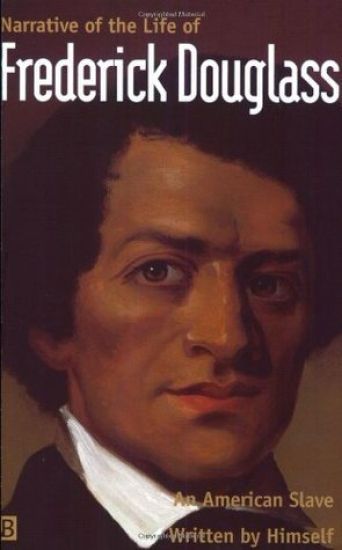
Narrative of the Life of Frederick Douglass, An American Slave
The powerful story of slavery that has become a classic of American autobiography, in an authoritative edition “This edition is the most valuable teaching tool on slavery and abolition available today. It is exceptional.”—Nancy Hewitt, Distinguished Professor Emerita, Rutgers University The autobiography of Frederick Douglass (1818–1895), Narrative of the Life of Frederick Douglass, An American Slave, is widely regarded as a classic of American nineteenth-century history, of African-American studies, and of literature. In 1845, just seven years after his escape from slavery, the young Douglass published this powerful account of his life as a slave and his triumph over oppression. The book, which marked the beginning of Douglass’s career as an impassioned writer, journalist, and orator for the abolitionist cause, reveals the terrors he faced as a slave, the brutalities of his owners and overseers, and his harrowing escape to the North. This edition of the book, based on the authoritative text that appears in Yale University Press’s multivolume edition of the Frederick Douglass Papers, is the only edition of Douglass’s Narrative designated as an Approved Text by the Modern Language Association’s Committee on Scholarly Editions. It includes a chronology of Douglass’s life, a thorough introduction by the eminent Douglass scholar John Blassingame, historical notes, and reader responses to the first edition of 1845. “None so dramatically as Douglass integrated both the horror and the great quest of the African-American experience into the deep stream of American autobiography. He advanced and extended that tradition and is rightfully designated one of its greatest practitioners.”—John W. Blassingame, from the introduction
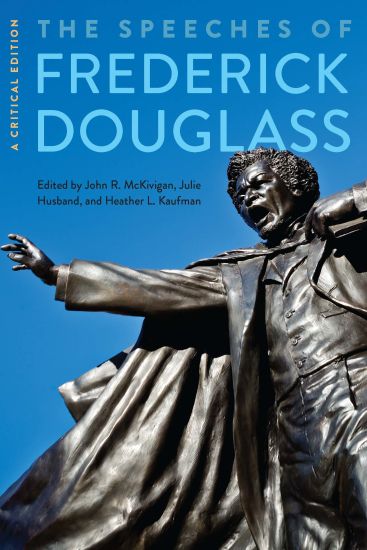
The Speeches of Frederick Douglass

The Speeches of Frederick Douglass

Frederick Douglass

Yale University Press
2018
pokkari
A collection of twenty of Frederick Douglass’s most important orations This volume brings together twenty of Frederick Douglass’s most historically significant speeches on a range of issues, including slavery, abolitionism, civil rights, sectionalism, temperance, women’s rights, economic development, and immigration. Douglass’s oratory is accompanied by speeches that influenced him, his reflections on successful rhetorical strategies, contemporary commentary on his performances, and modern-day assessments of his rhetorical legacy.
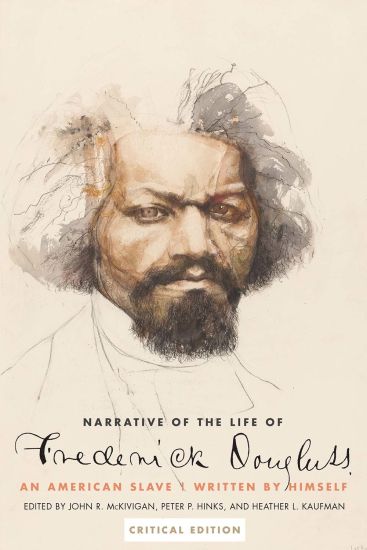
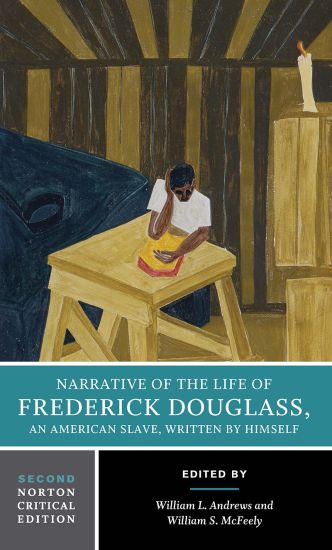
Narrative of the Life of Frederick Douglass, an American Slave
A critical edition of one of the most influential literary documents in American and African American history “This edition is the most valuable teaching tool on slavery and abolition available today. It is exceptional.”—Nancy Hewitt, Distinguished Professor Emerita, Rutgers University Ideal for independent reading or for coursework in American and African American history, this revised edition of the memoir written by Frederick Douglass (1818–1895) of his life as a slave in pre–Civil War Maryland incorporates a wide range of supplemental materials to enhance students’ understanding of slavery, abolitionism, and the role of race in American society. Offering readers a new appreciation of Douglass’s world, it includes documents relating to the slave narrative genre and to the later career of an essential figure in the nineteenth-century abolition movement.
The Frederick Douglass Papers

The Frederick Douglass Papers

Frederick Douglass

YALE UNIVERSITY PRESS
2023
sidottu
The selected correspondence of the great American abolitionist and reformer dating from the immediate post–Civil War years This third volume of Frederick Douglass’s Correspondence Series exhibits Douglass at the peak of his political influence. It chronicles his struggle to persuade the nation to fulfill its promises to the former slaves and all African Americans in the tempestuous years of Reconstruction. Douglass’s career changed dramatically with the end of the Civil War and the long-sought after emancipation of American slaves; the subsequent transformation in his public activities is reflected in his surviving correspondence. In these letters, from 1866 to 1880, Douglass continued to correspond with leading names in antislavery and other reform movements on both sides of the Atlantic, and political figures began to make up an even larger share of his correspondents. The Douglass Papers staff located 817 letters for this time period and selected 242, or just under 30 percent, of them for publication. The remaining 575 letters are summarized in the volume’s calendar.
The Frederick Douglass Papers

The Frederick Douglass Papers

Frederick Douglass

YALE UNIVERSITY PRESS
2026
sidottu
Douglass’s letters from the 1880s reveal both his unrelenting efforts to protect African American rights and little-known details about his personal life The fourth volume of the Correspondence Series presents Frederick Douglass as a still-influential public figure but also as a man aware that the gains African Americans made during the Civil War and Reconstruction were not as well secured as he had hoped. For this volume, the editors selected 247 of the 914 known letters sent to or from Douglass between 1881 and 1888. An active partisan, Douglass corresponded regularly with Republican party leaders from the local to national level about campaign tactics and strategies. Douglass also often received letters from African Americans who detailed the deteriorating state of race relations across the South in the 1880s. Douglass used his correspondence to advance the political stature of Republicans he regarded as most sympathetic to protecting African American rights. Douglass wrote about his taste in reading; his fondness for carriage riding; his feuds with family members and neighbors; his first wife, Anna Murray; and his remarriage, to Helen Pitts, and the controversy that the interracial marriage generated. Douglass’s correspondence details the seven-month honeymoon the couple took in Europe and Egypt, the reunion with old abolitionist friends in Great Britain, and candid appraisals of places he visited and people he met overseas.
Frederick Douglass On Women's Rights

Frederick Douglass On Women's Rights

Philip Foner

Da Capo Press Inc
1992
pokkari
In their long, continuing struggle for equality, American women have had to rely primarily on their own resources, which have been considerable. Yet many men have helped advance their cause. Perhaps foremost among them was the great abolitionist Frederick Douglass. According to the women of the time, Douglass was their preeminent male supporter. As Elizabeth Cady Stanton said, "He was the only man I ever saw who understood the degradation of the disfranchisement of women." This book collects the speeches and writings of Frederick Douglass on women's rights. Since suffrage was the major concern of the movement, the issue of voting was primary among Douglass's themes however, he also spoke and wrote resolutely on the need for women to reach their full potential by participating in every phase of American society and in every aspect of decision-making. No one was more insistent that the oppression of women violated the principles proclaimed at the birth of the American Republic. He was, in short, in favour of "absolute justice and perfect equality" for women. And because of his pride in his own race, he never failed to remind the white women who led the movement that black women endured an even greater oppression in white, male-dominated society than they did. Always eloquent and rarely less than inspiring, Frederick Douglass on Women's Rights presents the words of one of America's greatest spokesmen on one of the most important issues of the nineteenth century, words which still ring with truth and power today.
Frederick Douglass

Frederick Douglass

David B. Chesebrough

Greenwood Press
1998
sidottu
Frederick Douglass, once a slave, was one of the great 19th century American orators and the most important African American voice of his era. This book traces the development of his rhetorical skills, discusses the effect of his oratory on his contemporaries, and analyzes the specific oratorical techniques he employed.The first part is a biographical sketch of Douglass's life, dealing with his years of slavery (1818-1837), his prewar years of freedom (1837-1861), the Civil War (1861-1865), and postwar years (1865-1895). Chesebrough emphasizes the centrality of oratory to Douglass's life, even during the years in slavery. The second part looks at his oratorical techniques and concludes with three speeches from different periods. Students and scholars of communications, U.S. history, slavery, the Civil War and Reconstruction, and African American studies will be interested in this book.
Frederick Douglass

Frederick Douglass

C. James Trotman Ph.D.

Greenwood Press
2011
sidottu
Written for young adults, this biography of Frederick Douglass covers the life of the most famous black abolitionist and intellectual of the 19th century.Frederick Douglass: A Biography explores the life of the most famous black abolitionist and intellectual of the 19th century. The book covers the major developments of Douglass's life from his birth in 1818 through his time as a slave and his rise to prominence as the most famous black voice for freedom of his time. The biography discusses Douglass's relationships with such figures as John Brown, the feminist Elizabeth Cady Stanton, and five presidents of the United States, including Abraham Lincoln. It analyzes his role in national politics before, during, and after the Civil War, and examines the way his life is tied to significant local, regional, and national events. By focusing on the importance of spirituality in Douglass's life, this revealing work adds to our understanding of the man, the way he saw himself, and the many things he accomplished.
Narrative of the Life of Frederick Douglass, an American Slave & Incidents in the Life of a Slave Girl
Two great works of African-American literature come together in an omnibus edition that includes the autobiography of the famous abolitionist and statesman who escaped to the North after twenty-one years of enslavement, as well as an account that reveals the exploitation of African American female slaves through first-person narrative. Reader's Guide included. Reprint.
Narrative of the Life of Frederick Douglass, an American Slave
Narrative of the Life of Frederick Douglass is an 1845 memoir and treatise on abolition written by famous orator and former slave Frederick Douglass during his time in Lynn, Massachusetts. It is generally held to be the most famous of a number of narratives written by former slaves during the same period. In factual detail, the text describes the events of his life and is considered to be one of the most influential pieces of literature to fuel the abolitionist movement of the early 19th century in the United States.Narrative of the Life of Frederick Douglass encompasses eleven chapters that recount Douglass's life as a slave and his ambition to become a free man.
Frederick Douglass

Frederick Douglass

William S. McFeely

WW Norton Co
1996
nidottu
Former slave, orator, journalist, autobiographer; revolutionary on behalf of a just America, Frederick Douglass was a towering figure, at once consummately charismatic and flawed. His Narrative of the Life of Frederick Douglass (1845) galvanized the antislavery movement and is one of the truly seminal works of African-American literature. In this masterful and compelling biography, William S. McFeely captures the many sides of Douglass—his boyhood on the Chesapeake; his self-education; his rebellion and rising expectations; his marriage, affairs, and intense friendships; his bitter defeat and transcendent courage—and recreates the high drama of a turbulent era.
Frederick Douglass

Frederick Douglass

William S. McFeely

WW Norton Co
2017
nidottu
Born into but escaped from slavery, Frederick Douglass—orator, journalist, autobiographer; revolutionary on behalf of a just America—was a towering figure, at once consummately charismatic and flawed. His Narrative of the Life of Frederick Douglass (1845) galvanised the antislavery movement and is one of the truly seminal works of African-American literature. In this Lincoln Prize– winning biography, William S. McFeely captures the many sides of Douglass— his boyhood on the Chesapeake; his self-education; his rebellion and rising expectations; his marriage, affairs, and intense friendships; his bitter defeat and transcendent courage—and re-creates the high drama of a turbulent era.
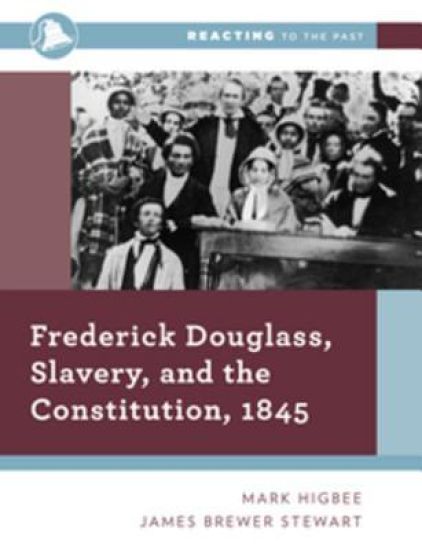
Frederick Douglass, Slavery, and the Constitution, 1845

Frederick Douglass, Slavery, and the Constitution, 1845

Mark Higbee; James Brewer Stewart

WW Norton Co
2019
nidottu
Frederick Douglass asks students to confront an explosive question: How, in a nation founded on ideas of equal rights and freedom, could the institution of slavery become so entrenched and long-lasting? How was slavery justified and how was it criticised? At a literary forum, students consider the newly-published Narrative of Frederick Douglass and hold a hearing on John C. Calhoun’s view of slavery as a “positive good”. Finally, players address the US Constitution, its original protections of the slaveholders’ power and the central question: Are Americans more beholden to the Constitution or to some “higher law”?
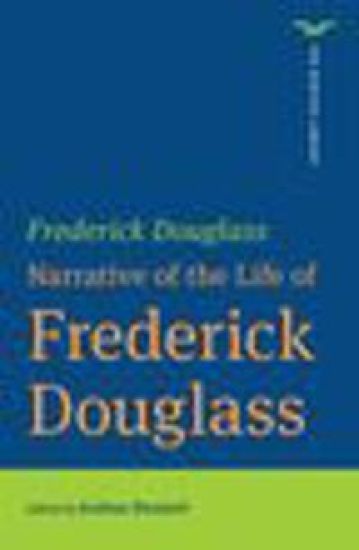
Narrative of the Life of Frederick Douglass

Narrative of the Life of Frederick Douglass

Frederick Douglass

WW NORTON CO
2023
nidottu
One of the most influential works of literature during the abolitionist movement of the early nineteenth century, Narrative of the Life of Frederick Douglass recounts with powerful eloquence and detail the author’s life as a slave and his eventual escape to the North. This Norton Library edition features the original 1845 text and explanatory endnotes that clarify obscure terms and references. An introduction by Joshua Bennett provides historical background, highlights some of the narrative’s key themes, and assesses the enduring legacy of Frederick Douglass’s vital work.
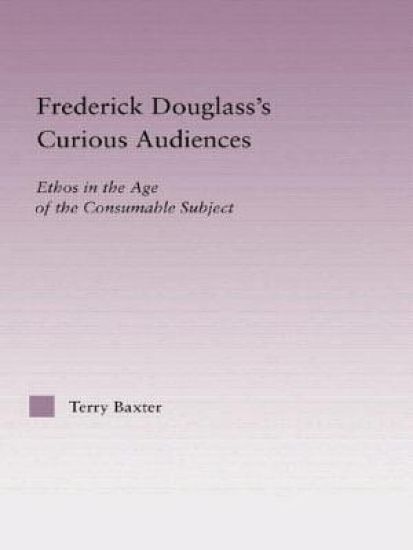
Frederick Douglass's Curious Audiences
This book attempts to answer a fundamental question: How did Douglass manage to persuade anyone about the evils of slavery, and even impress viewers with his personal qualities, when his speeches were commonly considered mere entertainment, in the same category as Barnum's circus acts? In answering this question, Terry Baxter provides a means of understanding the positive responses of Frederick Douglass's white audiences and African American celebrities' roles as both objects of consumption and vehicles for social change.
Frederick Douglass

Frederick Douglass

L. Diane Barnes

Routledge
2012
sidottu
Frederick Douglass was born a slave in Talbot County, Maryland, in February, 1818. From these humble beginnings, Douglass went on to become a world-famous orator, newspaper editor, and champion of the rights of women and African Americans. He was the most prominent African American activist of the 19th century. He remains important in American history because he moved beyond relief at his own personal freedom to dedicating his life to the progress of his race and his country. This volume offers a short biographical exploration of Douglass' life in the broader context of the 19th century world, and pulls together some of his most important writings on slavery, civil rights, and political issues. Bolstered by the series website, which provides instructors with more images and documents, as well as targeted links to further research, Frederick Douglass: Reformer and Statesman gives the student of American history a fully-rounded glimpse into the world inhabited by this great figure.