"This book is lewd, rude and superb! Fran and Stein have written the first guide to grad school from a student's point of view; and the result is an irreverent, humorous and USEFUL book of avice. These foul-mouthed sages will help you get through a master's or doctoral program more quickly, with fewer blunders and less angst. I plan to recommend this book to all the graduate students I coach and teach."
In this study, Frederick R. Karl defines and evaluates the main movements in the English novel beginning with Joyce. Karl devotes separate chapters to the works of C. P. Snow, Samuel Beckett, Ivy Compton-Burnett, Graham Greene, Lawrence Durrell, Elizabeth Bowen, Evelyn Waugh, George Orwell, Henry Greene, and Joyce Cary. In a series of composite chapters he considers Iris Murdoch, Anthony Powell, the Angry Young Men, Rosamond Lehmann, Nigel Dennis, William Golding, Doris Lessing, and Angus Wilson.
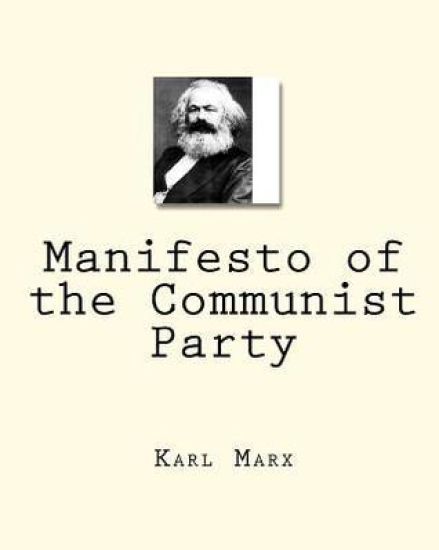
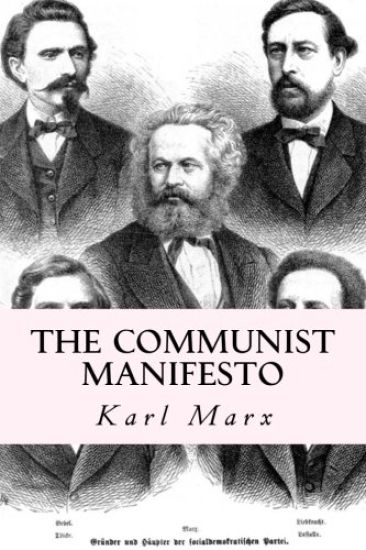
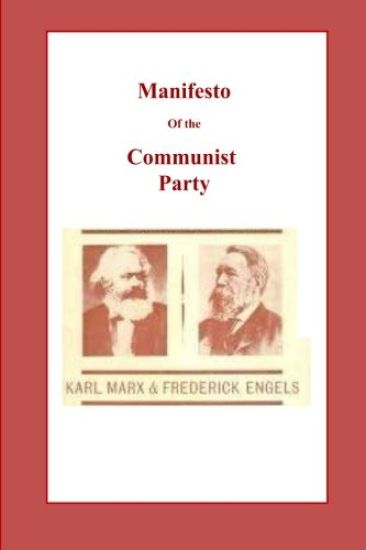
The Communist Manifesto (originally Manifesto of the Communist Party) is an 1848 political pamphlet by German philosophers Karl Marx and Friedrich Engels. Commissioned by the Communist League and originally published in London (in German as Manifest der Kommunistischen Partei) just as the revolutions of 1848 began to erupt, the Manifesto was later recognised as one of the world's most influential political documents. It presents an analytical approach to the class struggle (historical and then-present) and the problems of capitalism and the capitalist mode of production, rather than a prediction of communism's potential future forms. The Communist Manifesto summarises Marx and Engels' theories about the nature of society and politics, that in their own words, "The history of all hitherto existing society is the history of class struggles". It also briefly features their ideas for how the capitalist society of the time would eventually be replaced by socialism. In 2013, The Communist Manifesto was registered to UNESCO's Memory of the World Programme with the Capital, Volume I. The Communist Manifesto is divided into a preamble and four sections, the last of these a short conclusion. The introduction begins by proclaiming "A spectre is haunting Europe-the spectre of communism. All the powers of old Europe have entered into a holy alliance to exorcise this spectre". Pointing out that parties everywhere-including those in government and those in the opposition-have flung the "branding reproach of communism" at each other, the authors infer from this that the powers-that-be acknowledge communism to be a power in itself. Subsequently, the introduction exhorts Communists to openly publish their views and aims, to "meet this nursery tale of the spectre of communism with a manifesto of the party itself". The first section of the Manifesto, "Bourgeois and Proletarians", elucidates the materialist conception of history, that "the history of all hitherto existing society is the history of class struggles". Societies have always taken the form of an oppressed majority living under the thumb of an oppressive minority. In capitalism, the industrial working class, or proletariat, engage in class struggle against the owners of the means of production, the bourgeoisie. As before, this struggle will end in a revolution that restructures society, or the "common ruin of the contending classes". The bourgeoisie, through the "constant revolutionising of production and] uninterrupted disturbance of all social conditions" have emerged as the supreme class in society, displacing all the old powers of feudalism. The bourgeoisie constantly exploits the proletariat for its labour power, creating profit for themselves and accumulating capital. However, in doing so, the bourgeoisie serves as "its own grave-diggers"; the proletariat inevitably will become conscious of their own potential and rise to power through revolution, overthrowing the bourgeoisie. "Proletarians and Communists", the second section, starts by stating the relationship of conscious communists to the rest of the working class. The communists' party will not oppose other working-class parties, but unlike them, it will express the general will and defend the common interests of the world's proletariat as a whole, independent of all nationalities. The section goes on to defend communism from various objections, including claims that it advocates "free love" or disincentivises people from working. The section ends by outlining a set of short-term demands-among them a progressive income tax; abolition of inheritances and private property; abolition of child labour; free public education; nationalisation of the means of transport and communication; centralisation of credit via a national bank; expansion of publicly owned etc.-the implementation of which would result in the precursor to a stateless and classless society.
The definitive introduction to history’s most influential and controversial political document, updated for a new generation of readers.Since it was first written in 1848, The Communist Manifesto has been translated into more languages than any other modern text. All across the world—in countless places and idioms—it has been debated, shared, brandished, invoked, banned, burned, and even declared “dead.” But in an era of escalating political, economic, health, and environmental crises, Marx and Engels’ fierce indictment of capitalism is more relevant than ever, and their Manifesto remains required reading from the classroom to the picket line.Scholar Phil Gasper draws on his decades of teaching and organizing experience to produce a beautifully organized edition of the Manifesto that brings the text to life. By fully annotating the Manifesto with clear historical references and explication, a glossary, and including additional related texts, Gasper provides an accessible and comprehensive reference edition suited to first-time readers and dedicated partisans alike.
Readers will not find a Marxist interpretation of the American Civil War laid out in this volume. Rather, they will observe Marx and Engels working to define their own approach to history and politics while analyzing the American Civil War as it developed into the greatest social revolution that the United States has so far achieved. Radicals and revolutionaries found themselves in a complex political position at the outbreak of the American Civil War of 1861-65. They demanded a war against slavery as an evil in itself and as the root cause of the Confederate rebellion, but the Lincoln administration proclaimed it fought only to preserve the Union and would not interfere with slavery in the states where it already existed. "All knew," in the words of Lincoln's 1864 second inaugural address, that slavery "was somehow the cause of the war," but if, and to what extent, the war would end slavery and transom the country that had grown wealthy from the labor of four million enslaved African Americans remained an open question. By the time the war ended in 1865, the radicals and revolutionaries got their way, thanks in large part to the actions of the enslaved themselves, and the North thus won a war that had also become a revolution against slavery.
The Communist Manifesto, originally the Manifesto of the Communist Party, is an 1848 pamphlet by German philosophers Karl Marx and Friedrich Engels. Commissioned by the Communist League and originally published in London just as the Revolutions of 1848 began to erupt, the Manifesto was later recognised as one of the world's most influential political documents. It presents an analytical approach to the class struggle (historical and then-present) and the conflicts of capitalism and the capitalist mode of production, rather than a prediction of communism's potential future forms. The Communist Manifesto summarises Marx and Engels' theories concerning the nature of society and politics, namely that in their own words " t]he history of all hitherto existing society is the history of class struggles". It also briefly features their ideas for how the capitalist society of the time would eventually be replaced by socialism. In the last paragraph of the Manifesto, the authors call for a "forcible overthrow of all existing social conditions", which served as a call for communist revolutions around the world
The Essentials of Marx: The Communist Manifesto is a political and philosophical treatise written by Karl Marx. The book is considered to be one of the most important works in the history of political thought and is a foundational text for the socialist and communist movements. The book outlines Marx's theory of history and his vision for a classless society. It argues that capitalism is inherently exploitative and that the only way to achieve true equality and freedom is through a revolution led by the working class. The book also discusses the role of the state in society and the need for international solidarity among workers. The Essentials of Marx: The Communist Manifesto is an accessible and concise introduction to Marx's ideas and is essential reading for anyone interested in political theory and social justice.This scarce antiquarian book is a facsimile reprint of the old original and may contain some imperfections such as library marks and notations. Because we believe this work is culturally important, we have made it available as part of our commitment for protecting, preserving, and promoting the world's literature in affordable, high quality, modern editions, that are true to their original work.
Class Struggles in France, 1848-1850 is a political and historical analysis written by Karl Marx. The book is a detailed account of the political and social events that took place in France during the period of 1848-1850. The book examines the class struggles that took place during this time and how they affected the political landscape of France.Marx's analysis focuses on the role of the working class in the revolution of 1848, and the subsequent struggle for power that ensued. He examines the various political factions that emerged during this time, including the socialists, republicans, and monarchists. Marx also analyzes the role of the bourgeoisie in the revolution and the ways in which they sought to maintain their power and influence.Throughout the book, Marx argues that the class struggle is the driving force behind political change and that the working class must take an active role in shaping the future of society. He also critiques the limitations of the various political factions and argues that true social change can only be achieved through a revolution that is led by the working class.Overall, Class Struggles in France, 1848-1850 is a seminal work of political and historical analysis that continues to influence political thought and activism today. It provides a detailed account of a critical period in French history and offers insights into the ongoing struggle for social and economic justice.This scarce antiquarian book is a facsimile reprint of the old original and may contain some imperfections such as library marks and notations. Because we believe this work is culturally important, we have made it available as part of our commitment for protecting, preserving, and promoting the world's literature in affordable, high quality, modern editions, that are true to their original work.