
Kirjahaku
Etsi kirjoja tekijän nimen, kirjan nimen tai ISBN:n perusteella.
1000 tulosta hakusanalla Fritz Barth
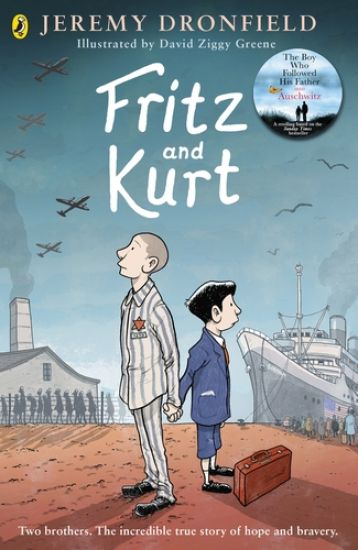
"Extraordinarily touching" - The Jewish ChronicleWhen everything is taken away from you, love and courage are all you have left.In 1938, the Nazis come to Vienna. They hate anyone who is different, especially Jewish people.Fritz and Kurt's family are Jewish, and that puts them in terrible danger.Fritz, along with his father, is taken to a Nazi prison camp, a terrible place, full of fear. When his father is sent to a certain death, Fritz can't face losing his beloved Papa. He chooses to go with him and fight for survival.Meanwhile, Kurt must go on a frightening journey, all alone, to seek safety on the far side of the world.In this extraordinary true story, Fritz and Kurt must face unimaginable hardships, and the two brothers wonder if they will ever return home . . .A retelling of the Sunday Times bestselling The Boy Who Followed his Father into Auschwitz, a Daily Mail and Sunday Express book of the year:'Shattering, astonishing' Daily Mail'Extraordinary' Observer

This award-winning book, now available in paperback, is the first solid appraisal of the legendary career of the eminent Hungarian-born conductor Fritz Reiner (1888-1963). Personally enigmatic and often described as difficult to work with, he was nevertheless renowned for the dynamic galvanization of the orchestras he led, a nearly unrivaled technical ability, and high professional standards. Reiner's influence in the United States began in the early 1920s and lasted until his death. Reiner was also deeply committed to serious music in American life, especially through the promotion of new scores. In Fritz Reiner, Maestro and Martinet, Kenneth Morgan paints a very real portrait of a man who was both his own worst enemy and one of the true titans of his profession.
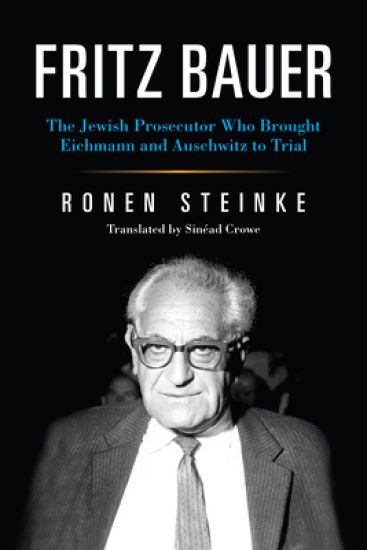
German Jewish judge and prosecutor Fritz Bauer (1903–1968) played a key role in the arrest of Adolf Eichmann and the initiation of the Frankfurt Auschwitz trials. Author Ronen Steinke tells this remarkable story while sensitively exploring the many contributions Bauer made to the postwar German justice system. As it sheds light on Bauer's Jewish identity and the role it played in these trials and his later career, Steinke's deft narrative contributes to the larger story of Jewishness in postwar Germany. Examining latent antisemitism during this period as well as Jewish responses to renewed German cultural identity and politics, Steinke also explores Bauer's personal and family life and private struggles, including his participation in debates against the criminalization of homosexuality—a fact that only came to light after his death in 1968. This new biography reveals how one individual's determination, religion, and dedication to the rule of law formed an important foundation for German post war society.
German Jewish judge and prosecutor Fritz Bauer (1903–1968) played a key role in the arrest of Adolf Eichmann and the initiation of the Frankfurt Auschwitz trials. Author Ronen Steinke tells this remarkable story while sensitively exploring the many contributions Bauer made to the postwar German justice system. As it sheds light on Bauer's Jewish identity and the role it played in these trials and his later career, Steinke's deft narrative contributes to the larger story of Jewishness in postwar Germany. Examining latent antisemitism during this period as well as Jewish responses to renewed German cultural identity and politics, Steinke also explores Bauer's personal and family life and private struggles, including his participation in debates against the criminalization of homosexuality—a fact that only came to light after his death in 1968. This new biography reveals how one individual's determination, religion, and dedication to the rule of law formed an important foundation for German post war society.
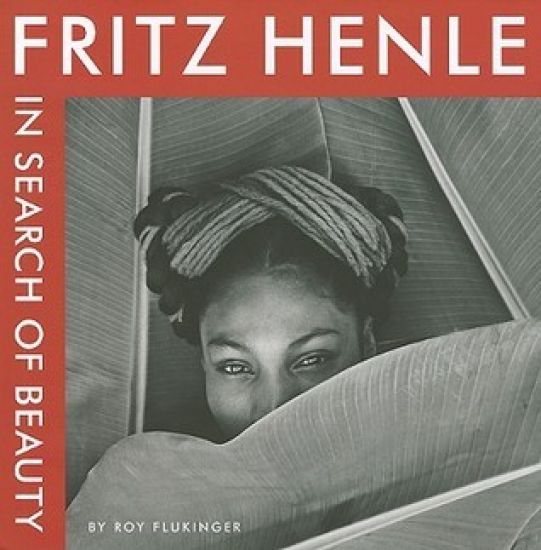
Praised as "the last classic freelance photographer" by photohistorian Helmut Gernsheim and as "a true 'Old Master' of the reflex camera" by critic Norman Rothschild, Fritz Henle (1909–1993) was one of the greatest photographers of the mid-twentieth century. Unlike most of his peers who specialized in a particular genre or style of photography, Henle ranged widely and successfully across many genres, including documentary, travel, fashion, commercial, portrait, celebrity, avant-garde, nude, industrial, landscape, and inspirational, to name only a few. He championed the square format photography of the Rolleiflex twin-lens reflex camera, becoming known later in life as "Mr. Rollei." A master craftsman renowned for exceptional technique and extraordinary composition, Henle was a prolific artist who published more than twenty books of his work, from This Is Japan (1937) to Casals (1975). Beyond his mastery of the craft, however, Henle was driven by a lifelong urge "to show people beauty." "I am obsessed," he said, "by showing them beauty." This volume is the catalogue of a major retrospective exhibition of the life and career of Fritz Henle staged by the Harry Ransom Center at the University of Texas at Austin. It covers the entire range of Henle's work, including significant items from the photographer's archive and family. The catalogue reproduces 127 of Henle's black-and-white and color photographs, which illustrate Henle's mastery of both media. Curator Roy Flukinger's text covers the full arc of Henle's career, from his early training in Germany to his prewar travels and photography in the Mediterranean, India, China, and Japan; his freelance work for LIFE magazine; his fashion editorials for Harper's Bazaar, Mademoiselle, and Town and Country; and his later photography and books of photographs of Mexico, Hawaii, Europe, and his final home, the U.S. Virgin Islands. An extensive bibliography of Henle's publications and exhibitions, collections that own his work, and critical commentary on Henle's photography completes this volume.
In this classic picture book from best-selling author-illustrator Jan Brett, Fritz the pony becomes a hero when he rescues the children of a walled city. Outside the walled city of beautiful horses lives Fritz, a pony that is neither beautiful nor elegant, but very gentle and kind.When the bridge to the city breaks in half, it's up to Fritz to save the children stranded on the other side. This beautifully-illustrated picture book by best-selling author-illustrator Jan Brett celebrates a timely message of inner beauty.
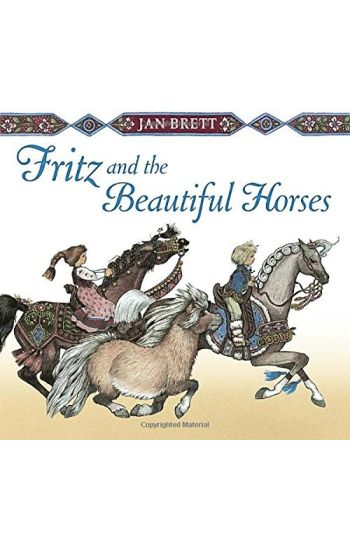
The timeless message of inner beauty is highlighted in this classic picture book from best-selling author-illustrator Jan Brett, in which Fritz the pony becomes a hero when he rescues the children of a walled city. Fritz was not beautiful. He didn't have a braided mane or a glossy coat. He couldn't prance with long, graceful strides like the elegant horses who carried lords and lovely ladies to the city--a city that allowed only the most beautiful horses within its walls. The citizens laughed at the short-legged pony's attempts to be like their own horses. But Fritz was dependable and hard-working. He proved to the citizens that there are things more important than being beautiful. He earned a special place for himself in the walled city just as he'll earn a special place in every reader's heart. Jan Brett's full-color artwork sparkles in intricate detail across every page of this exceptional picture book about Fritz, a sure-footed pony who finally gets the chance to shine in his own best way.

Fritz London was one of the twentieth century's key figures in the development of theoretical physics. A quiet and self-effacing man, he was one of the founders of quantum chemistry, and was the first to give a phenomenological explanation of superconductivity. This thoroughly researched biography gives a detailed account of London's life and work in Munich, Berlin, Oxford, Paris, and finally in the United States. Covering a fascinating period in the development of theoretical physics, and containing an appraisal of London's work by the late John Bardeen, this book will be of great interest to physicists, chemists, and to anyone interested in the history of science.


"Does he fetch?" Fritz asked. The puppy's owner sighed "No. We tried to teach him, but he would not learn. "Then I will teach hlm," thought Fritz. Remember that the puppy would not learn before FRITZ' PUPPY tells the story of Fritz' efforts to train his little dog. This charming story captures a classic childhood moment, getting a pet, and imparts a lesson on the value of persistence.

Join Fritz, an introverted chanterelle mushroom, and his friend Pip, an exuberant fly agaric mushroom, on a day of fun and adventure in this adorable picture book from the illustrator of the New York Times bestseller My Little Brave Girl Meet Fritz. He likes rose hip ice cream on warm days and cream of chestnut soup on cold ones. Sometimes, Fritz likes to play with lots of friends. Sometimes, he likes playing with his extroverted best friend Pip (who likes blackberry bramble ice cream on hot days and spicy nettle stew on cold ones). But most often, Fritz likes to spend time all by himself. Time to be quiet. Time to do lots of things or nothing at all. One morning, Fritz decides to have a very Pip-like day, to see what it's like being Pip. The day starts with an exciting morning of berryball, followed by a swim in the puddle pond -- and then blowing bubbles in the violet patch But as the day goes on, Fritz starts getting more and more frazzled -- it's exhausting work being so social when you're an introvert How can Fritz get the quiet time he needs when there's so much going on? Find out in this sweet new picture book by talented author-illustrator Kelsey Garrity-Riley.

It was a war that shaped the modern world, fought on five continents, claiming the lives of ten million people. Two great nations met each other on the field of battle for the first time. But were they so very different? For the first time, and drawing widely on archive material in the form of original letters and diaries, Peter Doyle and Robin Schäfer bring together the two sides, ‘Fritz’ and ‘Tommy’, to examine cultural and military nuances that have until now been left untouched: their approaches to war, their lives at the front, their greatest fears and their hopes for the future. The soldiers on both sides went to war with high ideals; they experienced horror and misery, but also comradeship/Kameradschaft. And with increasing alienation from the people at home, they drew closer together, ‘the Hun’ transformed into ‘good old Jerry’ by the war’s end. This unique collaboration is a refreshing yet touching examination of how little truly divided the men on either side of no-man’sland during the First World War.
Fritz Marti (1894–1991) came from Switzerland, where he had completed his doctorate in philosophy, to The University of Oregon, Eugene, in 1923. He was a serious, committed scholar in the tradition of German Idealism. The book is about his search for intellectual freedom in America. He was part of the evolution of higher education in the United States in the 20th Century and taught at colleges and universities across the country such as Oregon, Goucher, Maryland, Chicago and Notre Dame. He became passionate about the role of a college education. In 1947 he and his wife Gertrude Austin established a college preparatory school within a farm/home community in the hills of southern Ohio. It exists today as The Miami Valley School in Dayton, Ohio. This is the story of his encounter with and adaptation to America and a look at American academic life during the early Twentieth Century.
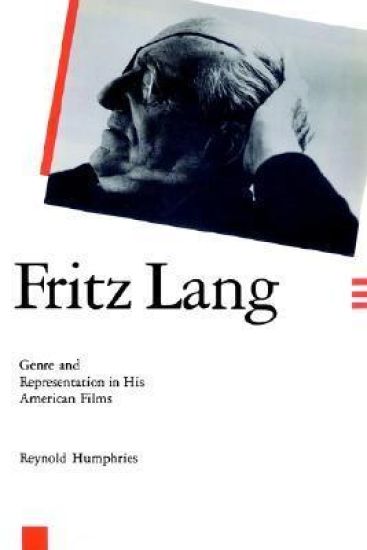
Challenging the myth that Fritz Lang's best work ended when he reached Hollywood, Reynold Humphries takes a new look at seventeen of the director's twenty-two American films. Made between 1936 and 1956, these films- Fury, You Only Live Once, You and Me, Man Hunt, Hangmen Also Die, The Ministry of Fear, The Woman in the Window, Scarlet Street, Cloak and Dagger, Secret beyond the Door, House by the River, Rancho Notorious, The Blue Gardenia, The Big Heat, Moonfleet, While the City Sleeps, and Beyond a Reasonable Doubt-broadly validate the insights of auteur theory while emphasizing the importance of the narrative and representational codes peculiar to a given genre. Humphries examines these films in light of semiotics and psychoanalysis, drawing on Freud's "Wolfman" case and Lacan's theories of "the subject" and "the look" to bring novel solutions to crucial theoretical problems in such areas as the spectator, classical film narrative, and genre. In applying critical theory to Lang's Hollywood-made film noirs, melodramas, Westerns, and spy films, Humphries provocatively complicates auteur theory and revitalizes an unjustly neglected phase in the career of one of cinema's boldest visionaries.
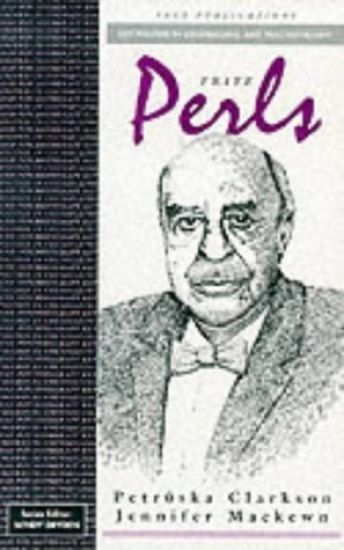
`A well-researched, clearly written book... Petruska Clarkson and JenniferMackewn did a splendid job organizing the theoretical material... Their judicious use of graphics enhances their discussions... The chapter on Perls' contributions to practice is nicely peppered by samples of his actual therapy work and this is true for other chapters. This, I imagine, is how Fritz would have liked it: to let his work speak for itself... Petruska Clarkson and Jennifer Mackewn have carefully crafted and produced a powerfully informative book. Its pages are crammed with up-to-date facts and issues relating to Perls... The work is lean, not one word is wasted. Congratulations!' - British Gestalt Journal Fritz Perls was the co-founder of Gestalt Therapy, which is based on a holistic view of people and their relationship to the environment, and which remains one of the most influential approaches in counselling and psychotherapy today. This book provides a clear account of the diverse life of this popular but controversial psychotherapist and discusses his ideas simply and lucidly. The book includes examples of Perls' work, drawn from transcripts and films of his demonstration sessions. A further feature is a full acknowledgement of the criticisms and appreciations which Perls' life and work have attracted and an honest evaluation of whether and to what extent they are justified.

While Howard Phillips Lovecraft was closing the final chapter of his writing career, Fritz Reuter Leiber was only beginning to open his own. The year was 1936 and Jonquil Leiber, Fritz's first wife, sent a letter on her own initiative to Lovecraft, knowing that her husband had been an avid admirer of his work, ever since his first reading of "The Colour out of Space" and hoping that Lovecraft's presence in Fritz's slow-paced writing career might be the source of inspiration he so dearly needed. Lovecraft replied promptly on November 2 of that year, the seed of an invigorating correspondence, which lasted till Lovecraft's passing.Fritz Leiber and H.P. Lovecraft: Writers of the Dark presents Lovecraft's letters to Leiber, an impressive selection of Leiber's fiction which shows Lovecraft's influence, and a selection of Leiber's essays on Lovecraft and Matters Lovecraftian. Features an introduction by Ben J. S. Szumskyj and an afterword by S.T. Joshi.
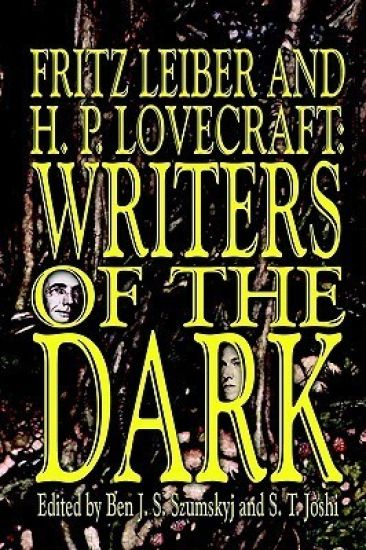
While Howard Phillips Lovecraft was closing the final chapter of his writing career, Fritz Reuter Leiber was only beginning to open his own. The year was 1936 and Jonquil Leiber, Fritz's first wife, sent a letter on her own initiative to Lovecraft, knowing that her husband had been an avid admirer of his work, ever since his first reading of "The Colour out of Space" and hoping that Lovecraft's presence in Fritz's slow-paced writing career might be the source of inspiration he so dearly needed. Lovecraft replied promptly on November 2 of that year, the seed of an invigorating correspondence, which lasted till Lovecraft's passing.Fritz Leiber and H.P. Lovecraft: Writers of the Dark presents Lovecraft's letters to Leiber, an impressive selection of Leiber's fiction which shows Lovecraft's influence, and a selection of Leiber's essays on Lovecraft and Matters Lovecraftian. Features an introduction by Ben J. S. Szumskyj and an afterword by S.T. Joshi.
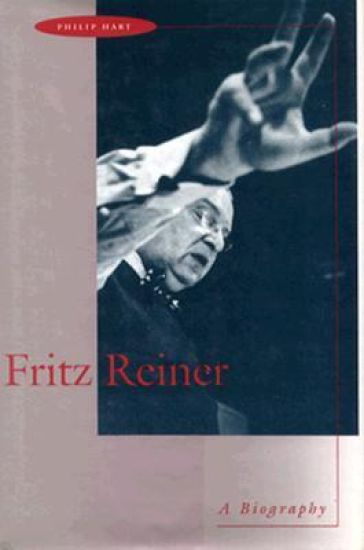
This is a biography of one of the century's most important conductors of opera and symphonic music. Fritz Reiner (1888-1963) led major orchestras in Europe and the Americas, including those of Chicago, Cincinnati, and Pittsburgh. After distinguished opera conducting in Philadelphia and San Francisco, he spent five memorable seasons at the Metropolitan Opera. He was not only a consummate musician but also a major participant in the evolution of concert and opera in America, in the development of characteristically American music, and in the education of musicians. Leonard Bernstein, his most famous pupil, declared, ""Reiner is responsible for my own very high standards"". His most enduring legacy, his recordings made with the Chicago Symphony Orchestra, are now more highly regarded than they were in his lifetime - indeed, most of Reiner's recorded repertory was reissued on compact disc much more quickly than that of other conductors of his era. Hart's unique perspective - he was Reiner's colleague at the Chicago Symphony Orchestra and remained his friend until his death - informs this work and grounds Reiner's career in the cultural context in which he worked and lived. Drawing heavily on the resources of the Fritz Reiner Library at Northwestern University and on other archives in America and Europe, as well as on his own extensive contacts in the field, Hart supplements research with personal knowledge and experience to produce an authoritative study of his complex subject. The book includes comprehensive recordings and repertory lists and an illuminating epilogue detailing the disposition of Reiner's estate. ""Fritz Reiner: A Biography"" offers a portrait of a brilliant conductor. Philip Hart is the author of ""Orpheus in the New World"", a study of the symphony orchestra as a cultural institution in the United States. His long career in music administration has included positions at The Juilliard School and with orchestras in Portland and Seattle, as well as six years spent as the Associate Manager of the Chicago Symphony Orchestra.
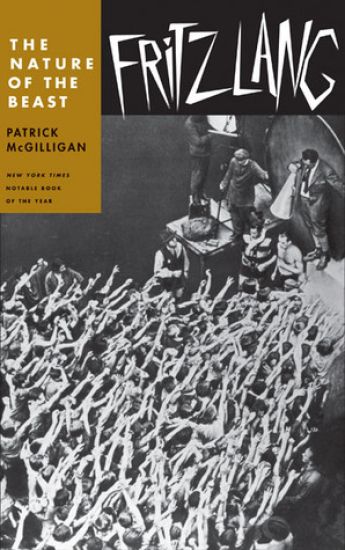
The name of Fritz Lang—the visionary director of Metropolis, M, Fury, The Big Heat, and thirty other unforgettable films—is hallowed the world over. But what lurks behind his greatest legends and his genius as a filmmaker? Patrick McGilligan, placed among “the front rank of film biographers” by the Washington Post, spent four years in Europe and America interviewing Lang’s dying contemporaries, researching government and film archives, and investigating the intriguing life story of Fritz Lang. This critically acclaimed biography—lauded as one of the year’s best nonfiction books by Publishers Weekly—reconstructs the compelling, flawed human being behind the monster with the monocle.