Kirjojen hintavertailu. Mukana 11 627 373 kirjaa ja 12 kauppaa.

Kirjahaku

Etsi kirjoja tekijän nimen, kirjan nimen tai ISBN:n perusteella.

225 tulosta hakusanalla Fumiko Hayashi

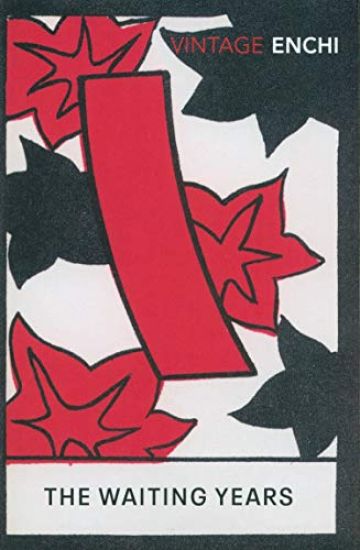
The Waiting Years

The Waiting Years

Fumiko Enchi

Vintage Classics
2019
pokkari
Published for the first time in the UK, one of Japan's greatest modern female writers In the late nineteenth century, Tomo, the faithful wife of a government official, is sent to Tokyo, where a heartbreaking task is awaiting her. From among hundreds of geishas and daughters offered up for sale by their families she must select a respectable young girl to become her husband’s new lover. Externally calm, but torn apart inside, Tomo dutifully begins the search for an official mistress. The Waiting Years was awarded Japan’s most prestigious literary award, the Noma Prize.
American Pioneers and the Japanese Frontier

American Pioneers and the Japanese Frontier

Fumiko Fujita

Praeger Publishers Inc
1994
sidottu
In 1871-1882 fifty Americans, along with other foreign experts, were employed by the Japanese government to develop Japan's northern frontier, Hokkaido. Their work covered a wide scope of activities, from introducing Western agriculture and industry, constructing roads and a railroad, and surveying topography and mines, to establishing an agricultural college. While examining the overall undertaking, Professor Fujita specifically focuses on the prominent members who left copious private and public records. She thoroughly examines their ideas as well as their attitudes toward an alien culture. At the same time, she shows the Japanese responses to these experts and their alien culture. This is the first booklength examination of a development project that, in many ways, approaches some of the twentieth century undertakings in scope and complexity. As such, it will be of interest to students and scholars of inter-cultural relations, and Japanese and American nineteenth-century history.
Nationalism, Political Realism and Democracy in Japan
Masao Maruyama was the most influential and respected political thinker in post-WWII Japan. He believed that the collective mentality, inherent in the traditional Japanese way of thinking, was a key reason for the defeat in WWII and was convinced that such thought needed to be modernized. In this book Fumiko Sasaki argues that the cause of the prolonged political, economic and social decline in Japan since the early 1990s can be explained by the same characteristics Maruyama identified after 1945. Using Maruyama’s thought Sasaki explores how the Japanese people see their role in their nation, the democracy imposed by the US, and the relationship between power and international relations. Further, Sasaki also considers what the essence of national security is and how much it has been forgotten in current Japanese political thought. The book solves the puzzle of how Maruyama, a teacher of political realism who emphasized the importance of power, could insist on the policy of unarmed neutrality for Japan's national security, and in doing so, illuminates how traditional Japanese thought has impacted development in Japan.Despite his status within Japan, there are few English language books available on Maruyama and his thought on national security. This book therefore will be an essential resource for students and scholars of Japanese Politics and Political Thought.
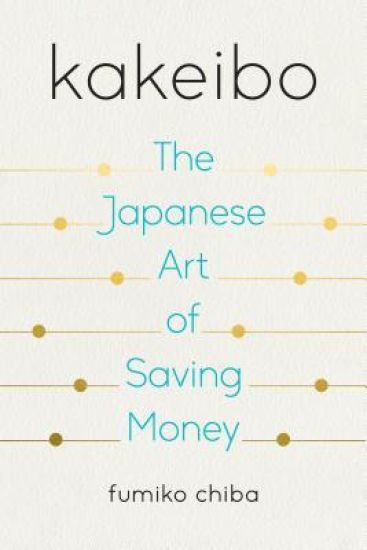
Kakeibo: The Japanese Art of Saving Money
DISCOVER THE JAPANESE SECRET TO FINANCIAL WELL-BEING: The Kakeibo is a wonderful tool for anyone who wants to make keeping track of their spending more streamlined People in Japan are masters of minimal living, able to make do with less in all aspects of life, whether it's de-cluttering personal belongings or savvy seasonal cooking. At the heart of all this is the kakeibo: the budgeting journal used to set savings goals and track spending. The premise is simple: at the beginning of each month, the prompts in this book help you to plan how much you would like to save and what you need to do in order to reach your goal. The kakeibo then gives you space to jot down your weekly spending and reflect on the month just gone. The act of completing your journal ensures that saving is a part of your everyday life, while also giving you the opportunity to reflect and improve every month.
Building Trust

Building Trust

Fumiko Hosokawa

Lexington Books
2009
sidottu
This book studies five ethnic communities—South Asian Americans, African Americans, Japanese Americans, Mexican Americans, and Somoan Americans—to understand how their members feel about being studied by researchers. American society has always had tension between and among ethnic groups, and yet our researchers are given limited training, if any, on how to approach various ethnic communities, all of which see their problems and needs differently than those outside their communities. This book bridges that gap by focusing on trust-building as a necessary process in doing good community research. The building of trust requires gaining knowledge of a group's culture and history, their perspective on social problems and issues, and the proper way of interviewing its members, going well beyond the mere building of rapport. This book offers the reader culturally sensitive methods to approach interacting and interviewing members of each of these unique, multifaceted ethnic communities.
Building Trust

Building Trust

Fumiko Hosokawa

Lexington Books
2009
nidottu
This book studies five ethnic communities_South Asian Americans, African Americans, Japanese Americans, Mexican Americans, and Somoan Americans_to understand how their members feel about being studied by researchers. American society has always had tension between and among ethnic groups, and yet our researchers are given limited training, if any, on how to approach various ethnic communities, all of which see their problems and needs differently than those outside their communities. This book bridges that gap by focusing on trust-building as a necessary process in doing good community research. The building of trust requires gaining knowledge of a group's culture and history, their perspective on social problems and issues, and the proper way of interviewing its members, going well beyond the mere building of rapport. This book offers the reader culturally sensitive methods to approach interacting and interviewing members of each of these unique, multifaceted ethnic communities.
A Tale of False Fortunes

A Tale of False Fortunes

Fumiko Enchi

UNIVERSITY OF HAWAI'I PRESS
2000
sidottu
A Tale of False Fortunes is a masterful translation of Enchi Fumiko's (1905-1986) modern classic, Namamiko monogatari. Written in 1965, this prize-winning work of historical fiction presents an alternative account of an imperial love affair narrated in the eleventh-century romance A Tale of Flowering Fortunes (Eiga monogatari). Both stories are set in the Heian court of the emperor Ichijo (980-1011) and tell of the ill-fated love between the emperor and his first consort, Teishi, and of the political rivalries that threaten to divide them. While the earlier work can be viewed largely as a panegyric to the all-powerful regent Fujiwara no Michinaga, Enchi's account emphasizes Teishi's nobility and devotion to the emperor and celebrates her ""moral victory"" over the regent, who conspired to divert the emperor's attentions toward his own daughter, Shoshi.The narrative of A Tale of False Fortunes is built around a fictitious historical document, which is so well crafted that it was at first believed to be an actual document of the Heian period. Throughout Enchi's innovation and skill are evident as she alternates between modern and classical Japanese, interjecting her own commentary and extracts from A Tale of Flowering Fortunes, to impress upon the reader the authenticity of the tale presented within the novel.
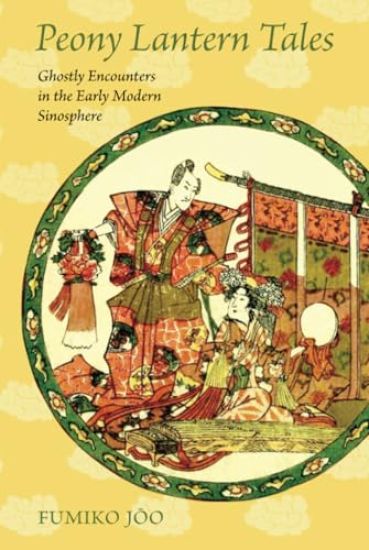
Peony Lantern Tales

Peony Lantern Tales

Fumiko Joo

UNIVERSITY OF HAWAI'I PRESS
2025
sidottu
The Story of the Peony Lantern by the Chinese author Qu You (1347–1433) travelled across lingual, cultural, and geopolitical borders in early modern East Asia. The original tale, set in fourteenth-century Ningbo, China, is one of ghostly seduction and murder, but it continued to transform as it traveled from city to city and in its encounters with characters from other texts, publishing networks, and countless readers in the Sinosphere. Fumiko Joo closely analyzes the cultural and societal structures that framed how a seductive female ghost was reconceived in texts, sites, and objects, both locally and trans-regionally. The myriad transformations of The Peony Lantern explain the context and the structures of knowledge production and practice where depictions of female sexuality, death, and morality emerged and were remade.Joo incorporates a breadth of sources, from local gazetteers to theater ephemera, to shed light on the cultural life of objects, the collective memory of vanished sites, and the public’s desire to encounter the phantom. She examines the historical moments and sociocultural spaces where Peony Lantern narratives and their writers thrived, following the tale as it moved from Hangzhou literati from the twelfth to fourteenth centuries to an early nineteenth-century group of Edo playwrights, kabuki theater producers, and publishers. Readers will welcome Joo’s exploration of the tale’s transformation by local scholars of Ningbo in the eighteenth century and the female classical writer Arakida Reijo (1732–1806) and her Ise literary circle. The key sites of literary activity for the stories, according to Joo’s illuminating analyses, are not modern nation-states but networks of literati connected by class, gender, and regional affinities.This volume includes complete translations of Qu You’s original Peony Lantern and two later adaptions, The Double-Fish Fan Pendant by Xiong Long Feng Publishing House and Arakida’s Floating Weeds.
A Practical Guide for Scholarly Reading in Japanese

A Practical Guide for Scholarly Reading in Japanese

Fumiko Nazikian; Keiko Ono; Naofumi Tatsumi

TAYLOR FRANCIS LTD
2023
nidottu
A Practical Guide for Scholarly Reading in Japanese is an innovative textbook for students specializing in scholarly Japanese for Asian studies. This book is aimed at scholars in any Asian Studies field in which Japanese scholarship is extremely important.The book can be used as a textbook or self-study guide for scholars of Asian studies, as well as students who need to learn to read scholarly Japanese.The book contains concise descriptions of grammar points essential for reading scholarly writings in Japanese and exercises based on excerpts taken from prominent Japanese scholarly texts. Each exercise reading provides a list of vocabulary and explanations of expressions. The reading materials provided mainly cover Chinese history, comparative literature, religion, and culture. The book can be used as a textbook or self-study guide for scholars of Asian studies, as well as students who have completed two years of basic language learning and need to learn to read scholarly Japanese.
A Practical Guide for Scholarly Reading in Japanese

A Practical Guide for Scholarly Reading in Japanese

Fumiko Nazikian; Keiko Ono; Naofumi Tatsumi

TAYLOR FRANCIS LTD
2023
sidottu
A Practical Guide for Scholarly Reading in Japanese is an innovative textbook for students specializing in scholarly Japanese for Asian studies. This book is aimed at scholars in any Asian Studies field in which Japanese scholarship is extremely important.The book can be used as a textbook or self-study guide for scholars of Asian studies, as well as students who need to learn to read scholarly Japanese.The book contains concise descriptions of grammar points essential for reading scholarly writings in Japanese and exercises based on excerpts taken from prominent Japanese scholarly texts. Each exercise reading provides a list of vocabulary and explanations of expressions. The reading materials provided mainly cover Chinese history, comparative literature, religion, and culture. The book can be used as a textbook or self-study guide for scholars of Asian studies, as well as students who have completed two years of basic language learning and need to learn to read scholarly Japanese.
Nationalism, Political Realism and Democracy in Japan
Masao Maruyama was the most influential and respected political thinker in post-WWII Japan. He believed that the collective mentality, inherent in the traditional Japanese way of thinking, was a key reason for the defeat in WWII and was convinced that such thought needed to be modernized. In this book Fumiko Sasaki argues that the cause of the prolonged political, economic and social decline in Japan since the early 1990s can be explained by the same characteristics Maruyama identified after 1945. Using Maruyama’s thought Sasaki explores how the Japanese people see their role in their nation, the democracy imposed by the US, and the relationship between power and international relations. Further, Sasaki also considers what the essence of national security is and how much it has been forgotten in current Japanese political thought. The book solves the puzzle of how Maruyama, a teacher of political realism who emphasized the importance of power, could insist on the policy of unarmed neutrality for Japan's national security, and in doing so, illuminates how traditional Japanese thought has impacted development in Japan.Despite his status within Japan, there are few English language books available on Maruyama and his thought on national security. This book therefore will be an essential resource for students and scholars of Japanese Politics and Political Thought.
Kakeibo

Kakeibo

Fumiko Chiba

Penguin Books Ltd
2017
nidottu
SAVE MONEY IN 2021 WITH THIS SIMPLE AND FOOLPROOF JOURNAL________'Experts claim it could help some people cut spending by up to 35%' Mail OnlinePeople in Japan are masters of minimal living, able to make do with less in all aspects of life, whether it's de-cluttering personal belongings or savvy seasonal cooking. But at the heart of all this is the kakeibo: the budgeting journal used to set saving goals and spend wisely.It's simple: at the beginning of each month you sit down with your kakeibo and think about how much you would like to save and what you will need to do in order to reach your goal. There is space to jot down your weekly spending and reflect on the month just gone. A kakeibo ensures helps make saving a part of your everyday life, while also giving you the opportunity to reflect and improve every month.Get a grip on your spending and start to achieve your goals, by finding ways to save for the things that really matter in your life.Don't give up what you want most for what you want now . . . This is the Japanese Journal that puts more money in YOUR pocket every month.'The simple art of keeping track of your finances . . . this is about being financially mindful rather than letting a gadget do the thinking for you' The Sunday Times
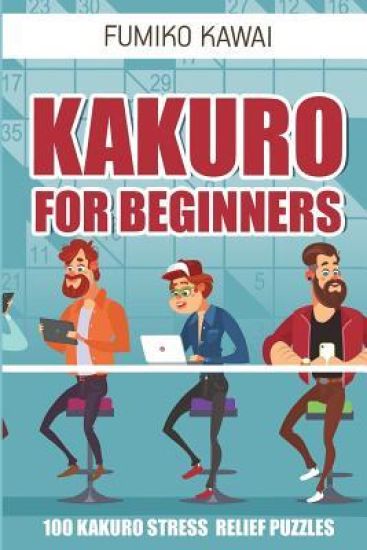
Kakuro For Beginners

Kakuro For Beginners

Fumiko Kawai

Independently Published
2018
pokkari
KakuroThe object of a kakuro is to insert digits from 1 to 9 into the white cells to total the clue associated with it. However no digit can be duplicated in an entry. For example the total 6 you could have 1 and 5, 2 and 4 but not 3 and 3.
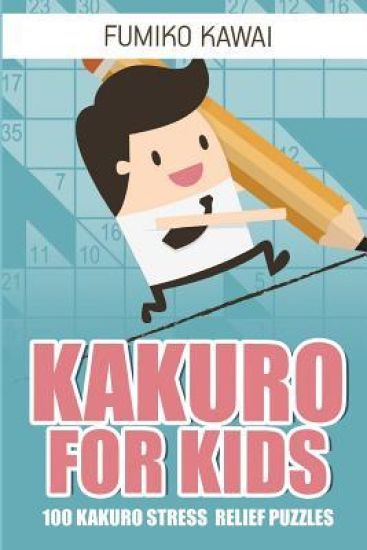
Kakuro For Kids

Kakuro For Kids

Fumiko Kawai

Independently Published
2018
pokkari
KakuroThe object of a kakuro is to insert digits from 1 to 9 into the white cells to total the clue associated with it. However no digit can be duplicated in an entry. For example the total 6 you could have 1 and 5, 2 and 4 but not 3 and 3.
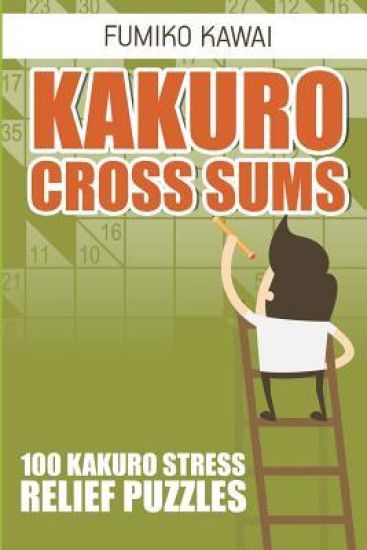
Kakuro Cross Sums

Kakuro Cross Sums

Fumiko Kawai

Independently Published
2018
pokkari
KakuroThe object of a kakuro is to insert digits from 1 to 9 into the white cells to total the clue associated with it. However no digit can be duplicated in an entry. For example the total 6 you could have 1 and 5, 2 and 4 but not 3 and 3.
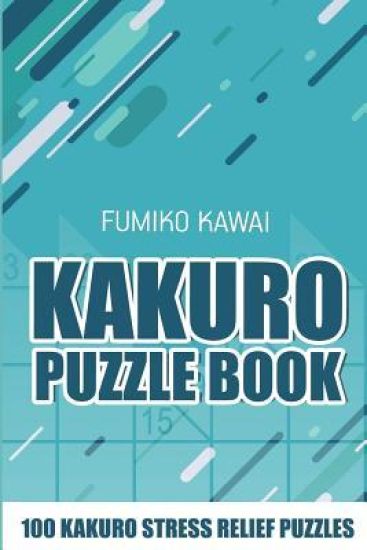
Kakuro Puzzle Book

Kakuro Puzzle Book

Fumiko Kawai

Independently Published
2018
pokkari
KakuroThe object of a kakuro is to insert digits from 1 to 9 into the white cells to total the clue associated with it. However no digit can be duplicated in an entry. For example the total 6 you could have 1 and 5, 2 and 4 but not 3 and 3.