
Kirjahaku
Etsi kirjoja tekijän nimen, kirjan nimen tai ISBN:n perusteella.
1000 tulosta hakusanalla G.E. Moore




The author emphasizes Moore's contributions to philosophy and discusses his appeals to common sense and to ordinary language and his concept of the theory of meaning. This is followed by a close examination of the method of analysis. The application of the method is then illustrated in chapters on Moore's ethics and on his views on visual perception.
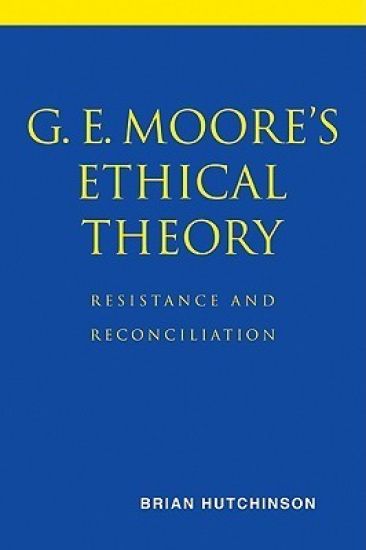
This 2001 book is a comprehensive study of the ethics of G. E. Moore, the most important English-speaking ethicist of the twentieth century. Moore's ethical project, set out in his seminal text Principia Ethica, is to preserve common moral insight from scepticism and, in effect, persuade his readers to accept the objective character of goodness. Brian Hutchinson explores Moore's arguments in detail and in the process relates the ethical thought to Moore's anti-sceptical epistemology. Moore was, without perhaps fully realizing it, sceptical about the very enterprise of philosophy itself, and in this regard, as Brian Hutchinson reveals, was much closer in his thinking to Wittgenstein than has been previously realized. This book shows Moore's ethical work to be much richer and more sophisticated than his critics have acknowledged.
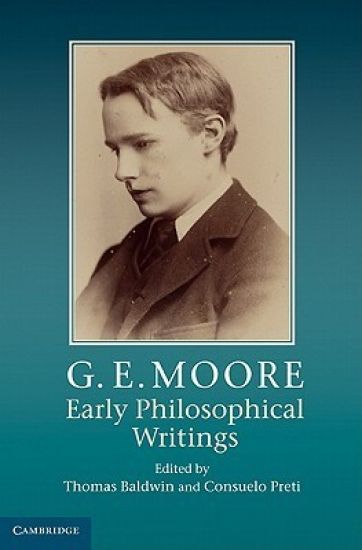
G. E. Moore: Early Philosophical Writings
Cambridge University Press
2011
sidottu
G. E. Moore's fame as a philosopher rests on his ethics of love and beauty, which inspired Bloomsbury, and on his 'common sense' certainties which challenge abstract philosophical theory. Behind this lies his critical engagement with Kant's idealist philosophy, which is published here for the first time. These early writings, Moore's fellowship dissertations of 1897 and 1898, show how he initiated his influential break with idealism. In 1897 his main target was Kant's ethics, but by 1898 it was the whole Kantian project of transcendental philosophy that he rejected, and the theory which he developed to replace it gave rise to the new project of philosophy as logical analysis. This edition includes comments by Moore's examiners Henry Sidgwick, Edward Caird and Bernard Bosanquet, and in a substantial introduction the editors explore the crucial importance of the dissertations to the history of twentieth-century philosophical thought.
This 2001 book is a comprehensive study of the ethics of G. E. Moore, the most important English-speaking ethicist of the twentieth century. Moore's ethical project, set out in his seminal text Principia Ethica, is to preserve common moral insight from scepticism and, in effect, persuade his readers to accept the objective character of goodness. Brian Hutchinson explores Moore's arguments in detail and in the process relates the ethical thought to Moore's anti-sceptical epistemology. Moore was, without perhaps fully realizing it, sceptical about the very enterprise of philosophy itself, and in this regard, as Brian Hutchinson reveals, was much closer in his thinking to Wittgenstein than has been previously realized. This book shows Moore's ethical work to be much richer and more sophisticated than his critics have acknowledged.
The Epistemology of G. E. Moore is an examination of the philosophy of G. E. Moore, one of the foremost Anglo-American, analytic philosophers of the twentieth century.This book, together with Reinhardt Grossmann’s Reflections on Frege’s Philosophy and Moltke Gram’s Kant, Ontology, and the A Priori, seeks to redress an imbalance in analytic philosophy by making a case for the relevance of analytically oriented historical studies to contemporary problems. It focuses on Moore’s epistemological writings and aims to present an exhaustive overview of Moore’s work on this topic.
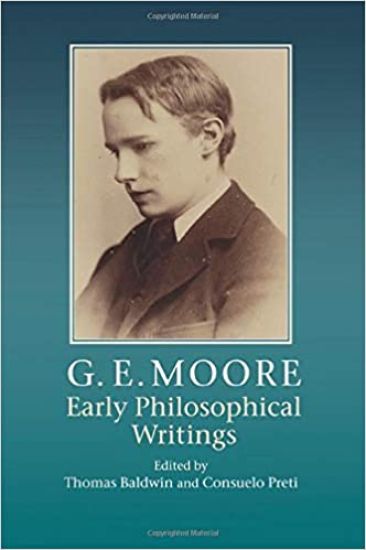
G. E. Moore: Early Philosophical Writings
Cambridge University Press
2015
pokkari
G. E. Moore's fame as a philosopher rests on his ethics of love and beauty, which inspired Bloomsbury, and on his 'common sense' certainties which challenge abstract philosophical theory. Behind this lies his critical engagement with Kant's idealist philosophy, which is published here for the first time. These early writings, Moore's fellowship dissertations of 1897 and 1898, show how he initiated his influential break with idealism. In 1897 his main target was Kant's ethics, but by 1898 it was the whole Kantian project of transcendental philosophy that he rejected, and the theory which he developed to replace it gave rise to the new project of philosophy as logical analysis. This edition includes comments by Moore's examiners Henry Sidgwick, Edward Caird and Bernard Bosanquet, and in a substantial introduction the editors explore the crucial importance of the dissertations to the history of twentieth-century philosophical thought.
G. E. Moore's Intuitionism. A highly implausible meta-ethical position
Mark Costello
Grin Verlag
2017
nidottu
Themes from G. E. Moore
Clarendon Press
2007
sidottu
These sixteen original essays, whose authors include some of the world's leading philosophers, examine themes from the work of the Cambridge philosopher G. E. Moore (1873-1958), and demonstrate his considerable continuing influence on philosophical debate. Part I bears on epistemological topics, such as scepticism about the external world, the significance of common sense, and theories of perception. Part II is devoted to themes in ethics, such as Moore's open question argument, his non-naturalism, utilitarianism, and his notion of organic unities.

In this book, setting aside his consideration of specifically ethical topics, I try to provide a comprehensive interpretation of Moore's thought. Against the background of this general interpretation I examine in detail his work on some of the central problems of metaphysics and, because Moore's being able to sustain a consistent anti-skepticism is essential to the survival of the base from which he works on those problems, of epistemology too. The interpretation of which I speak involves my taking as the centerpiece of Moore's philosophical work his book, Some Main Problems of Philosophy, written in 1910 as the text of a lecture series but left unpublished for over forty years thereafter. That book is aptly titled, for the issues with which Moore deals in it are indeed among the main problems of philosophy. Not least of these are the problems of formulating a general categorial deSCription of the world and then of defending that formulation. However, while I will discuss Moore's work in light of its contribution to this project of taking metaphysical inventory, it is important to note that he, in common with many other major figures in contemporary analytical philosophy, did not approach specific philosophical puzzles with a view to possibly integrating solutions to them into a comprehensive theory about reality as a whole, that is, into what might be called a metaphysical system.
In this book, setting aside his consideration of specifically ethical topics, I try to provide a comprehensive interpretation of Moore's thought. Against the background of this general interpretation I examine in detail his work on some of the central problems of metaphysics and, because Moore's being able to sustain a consistent anti-skepticism is essential to the survival of the base from which he works on those problems, of epistemology too. The interpretation of which I speak involves my taking as the centerpiece of Moore's philosophical work his book, Some Main Problems of Philosophy, written in 1910 as the text of a lecture series but left unpublished for over forty years thereafter. That book is aptly titled, for the issues with which Moore deals in it are indeed among the main problems of philosophy. Not least of these are the problems of formulating a general categorial deSCription of the world and then of defending that formulation. However, while I will discuss Moore's work in light of its contribution to this project of taking metaphysical inventory, it is important to note that he, in common with many other major figures in contemporary analytical philosophy, did not approach specific philosophical puzzles with a view to possibly integrating solutions to them into a comprehensive theory about reality as a whole, that is, into what might be called a metaphysical system.

Arie Nazionali ... Traduzione E Versi Di G. Testini.
Thomas Moore
British Library, Historical Print Editions
2011
pokkari
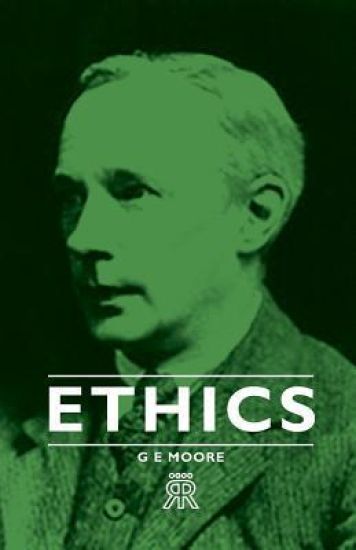
G. E. Moore's 1912 work Ethics has tended to be overshadowed by his famous earlier work Principia Ethica. However, its detailed discussions of utilitarianism, free will, and the objectivity of moral judgements find no real counterpart in Principia, while its account of right and wrong and of the nature of intrinsic value deepen our understanding of Moore's moral philosophy. Moore himself regarded the book highly, writing late in his career, "I myself like [it] better than Principia Ethica, because it seems to me to be much clearer and far less full of confusions and invalid arguments." Short but philosophically rich, and written with impressive precision and intellectual candor, Ethics is a minor classic which repays careful study. This new edition includes Moore's essay "The Nature of Moral Philosophy" as well as editorial notes, an introduction, and a guide to further reading.
G. E. Moore was a central figure in twentieth-century philosophy. Along with Russell and Wittgenstein, he pioneered analytic philosophy, and his Principia Ethica shaped the contours of twentieth-century ethics. Indeed, until the publication of Rawls's A Theory of Justice, no single book in moral philosophy was to equal Principia's influence. Unfortunately, however, Principia Ethica has so dominated critical discussions of Moore's work that even experts on his moral philosophy have tended to ignore his Ethics, which he published eight years later. But Ethics is Moore's only other book on moral philosophy, and one of only a handful of post-Principia publications dealing with ethics. Its detailed discussions of utilitarianism, free will, and the objectivity of moral judgements find no real counterpart in Principia while its account of right and wrong and of the nature of intrinsic value deepen our understanding of his moral philosophy. The republication of Ethics thus rounds out our understanding of Moore's ethical thought. But the book's value goes beyond its historical or scholarly interest. A short but philosophically rich text, Ethics stands independent of Principia and repays careful study in its own right. By raising a number of fundamental questions in ethics, questions that remain live today, by proffering clear, credible, and often innovative answers to them, and by doing so with a philosophical skill that is still impressive, Moore's short book is a minor classic. Almost a century after its original publication, it still amply rewards those who read it. This new edition of Moore's Ethics includes his essay 'The Nature of Moral Philosophy' as well as editorial notes, an introduction, and a guide to further reading.
Principia Ethica is recognised as the definitive starting point for twentieth-century ethical theory. Its influence was first largely confined to the Bloomsbury Group - Maynard Keynes wrote that it was ‘better than Plato’ - who took it up for its celebration of the values of art and love; but later it achieved the widespread recognition it still retains as a classic text of analytic ethical theory. It is particularly renowned for Moore’s argument that previous ethical theories have been guilty of a fallacy - the ‘naturalistic fallacy’. Principia Ethica is reprinted here with the previously unpublished Preface Moore wrote for a planned, but never completed, second edition. Though unfinished, it sets out clearly Moore’s second thoughts about his own work. The volume also includes two important pieces from his later ethical writings, ‘Free will’ and ‘The conception of intrinsic value’, and a new introduction by Thomas Baldwin.