Kirjojen hintavertailu. Mukana 12 562 392 kirjaa ja 12 kauppaa.

Kirjahaku

Etsi kirjoja tekijän nimen, kirjan nimen tai ISBN:n perusteella.

1000 tulosta hakusanalla G.W. Patton

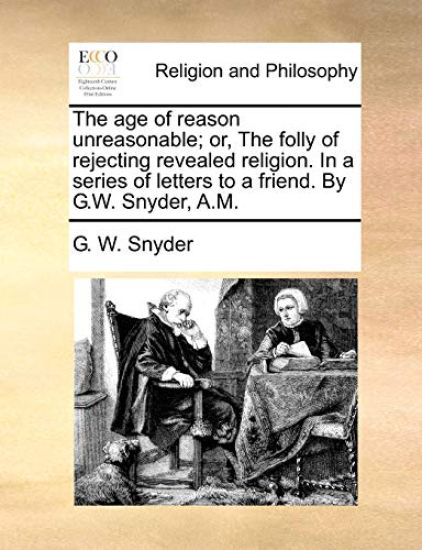
The age of Reason Unreasonable; or, The Folly of Rejecting Revealed Religion. In a Series of Letters to a Friend. By G.W. Snyder, A.M
The 18th century was a wealth of knowledge, exploration and rapidly growing technology and expanding record-keeping made possible by advances in the printing press. In its determination to preserve the century of revolution, Gale initiated a revolution of its own: digitization of epic proportions to preserve these invaluable works in the largest archive of its kind. Now for the first time these high-quality digital copies of original 18th century manuscripts are available in print, making them highly accessible to libraries, undergraduate students, and independent scholars.The Age of Enlightenment profoundly enriched religious and philosophical understanding and continues to influence present-day thinking. Works collected here include masterpieces by David Hume, Immanuel Kant, and Jean-Jacques Rousseau, as well as religious sermons and moral debates on the issues of the day, such as the slave trade. The Age of Reason saw conflict between Protestantism and Catholicism transformed into one between faith and logic -- a debate that continues in the twenty-first century.++++The below data was compiled from various identification fields in the bibliographic record of this title. This data is provided as an additional tool in helping to insure edition identification: ++++Library of CongressW005703A remonstrance against Paine's Age of reason and the writings of other deists.Philadelphia: Published by William Cobbett, opposite Christ Church, May, 1798. 213, 3]p.; 12
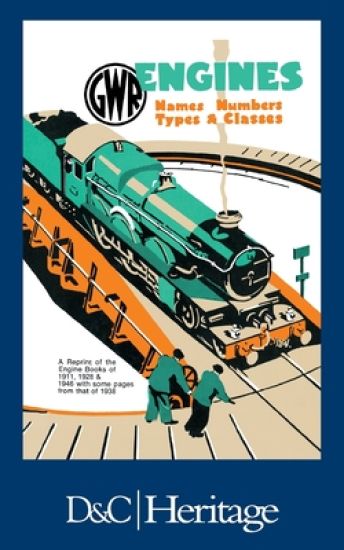
G.W.R. Engines

G.W.R. Engines

W. G. Chapman

David Charles
2014
nidottu
A collection of the Great Western Railway: Names, Numbers, Types and Classes book editions spanning the middle of the 20th century from the detailed work of W. G. Chapman.
G.W. & Her Two Time Travelers

G.W. & Her Two Time Travelers

Freddie D. Wah

Independently Published
2019
nidottu
This book is about Freddie and his mother, Grandma Wah (G.W.), a retired school teacher who teaches voluntarily on occasions at Faxon Montessori Elementary School. Freddie writes books. One Day, he lost himself in a book he was writing called "Dinosaurs Are Pets." Freddie fell asleep while writing and woke up stranded on an island where he'll be stuck forever, if he doesn't find a way out.Freddie has two children, a son, Fre'johane (Jon) and a daughter, Fre'jae (Jae). They believe Freddie came alive because they dreamt him into existence six years ago. They tried to stay awake six years ago, but fell asleep. When they awakened, Freddie was gone. Fortunately, that's not true. Freddie is alive and only got lost in a children's book. Now, he's stuck on an island called "Yazland".What will it take to get Freddie home to his two children and his mother, G.W.? And, how long will it take?
G.W. Leibniz' Monadologie

G.W. Leibniz' Monadologie

Tim Christophersen

Grin Publishing
2010
pokkari
Wissenschaftlicher Aufsatz aus dem Jahr 2008 im Fachbereich Philosophie - Philosophie des 17. und 18. Jahrhunderts, Note: 1.0, Georg-August-Universit t G ttingen, Sprache: Deutsch, Abstract: Diese Arbeit besch ftigt sich mit G.W. Leibniz' Monadologie aus dem Jahre 1714, die in neunzig knapp gehaltenen Paragraphen seine wohl bekannteste Schrift zur Substanzphilosophie ist und, so wird h ufig behauptet, nur deswegen geschrieben wurde, um noch vor dem Ableben einen berblick ber das eigene philosophische System zu geben. Seine Monadentheorie beschr nkt sich jedoch nicht allein auf die Substanzen, insofern sie ebenfalls als holistische Theorie zum Weltzusammenhang und zur Bedeutung und Wirkungsweise Gottes zu verstehen ist. Leibniz verband in ihr Metaphysik (Ontologie), Physik (Gesetze der Natur und der K rper) und Theologie (Gott und die Gesetze der Moral) zu einem harmonischen Gleichgewicht, und reanimierte in seinem Projekt die seinerzeit unpopul ren aristotelischen substantiellen Formen. Ein genauer Blick auf die innere Struktur des Argumentationsganges der Monadologie und auf die innere Vielfalt an behandelten Themen offenbart, wie K chy gezeigt hat, eine perspektivische Architektonik, durch die die Argumentation von unterschiedlichen Blickwinkeln aus zu einer Synthese ihrer Hypothesen gef hrt wird. Mit der Besch ftigung mit dem Metaphysischen bezweckt Leibniz prim r die Aufbietung einer ganzheitlichen Antwort auf zentrale Fragen der Metaphysik, obwohl sie sich bei ihm vorrangig auf die Ontologie reduzieren lassen: Was ist? Was sind die grundlegenden Komponenten der Welt? Die Beantwortung dieser Fragen als Hauptanliegen erkannt, kann dann au erdem nachgewiesen werden, dass Leibniz sich zu Gunsten seiner zentralen Fragestellung genau sieben Themenkomplexen zuwendet, die jeweils als spezifische Perspektiven und als Widerspiegelungen des gemeinsamen, bergeordneten Grundproblems der Monadologie hervortreten. Gem dieses Interpretationsmodells der perspektivis
G.W. Stellers Reise von Kamtschatka nach Amerika

G.W. Stellers Reise von Kamtschatka nach Amerika

Peter Simon Pallas; Georg Wilhelm Steller

Hansebooks
2018
pokkari
G.W. Stellers Reise von Kamtschatka nach Amerika ist ein unver nderter, hochwertiger Nachdruck der Originalausgabe aus dem Jahr 1793. Hansebooks ist Herausgeber von Literatur zu unterschiedlichen Themengebieten wie Forschung und Wissenschaft, Reisen und Expeditionen, Kochen und Ern hrung, Medizin und weiteren Genres. Der Schwerpunkt des Verlages liegt auf dem Erhalt historischer Literatur. Viele Werke historischer Schriftsteller und Wissenschaftler sind heute nur noch als Antiquit ten erh ltlich. Hansebooks verlegt diese B cher neu und tr gt damit zum Erhalt selten gewordener Literatur und historischem Wissen auch f r die Zukunft bei.
G.W. Leibniz, Interrelations between Mathematics and Philosophy
Up to now there have been scarcely any publications on Leibniz dedicated to investigating the interrelations between philosophy and mathematics in his thought. In part this is due to the previously restricted textual basis of editions such as those produced by Gerhardt. Through recent volumes of the scientific letters and mathematical papers series of the Academy Edition scholars have obtained a much richer textual basis on which to conduct their studies - material which allows readers to see interconnections between his philosophical and mathematical ideas which have not previously been manifested. The present book draws extensively from this recently published material. The contributors are among the best in their fields. Their commissioned papers cover thematically salient aspects of the various ways in which philosophy and mathematics informed each other in Leibniz's thought.
G.W. Leibniz, Interrelations between Mathematics and Philosophy
Up to now there have been scarcely any publications on Leibniz dedicated to investigating the interrelations between philosophy and mathematics in his thought. In part this is due to the previously restricted textual basis of editions such as those produced by Gerhardt. Through recent volumes of the scientific letters and mathematical papers series of the Academy Edition scholars have obtained a much richer textual basis on which to conduct their studies - material which allows readers to see interconnections between his philosophical and mathematical ideas which have not previously been manifested. The present book draws extensively from this recently published material. The contributors are among the best in their fields. Their commissioned papers cover thematically salient aspects of the various ways in which philosophy and mathematics informed each other in Leibniz's thought.
G.W.F. Hegel: Textes Pedagogiques

G.W.F. Hegel: Textes Pedagogiques

B. Bourgeois

Librarie Philosophique J. Vrin
1990
nidottu
Pedegogie rigoureuse de la liberte, la pedagogie hegelienne confie a l'ecole - dont le retrait critique a l'egard de la vie et de la societe permet mieux de maitriser celles-ci - le soin d'eduquer les esprits en les instruisant par le strict apprentissage des differents savoirs, eux-memes reconstruits specifiquement a partir de leurs vrais commencements, c'est-a-dire de leurs elements abstraits. Intempestif deja a son epoque, ce message scolaire de Hegel l'est encore bien plus de nos jours. D'autant plus precieux est par la le rappel magistral qu'il nous adresse des exigences de la raison dans le lieu meme qui devrait etre le sien.
G.W.F. Hegel: Lecons Sur l'Histoire de la Philosophie II: La Philosophie Grecque Des Sophistes Aux Socratiques
De 1805 a 1830, Hegel professe neuf series de cours sur l'histoire de la philosophie. Explorant et meditant les pensees de ses predecesseurs, il en nourrit sa pensee et les eclaire en retour de la sienne. A ce titre, K.L. Michelet, a qui l'on doit la restitution de ces lecons a partir des notes de Hegel et de celles de ses auditeurs, voit dans ce texte la meileure cle pour la comprehension de son oeuvre . C'est par le berceau de la philosophie, la Grece, que Hegel commence son exploration de l'histoire de la philosophie. Divisant la pensee grecque en trois periodes (la premiere s'etend de Thales a Aristote; la seconde englobe epicurisme, stoicisme et scepticisme; la troisieme, Platon et Aristote), il s'agit pour lui de partir du commencement de la pensee philosophante pour aboutir au stade ou l'idee prend la forme de la totalite . Ce deuxieme tome presente, au sein de la premiere periode, les lecons dediees aux sophistes (Protagoras, Gorgias), a Socrate et aux trois grandes ecoles socratiques: megarique (Euclide, Eubulide, Stilpon), cyrenaique (Aristippe, Theodore, Hegesias, Anniceris), cynique (Antisthene, Diogene et cyniques posterieurs).
G.W.F. Hegel: Lecons Sur l'Histoire de la Philosophie III: La Philosophie Grecque Platon Et Aristote
De 1805 a 1830, Hegel professe neuf series de cours sur l'histoire de la philosophie. Explorant et meditant les pensees de ses predecesseurs, il en nourrit sa pensee et les eclaire en retour de la sienne. A ce titre, K.L. Michelet, a qui l'on doit la restitution de ces lecons a partir des notes de Hegel et de celles de ses auditeurs, voit dans ce texte la meileure cle pour la comprehension de son oeuvre . C'est par le berceau de la philosophie, la Grece, que Hegel commence son exploration de l'histoire de la philosophie. Divisant la pensee grecque en trois periodes (la premiere s'etend de Thales a Aristote; la seconde englobe epicurisme, stoicisme et scepticisme; la troisieme, Platon et Aristote), il s'agit pour lui de partir du commencement de la pensee philosophante pour aboutir au stade ou l'idee prend la forme de la totalite . Achevant la presentation de cette premiere periode, le troisieme tome des Lecons traite des pensees de Platon et d'Aristote.
G.W.F. Hegel: Lecons Sur l'Histoire de la Philosophie IV: La Philosophie Grecque Le Dogmatisme Et Le Scepticisme Les Neoplatoniciens
Les Lecons sur la logique, donnees par Hegel dans l'ete 1831, quelques mois avant sa mort, livrent son ultime pensee dans le domaine de cette science qui constitue l' ame du systeme. Le texte de l'abrege encyclopedique n'est, comme il l'ecrit a Cousin, qu'une suite de theses, dont le developpement et l'eclaircissement est reserve aux cours . On trouve donc, dans les rares manuscrits et cahiers de ses etudiants, le veritable echo de l'enseignement et des explications du maitre, permettant de comprendre de nombreux paragraphes commentes par Hegel de maniere nouvelle selon les annees. Les notes de cours prises par Karl Hegel, son propre fils et son etudiant alors, fiables, completes et homogenes, sont l'un des deux seuls temoignages des lecons faites sur la base de la derniere edition du manuel encyclopedique (1830). Leur interet est d'autant plus grand que ces lecons sont professees durant la periode d'elaboration de la seconde edition de la Doctrine de l'Etre de la Science de la Logique qui paraitra en 1832. Elles beneficient donc de cette proximite qui leur confere une clarte singuliere due a la maturation profonde de la pensee hegelienne. Retrouvees et publiees recemment par des membres du Hegel-Archiv de Bochum, ces pages, traduites par les chercheurs du Centre Alpin de Philosophie Allemande (Universite de Grenoble2 - ENS-LSH), constituent donc un outil indispensable a la comprehension de la Logique que Hegel a enseignee tous les ans, de 1818 a sa mort.