Kirjahaku
Etsi kirjoja tekijän nimen, kirjan nimen tai ISBN:n perusteella.
1000 tulosta hakusanalla Gabriele Westhoff



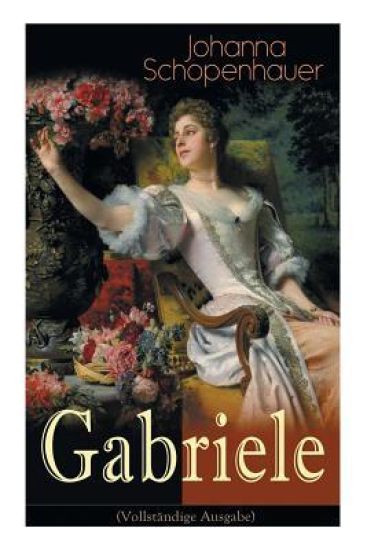
Johanna Schopenhauer (1766-1838) war eine deutsche Schriftstellerin und Salonni re. Sie war die Mutter des Philosophen Arthur Schopenhauer und der Schriftstellerin Adele Schopenhauer. Aus dem Buch: "Wie oft versuchte ich es schon, sein Bild auf dem Papier festzuhalten Aber ich erm de im fruchtlosen Streben. Ja, wenn ich mit den Z gen seines Gesichts auch die unbeschreibliche Harmonie in seinem ganzen Wesen wiederzugeben verm chte Er ist immer er selbst Ganz und ungeteilt er selbst, in jeder seiner Bewegungen, in jedem seiner Worte, im Scherz wie im Ernst Nur er, einzig er kann so dastehen, so sprechen, so aussehen, und doch ist es nicht seine Gestalt allein, die ihn vor allen auszeichnet, es ist der Einklang, die bereinstimmung in seiner ganzen Erscheinung. Wo lebt der K nstler, der diese darzustellen verm chte? Ohne sie bleiben meine Bilder leblos und starr, bei aller brigen hnlichkeit gleichen sie Wachsbildern, die das Leben ungeschickt nach ffen wollen, und ich mu sie vernichten, denn sie erregen mir Grauen."

This title charts the incredible work and life of Gabriele D'Annunzio, considered pivotal in the emergence of great 20th-century Italian literature. It is intended for students and scholars of Italian literature, history, and politics, and European Decadentism.
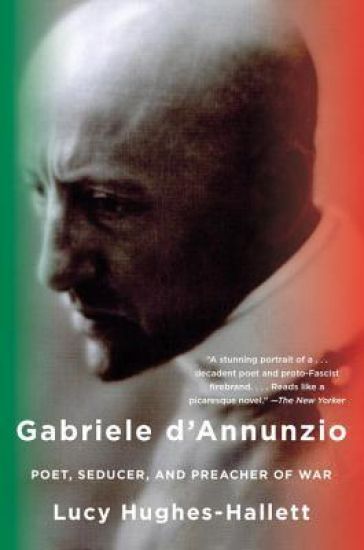
Gabriele D'Annunzio: Poet, Seducer, and Preacher of War
Lucy Hughes-Hallett
Knopf Doubleday Publishing Group
2014
nidottu
Winner of the Samuel Johnson Prize for NonfictionWinner of the Costa Biography Award**Washington Post Best Books of 2013****Economist Best Books of 2013**This fascinating life of Gabriele d'Annunzio--the charismatic poet, bon vivant, and virulent nationalist who prefigured Mussolini--traces the early twentieth century's trajectory from Romantic idealism to Fascist thuggery. D'Annunzio was Italy's premier poet at a time when poetry could trigger riots. A brilliant self-publicist, he used his fame to sell his work, seduce women, and promote his extreme nationalism. At once an aesthete and a militarist, he enjoyed risking death no less than making love, and he wrote with equal enthusiasm about Fortuny gowns and torpedoes. In 1915 his incendiary oratory helped drive Italy into the First World War, and in 1919 he led a troop of mutineers into the Croatian port of Fiume, where he established a delinquent utopia. Futurists, anarchists, communists and proto-fascists descended on the place, along with literati and thrill-seekers, drug dealers and prostitutes. Three years later, when the fascists marched on Rome, they belted out anthems they'd learned in Fiume, while Mussolini consciously modeled himself on the great poet. Lucy Hughes-Hallett's compelling biography is a revelation both of d'Annunzio's flamboyant life and of the dramatic times he helped to shape.

Gabriele D'Annunzio: The Collection of Poems in English
Gabriele D'Annunzio; Alessandro Baruffi
978-0-359-92886-6
2019
nidottu


Gabriele Zerbi, Gerontocomia: On the Care of the Aged, and Maximianus, Elegies on Old Age and Love, Memoirs, American Philosophical Society (Vol. 182)
Gabriele Zerbi; Maximianus
American Philosophical Society Press
1988
sidottu
Gabriele Zerbi (1445-1505), born in Verona of an old patrician family, was a remarkable medical man & anatomists of his time. He probably studied at the University at Padua, where he began to teach medicine in 1467, having obtained the doctorate at the age of 22. He then taught medicine & logic at the University of Bologna, lived & worked in Rome, & finally returned to Padua. Maximianus the Etruscan, as he calls himself, lived in Rome in the age of Justinian, the 6th century. Only a few biographical facts about him can be gleaned from his 6 poems. Chapters: Introduction to Zerbi & His Works; text of The "Gerontocomia" On the Care of the Aged; Intro. to Maximianus's Elegies on Old Age & Love; & The Elegies. Bibliography.
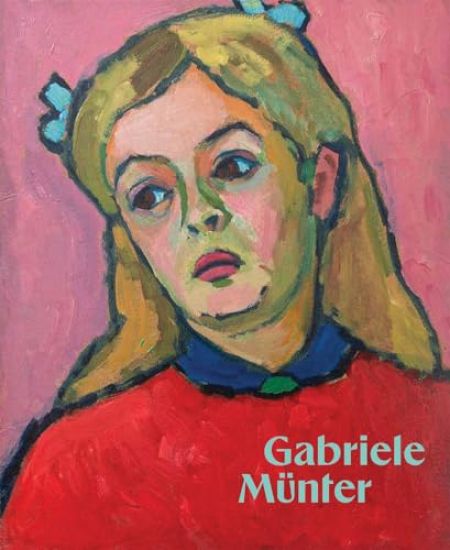
A new look at a vanguard modernist artist who reimagined the still life, landscape and portrait genres This landmark publication coincides with the major Guggenheim New York exhibition of works by the remarkable German Expressionist Gabriele Münter. Münter's painting practice between 1908 and 1920 is the central focus of the exhibition and accompanying book. The study also illuminates her lesser-known later work and includes significant examples of her photography taken during earlier extensive travels in the United States. Münter was notably a cofounder of Der Blaue Reiter (The Blue Rider), a loose and transnational confederation of progressive artists and other creatives, with whom she probed the expressive potential of color and the symbolic resonance of forms. Her introspective portraits during World War II capture the "new woman" and explore questions of gender identity. With over 70 full-color plates, plus a rich selection of Münter's photographs and later works, this publication not only traces Münter's pioneering and understudied practice but also challenges accepted historical narratives that have tended to sideline women artists. Reproductions of archival material appear alongside choice selections of the artist's sketches, prints and reverse glass paintings. Thematic texts by renowned scholars explore identity, place, belonging and the embodied experience of modernist women artists during this period. Gabriele Münter (1877–1962) was at the forefront of the German avant-garde in the early 20th century and exhibited extensively at galleries and salons throughout Europe during her lifetime. Along with her artistic colleague and one-time partner, Vasily Kandinsky, Münter was a founder of the influential Expressionist group of artists, Der Blaue Reiter.


Gabriele d'Annunzio prima e dopo il Trattato di Rapallo; commemorando la partecipazione dell'Italia alla guerra nel terzo anno dopo la pace
Cimbali Eduardo 1862-
Hutson Street Press
2025
sidottu

Gabriele d'Annunzio prima e dopo il Trattato di Rapallo; commemorando la partecipazione dell'Italia alla guerra nel terzo anno dopo la pace
Cimbali Eduardo 1862-
Hutson Street Press
2025
pokkari

Gabriele - Il mio Libro dei Bambini: Il libro dei bambini personalizzato per Gabriele, come libro per genitori o diario, per testi, immagini, disegni,
En Lettres Bambini
Independently Published
2019
nidottu