Kirjojen hintavertailu. Mukana 11 627 362 kirjaa ja 12 kauppaa.

Kirjahaku

Etsi kirjoja tekijän nimen, kirjan nimen tai ISBN:n perusteella.

1000 tulosta hakusanalla Garry Gitzen

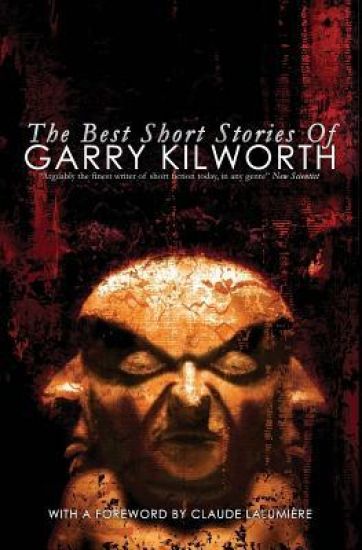
The Best Short Stories of Garry Kilworth

The Best Short Stories of Garry Kilworth

Garry Kilworth

Createspace Independent Publishing Platform
2016
nidottu
Stories from the back of the brain. These short stories span a period of 40 years. They are as eclectic as the insect world, ranging from the bizzare to the quixotic and back again. Plucked from an oeuvre of 145 stories, they are beautifully crafted tales, several of which have snatched awards from the jaws of oblivion or shouldered their way into short lists. Though he writes longer fiction Garry Kilworth considers himself primarily a short story writer, which is his first and last love. There is science fiction, fantasy, horror, folk lore and legend within these pages. What does not fall into any of those categories is simply unclassifiable weird fish. The first tale is a parallel world story in which we, the people who inhabit this planet, can walk on water. The last story involves the kind of madness which is brought on by too much discipline and good order. These two sandwich a vast array of brilliant and sometimes puzzling pieces of prose. "One is left in no doubt about the quality of the writing or of Kilworth's talent..." Times Educational Supplement "The tales are haunting, often almost poetic, but still chilling." Fantasy Zone on In The Country Of Tattooed Men "His characters are strong and the sense of place he creates is immediate and strong." Sunday Times "Kilworth is a master of his trade." Punch "Arguably the finest writer of short fiction today, in any genre" New Scientist
Garry's Upside-Down Adventure

Garry's Upside-Down Adventure

Karin Wyman Vardaman

Fideli Publishing Inc.
2019
sidottu
After five hundred and two years of living UP on top of an ancient cathedral in the middle of a metropolitan city, Garry The Gargoyle decides it's time to explore the world of DOWN. But being DOWN instead of UP isn't what Garry imagined it would be The bustling town of Shamlaigh is full of harrowing challenges, including encountering a giant pony-dog and scary bug people. Eventually Garry finds refuge in the Garden of Friends, where his enchanting tales of times long ago come to life.
BACK TO RILEYVILLE By Garry Lewis

BACK TO RILEYVILLE By Garry Lewis

Garry E Lewis

Independently Published
2019
pokkari
Witches have taken up residence, as a small town sheriff soon discovers along with unexplained disappearances and murders. What is this covens plans? As soon the sheriff finds himself under the spell and the sexual seduction of one of the witches. What lies in wait for the town of Rileyville ? That is the question the Sheriff must now uncover. As this coven sets its claws into the towns citizens along with the sheriff himself. Their intentions unknown, Why have they chose Rileyville? Only time will tell.
Garry the Greyhound

Garry the Greyhound

Steven Jones

Authorhouse UK
2019
pokkari
This is a story about a dog who is finding out who he is and what he's good at. You will follow this lovable greyhound called Garry in his search for what he's good at in this adventure. There are tears and joy and friends too. Join Garry in this story of courage, belief, and friendship. There is something out there for everyone. We all have something we are good at in life. Like Garry, don't give up. Keep at it, and you will find your goal in life.
Garry Kasparov's Chess Puzzle Book

Garry Kasparov's Chess Puzzle Book

Garry Kasparov

Everyman Chess
2016
pokkari
Test your chess skills with the world champion! In this stimulating book Garry Kasparov selects the best chess combinations from recent grandmaster play and presents them in a test-yourself format that everyone will enjoy. Each chapter demonstrates the tactical properties of a particular piece, with a series of puzzles of varying difficulty. . The cream of recent chess combinations . More than 90 chess positions . Ideal for the improving player . Written by the world's finest attacking player Since defeating Anatoly Karpov for the world championship in 1985, Garry Kasparov has successfully defended his title on no less than five occasions, thereby establishing himself as the greatest player of his generation, if not of all time. Test your chess skills with the world champion! In this stimulating book Garry Kasparov selects the best chess combinations from recent grandmaster play and presents them in a test-yourself format that everyone will enjoy. Each chapter demonstrates the tactical properties of a particular piece, with a series of puzzles of varying difficulty. . The cream of recent chess combinations . More than 90 chess positions . Ideal for the improving player . Written by the world's finest attacking player Since defeating Anatoly Karpov for the world championship in 1985, Garry Kasparov has successfully defended his title on no less than five occasions, thereby establishing himself as the greatest player of his generation, if not of all time. Test your chess skills with the world champion! In this stimulating book Garry Kasparov selects the best chess combinations from recent grandmaster play and presents them in a test-yourself format that everyone will enjoy. Each chapter demonstrates the tactical properties of a particular piece, with a series of puzzles of varying difficulty. . The cream of recent chess combinations . More than 90 chess positions . Ideal for the improving player . Written by the world's finest attacking player Since defeating Anatoly Karpov for the world championship in 1985, Garry Kasparov has successfully defended his title on no less than five occasions, thereby establishing himself as the greatest player of his generation, if not of all time. itle on no less than five occasions, thereby establishing himself as the greatest player of his generation, if not of all time.
Garry Kasparov's Chess Challenge

Garry Kasparov's Chess Challenge

Garry Kasparov

Everyman Chess
2016
pokkari
In this stimulating book for players of all ages, Garry Kasparov selects the best chess combination from recent grandmaster play and presents them in a test-yourself format that everyone will enjoy. Whether you are a beginner discovering chess tactics for the first time or a master seeking to brush up on your skills, this book is sure to be a useful addition to your chess armoury. The cream of recent chess combinations . Dozens of fascinating chess positions . Suitable for novice and master alike. Written by the world's finest attacking player Since defeatingAnatoly Karpov for the world championship in 1985 Garry Kasparov has successfully defended his title on no less than five occasions, thereby establishing himself as the greatest player of all his generation, if not of all time.
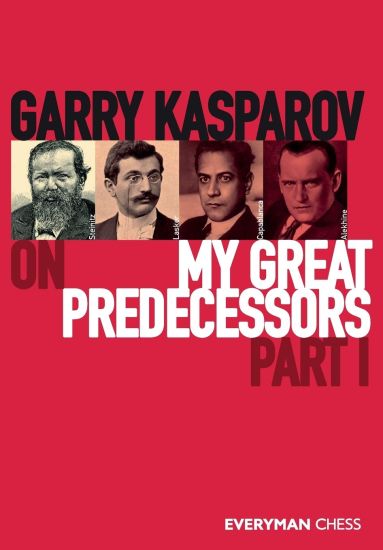
Garry Kasparov on My Great Predecessors, Part One
The battle for the World Chess Championship has witnessed numerous titanic struggles which have engaged the interest not only of chess enthusiasts but also of the public at large. The chessboard is the ultimate mental battleground and the world champions themselves are supreme intellectual gladiators. This magnificent compilation of chess form the basis of the first part of Garry Kasparov's definitive history of the World Chess Championship. Garry Kasparov, who is universally acclaimed as the greatest chessplayer ever, subjects the play of his predecessors to a rigorous analysis. Part one features the play of champions Wilhelm Steinitz (1886-1894), Emanuel Lasker (1894-1921), Jose Capablanca (1921-1927) and Alexander Alekhine (1927-1935 and 1937-1946).
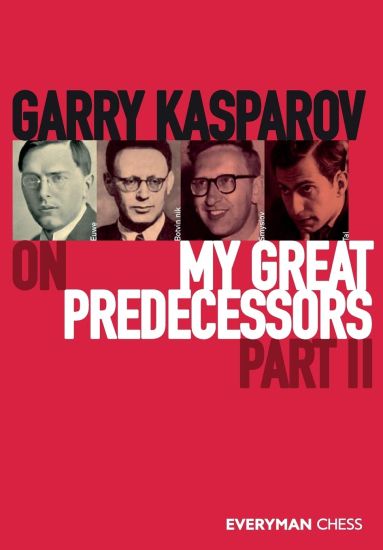
Garry Kasparov on My Great Predecessors, Part Two
Part two features the play of champions Max Euwe (1935-1937) Mikhail Botvinnik (1946-1957, 1958-1961 and 1961-1963), Vassily Smyslov (1957-1958) and Mikhail Tal (1960-1961). These books are more than just a compilation of the games of these champions. Kasparov's biographies place them in a fascinating historical, political and cultural context. Kasparov explains how each champion brought his own distinctive style to the chessboard and enriched the theory of the game with new ideas. All these games have been thoroughly reassessed with the aid of modern software technology and the new light this sheds on these classic masterpieces is fascinating.
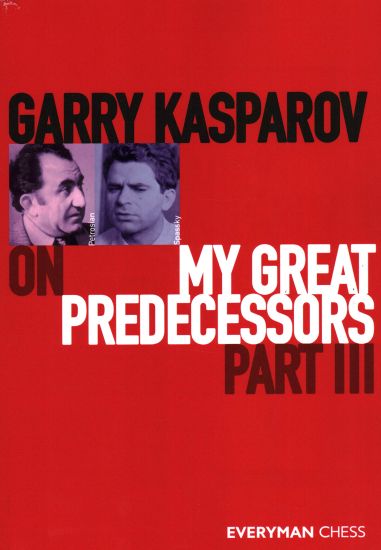
Garry Kasparov on My Great Predecessors Part III

Garry Kasparov on My Great Predecessors Part III

Damian Lemos; Garry Kasparov

Everyman Chess
2020
pokkari
The battle for the World Chess Championship has witnessed numerous titanic struggles which have engaged the interest not only of the chess enthusiasts but of the public at large. The chessboard is the ultimate mental battleground and the world champions themselves are supreme intellectual gladiators.This magnificent compilation of play from the 1960s through to the 1970s forms the basis of the third part of Garry Kasparov's long-awaited definitive history of the World Chess Championship. Garry Kasparov, who is universally acclaimed as the greatest chessplayer ever, subjects the play from this era to a rigorous analysis the examination being enhanced by the use of the latest chess software. This volume features the play of champions Tigran Petrosian (1963-1969) and Boris Spassky (1969-1972).However, this book is more than just a compilation of play from the greats of this era. Kasparos biographies of these champions place them in a fascinating historical, political and cultural context. Kasparov explains how each champion brought his own distinctive style to the chessboard and enriched the theory of the game with new ideas.
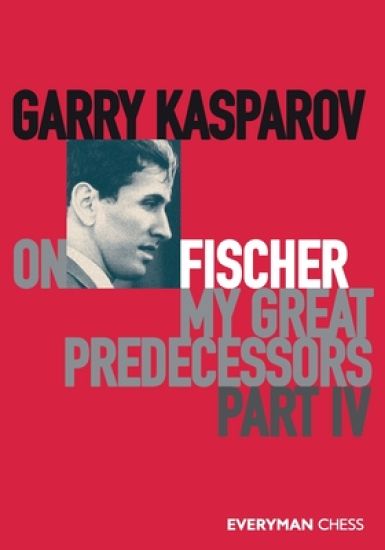
Garry Kasparov on My Great Predecessors, Part Four
This book brings together the two greatest names in the history of chess. The author, Garry Kasparov, is the world number one and, by common consent, the greatest player ever. The subject of the book, Bobby Fischer, is the only American to have become world champion and is probably the greatest natural talent the world has ever seen.In the period between 1955 and 1972 Fischer, more or less single-handedly, took on the might of the Soviet Chess Empire, and won. During this time Fischer scored astonishing successes the like of which had not been seen before. These included 11/11 in the 1963/64 US Championship and match victories (en route to the World Championship) by the score of 6-0 against two of the strongest players in the world, Mark Taimanov and Bent Larsen. The climax of Fischer's campaign was his unforgettable match win in Reykjavik in 1972 against Boris Spassky.Fischer is almost equally well-known for his temperamental behaviour away from the board, as his play on it. He made extreme demands of all those around him including tournament organisers. When these demands were not met he often refused to play. The 1972 match against Spassky required the intervention of no less than Henry Kissinger to smooth things over. In 1975 when he was due to defend his title against Anatoly Karpov, Fischer was completely unable to agree terms with FIDE (the World Chess Federation) and was defaulted. After this he more or less gave up chess, playing only once, a 'return' match against Spassky in 1992.In this book, a must for all serious chessplayers, Kasparov analyses deeply Fischer's greatest games and assesses the legacy of this great American genius.
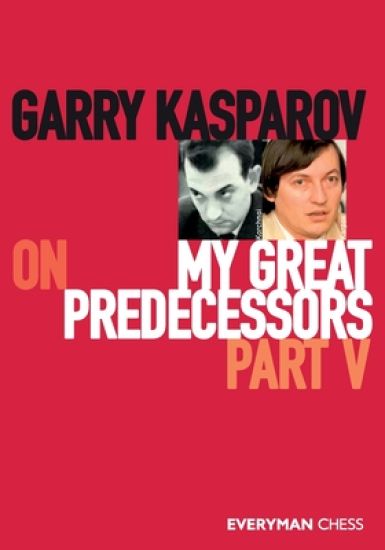
Garry Kasparov on My Great Predecessors, Part Five
This book, the fifth in Garry Kasparov's magnificent history of the World Chess Championship, catalogues the post-Fischer period in the 1970's and early 1980's This period was dominated by Anatoly Karpov (world champion from 1975-1985) and his three-time challenger, Viktor Korchnoi. Anatoly Karpov gained the right to challenge Bobby Fischer for the world title by winning through the Candidates series in 1974. As is well known, Fischer refused to defend the title and in 1975 Karpov became champion by default. Although he did not have to contest a Championship match to gain the title, Karpov proved that he was a worthy champion by winning virtually every major tournament over the next decade.In this book, a must for all serious chessplayers, Kasparov analyses deeply Karpov's greatest games and assesses the legacy of this great Russian genius. Also under the microscope are the games of Viktor Korchnoi, who was at his peak during this period and twice challenged Karpov for his world title.
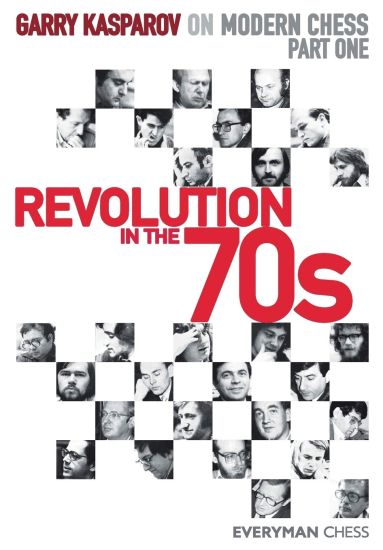
Garry Kasparov on Modern Chess. Part One

Garry Kasparov on Modern Chess. Part One

Garry Kasparov

Everyman Chess
2020
pokkari
This book is the first in a brand new series that follows on from My Great Predecessors and sees chess legend Garry Kasparov reflecting on a pivotal time in chess history. Bobby Fischer's spurt towards the chess summit (1970-1972) marked the approach of a new era affecting all aspects of the game and opening theory in particular. Fischer demonstrated the need for deep preparation with both colours, expanded the range of openings knowledge, and laid the foundations for present-day professional chess. The leader of the new generation, Anatoly Karpov, fully reaped the benefits of the Fischer revolution by mastering the lessons of his great predecessor. Of the players of the older generation, only Victor Korchnoi was able to achieve such a high level of professionalism. Alas, Fischer then left the chess stage. However, the tectonic shifts he had brought about led to the beginning of a genuine revolution in opening theory and a revolution that overturned traditional impressions about many typical positions. Between 1972 and 1975 alone, progress in the field of opening theory was more significant than in the entire preceding decade! Under Fischer's influence chess was radically regenerated, a process which then continued to accelerate. As a result, from the 1972 Fischer-Spassky world championship match to 1984 and the Kasparov-Karpov matches, the overall picture of chess openings changed almost beyond recognition. This fascinating book tells the story of this opening revolution. This story is told not only with the insight of Garry Kasparov, but also as seen through the eyes of the leading players who were at the forefront of the development of chess theory during those key years. The reader will witness at first hand how rapidly and inexorably chess development approached the coming computer era.
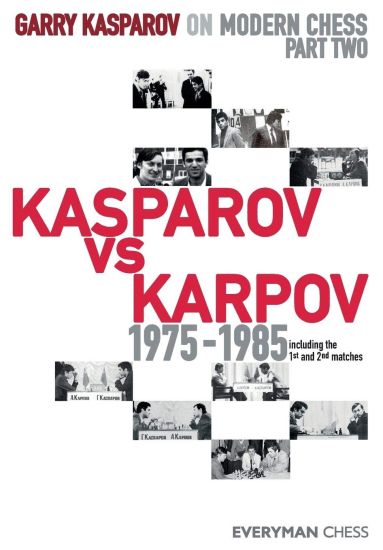
Garry Kasparov on Modern Chess

Garry Kasparov on Modern Chess

Garry Kasparov

Everyman Chess
2023
pokkari
The history of sport has seen many great gladiatorial clashes: Ali v Frazier in boxing, McEnroe v Borg in tennis, Prost v Senna in motor racing. None however can quite compare to the intensity of the rivalry between those two great world chess champions: Garry Kasparov and Anatoly Karpov. Between 1984 and 1990 they contested an astonishing five World Championship matches consisting of 144 individual encounters. This volume concentrates on the first two of those matches. The epic 1984/85 contest which was lasted six months before being controversially halted "without result" by the then President of FIDE Florencio Campomanes.The 1985 match when Kasparov brilliantly won the final game to take the title and become - at the age of 22 - the youngest ever world champion. Great chess contests have often had resonances extending beyond the 64 squares. The Fischer v Spassky match was played during the Cold War with both champions being perceived as the finest products of their respective ideologies. The Karpov v Korchnoi battles (three matches between 1974 and 1981) were lent an edge with Karpov being a Russian hero of the pre-Glasnost era whilst Korchnoi was the disaffected dissident. The Kasparov v Karpov encounters mirrored a battle between the new Russia and old Russia with Kasparov seen as a symbol of the new ideology emerging under Gorbachev whereas Karpov was seen to represent the old regime of die-hard Communists such as Brezhnev. In this volume Garry Kasparov (world champion between 1985 and 2000 and generally regarded as the greatest player ever) analyses in depth the clashes from 1984 and 1985, giving his opinions both on the political machinations surrounding the matches as well as the games themselves.
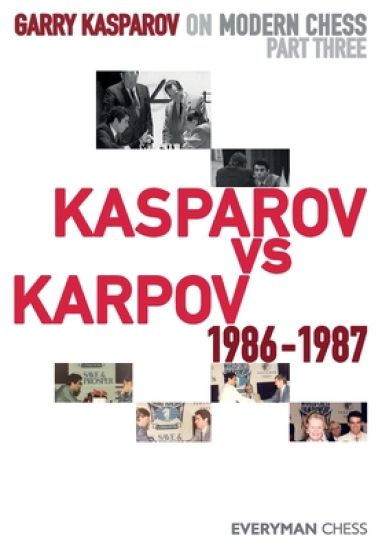
Garry Kasparov on Modern Chess

Garry Kasparov on Modern Chess

Garry Kasparov

Everyman Chess
2023
pokkari
Garry Kasparov and Anatoly Karpov are unquestionably the protagonists who featured in the greatest ever chess rivalry. Between 1984 and 1990 they contested five long matches for the World Championship. This 3rd volume of the, 'Garry Kasparov on Modern Chess' series concentrates on the third and fourth matches in this sequence: London/Leningrad 1986 and Seville 1987. Both matches were tremendously exciting and hard fought and both produced chess of an extremely high level. The 1986 clash was groundbreaking in that it was the first World Championship match between two Soviets to take place outside Moscow. It was split between London and Leningrad with twelve games being played at both venues. The defending champion was now Kasparov (having won the 1985 match) and he leapt into an apparently decisive three point lead. However, this sensationally dissolved when a crisis broke out in the Kasparov camp. Karpov exploited this and pulled off the remarkable feat of winning three games in a row. Kasparov finally regained his composure and eventually clinched the match with a late victory. The 1987 match was notable for it's sensational finale. Kasparov approached the final game with a one point deficit, knowing that only a win would enable him to retain the title. When the game was adjourned overnight in a position where Kasparov had to win to stay champion, Spanish TV cleared its entire schedule so that the nail-biting conclusion could be watched live. A pre-internet global audience of millions was glued to their TV screens as Kasparov ground out his historic victory. In this volume Garry Kasparov (world champion between 1985 and 2000 and generally regarded as the greatest player ever) analyses in depth the clashes from 1986 and 1987, giving his opinion on the background to the matches as well as the games themselves
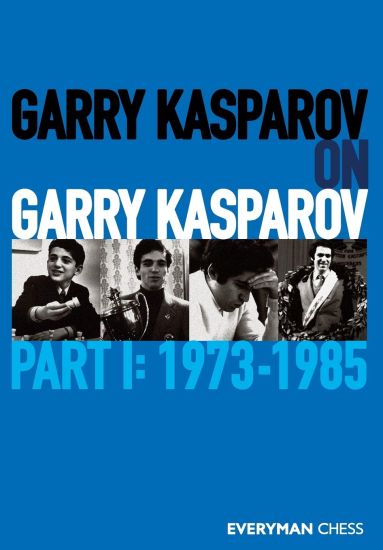
Garry Kasparov on Garry Kasparov, Part 1

Garry Kasparov on Garry Kasparov, Part 1

Garry Kasparov

Everyman Chess
2020
pokkari
Garry Kasparov on Garry Kasparov, part 1 is the first book in a major series. This series will be unique by the fact that it will record the greatest chess battles played by the greatest chessplayer of all-time. The series in itself is a continuation of Kasparov's mammoth history of chess, comprising My Great Predecessors and Modern Chess. Kasparov's historical volumes have received great critical and public acclaim for their rigorous analysis and comprehensive detail regarding the developments in chess that occurred both on and off the board.. This new volume and series continues in this vein with Kasparov scrutinising his most fascinating encounters from the period 1973-1985 whilst also charting his development away from the board.This period opens with the emergence of a major new chess star from Baku and ends with Kasparov's first clash with reigning world champion Anatoly Karpov - a mammoth encounter that stretched out over six months. It had been known in Russia for some time that Kasparov had an extraordinary talent but the first time that this talent was unleashed on the western world was in 1979. The Russian Chess Federation had received an invitation for a player to participate in a tournament at Banja Luka and, under the impression that this was a junior event, sent along the fifteen year old Kasparov (as yet without even an international rating!). Far from being a junior tournament, Banja Luka was actually a major international event featuring numerous world class grandmasters. Undeterred Kasparov stormed to first place, scoring 111/2/15 and finishing two points clear of the field. Over the next decade this 'broad daylight' between Kasparov and the rest of the field was to become a familiar sight in the world's leading tournaments.
Garry Kasparov on Garry Kasparov

Garry Kasparov on Garry Kasparov

Joshua Doknjas; Garry Kasparov

Everyman Chess
2021
pokkari
Garry Kasparov on Garry Kasparov: Part II is the second volume in a major three-volume series made unique by the fact that it records the greatest chess battles played by the greatest chessplayer of all-time.Kasparov's series of historical volumes have received great critical and public acclaim for their rigorous analysis and comprehensive detail regarding the developments in chess that occurred both on and off the board.Part I of this series saw Kasparov emerging as a huge talent and eventually toppling his great rival Anatoly Karpov to gain the world title. This volume focuses on the period from 1985-1993 which witnessed three title defences against Karpov as well as a number of shorter matches against elite players including Hubner, Anderssen, Timman and Miles.This period also saw Kasparov achieve spectacular results in both individual and team events. Kasparov won the board gold medal in three Olympiads (Dubai 1986, Thessaloniki 1988 and Manila 1992). The late 1980s also saw the emergence of the World Cup series which Kasparov utterly dominated, finishing either clear first or equal first at Belfort 1988 (111/2/15), Reykjavik 1988 (11/17), Barcelona 1989 (11/16) and Skelleftea 1989 (91/2/15). Other major tournament victories include Brussels 1987 (81/2/11), Amsterdam 1988 (9/12), Tilburg 1989 (12/14), Belgrade 1989 (91/211) and Linares 1990 (8/11).During the late 1980s and early 1990s Kasparov emphasized his huge superiority over his rivals. Despite generally adopting an uncompromising, double-edged attacking style he almost never lost. The games in this volume feature many masterpieces of controlled aggression played against the world's absolute best.
Garry Kasparov on Garry Kasparov, Part 3

Garry Kasparov on Garry Kasparov, Part 3

Garry Kasparov

Everyman Chess
2020
pokkari
Garry Kasparov on Garry Kasparov: Part III is the final volume in a major three-volume series made unique by the fact that it records the greatest chess battles played by the greatest chessplayer of all-time.Kasparov's series of historical volumes have received great critical and public acclaim for their rigorous analysis and comprehensive detail regarding the developments in chess that occurred both on and off the board.The first two volumes in this series saw Kasparov emerging as a huge talent, toppling his great rival Anatoly Karpov and then defending the World Championship title on three occasions. This third volume focuses on the final 12 years of Kasparov's career up until his retirement from full-time chess in 2005.This period witnessed three further World Championship matches: wins against Short (London 1993) and Anand (New York 1995) before the loss against Kramnik (London 2000) which finally ended Kasparov's 15-year tenure as world champion. This period also saw Kasparov achieve a colossal 2851 rating (1999), a record which stood until 2013.Despite loss of the World Championship, Kasparov continued to be ranked as the world number one and dominated the elite tournament circuit. He won the Linares super-tournament for four consecutive years (1999-2002) with the fourth of these victories in 2002 concluding an unprecedented run of ten straight wins in the world's elite events (Linares 4, Wijk aan Zee 3, Sarajevo 2 and Astana 1). The games in this volume feature many masterpieces of controlled aggression played against the world's absolute best.
Garry Kasparov on Modern Chess

Garry Kasparov on Modern Chess

Garry Kasparov

Everyman Chess
2008
sidottu
The history of sport has seen many great gladiatorial clashes: Ali v Frazier in boxing, McEnroe v Borg in tennis, Prost v Senna in motor racing. None however can quite compare to the intensity of the rivalry between those two great world chess champions: Garry Kasparov and Anatoly Karpov. Between 1984 and 1990 they contested an astonishing five World Championship matches consisting of 144 individual encounters. This volume concentrates on the first two of those matches.The epic 1984/85 contest which lasted six months before being controversially halted "without result" by the then President of FIDE Florencio Campomanes.The 1985 match when Kasparov brilliantly won the final game to take the title and become - at the age of 22 - the youngest ever world champion.Great chess contests have often had resonances extending beyond the 64 squares. The Fischer v Spassky match was played during the Cold War with both champions being perceived as the finest products of their respective ideologies. The Karpov v Korchnoi battles (three matches between 1974 and 1981) were lent an edge with Karpov being a Russian hero of the pre-Glasnost era whilst Korchnoi was the disaffected dissident. The Kasparov v Karpov encounters mirrored a battle between the new Russia and old Russia with Kasparov seen as a symbol of the new ideology emerging under Gorbachev whereas Karpov was seen to represent the old regime of die-hard Communists such as Brezhnev.In this volume Garry Kasparov (world champion between 1985 and 2000 and generally regarded as the greatest player ever) analyses in depth the clashes from 1984 and 1985, giving his opinions both on the political machinations surrounding the matches as well as the games themselves.
Garry Kasparov on Modern Chess

Garry Kasparov on Modern Chess

Garry Kasparov

Everyman Chess
2009
sidottu
Garry Kasparov and Anatoly Karpov are unquestionably the protagonists who featured in the greatest ever chess rivalry. Between 1984 and 1990 they contested five long matches for the World Championship. This 3rd volume of the,'Garry Kasparov on Modern Chess' series concentrates on the third and fourth matches in this sequence: London/Leningrad 1986 and Seville 1987. Both matches were tremendously exciting and hard fought and both produced chess of an extremely high level.