Kirjojen hintavertailu. Mukana 11 627 463 kirjaa ja 12 kauppaa.

Kirjahaku

Etsi kirjoja tekijän nimen, kirjan nimen tai ISBN:n perusteella.

1000 tulosta hakusanalla Gaurav Vashisht

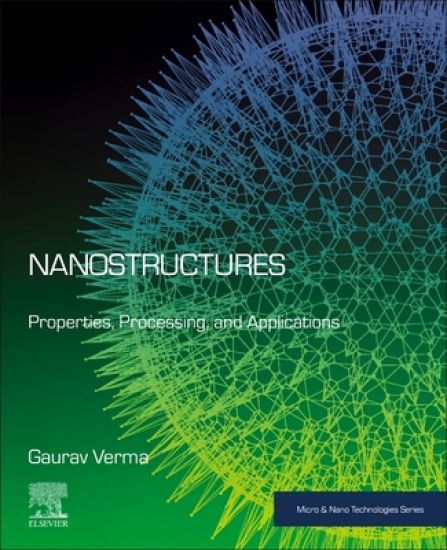
Nanostructures

Nanostructures

Gaurav Verma

Elsevier Science Publishing Co Inc
2023
nidottu
Nanostructures: Properties, Processing, and Applications is oriented around the Structure-Property-Processing-Applications and Performance lifecycle of materials development at the nanoscale. Through analogies and illustrations, the book explains the complex fundamentals in the areas of nanoscience and nanotechnology in an accessible way. The structures of metallic, polymeric, ceramic, hybrid, novel and natural nanomaterials are covered in depth to provide a broad-based understanding to the reader. The properties of materials are dependent on their structure; this is even more the case when nanostructures are examined. This book explains the major techniques for characterizing these properties. In order to control these properties, the synthesis of nanomaterials is essential. Hence a wide evaluation of processing of these materials with a focus on controlling size, shape, and structure is a focal point of the book. The second half of the book covers the major applications and performances of nanostructured materials, drawing comparisons with previous technologies for applications, highlighting the efficacy of nanoscale technologies vis-à-vis the conventional ones. This is an important information source for early career researchers and engineers wanting to understand the fundamentals of nanostructured materials, and what their major applications are.
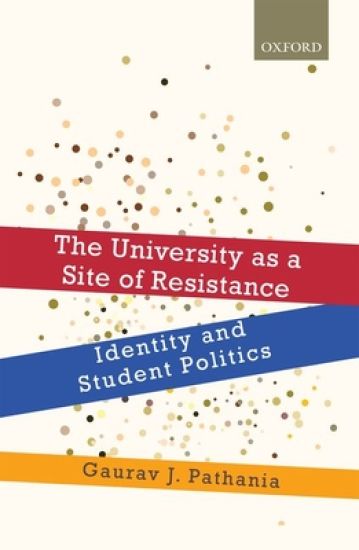
The University as a Site of Resistance

The University as a Site of Resistance

Gaurav J. Pathania

OUP India
2018
sidottu
The University as a Site of Resistance analyses massive protests that emerged in the aftermath of Rohith Vemula's death in Hyderabad Central University as well as the Azadi Campaign started by Jawaharlal Nehru University students in Delhi in 2016. Taking Osmania University in Hyderabad as a case study, the book provides an ethnographic account of the emergence of one of India's longest student movements - the movement for Telangana statehood. Since its inception in the 1960s to its culmination in the formation of Telangana state in 2014, students at Osmania University played a decisive role. The book discusses protest strategies, methods, and networks among students. It also examines the role played by various caste and sub-caste groups and civil society in making the movement a success. The author argues that contemporary identity based student movements are primarily cultural movements as the traditional caste and class analysis becomes redundant to explain such contemporary collective action. The book establishes these unique resistances as New Social Movements and claim that these movements contribute to the democratization of institutional spaces. In this context, the volume provides a conceptual debate on contemporary cultural politics among university students.
Commerce with the Universe

Commerce with the Universe

Gaurav Desai

Columbia University Press
2013
sidottu
Reading the life narratives and literary texts of South Asians writing in and about East Africa, Gaurav Desai builds a surprising, alternative history of Africa's experience with slavery, migration, colonialism, nationalism, and globalization. Consulting Afrasian texts that are literary and nonfictional, political and private, he broadens the scope of African and South Asian scholarship and inspires a more nuanced understanding of the Indian Ocean's fertile routes of exchange. Desai shows how the Indian Ocean engendered a number of syncretic identities and shaped the medieval trade routes of the Islamicate empire, the early independence movements galvanized in part by Gandhi's southern African experiences, the invention of new ethnic nationalisms, and the rise of plural, multiethnic African nations. Calling attention to lives and literatures long neglected by traditional scholars, Desai introduces rich, interdisciplinary ways of thinking not only about this specific region but also about the very nature of ethnic history and identity. Traveling from the twelfth century to today, he concludes with a look at contemporary Asian populations in East Africa and their struggle to decide how best to participate in the development and modernization of their postcolonial nations without sacrificing their political autonomy.
Commerce with the Universe

Commerce with the Universe

Gaurav Desai

Columbia University Press
2016
pokkari
Reading the life narratives and literary texts of South Asians writing in and about East Africa, Gaurav Desai builds a surprising, alternative history of Africa's experience with slavery, migration, colonialism, nationalism, and globalization. Consulting Afrasian texts that are literary and nonfictional, political and private, he broadens the scope of African and South Asian scholarship and inspires a more nuanced understanding of the Indian Ocean's fertile routes of exchange. Desai shows how the Indian Ocean engendered a number of syncretic identities and shaped the medieval trade routes of the Islamicate empire, the early independence movements galvanized in part by Gandhi's southern African experiences, the invention of new ethnic nationalisms, and the rise of plural, multiethnic African nations. Calling attention to lives and literatures long neglected by traditional scholars, Desai introduces rich, interdisciplinary ways of thinking not only about this specific region but also about the very nature of ethnic history and identity. Traveling from the twelfth century to today, he concludes with a look at contemporary Asian populations in East Africa and their struggle to decide how best to participate in the development and modernization of their postcolonial nations without sacrificing their political autonomy.
India's Nuclear Proliferation Policy
This book examines India’s nuclear program, and it shows how secrecy inhibits learning in states and corrodes the capacity of decision-makers to generate optimal policy choices.Focusing on clandestine Indian nuclear proliferation during 1980–2010, the book argues that efficient decision-making is dependent on strongly established knowledge actors, high information turnover and the capacity of leaders to effectively monitor their agents. When secrecy concerns prevent states from institutionalizing these processes, leaders tend to rely more on heuristics and less on rational thought processes in choices involving matters of great political uncertainty and technical complexity. Conversely, decision-making improves as secrecy declines and policy choices become subject to higher levels of scrutiny and contestation. The arguments in this book draw on compelling evidence gathered from interviews conducted by the author, with interviewees including individuals who were involved in nuclear planning in India from 1980 to 2010, such as former cabinet and defence secretaries, the principal secretary to the prime minister, national security advisors, secretaries to the department of atomic energy, military chiefs of staff and their principal staff officers, and commanders of India’s strategic (nuclear) forces.This book will be of much interest to students of nuclear proliferation, Asian politics, strategic studies and International Relations.
Illegitimate Freedom

Illegitimate Freedom

Gaurav Majumdar

Routledge
2021
sidottu
Illegitimate Freedom: Informality in Modernist Literature, 1900 - 1940 is the first study of informality in modernist literature. Differentiating informality from intimacy in its introduction, the book discusses the informal in relation with sensory experience, aesthetic presentation, ethical deliberation or action, and social attitudes within modernist works. It examines these works for particular nuances of the word "informality" in each of its chapters in the following thematic sequence: informality that offers humour, interpretive freedom, and promiscuity as counters to self-absorption in works by Virginia Woolf; rebuttals to male priorities in liberalism through "feminine informality" in several short stories by Katherine Mansfield; contempt for colloquialism and intimacy, tinged with class-anxieties and crises of attitude, in T. S. Eliot’s poetry; resistance to disgust in James Joyce’s novels; and the fusion of irreverence, protest, and praise in W. H. Auden’s writings before 1940. The book’s conclusion considers the risks of informality through a discussion of what it calls "inverted dignity." The theoretical aspects of the book offer insights into Lockean liberalism, the ethical dimensions of what Hélène Cixous termed "feminine writing," relations of sublimity and domesticity, Sigmund Freud’s arguments on humour and melancholia, and recent affect theory’s—as well as Immanuel Kant’s and Friedrich Nietzsche’s—views on disgust, linking these with modernism. This wide range of engagement makes this study relevant for those interested in literary studies, critical theory, and philosophy.
In wait for the perfect sky

In wait for the perfect sky

Gaurav Bhatia

Wizard of Words Publishing LLC
2019
pokkari
Gaurav Bhatia is a Canadian author, information technology whiz, serial entrepreneur and self-styled comedian. His work across multiple themes broadly addresses narratives of the human experience.Gaurav has a panache for travel, aviation and all good things life has to offer. He loves to share his unique perspective on life through poetry.Gaurav lives with his wife, two daughters and two dogs in Rochester, Michigan.
Web of Life

Web of Life

Gaurav M Patel

iUniverse
2005
pokkari
Find some humor, sadness, joy, and everything in between in your life. The author, Gaurav Patel, brings at least a few of these emotions to anyone who likes to read poetry. "Web of Life" includes the following: Loneliness Depressed Humor Thoughts Happiness "Web of Life" is just simply everyday reading enjoyment.
Web of Life

Web of Life

Gaurav M Patel

iUniverse
2005
sidottu
Find some humor, sadness, joy, and everything in between in your life. The author, Gaurav Patel, brings at least a few of these emotions to anyone who likes to read poetry. "Web of Life" includes the following: Loneliness Depressed Humor Thoughts Happiness "Web of Life" is just simply everyday reading enjoyment.
A Certain Ambiguity

A Certain Ambiguity

Gaurav Suri; Hartosh Singh Bal

Princeton University Press
2010
pokkari
While taking a class on infinity at Stanford in the late 1980s, Ravi Kapoor discovers that he is confronting the same mathematical and philosophical dilemmas that his mathematician grandfather had faced many decades earlier--and that had landed him in jail. Charged under an obscure blasphemy law in a small New Jersey town in 1919, Vijay Sahni is challenged by a skeptical judge to defend his belief that the certainty of mathematics can be extended to all human knowledge--including religion. Together, the two men discover the power--and the fallibility--of what has long been considered the pinnacle of human certainty, Euclidean geometry. As grandfather and grandson struggle with the question of whether there can ever be absolute certainty in mathematics or life, they are forced to reconsider their fundamental beliefs and choices. Their stories hinge on their explorations of parallel developments in the study of geometry and infinity--and the mathematics throughout is as rigorous and fascinating as the narrative and characters are compelling and complex. Moving and enlightening, A Certain Ambiguity is a story about what it means to face the extent--and the limits--of human knowledge.
Postcolonialisms

Postcolonialisms

Gaurav Gajanan Desai; Supriya Nair

Rutgers University Press
2005
nidottu
One of the best anthologies of contemporary postcolonial studies, this is a very useful resource for students. The editors do justice both to the history of the field and its most current concerns. The book provides a wide range of intellectual perspectives, accompanied by lucid and helpful section introductions."-Laura Chrisman, professor of postcolonial studies, University of York, UK "With its inclusion of gendered readings and a nice range of voices and positions from across the diaspora, this is perhaps the best collection of its kind in postcolonial studies."-Carole Boyce Davies, Florida International University "A well-conceived book . . . the organization is excellent, properly balanced between the canonical and the updated, between geographical regions, and in terms of the liveliest controversies."-Bruce Robbins, Columbia University Bringing together thirty-seven essays that have helped define the study of colonial and postcolonial cultures, this expansive and thoughtfully organized anthology offers an up-to-date and in-depth overview of this rapidly developing field. Canonical articles, most unexcerpted, explore postcolonialism's key themes-power and knowledge-while articles by contemporary scholars expand the discipline to include discussions of the discovery of the New World, Native American and indigenous identities in Latin America and the Pacific, settler colonies in Africa and Australia, English colonialism in Ireland, and feminism in Nigeria and Egypt. The inclusion of a broad sampling of histories and theories attests to multiple, even competing postcolonialisms, while the skillful organization of the volume provides a useful map of the field in terms of recognizable patterns, shared family resemblances, and common genealogies. Detailed introductions to each section serve to develop key themes, encourage debate, and contextualize the wide-ranging voices that contribute to the topic. The most cogent and teachable collection of postcolonial texts yet compiled, this anthology is equally suitable for undergraduate students and for seasoned scholars. Gaurav Desai is an associate professor of English at Tulane University and the author of Subject to Colonialism: African Self-fashioning and the Colonial Library. Supriya Nair is an associate professor of English at Tulane University and the author of Caliban's Curse: George Lamming and the Revisioning of History.
Subject to Colonialism

Subject to Colonialism

Gaurav Desai

Duke University Press
2001
sidottu
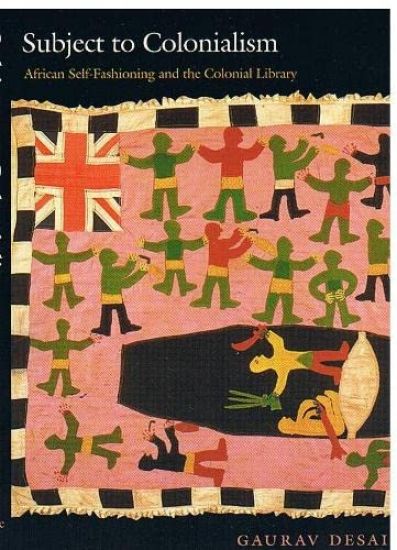
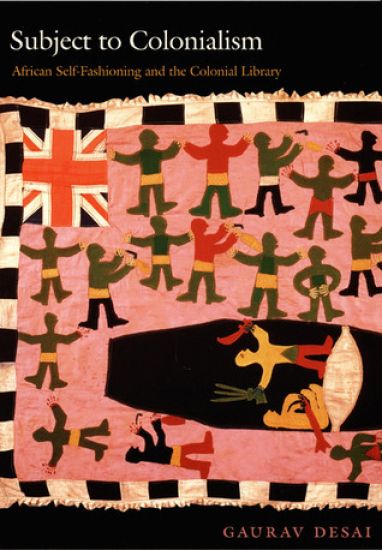
Subject to Colonialism provides a much needed revisionist perspective on the way twentieth-century Africa is viewed and analyzed among scholars. Employing literary, historical, and anthropological techniques, Gaurav Desai attempts to generate a new understanding of issues that permeate discussions of Africa by disrupting the centrality of postcolonial texts and focusing instead on the cultural and intellectual production of colonial Africans. In particular, Desai calls for a reevaluation of the “colonial library”-that set of representations and texts that have collectively “invented” Africa as a locus of difference and alterity. Presenting colonialism not as a singular, monolithic structure but rather as a practice frought with contradictions and tensions, Desai works to historicize the foundation of postcolonialism by decentering both canonical texts and privileged categories of analysis such as race, capitalism, empire, and nation. To achieve this, he focuses on texts that construct or reform-rather than merely reflect-colonialism, placing explicit emphasis on processes, performances, and the practices of everyday life. Reading these texts not merely for the content of their assertions but also for how they were created and received, Desai looks at works such as Jomo Kenyatta’s ethnography of the Gikuyu and Akiga Sai’s history of the Tiv and makes a particular plea for the canonical recuperation of African women’s writing.Scholars in African history, literature, and philosophy, postcolonial studies, literary criticism, and anthropology will welcome publication of this book.
Subject to Colonialism

Subject to Colonialism

Gaurav Desai

Duke University Press
2001
pokkari
Subject to Colonialism provides a much needed revisionist perspective on the way twentieth-century Africa is viewed and analyzed among scholars. Employing literary, historical, and anthropological techniques, Gaurav Desai attempts to generate a new understanding of issues that permeate discussions of Africa by disrupting the centrality of postcolonial texts and focusing instead on the cultural and intellectual production of colonial Africans. In particular, Desai calls for a reevaluation of the “colonial library”-that set of representations and texts that have collectively “invented” Africa as a locus of difference and alterity. Presenting colonialism not as a singular, monolithic structure but rather as a practice frought with contradictions and tensions, Desai works to historicize the foundation of postcolonialism by decentering both canonical texts and privileged categories of analysis such as race, capitalism, empire, and nation. To achieve this, he focuses on texts that construct or reform-rather than merely reflect-colonialism, placing explicit emphasis on processes, performances, and the practices of everyday life. Reading these texts not merely for the content of their assertions but also for how they were created and received, Desai looks at works such as Jomo Kenyatta’s ethnography of the Gikuyu and Akiga Sai’s history of the Tiv and makes a particular plea for the canonical recuperation of African women’s writing.Scholars in African history, literature, and philosophy, postcolonial studies, literary criticism, and anthropology will welcome publication of this book.
Awakening A Leader's Soul: Learnings through Immortal Poems
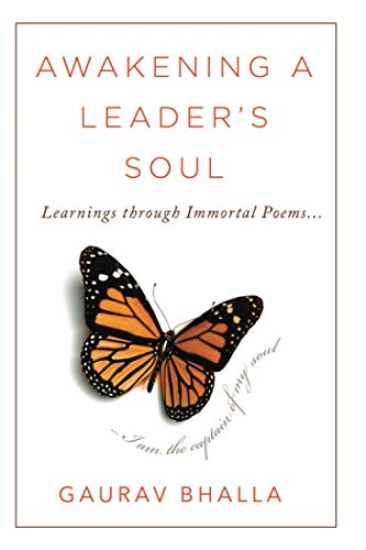
Awakening A Leader's Soul: Learnings Through Immortal Poems is about "Soulful Leadership," a new human-centric narrative that reimagines the purpose of leadership. This new narrative believes that in today's complex and uncertain world the humanity of leaders is significantly more important than their executive brilliance. Accordingly, with the help of different teachers - the timeless wisdom of immortal poems - the book takes current and future leaders on a transformative journey of reflection and self-awareness to help them understand their own humanity and that of the worlds in which they live, so their leadership journeys can increase the wellbeing and prosperity of the greatest many, including planet earth. And yet the world is different from what it seems to beand we are other than how we see ourselves in our ravings.Czeslaw Milosz, "Ars Poetica"After seeing and hearing themselves in new and different ways, readers can start their own "Soulful Leadership" journeys, using the power and privilege of their leadership positions to make the world a better place.