Kirjojen hintavertailu. Mukana 12 595 353 kirjaa ja 12 kauppaa.

Kirjahaku

Etsi kirjoja tekijän nimen, kirjan nimen tai ISBN:n perusteella.

1000 tulosta hakusanalla Gavin Alexander

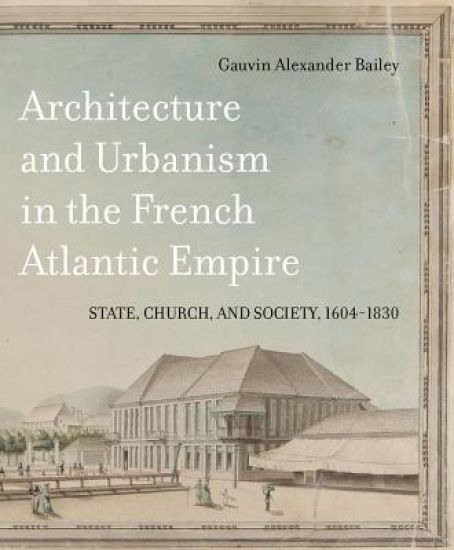
Architecture and Urbanism in the French Atlantic Empire

Architecture and Urbanism in the French Atlantic Empire

Gauvin Alexander Bailey

McGill-Queen's University Press
2018
sidottu
Spanning from the West African coast to the Canadian prairies and south to Louisiana, the Caribbean, and Guiana, France's Atlantic empire was one of the largest political entities in the Western Hemisphere. Yet despite France's status as a nation at the forefront of architecture and the structures and designs from this period that still remain, its colonial building program has never been considered on a hemispheric scale. Drawing from hundreds of plans, drawings, photographic field surveys, and extensive archival sources, Architecture and Urbanism in the French Atlantic Empire focuses on the French state's and the Catholic Church's ideals and motivations for their urban and architectural projects in the Americas. In vibrant detail, Gauvin Alexander Bailey recreates a world that has been largely destroyed by wars, natural disasters, and fires – from Cap-François (now Cap-Haïtien), which once boasted palaces in the styles of Louis XV and formal gardens patterned after Versailles, to failed utopian cities like Kourou in Guiana. Vividly illustrated with examples of grand buildings, churches, and gardens, as well as simple houses and cottages, this volume also brings to life the architects who built these structures, not only French military engineers and white civilian builders, but also the free people of colour and slaves who contributed so much to the tropical colonies. Taking readers on a historical tour through the striking landmarks of the French colonial landscape, Architecture and Urbanism in the French Atlantic Empire presents a sweeping panorama of an entire hemisphere of architecture and its legacy.
Art on the Jesuit Missions in Asia and Latin America, 1542-1773

Art on the Jesuit Missions in Asia and Latin America, 1542-1773

Gauvin Alexander Bailey

University of Toronto Press
2001
pokkari
When the Jesuit missionaries ventured from Europe to newly discovered territories in Asia and Latin America, they brought with them the rich traditions of Renaissance and Baroque art and architecture. What happened to the artistic and social practices already thriving in the communities that the missionaries encountered is the story told by art historian and Jesuit specialist Gauvin Alexander Bailey. The Jesuits, determined to convert both spiritually and culturally, put great effort into imparting their own artistic techniques and knowledge. At the same time they were unusually tolerant of the non-European cultures, making artistic accommodations in order to communicate with each particular society. The resulting hybridization was complex: German, Italian, and Flemish as well as the dominant Spanish and Portuguese idioms mingled with multiple Asian and Amerindian traditions. Bailey argues that this cross-pollination of early modern art became the first truly global visual currency for cultural exchange. Through a sweeping look at Japan, China, Mughul India, and Paraguay, the author focuses on four of the most flourishing artistic encounters and discovers much unrecognized or misunderstood art. He overturns the simple thesis that art was imposed on subject cultures in favour of the more difficult paradigm of exchange. This meticulously researched book has over 100 beautiful illustrations and a thorough index. Winner of the 2000 Roland H. Bainton Prize Winner for Art and Music History - Sixteenth Century Studies Conference
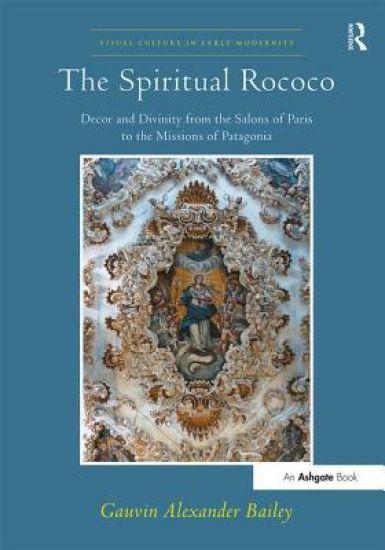
The Spiritual Rococo

The Spiritual Rococo

Gauvin Alexander Bailey

Routledge
2017
nidottu
A groundbreaking approach to Rococo religious décor and spirituality in Europe and South America, The Spiritual Rococo addresses three basic conundrums that impede our understanding of eighteenth-century aesthetics and culture. Why did the Rococo, ostensibly the least spiritual style in the pre-Modern canon, transform into one of the world’s most important modes for adorning sacred spaces? And why is Rococo still treated as a decadent nemesis of the Enlightenment when the two had fundamental characteristics in common? This book seeks to answer these questions by treating Rococo as a global phenomenon for the first time and by exploring its moral and spiritual dimensions through the lens of populist French religious literature of the day-a body of work the author calls the ’Spiritual Rococo’ and which has never been applied directly to the arts. The book traces Rococo’s development from France through Central Europe, Portugal, Brazil, and South America by following a chain of interlocking case studies, whether artistic, literary, or ideological, and it also considers the parallel diffusion of the literature of the Spiritual Rococo in these same regions, placing particular emphasis on unpublished primary sources such as inventories. One of the ultimate goals of this study is to move beyond the cliché of Rococo’s frivolity and acknowledge its essential modernity. Thoroughly interdisciplinary, The Spiritual Rococo not only integrates different art historical fields in novel ways but also interacts with church and social history, literary and post-colonial studies, and anthropology, opening up new horizons in these fields.
The Spiritual Rococo

The Spiritual Rococo

Gauvin Alexander Bailey

Ashgate Publishing Limited
2014
sidottu
A groundbreaking approach to Rococo religious décor and spirituality in Europe and South America, The Spiritual Rococo addresses three basic conundrums that impede our understanding of eighteenth-century aesthetics and culture. Why did the Rococo, ostensibly the least spiritual style in the pre-Modern canon, transform into one of the world’s most important modes for adorning sacred spaces? And why is Rococo still treated as a decadent nemesis of the Enlightenment when the two had fundamental characteristics in common? This book seeks to answer these questions by treating Rococo as a global phenomenon for the first time and by exploring its moral and spiritual dimensions through the lens of populist French religious literature of the day-a body of work the author calls the ’Spiritual Rococo’ and which has never been applied directly to the arts. The book traces Rococo’s development from France through Central Europe, Portugal, Brazil, and South America by following a chain of interlocking case studies, whether artistic, literary, or ideological, and it also considers the parallel diffusion of the literature of the Spiritual Rococo in these same regions, placing particular emphasis on unpublished primary sources such as inventories. One of the ultimate goals of this study is to move beyond the cliché of Rococo’s frivolity and acknowledge its essential modernity. Thoroughly interdisciplinary, The Spiritual Rococo not only integrates different art historical fields in novel ways but also interacts with church and social history, literary and post-colonial studies, and anthropology, opening up new horizons in these fields.
Between Renaissance and Baroque

Between Renaissance and Baroque

Gauvin Alexander Bailey

University of Toronto Press
2009
pokkari
Between Renaissance and Baroque is a stunning achievement - the first book to be written about the original painting commissions of the Jesuits in Rome. Offering a uniquely comprehensive and comparative analysis of the paintings and stuccoes which adorned all of the Jesuit foundations in the city during their first half century of existence, the study treats some of the most crucial monuments of late Renaissance painting including the original decorations of the church of the Gesù and the Collegio Romano, and the martyrdom frescoes at S. Stefano Rotondo. Based on extensive new archival research from Rome, Florence, Parma, and Perugia, Gauvin Alexander Bailey's study presents an original, revisionist treatment of Italian painting in the last four decades of the sixteenth century, a critical transitional period between Renaissance and Baroque. Bailey relates the Jesuit painting cycles to the great religious and intellectual climate of the period, isolates the new stylistic trends which appeared after the Council of Trent, and looks at the different ways in which artists met the challenges for devotional art made by the religious climate of the post-Tridentine period. Bailey also succeeds in providing the first ever written reconstructions of the Jesuit churches of S. Tommaso di Canterbury, S. Saba, and S. Apollinare, and the original novitiate complex of S. Andrea al Quirinale, the site of the most complex and original hospital decoration in late Renaissance Italy. Through these reconstructions, Bailey sheds new light on such works as Louis Richeôme's meditation manual on the paintings at S. Andrea, Le peinture spirituelle, a lively and detailed treatise on late Renaissance art that has never before been the subject of a thorough study. Ultimately, Bailey provides us with a new understanding of the stylistic and iconographic strands which shortly afterward were woven together to form the Baroque.
Baroque & Rococo

Baroque & Rococo

Bailey Gauvin Alexander

Phaidon Press Ltd
2012
nidottu
This new title in the highly regarded Art & Ideas series presents a thorough introduction to the Baroque and Rococo styles. Encompassing architecture, interior design, furniture, ceramics, garden landscaping and theatrical spectaculars, as well as the masterpieces of this prolific period in the Fine Arts, these styles were global and had enormous impact on the history of art. Gauvin Bailey clarifies the essence of the styles and examines their complexities and contradictions, and their applications against the backdrop of seventeenth- and eighteenth-century Europe, Latin America and Asia. With 250 illustrations, well-known sculptures by Bernini, paintings by Caravaggio and Rembrandt, and some of the most famous buildings in the world are set in their creative milieu with succinct analysis and broad clarity. Lesser known examples from across the world demonstrate how the aesthetic trends of the styles were concurrent throughout continents, and enlightens and refreshes the implications of the terms.
Saints & Santos

Saints & Santos

Montserrat A. Báez Hernández; Gauvin Alexander Bailey; Arturo Balandrano Campos; James M. Córdova; Ray Hernández-Durán; Anna M. Nogar; Gabriela Sánchez Reyes; Mark A. White

SCALA PUBLISHERS LTD
2025
sidottu
Explore how sacred art evolved in early Mexico, adapting to local cultures and artistic traditions.This beautifully illustrated book reveals the importance of saints in New Spain, a viceroyalty that was part of the Spanish Empire from 1521–1821, covering modern-day Mexico, Central America, and the US Southwest. In the late sixteenth century, Rome’s attempts to manage sanctity as an official process had a profound impact throughout Spain and the Spanish viceroyalties. Saintly devotions traveled to Mexico, and circulated within the vast territory as images or print, then to be transformed by New Spain’s own communities. Drawing on collections from Mexico and the United States, this book examines the role of images in the construction of the holy: these paintings, sculptures, and engravings routinely used to propagate, celebrate, and venerate saintly figures, and used in official beatification and canonization proceedings. The relationship between sanctity and the pictorial is a long, revered tradition that continues in the work of New Mexico’s santero artists today.
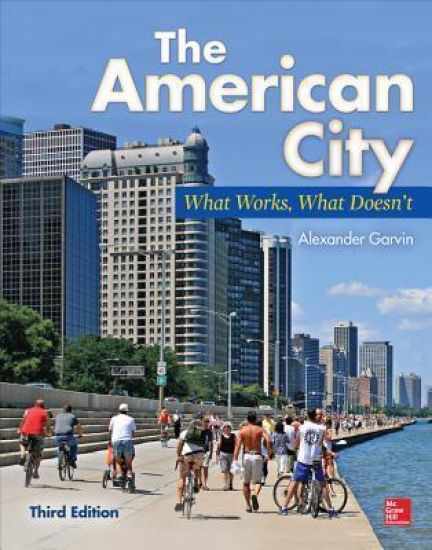
The American City: What Works, What Doesn't

The American City: What Works, What Doesn't

Alexander Garvin

McGraw-Hill Professional
2013
sidottu
Publisher's Note: Products purchased from Third Party sellers are not guaranteed by the publisher for quality, authenticity, or access to any online entitlements included with the product.The definitive guide to urban planning and design--completely updated and now in full colorIn the Third Edition of The American City: What Works, What Doesn't, award-winning city planner and renowned urban scholar Alexander Garvin examines more than 350 programs and projects that have been implemented nationwide in 150 cities and suburbs, evaluates their successes and failures, and offers relevant lessons learnedfrom them.Nearly all of the book's 650 illustrations are now in full color and consist almost entirely of photographs, maps, and diagrams produced especially for the Third Edition. Garvin discusses major urban initiatives that have emerged over the past two decades, such as Chicago's Millennium Park, Houston's Uptown Business District, and Metropolitan Denver's FasTracks multicounty rapid transitnetwork. He reexamines the wide range of places and strategies covered in the previous edition, offering new analyses and insights. A new chapter on retrofitting the city for a modern commercial economy is included.This practical guide presents six key ingredients of project success--market, location, design, financing, time, and entrepreneurship--and explains how to combine these elements in a mutually reinforcing manner. Garvin demonstrates how the synthesis of individual and private-sector efforts, community-level action, and broad-based government policy can--and has--achieved urban and suburban regeneration.COVERAGE INCLUDES:A realistic approach to city and suburban planningIngredients of success--market, location, design, financing, time, and entrepreneurshipParks, playgrounds, and open spaceRetail shoppingPalaces for the people--libraries, stadiums, museums, and other public facilitiesRetrofitting the city for a modern commercial economyThe life and death of the City of Tomorrow--implications of national urban redevelopment programsDowntown managementIncreasing the housing supplyReducing housing costsHousing rehabilitationClearing the slumsRevitalizing neighborhoodsResidential suburbsNew-towns-in-townNew-towns-in-the-countryLand use regulationHistoric preservationComprehensive planning
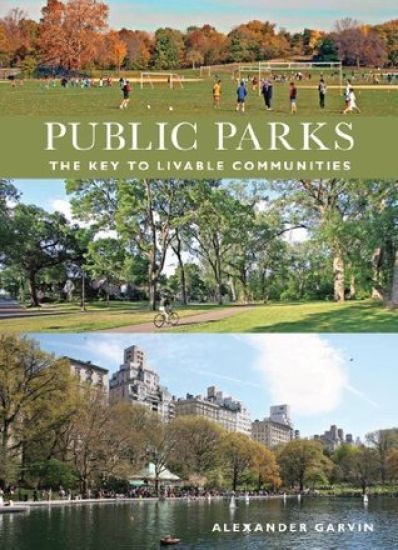
Public Parks

Public Parks

Alexander Garvin

WW Norton Co
2011
sidottu
Everything that anybody (whether they are citizen activists, or public officials, or professional landscape architects, architects, and planners) needs to know about the critical role public parks play in creating livable communities. Millions of dollars are being spent on restoring parks and creating new ones. Planner Alexander Garvin explains the rationales for their existence, the forms they take, their value, ways to pay for and govern them, and the ingredients that make successful parks, providing the first single definitive source of wisdom about them.
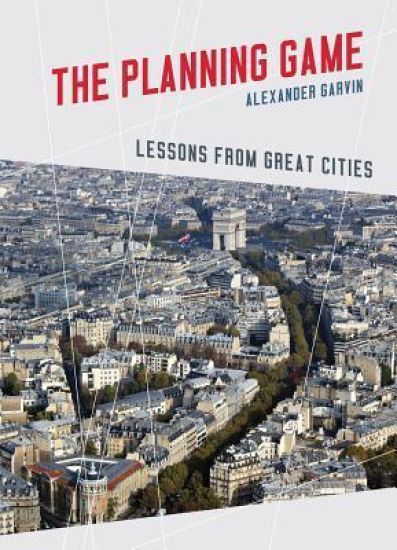
The Planning Game

The Planning Game

Alexander Garvin

WW Norton Co
2013
sidottu
The Planning Game: Lessons from Great Cities provides a focused, thorough, and sophisticated overview of how planning works, generously illustrated with 200 colorful photographs, diagrams, and maps created expressly for the book. It presents the public realm approach to planning—an approach that emphasizes the importance of public investments in what we own: streets, squares, parks, infrastructure, and public buildings. They are the fundamental elements in any community and are the way to determine our future. The book covers planning at every level, explaining the activities that go into successfully transforming a community as exemplified by four cities and their colorful motive forces: Paris (Baron Georges-Eugene Haussmann), New York (Robert Moses), Chicago (Daniel Burnham), and Philadelphia (Edmund Bacon). The Planning Game is an invaluable resource for planners, students, community leaders, and everybody involved with making better places to live.
What Makes a Great City

What Makes a Great City

Alexander Garvin

Island Press
2016
sidottu
What makes a great city? Not a good city or a functional city but a great city. A city that people admire, learn from, and replicate. City planner and architect Alexander Garvin set out to answer this question by observing cities, largely in North America and Europe, with special attention to Paris, London, New York, and Vienna. For Garvin, greatness is not just about the most beautiful, convenient, or well-managed city; it isn't even about any "city." It is about what people who shape cities can do to make a City great. A great city is not an Exquisite, completed artefact. It is a dynamic, constantly changing place that residents and their leaders can reshape, to satisfy their demands. While this book does discuss the history, demographic composition, politics, economy, topography, history playout, architecture, and planning of great cities, it is not about these aspects alone. Most importantly, it is about the interplay between people and public realm and how they have interacted throughout history to create great Cities. To open the book, Garvin explains that a great public realm attracts and retains the people who make a city great.He describes exactly what the term public realm means, its most important characteristics, as well as providing examples of when and how these characteristics work, or don't. An entire chapter is devoted to a discussion of how particular components of the public realm (squares in London, parks in Minneapolis, and streets in Madrid) shape people's daily lives. He concludes with a look at how twenty-first century initiatives in Paris, Houston, Atlanta-Brooklyn, and Toronto are making an already fine public realm even better, initiatives that demonstrate what other cities can do to improve. What Makes o Great City will help readers understand that any city can be changed for the better-and inspire entrepreneurs, public officials, and city residents to do it themselves.
The Heart of the City

The Heart of the City

Alexander Garvin

Island Press
2019
pokkari
Downtowns are more than economic engines: they are repositories of knowledge and culture and generators of new ideas, technology, and ventures. They are the heart of the city that drives its future. If we are to have healthy downtowns, we need to understand what downtown is all about; how and why some American downtowns never stopped thriving (such as San Jose and Houston), some have been in decline for half a century (including Detroit and St. Louis), and still others are resurging after temporary decline (many, including Lower Manhattan and Los Angeles). The downtowns that are prospering are those that more easily adapt to changing needs and lifestyles. In The Heart of the City, distinguished urban planner Alexander Garvin shares lessons on how to plan for a mix of housing, businesses, and attractions; enhance the public realm; improve mobility; and successfully manage downtown services. Garvin opens the book with diagnoses of downtowns across the United States, including the people, businesses, institutions, and public agencies implementing changes. In a review of prescriptions and treatments for any downtown, Garvin shares brief accounts--of both successes and failures--of what individuals with very different objectives have done to change their downtowns. The final chapters look at what is possible for downtowns in the future, closing with suggested national, state, and local legislation to create standard downtown business improvement districts to better manage downtowns. This book will help public officials, civic organizations, downtown business property owners, and people who care about cities learn from successful recent actions in downtowns across the country, and expand opportunities facing their downtown. Garvin provides recommendations for continuing actions to help any downtown thrive, ensuring a prosperous and thrilling future for the 21st-century American city.
Ed Bacon

Ed Bacon

Gregory L. Heller; Alexander Garvin

University of Pennsylvania Press
2016
pokkari
In the mid-twentieth century, as Americans abandoned city centers in droves to pursue picket-fenced visions of suburbia, architect and urban planner Edmund Bacon turned his sights on shaping urban America. As director of the Philadelphia City Planning Commission, Bacon forged new approaches to neighborhood development and elevated Philadelphia's image to the level of great world cities. Urban development came with costs, however, and projects that displaced residents and replaced homes with highways did not go uncriticized, nor was every development that Bacon envisioned brought to fruition. Despite these challenges, Bacon oversaw the planning and implementation of dozens of redesigned urban spaces: the restored colonial neighborhood of Society Hill, the new office development of Penn Center, and the transit-oriented shopping center of Market East. Ed Bacon is the first biography of this charismatic but controversial figure. Gregory L. Heller traces the trajectory of Bacon's two-decade tenure as city planning director, which coincided with a transformational period in American planning history. Edmund Bacon is remembered as a larger-than-life personality, but in Heller's detailed account, his successes owed as much to his savvy negotiation of city politics and the pragmatic particulars of his vision. In the present day, as American cities continue to struggle with shrinkage and economic restructuring, Heller's insightful biography reveals an inspiring portrait of determination and a career-long effort to transform planning ideas into reality.
The North Atlantic Cities

The North Atlantic Cities

Charles B. Duff; Alexander Garvin

The Bluecoat Press
2023
nidottu
The North Atlantic Cities by Charles B. Duff, which is available for the first time in the United States, is a book on urban development and urban life masquerading as a book on architecture. It is the story of four hundred years of architecture and urban development in four countries: the Netherlands, Great Britain, Ireland, and the United States, particularly cities like New York, Boston, Washington, D.C., Philadelphia, Baltimore, Savannah, to name a few. The author starts with a kind of building few others have considered--the row house--which could very well be the key to understanding why many of the world's great cities look and function as they do. From the 1600s to today as the author theorizes, this innocuous-seeming housing type is perhaps the antidote to suburban sprawl, urban decay, and the worst catastrophes of global climate change.
Our Man in Alexandria

Our Man in Alexandria

Gavin Chappell

Createspace Independent Publishing Platform
2017
nidottu
Seconded to the Twenty Second Legion in Egypt, Gaius Flaminius Drusus finds himself plunged into a murky world of religious cults and ethnic hatreds. Investigating the murder of his predecessor, Flaminius is hindered at every turn, despite the assistance of the Egyptian scribe and reformed tomb robber, Ozymandias. Weakened by fever, he is given only a day and a half to solve the murder by the legate, who requires his services fighting desert raiders. Desperate to close the case, he infiltrates the horrific rites of an underground cult only to find himself accused of murder. The latest instalment in the ON HADRIAN'S SECRET SERVICE series...
Den Finaste Gåvan

Den Finaste Gåvan

Alexander Bonsfills

Solentro
2025
nidottu
En naturlyrisk och romantisk skildring av midsommaren i den bohuslänska skärgården. Novellen bjuder på nattens mystär, fjäderlätta rysningar och ett väsen som hjälper kärleken på traven. Det är en vacker berättelse som tar sin början under en minnesstund i en prunkande trädgård efter andakten. I en hammock sitter en äldre dam och berättar för sitt barnbarn hur hon träffade sin nu avlidne make efter andra världskriget och hur magiskt det var. Detta alster utgör inledningen till nästa berättelse som utspelar sig under en snöstorm i de värmländska skogarna under slutet på 1800-talet. En pappa bygger en gunghäst i sågverket där han jobbar. Det ska bli en fin julgåva till sonen. Men det sker en olycka under stormen och den går sönder. Där och då börjar ett spännande äventyr för dig och för familjen Stålklang. Nordisk mytologi och några av dess väsen som finns i skogen delar plats med kristna seder liksom en heroisk tomtemor. Äventyret kulminerar på självaste julafton och får anses vara en av de allra finaste julberättelser som någonsin skrivits inom svensk litteratur.
Losing Weight to Gain Control: Loving Your Weight Maintenance Journey

Losing Weight to Gain Control: Loving Your Weight Maintenance Journey

Gwen S. Alexander

Createspace Independent Publishing Platform
2015
nidottu
Everything meaningful in life comes with a risk. It's true. Sometimes you need to lose something if you want to gain something else. Something better. Something like Gwen Alexander did.She lost weight only to gain every last pound back. You can imagine the devastation. Working so hard, only to gain it all back and, in turn, losing everything she fought so hard to attain. Gwen doesn't want this to happen to you. She wants you to lose weight and keep the weight off, feeling more confident than ever. She wants to help you discover a plan that you can follow for the rest of your life like she did. Something just right for you. Yes, you will need to stick to a plan, but this book makes it manageable and worth the gain of something better. A new you Using this book, Gwen guides readers on their weight loss journeys. As a friend and confidant, she helps you lose weight, keep it off, and ultimately gain control of your life. You can make a difference in your life. Starting right now. You can lose all of the weight you've ever dreamed of and live the life you've always wanted. It all starts right now. And Gwen is dedicated to helping you achieve your goals and maintain them not just for a few years, but a lifetime.
Gain-Cell Embedded DRAMs for Low-Power VLSI Systems-on-Chip

Gain-Cell Embedded DRAMs for Low-Power VLSI Systems-on-Chip

Pascal Meinerzhagen; Adam Teman; Robert Giterman; Noa Edri; Andreas Burg; Alexander Fish

Springer International Publishing AG
2017
sidottu
This book pioneers the field of gain-cell embedded DRAM (GC-eDRAM) design for low-power VLSI systems-on-chip (SoCs). Novel GC-eDRAMs are specifically designed and optimized for a range of low-power VLSI SoCs, ranging from ultra-low power to power-aware high-performance applications. After a detailed review of prior-art GC-eDRAMs, an analytical retention time distribution model is introduced and validated by silicon measurements, which is key for low-power GC-eDRAM design. The book then investigates supply voltage scaling and near-threshold voltage (NTV) operation of a conventional gain cell (GC), before presenting novel GC circuit and assist techniques for NTV operation, including a 3-transistor full transmission-gate write port, reverse body biasing (RBB), and a replica technique for optimum refresh timing. Next, conventional GC bitcells are evaluated under aggressive technology and voltage scaling (down to the subthreshold domain), before novel bitcells for aggressively scaled CMOS nodes and soft-error tolerance as presented, including a 4-transistor GC with partial internal feedback and a 4-transistor GC with built-in redundancy.
Gain-Cell Embedded DRAMs for Low-Power VLSI Systems-on-Chip

Gain-Cell Embedded DRAMs for Low-Power VLSI Systems-on-Chip

Pascal Meinerzhagen; Adam Teman; Robert Giterman; Noa Edri; Andreas Burg; Alexander Fish

Springer International Publishing AG
2018
nidottu
This book pioneers the field of gain-cell embedded DRAM (GC-eDRAM) design for low-power VLSI systems-on-chip (SoCs). Novel GC-eDRAMs are specifically designed and optimized for a range of low-power VLSI SoCs, ranging from ultra-low power to power-aware high-performance applications. After a detailed review of prior-art GC-eDRAMs, an analytical retention time distribution model is introduced and validated by silicon measurements, which is key for low-power GC-eDRAM design. The book then investigates supply voltage scaling and near-threshold voltage (NTV) operation of a conventional gain cell (GC), before presenting novel GC circuit and assist techniques for NTV operation, including a 3-transistor full transmission-gate write port, reverse body biasing (RBB), and a replica technique for optimum refresh timing. Next, conventional GC bitcells are evaluated under aggressive technology and voltage scaling (down to the subthreshold domain), before novel bitcells for aggressively scaled CMOS nodes and soft-error tolerance as presented, including a 4-transistor GC with partial internal feedback and a 4-transistor GC with built-in redundancy.