
Kirjahaku
Etsi kirjoja tekijän nimen, kirjan nimen tai ISBN:n perusteella.
978 tulosta hakusanalla Geetha Waters

Philosophie de la gestion des vins du monde : Geetha de Bagavath
Morusu Sivasankar
ÉDITIONS UNIVERSITAIRES EUROPÉENNES
2020
nidottu

Filosofia de Gestão de Vinhos do Mundo: Bagavath Geetha
Morusu Sivasankar
Novas Edições Acadêmicas
2020
nidottu

Best Management show Lord krishna :A case study of Bagavath Geetha
Morusu Sivasankar
SCHOLARS' PRESS
2018
nidottu

La mejor filosofía de gestión del mundo: Bagavath Geetha
Morusu Sivasankar
Ediciones Nuestro Conocimiento
2022
nidottu

La meilleure philosophie de gestion au monde : Bagavath Geetha
Morusu Sivasankar
Editions Notre Savoir
2022
nidottu

La migliore filosofia di gestione al mondo: Bagavath Geetha
Morusu Sivasankar
Edizioni Sapienza
2022
nidottu

A Melhor Filosofia de Gestão de Vinhos do Mundo: Bagavath Geetha
Morusu Sivasankar
Edições Nosso Conhecimento
2022
nidottu

Filozofia zarz¿dzania ¿wiatowym winem: Bagavath Geetha
Morusu Sivasankar
Wydawnictwo Bezkresy Wiedzy
2020
nidottu

The Wackentute Diary: A Novel of Management, Mayhem, and the Simple Game of Geetha
Michael McInerney
Green Mouse Press
2014
nidottu

This book examines the domain of human agency–environment interaction from a multidimensional point of view. It explores the human–environment interface by analysing its ethical, political and epistemic aspects – the value aspects that humans attribute to their environment, the relations of power in which the actions and their consequences are implicated and the meaning of human actions in relation to the environment. The volume delineates the character of this domain and works out a theoretical framework for the field of human ecology.This book will be a must-read for students, scholars and researchers of environmental studies, human ecology, development studies, environmental history, literature, politics and sociology. It will also be useful to practitioners, government bodies, environmentalists, policy makers and NGOs.
This book visits modernism within a comparative, gendered, and third-world framework, questioning current scholarly categorisations of modernism and reframing our conception of what constitutes modernist aesthetics. It describes the construction of modernist studies and argues that despite a range of interventions which suggest that philosophical and material articulations with the third world shaped modernism, an emphasis on modernist "universals" persists. Ramanathan argues that women and third-world authors have reshaped received notions of the modern and revised orthodox ideas on the modern aesthetic. Authors such as Bessie Head, Josiane Racine, T.Obinkaram Echewa, Raja Rao, Gabriel Garcia Marquez, Sembene Ousmane, Salman Rushdie, Ana Castillo, Attia Hossain, Bapsi Sidhwa, and Sahar Khalifeh, are visited in their specific cultural contexts and use some form of realism, a mode that western modernism relegates to the nineteenth century. A comparative methodology and extensive research on intersecting topics such as post-coloniality and the articulation between gender and modernist aesthetics facilitates readings of the modern in twentieth century literature that fall outside standards of western modernism. Considering the relationship between aesthetics and ideology, Ramanathan lays out a critical apparatus to enhance our understanding of the modern, thus suggesting that form is not universal, but that the history of forms, like the history of colonialism and of women, indicates very specific modalities of the modern.

This book examines the domain of human agency–environment interaction from a multidimensional point of view. It explores the human–environment interface by analysing its ethical, political and epistemic aspects – the value aspects that humans attribute to their environment, the relations of power in which the actions and their consequences are implicated and the meaning of human actions in relation to the environment. The volume delineates the character of this domain and works out a theoretical framework for the field of human ecology.This book will be a must-read for students, scholars and researchers of environmental studies, human ecology, development studies, environmental history, literature, politics and sociology. It will also be useful to practitioners, government bodies, environmentalists, policy makers and NGOs.

This book visits modernism within a comparative, gendered, and third-world framework, questioning current scholarly categorisations of modernism and reframing our conception of what constitutes modernist aesthetics. It describes the construction of modernist studies and argues that despite a range of interventions which suggest that philosophical and material articulations with the third world shaped modernism, an emphasis on modernist "universals" persists. Ramanathan argues that women and third-world authors have reshaped received notions of the modern and revised orthodox ideas on the modern aesthetic. Authors such as Bessie Head, Josiane Racine, T.Obinkaram Echewa, Raja Rao, Gabriel Garcia Marquez, Sembene Ousmane, Salman Rushdie, Ana Castillo, Attia Hossain, Bapsi Sidhwa, and Sahar Khalifeh, are visited in their specific cultural contexts and use some form of realism, a mode that western modernism relegates to the nineteenth century. A comparative methodology and extensive research on intersecting topics such as post-coloniality and the articulation between gender and modernist aesthetics facilitates readings of the modern in twentieth century literature that fall outside standards of western modernism. Considering the relationship between aesthetics and ideology, Ramanathan lays out a critical apparatus to enhance our understanding of the modern, thus suggesting that form is not universal, but that the history of forms, like the history of colonialism and of women, indicates very specific modalities of the modern.
Approaches to Select Texts in World Literature
Geetha Ramanathan; Kwame Awuyah
Kendall Hunt Pub Co
2015
pokkari
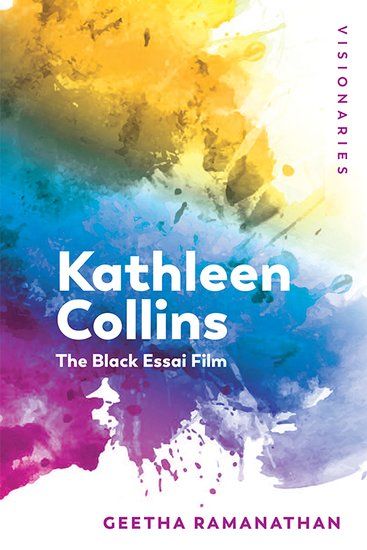
A philosopher-filmmaker, Kathleen Collins decisively redefined the parameters of African American film with The Cruz Brothers and Miss Malloy (1980) and Losing Ground (1982). This book uses detailed analyses of Collins's films to contextualise her work in the African American, feminist and world film traditions, and it highlights her contribution to each of these canons. Exploring the philosophical aspects of Collins's films and placing her in a genealogy of African American auteurs, Geetha Ramanathan argues that Collins uses film to integrate diverse elements of African American culture, showing how the medium can transform the visual and become a site of convergence for ideas on philosophy, otherness, art, aesthetics and the craft of filmmaking.

A philosopher-filmmaker, Kathleen Collins decisively redefined the parameters of African American film with The Cruz Brothers and Miss Malloy (1980) and Losing Ground (1982). This book uses detailed analyses of Collins's films to contextualise her work in the African American, feminist and world film traditions, and it highlights her contribution to each of these canons. Exploring the philosophical aspects of Collins's films and placing her in a genealogy of African American auteurs, Geetha Ramanathan argues that Collins uses film to integrate diverse elements of African American culture, showing how the medium can transform the visual and become a site of convergence for ideas on philosophy, otherness, art, aesthetics and the craft of filmmaking.
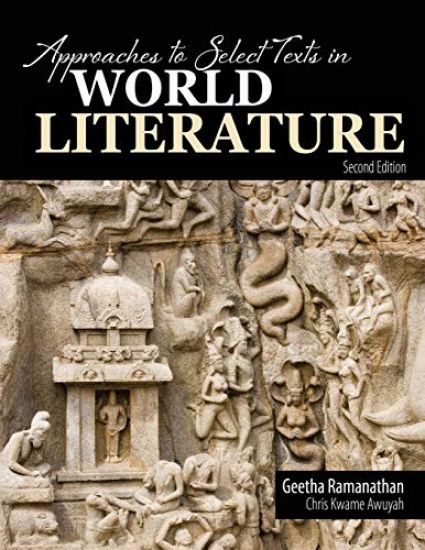
Approaches to Select Texts in World Literature
Geetha Ramanathan; Kwame Awuyah
KENDALL/HUNT PUBLISHING CO ,U.S.
2021
pokkari