
Kirjahaku
Etsi kirjoja tekijän nimen, kirjan nimen tai ISBN:n perusteella.
1000 tulosta hakusanalla Georg Muffat


Georg Jensen
Yale University Press
2018
sidottu
A beautifully illustrated look at how Georg Jensen pushed the boundaries of modern domestic design In 1904 Danish silversmith Georg Jensen (1866–1935) founded one of the world’s most celebrated design companies. Famous for its signature silver tableware that combines gleaming sculptural forms with lush ornament, Jensen’s eponymous firm has stood at the forefront of domestic design for over a century by combining an innovative and experimental spirit with a commitment to traditional craftsmanship. Tracing the evolution of Georg Jensen silver from its place in the company’s initial emergence through its continuing role as a touchstone for the global identity of Danish design, this book examines the creative processes and business practices behind Jensen’s stunning bowls, pitchers, coffee services, and other domestic objects. Lavishly illustrated with works ranging in style from organic to industrial, Georg Jensen is full of new insights gleaned from the company’s own archives and situates Jensen’s work in the broader context of 20th-century design. This unprecedented study includes scholarly essays by Alison Fisher, Maggie Taft, and Thomas C. Thulstrup that delve into the significant and continuing impact of Georg Jensen silver on modern domestic taste. Distributed for the Art Institute of ChicagoExhibition Schedule:The Art Institute of Chicago (06/22/18–09/09/18)

Originally published in 1951 this full length study gives an account of Büchner’s life and personality, together with an account of his three plays, his unfinished short story, his scientific publications and his translations of Hugo.

Originally published in 1951 this full length study gives an account of Büchner’s life and personality, together with an account of his three plays, his unfinished short story, his scientific publications and his translations of Hugo.
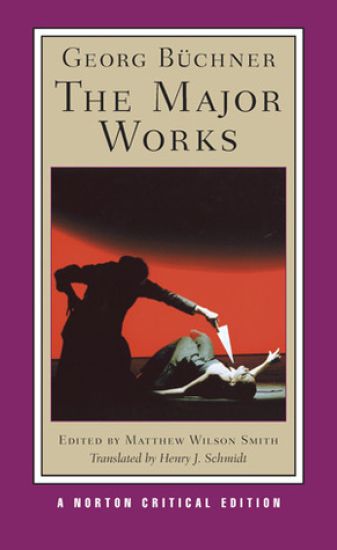
The Georg Büchner Prize is the highest literary honor for German language writers, and the full extent of Büchner’s influence—from Gerhart Hauptmann to Christa Wolf, Max Reinhardt to Robert Wilson, Alban Berg to Tom Waits—defies cataloging. When Georg Büchner died in 1837 at the age of twenty-three, he left behind a small and heterogenous body of work, most of it unpublished: three plays, a novella, a political pamphlet, a dissertation, medical lectures, and letters. Matthew Wilson Smith has newly translated Büchner’s introduction to On Cranial Nerves. Each text is accompanied by explanatory annotations. The editor’s introduction examines the complexities of Büchner’s short life and how they informed his writing. The volume also contains ten illustrations. “Contexts” includes Büchner’s correspondence with the people who knew him best, impressions of Büchner from a fellow medical student, excerpts from Büchner’s diary, the wanted poster calling for Büchner’s arrest for political conspiracy as well as the real-life inspirations his novella, Lenz, and his best-known play, Woyzeck. For ease of reference, “Criticism” is topically arranged by work and includes assessments by, among others, Laura Ginters, Victor Brombert, Bertolt Brecht, Henry Schmidt, Andrew Webber, Rainer Maria Rilke, and George Steiner. Three accounts of important productions of Danton’s Death are reprinted, including John Houseman’s remarks on Orson Welles’s staging. Finally, the speeches of four winners of the Georg Büchner Prize—Paul Celan, Christa Wolf, Heiner Müller, and Durs Grünbein—are reprinted in their entirety. A Chronology of Büchner’s life and work and a Selected Bibliography are also included.

Georg Simmel predicted that he would have no followers after his death. However he is now widely recognized as the father of the sociology of Modernity. His ideas on the metropolis, consumer culture, social space and aesthetics are at the crux of contemporary debate in sociology. This collection brings together the essential secondary literature on Simmel. It is selected and edited by David Frisby - a scholar who has perhaps done more than anyone else to rehabilitate Simmel's reputation in the English speaking world. What emerges is the most concise yet comprehensive view of this astonishingly prescient and penetrating sociologist. The volumes will be of interest to graduate students and anyone with a serious interest in Simmel.

Until recently little of Simmel's work was available in translation and certain key texts were unknown outside Germany. David Frisby, the eminent Simmel scholar, provides not only an introduction to the major sociological writings of this important figure, but also an argument for a reconsideration of his work. The author outlines the cultural and historical context in which Simmel worked; reviews Simmel's most important writings; and examines his legacy to sociology by illuminating his links with Weber's theories and his influential relationship with Marxism. Simmel, a central figure in the development of modern sociology, and a contemporary of Weber and Durkheim, was one of the first to identify sociology as a separate discipline. His ideas influenced Weber, the Chicago School, and many later sociologists. His introduction of a number of basic concepts to sociology, such as exchange, interaction and differentiation, attest to his intellectual stature and the far-reaching significance of his work.

Until recently little of Simmel's work was available in translation and certain key texts were unknown outside Germany. David Frisby, the eminent Simmel scholar, provides not only an introduction to the major sociological writings of this important figure, but also an argument for a reconsideration of his work. The author outlines the cultural and historical context in which Simmel worked; reviews Simmel's most important writings; and examines his legacy to sociology by illuminating his links with Weber's theories and his influential relationship with Marxism. Simmel, a central figure in the development of modern sociology, and a contemporary of Weber and Durkheim, was one of the first to identify sociology as a separate discipline. His ideas influenced Weber, the Chicago School, and many later sociologists. His introduction of a number of basic concepts to sociology, such as exchange, interaction and differentiation, attest to his intellectual stature and the far-reaching significance of his work.

Georg Simmel: Rembrandt
Routledge
2005
sidottu
First published in 1916 in German, this important work has never been translated into English--until now. Simmel attacks such questions as "What do we see in a work of Art?" and "What do Rembrandt's portraits tell us about human nature?" This is a major work by a major thinker concerning one of the world's most important painters.

Georg Simmel: Rembrandt
Routledge
2005
nidottu
First published in 1916 in German, this important work has never been translated into English--until now. Simmel attacks such questions as "What do we see in a work of Art?" and "What do Rembrandt's portraits tell us about human nature?" This is a major work by a major thinker concerning one of the world's most important painters.
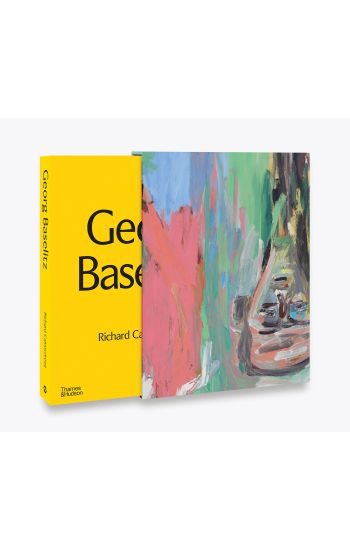
A prolific artist with a protean output, Georg Baselitz has rethought the conventions of a range of media, predominantly painting and sculpture, over the course of a career of some sixty years. Born in 1938, Baselitz was expelled from art school in East Berlin in 1956 for ‘socio-political immaturity’, and moved to the western half of the city. By the late 1950s, he had rejected the dominant tendencies of both sides of the country and his singular achievement was to reintroduce the figure, compromised and discredited though it was by both Nazism and Communism, into art. By drawing attention to art by ‘outsiders’, such as psychiatric patients, and invoking a Parisian model of existentialist art and literature, Baselitz proposed an alternative European tradition that did not eliminate the human subject. In alluding later to movements in German painting such as Expressionism as well as to artists like Munch, he also consciously rehabilitated the kind of art that was condemned by Hitler as ‘degenerate’. The book follows the development of Baselitz’s unique style from his earliest work through to the most recent creations of his eighth decade. Calvocoressi’s masterful construction of a chronological narrative helps us to evaluate Baselitz’s work in terms of the disruptions of his life – historical upheavals witnessed alongside an astonishing career.With 406 illustrations in colour

Georg Wilhelm Friedrich Hegel: Encyclopedia of the Philosophical Sciences in Basic Outline, Part 1, Science of Logic
Georg Wilhelm Fredrich Hegel
Cambridge University Press
2010
sidottu
Hegel's Encyclopaedia Logic constitutes the foundation of the system of philosophy presented in his Encyclopaedia of the Philosophical Sciences. Together with his Science of Logic, it contains the most explicit formulation of his enduringly influential dialectical method and of the categorical system underlying his thought. It offers a more compact presentation of his dialectical method than is found elsewhere, and also incorporates changes that he would have made to the second edition of the Science of Logic if he had lived to do so. This volume presents it in a new translation with a helpful introduction and notes. It will be a valuable reference work for scholars and students of Hegel and German idealism, as well as for those who are interested in the post-Hegelian character of contemporary philosophy.

Georg Wilhelm Friedrich Hegel: The Science of Logic
Georg Wilhelm Fredrich Hegel
Cambridge University Press
2010
sidottu
This translation of The Science of Logic (also known as 'Greater Logic') includes the revised Book I (1832), Book II (1813) and Book III (1816). Recent research has given us a detailed picture of the process that led Hegel to his final conception of the System and of the place of the Logic within it. We now understand how and why Hegel distanced himself from Schelling, how radical this break with his early mentor was, and to what extent it entailed a return (but with a difference) to Fichte and Kant. In the introduction to the volume, George Di Giovanni presents in synoptic form the results of recent scholarship on the subject, and, while recognizing the fault lines in Hegel's System that allow opposite interpretations, argues that the Logic marks the end of classical metaphysics. The translation is accompanied by a full apparatus of historical and explanatory notes.
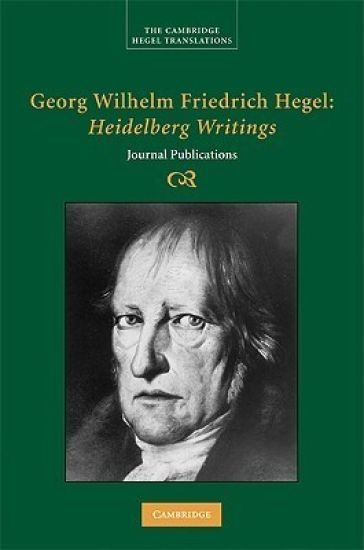
Georg Wilhelm Friedrich Hegel: Heidelberg Writings
Georg Wilhelm Fredrich Hegel
Cambridge University Press
2009
sidottu
This work brings together, for the first time in English translation, Hegel's journal publications from his years in Heidelberg (1816–18), writings which have been previously either untranslated or only partially translated into English. The Heidelberg years marked Hegel's return to university teaching and represented an important transition in his life and thought. The translated texts include his important reassessment of the works of the philosopher F. H. Jacobi, whose engagement with Spinozism, especially, was of decisive significance for the philosophical development of German Idealism. They also include his most influential writing about contemporary political events, his essay on the constitutional assembly in his native Württemberg, which was written against the background of the dramatic political and social changes occurring in post-Napoleonic Germany. The translators have provided an introduction and notes that offer a scholarly commentary on the philosophical and political background of Hegel's Heidelberg writings.
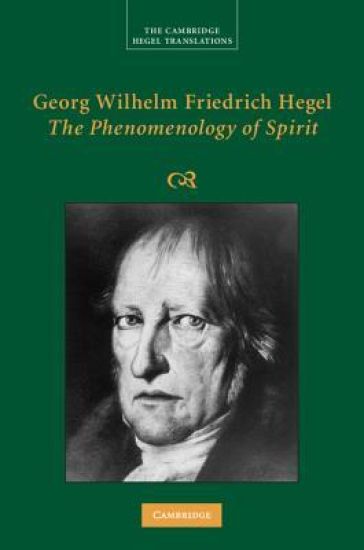
Georg Wilhelm Friedrich Hegel: The Phenomenology of Spirit
Georg Wilhelm Fredrich Hegel
Cambridge University Press
2018
sidottu
Hegel's The Phenomenology of Spirit (1807) is one of the most influential texts in the history of modern philosophy. In it, Hegel proposed an arresting and novel picture of the relation of mind to world and of people to each other. Like Kant before him, Hegel offered up a systematic account of the nature of knowledge, the influence of society and history on claims to knowledge, and the social character of human agency itself. A bold new understanding of what, after Hegel, came to be called 'subjectivity' arose from this work, and it was instrumental in the formation of later philosophies, such as existentialism, Marxism, and American pragmatism, each of which reacted to Hegel's radical claims in different ways. This edition offers a new translation, an introduction, and glossaries to assist readers' understanding of this central text, and will be essential for scholars and students of Hegel.

Mary Gluck introduces us to a Lukács we have never met. Here is Lukács among his friends, lovers, and peers in those important years before 1918, when he converted to Communism and Marxism at the age of thirty-nine.Georg Lukács claimed in later life that his early achievements lacked genuine coherence, being expressions of a vague "romantic anticapitalism" that only found resolution in his conversion to Marxism. By integrating Lukács with his early generational grouping and making expert use of a new treasure trove of documents from his early years, Gluck demonstrates that revolutionary socialism was not the inevitable outcome of Lukács' early cultural radicalism, but only one of several possible options in the fragmented ideological climate of postwar Europe. From this new perspective, his pre-Marxist career takes on a cultural consistency that parallels and illuminates the inner strivings of the early modernists before the outbreak of World War I.Lukács emerges in this generational portrait not only as dramatic and psychologically complex but also as a representative figure whose inner dilemmas were echoed in the lives of many other radical intellectuals who came of age during the fin de siêcle period. Gluck situates Lukács within a fascinating network of friends and associates, the so-called Sunday Circle, which included such people as Karl Mannheim, Arnold Hauser, Bela Balázs, and Anna Lesznai. She adeptly anchors this group within the context of social and economic transformations in Hungary that brought new conservative, antisemitic movements to the fore and that marginalized the assimilated Jewish middle classes to which Lukács and most of his friends belonged. Retracing their collective hopes and values helps to clarify the far-ranging cultural crisis associated with the decline of nineteenth-century liberal culture and the emergence of the modernist sensibility.
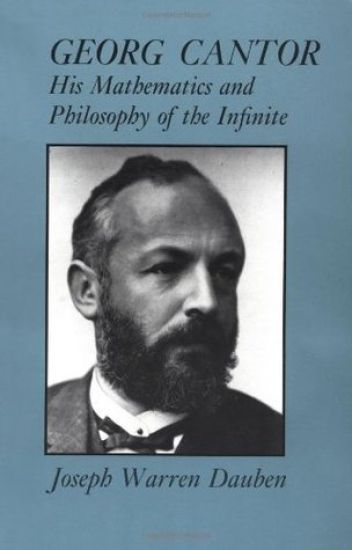
One of the greatest revolutions in mathematics occurred when Georg Cantor (1845-1918) promulgated his theory of transfinite sets. This revolution is the subject of Joseph Dauben's important studythe most thorough yet writtenof the philosopher and mathematician who was once called a "corrupter of youth" for an innovation that is now a vital component of elementary school curricula. Set theory has been widely adopted in mathematics and philosophy, but the controversy surrounding it at the turn of the century remains of great interest. Cantor's own faith in his theory was partly theological. His religious beliefs led him to expect paradoxes in any concept of the infinite, and he always retained his belief in the utter veracity of transfinite set theory. Later in his life, he was troubled by recurring attacks of severe depression. Dauben shows that these played an integral part in his understanding and defense of set theory.
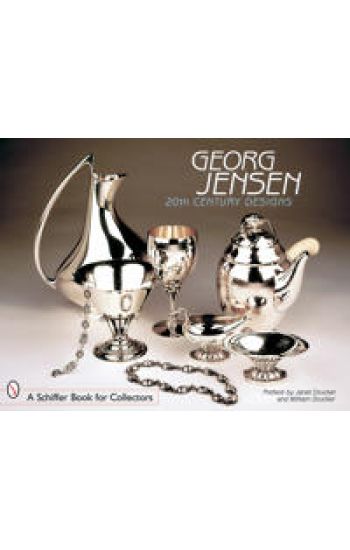
This reprint of jewelry and hollowware catalog pages from Georg Jensen brings eagerly sought information together in one volume. Hard to find, the original catalogs have been widely dispursed and costly, yet they provide primary information to enable identification of thousands of pieces found on the vintage market today. The jewelry section presents women's and men's gold and silver designs, including those sold at the retail store in New York that represented a selection of American-made items, and those made during the 1940s which were difficult to identify previously. The enormous section on hollowware displays hundreds of designs from the late 1950s and early 1960s. During this period Georg Jensen designers expanded their range of tea sets, pitchers, bowls, etc. to include very popular modern forms based on Scandinavian design principles. These designs have remained among the most cherished Jensen forms. The catalog descriptions include the product numbers, original retail prices from the mid-century era, measurements, and designers. A special information list identifies forty-three Georg Jensen designs in museum collections around the world. This easy-to-use volume will become a standard reference for all the collectors, dealers, auction houses, and individuals who own and are inspired by Georg Jensen designs.