George Augustus Moore (24 February 1852 - 21 January 1933) was an Irish novelist, short-story writer, poet, art critic, memoirist and dramatist. Moore came from a Roman Catholic landed family who lived at Moore Hall in Carra, County Mayo. He originally wanted to be a painter, and studied art in Paris during the 1870s. There, he befriended many of the leading French artists and writers of the day. As a naturalistic writer, he was amongst the first English-language authors to absorb the lessons of the French realists, and was particularly influenced by the works of mile Zola.His writings influenced James Joyce, according to the literary critic and biographer Richard Ellmann, and, although Moore's work is sometimes seen as outside the mainstream of both Irish and British literature, he is as often regarded as the first great modern Irish novelist.George Moore was born in Moore Hall in 1852. As a child, Moore enjoyed the novels of Walter Scott, which his father read to him. He spent a good deal of time outdoors with his brother, Maurice George Moore, and also became friendly with the young Willie and Oscar Wilde, who spent their summer holidays at nearby Moytura. Oscar was to later quip of Moore: "He conducts his education in public". His father had again turned his attention to horse breeding and in 1861 brought his champion horse, Croagh Patrick, to England for a successful racing season, together with his wife and nine-year-old son. For a while George was left at Cliff's stables until his father decided to send George to his alma mater facilitated by his winnings. Moore's formal education started at St. Mary's College, Oscott, a Catholic boarding school near Birmingham where he was the youngest of 150 boys. He spent all of 1864 at home, having contracted a lung infection brought about by a breakdown in his health. His academic performance was poor while he was hungry and unhappy. In January 1865, he returned to St. Mary's College with his brother Maurice, where he refused to study as instructed and spent time reading novels and poems.That December the principal, Spencer Northcote, wrote a report that: "he hardly knew what to say about George." By the summer of 1867 he was expelled, for (in his own words) 'idleness and general worthlessness', and returned to Mayo. His father once remarked, about George and his brother Maurice: "I fear those two redheaded boys are stupid", an observation which proved untrue for all four boys.
1916. Irish novelist, playwright, poet and critic, his epic The Brook Kerith begins: It was at the end of a summer evening, long after his usual bedtime, that Joseph, sitting on his grandmother's knee, heard her tell that Kish having lost his asses sent Saul, his son, to seek them in the land of the Benjamites and the land of Shalisha, whither they might have started. But they were not in these lands, Son, she continued, nor in Zulp, whither Saul went afterwards, and being then tired out with looking for them he said to the servant: we shall do well to forget the asses, lest my father should ask what has become of us. See other titles by this author available from Kessinger Publishing............... George Augustus Moore (24 February 1852 - 21 January 1933) was an Irish novelist, short-story writer, poet, art critic, memoirist and dramatist. Moore came from a Roman Catholic landed family who lived at Moore Hall in Carra, County Mayo. He originally wanted to be a painter, and studied art in Paris during the 1870s. There, he befriended many of the leading French artists and writers of the day. As a naturalistic writer, he was amongst the first English-language authors to absorb the lessons of the French realists, and was particularly influenced by the works of mile Zola.His writings influenced James Joyce, according to the literary critic and biographer Richard Ellmann, and, although Moore's work is sometimes seen as outside the mainstream of both Irish and British literature, he is as often regarded as the first great modern Irish novelist.George Moore was born in Moore Hall in 1852. As a child, Moore enjoyed the novels of Walter Scott, which his father read to him. He spent a good deal of time outdoors with his brother, Maurice George Moore, and also became friendly with the young Willie and Oscar Wilde, who spent their summer holidays at nearby Moytura. Oscar was to later quip of Moore: "He conducts his education in public". His father had again turned his attention to horse breeding and in 1861 brought his champion horse, Croagh Patrick, to England for a successful racing season, together with his wife and nine-year-old son. For a while George was left at Cliff's stables until his father decided to send George to his alma mater facilitated by his winnings. Moore's formal education started at St. Mary's College, Oscott, a Catholic boarding school near Birmingham where he was the youngest of 150 boys. He spent all of 1864 at home, having contracted a lung infection brought about by a breakdown in his health. His academic performance was poor while he was hungry and unhappy. In January 1865, he returned to St. Mary's College with his brother Maurice, where he refused to study as instructed and spent time reading novels and poems.That December the principal, Spencer Northcote, wrote a report that: "he hardly knew what to say about George." By the summer of 1867 he was expelled, for (in his own words) 'idleness and general worthlessness', and returned to Mayo. His father once remarked, about George and his brother Maurice: "I fear those two redheaded boys are stupid", an observation which proved untrue for all four boys.............
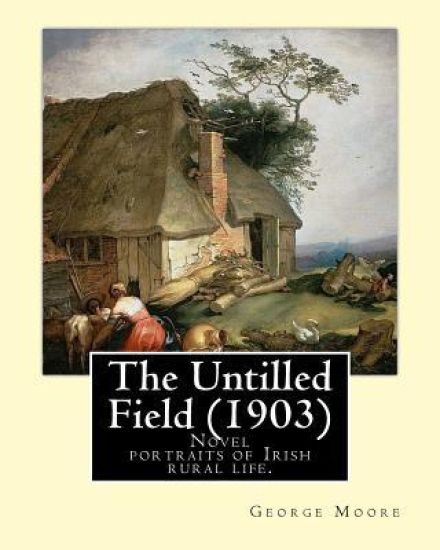
Originally published in 1903, The Untilled Field proved to be one of Moore's works that pleased Moore best for its affectionate portraits of Irish rural life. Though modeled initially on Turgenev's Tales of a Sportsman, the stories soon became original inspirations woven out of Moore's memories of the peasants who lived and worked on his family estate in Mayo. It is one of the richest and most perfectly written of his works. ........ George Augustus Moore (24 February 1852 - 21 January 1933) was an Irish novelist, short-story writer, poet, art critic, memoirist and dramatist. Moore came from a Roman Catholic landed family who lived at Moore Hall in Carra, County Mayo. He originally wanted to be a painter, and studied art in Paris during the 1870s. There, he befriended many of the leading French artists and writers of the day. As a naturalistic writer, he was amongst the first English-language authors to absorb the lessons of the French realists, and was particularly influenced by the works of mile Zola.His writings influenced James Joyce, according to the literary critic and biographer Richard Ellmann, and, although Moore's work is sometimes seen as outside the mainstream of both Irish and British literature, he is as often regarded as the first great modern Irish novelist.George Moore was born in Moore Hall in 1852. As a child, Moore enjoyed the novels of Walter Scott, which his father read to him. He spent a good deal of time outdoors with his brother, Maurice George Moore, and also became friendly with the young Willie and Oscar Wilde, who spent their summer holidays at nearby Moytura. Oscar was to later quip of Moore: "He conducts his education in public". His father had again turned his attention to horse breeding and in 1861 brought his champion horse, Croagh Patrick, to England for a successful racing season, together with his wife and nine-year-old son. For a while George was left at Cliff's stables until his father decided to send George to his alma mater facilitated by his winnings. Moore's formal education started at St. Mary's College, Oscott, a Catholic boarding school near Birmingham where he was the youngest of 150 boys. He spent all of 1864 at home, having contracted a lung infection brought about by a breakdown in his health. His academic performance was poor while he was hungry and unhappy. In January 1865, he returned to St. Mary's College with his brother Maurice, where he refused to study as instructed and spent time reading novels and poems.That December the principal, Spencer Northcote, wrote a report that: "he hardly knew what to say about George." By the summer of 1867 he was expelled, for (in his own words) 'idleness and general worthlessness', and returned to Mayo. His father once remarked, about George and his brother Maurice: "I fear those two redheaded boys are stupid", an observation which proved untrue for all four boys.
Set in England from the early 1870s onward, the novel is about a young, pious woman from a poor working-class family who, while working as a kitchen maid, is seduced by another employee, becomes pregnant, is deserted by her lover, and against all odds decides to raise her child as a single mother.
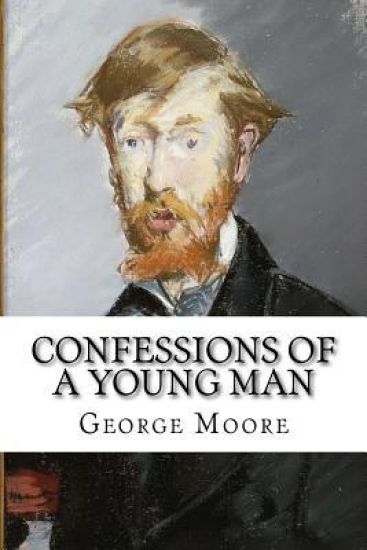
The Confessions of a Young Man is a memoir by Irish novelist George Moore who spent about 15 years in his teens and 20s in Paris and later London as a struggling artist. The book is notable as being one of the first English writings which named important emerging French Impressionists; for its literary criticism; and depictions of bohemian life in Paris during the 1870s and 80s.
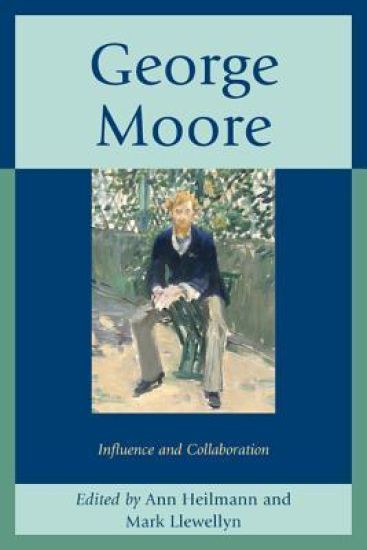
“Nearly every major figure of his era,” writes his biographer Adrian Frazier, “worked with Moore, tangled with Moore, took his impression from, or left it on, George Moore.” The Anglo-Irish novelist George Moore (1852–1933) espoused multiple identities. An agent provocateur whether as an art critic, novelist, short fiction writer or memoirist, always probing and provocative, often deliberately controversial, the personality at the core of this book invented himself as he reinvented his contemporary world. Moore’s key role—as observer-participant and as satirist—within many literary and aesthetic movements at the end of the Victorian period and into the twentieth century owed considerably to the structures and manners of collaboration that he embraced. This book throws into relief the multiple ways in which Moore’s work can serve as a counterbalance to established understandings of late nineteenth and early twentieth-century literary aesthetics both through innovative scholarly readings of Moore’s work and through illustrative case studies of Moore’s collaborative practice by making available, for the first time, two manuscript plays he co-authored with Pearl Craigie (John Oliver Hobbes) in 1894. It is this collaborative practice in conjunction with his cosmopolitan outlook that turned Moore into a key player in the fin-de-siècle formation of an international aesthetic community. This book explores the full range of Moore’s collaborations and cultural encounters: from 1870s Paris art exhibitions to turn-of-the-century Dublin and London; from gossip to the culture of the barmaid; from the worship of Balzac to the fraught engagement with Yeats; from music to Celtic cultural translation. Moore’s reputation as a collaborator with the most significant artistic individuals of his time in Britain, Ireland and France in particular, but also in Europe more widely, provides a rich exposition of modes of exchange and influence in the period, and a unique and distinctive perspective on Moore himself.
“Nearly every major figure of his era,” writes his biographer Adrian Frazier, “worked with Moore, tangled with Moore, took his impression from, or left it on, George Moore.” The Anglo-Irish novelist George Moore (1852–1933) espoused multiple identities. An agent provocateur whether as an art critic, novelist, short fiction writer or memoirist, always probing and provocative, often deliberately controversial, the personality at the core of this book invented himself as he reinvented his contemporary world. Moore’s key role—as observer-participant and as satirist—within many literary and aesthetic movements at the end of the Victorian period and into the twentieth century owed considerably to the structures and manners of collaboration that he embraced. This book throws into relief the multiple ways in which Moore’s work can serve as a counterbalance to established understandings of late nineteenth and early twentieth-century literary aesthetics both through innovative scholarly readings of Moore’s work and through illustrative case studies of Moore’s collaborative practice by making available, for the first time, two manuscript plays he co-authored with Pearl Craigie (John Oliver Hobbes) in 1894. It is this collaborative practice in conjunction with his cosmopolitan outlook that turned Moore into a key player in the fin-de-siècle formation of an international aesthetic community. This book explores the full range of Moore’s collaborations and cultural encounters: from 1870s Paris art exhibitions to turn-of-the-century Dublin and London; from gossip to the culture of the barmaid; from the worship of Balzac to the fraught engagement with Yeats; from music to Celtic cultural translation. Moore’s reputation as a collaborator with the most significant artistic individuals of his time in Britain, Ireland and France in particular, but also in Europe more widely, provides a rich exposition of modes of exchange and influence in the period, and a unique and distinctive perspective on Moore himself.
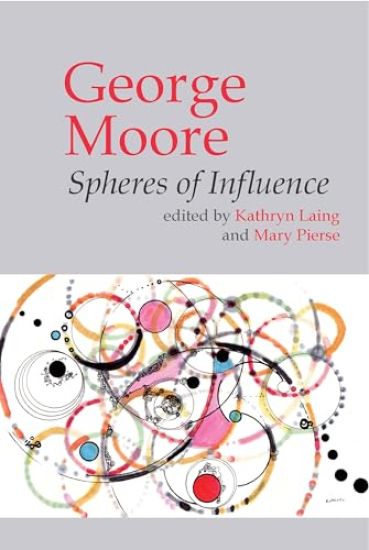
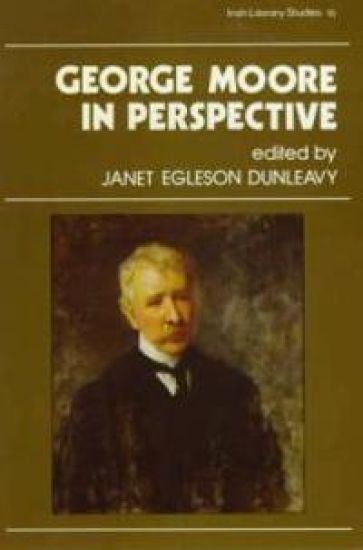
This invigorating volume explores the literary worlds inhabited by the pioneering Irish author George Moore (1852–1933). With an eye to Moore’s innovative embrace of visual art, feminism and literary history, and in the spirit of his feisty resistance to ‘orthodoxy’, it investigates his influences and inventive strategies in novel, short story and memoir. Amongst the names emerging from the disparate spheres of impressionism, literary coteries, the paratextual and the music world are those of Manet, Mallarmé, Wilde, Héloïse, Elgar and Bourdieu, all with Moorian links. Contested depictions of religion and nationalism simmer; France and French influences encompass fin-de-siècle stories and medieval texts; epistolary details evidence vital parental support; contemporary authors write back to Moore. These voyages of discovery enter the fields of feminist scholarship and the New Woman, life writing and letters, fin-de-siècle aesthetics, intersections between art, music and literature, and literary transitions from Victorian to Modern. Valuably, the authors suggest numerous opportunities for additional research in these areas, as well as within Moore studies. This collection, with contributions from an international set of established and new scholars, delivers fresh and original findings as it builds on the substantial and ever-growing corpus of Moore studies.
This invigorating volume explores the literary worlds inhabited by the pioneering Irish author George Moore (1852–1933). With an eye to Moore’s innovative embrace of visual art, feminism and literary history, and in the spirit of his feisty resistance to ‘orthodoxy’, it investigates his influences and inventive strategies in novel, short story and memoir. Amongst the names emerging from the disparate spheres of impressionism, literary coteries, the paratextual and the music world are those of Manet, Mallarmé, Wilde, Héloïse, Elgar and Bourdieu, all with Moorian links. Contested depictions of religion and nationalism simmer; France and French influences encompass fin-de-siècle stories and medieval texts; epistolary details evidence vital parental support; contemporary authors write back to Moore. These voyages of discovery enter the fields of feminist scholarship and the New Woman, life writing and letters, fin-de-siècle aesthetics, intersections between art, music and literature, and literary transitions from Victorian to Modern. Valuably, the authors suggest numerous opportunities for additional research in these areas, as well as within Moore studies. This collection, with contributions from an international set of established and new scholars, delivers fresh and original findings as it builds on the substantial and ever-growing corpus of Moore studies.
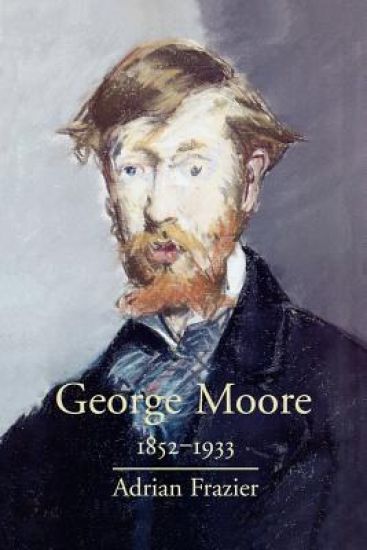
Always at the center of cultural change and excitement, George Moore enjoyed a sixty-year literary career during which he wrote prolifically, befriended artists and authors from Paris to London to Dublin, and rejected marriage but never the company of women. This book—the first documentary biography of Moore since 1936—tells the remarkable story of a high-spirited man and his pathbreaking innovations as a writer. Adrian Frazier has mined letters, memoirs, society journals, writings not previously attributed to Moore, and other archives to reveal new information about Moore’s early life, his ostensibly promiscuous bachelor life, and his complex career as an author. The book provides an engaging account of Moore’s pursuit of his passions, from his early, failed attempt to become an artist in Paris in the 1870s through his long career as an author. Moore wrote plays, poetry, criticism, short stories, and sixteen novels, among them his best-known Esther Waters. His experiments in style ranged from the naturalistic A Mummer’s Wife to the stream-of-consciousness prose of The Lake to the seamless, fluent narratives of his late manner—the comic Hail and Farewell and the epic The Brook Kerith. Frazier records the relationships between Moore and his well-known friends—Yeats, Joyce, Archer, Shaw, Frank Harris, Sickert, Whistler, and many others—and with the many women in his life, including his greatest love, Lady Cunard. At the end of his life, Moore sought without success a writer who would candidly tell the story of his life, loves, and art. At last Adrian Frazier has written that story.
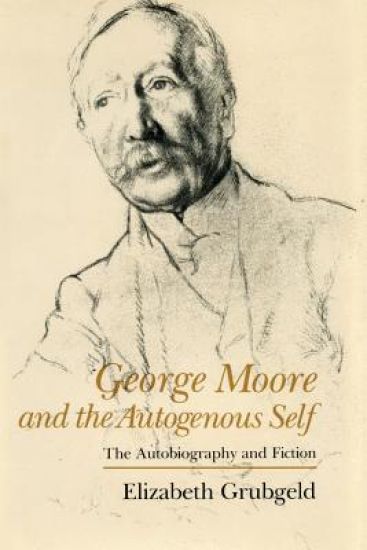
In the midst of an explosion of interest in the field of autobiography, there have developed critical languages and approaches that allow us to read both George Moore's fiction and his fictive autobiographies in new and exciting ways. Elizabeth Grubgeld presents a fresh look at the diverse experiments in fiction and the highly ironic and multi-generic performances Moore put forth as his life story. She focuses on the tension between Moore's fascination with deterministic theories of human behavior and his need to assert a principle of self-creation, his "autogenous self." Moore's work exhibits a profound recognition of the forces of heredity, gender, culture, and history while simultaneously declaring his belief in an autogenous self. In early novels like A Drama in Muslin and Esther Waters, there is a notable conflict between his postulation of the pure, instinctive individual and the emphasis upon the shaping power of heredity and economics inherent in the traditions of social realism that he adopts.In The Untilled Field, The Lake, and later works, Moore perfects a narrative technique that, in highlighting the power of subjective memory, allows his characters to work out a new relation with the forces of history. Grubgeld's discussion of satire, caricature, and parody as autobiographical forms will contribute greatly to an understanding of how Moore viewed the relations between the self and the surrounding world. This study, which also incorporates a theoretical discussion of letters as autobiography, will be of interest to specialists in Irish studies, late Victorian and modern British literature, gender studies, and autobiography.
Letters From George Moore To Ed Dujardin, 1886-1922 is a collection of letters written by the renowned Irish author George Moore to his friend and fellow writer, Ed Dujardin. The letters span a period of 36 years, from 1886 to 1922, and provide a fascinating insight into the life and work of Moore during this time.Moore was a prolific writer and a key figure in the literary world of the late 19th and early 20th centuries. In these letters, he discusses a wide range of topics, from his own writing and literary ambitions to his travels and personal relationships. He also offers his opinions on other writers and literary movements of the time, including the Symbolist and Decadent movements.The letters are written in a lively and engaging style, and offer a unique perspective on the literary and cultural world of the time. They also provide a glimpse into the personal life of Moore, including his relationships with women and his struggles with ill health.Overall, Letters From George Moore To Ed Dujardin, 1886-1922 is an important and fascinating collection of letters that will be of interest to anyone interested in the life and work of George Moore, as well as to scholars of the literary and cultural history of the late 19th and early 20th centuries.This scarce antiquarian book is a facsimile reprint of the old original and may contain some imperfections such as library marks and notations. Because we believe this work is culturally important, we have made it available as part of our commitment for protecting, preserving, and promoting the world's literature in affordable, high quality, modern editions, that are true to their original work.
The engaging figure of Irish writer George Moore (1852-1933) comes to life in this collection of essays on his works and influences. So often considered as dangerously controversial in his lifetime, his literary output can now be appreciated as groundbreaking, artistically sophisticated and particularly significant for the innovations he introduced into English literature. In this volume, international Moore scholars venture into previously unexplored literary, historical and psychological territory as they shine new light on Moore’s diagnoses, and on his presentation of human quirks. In turn, and in a Moorian spirit, the author is critically examined for his alleged feminist credentials, his spiritual understanding, his cultural insights and his literary experimentation. The analytical focus is sharp; the presence of Joyce, Yeats, Wilde, Zola and Dujardin is strong; and the surrounding atmosphere of Revival Ireland is unmistakable, albeit with a French colouring. This is an entertaining and enlightening compilation that will engage the reader and provide much relevant material for specialists across a variety of fields.
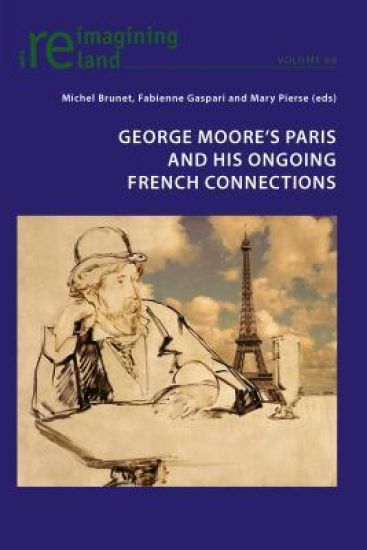
The formative influences of Paris and France on the Anglo-Irish writer George Moore (1852–1933) cannot be underestimated. While the years Moore spent in Paris in the 1870s were seminal for his artistic awakening and development, the associations and friendships he formed in French literary and artistic circles exerted an enduring influence on his creative career. Moore maintained close ties with France throughout his life and his numerous contacts extended to social, musical and cultural spheres. He introduced the Impressionists to a British audience and his importation of French literary innovation into the English novel was remarkable. Exploring Moore’s early years in Paris and his ongoing engagement with the experimental modernity of his French models, these essays offer new insights into this cosmopolitan writer’s work. Moore emerges as a turn-of-the-century European artist whose eclectic writings reflect the complex evolution of literature from Naturalism to Modernism through Symbolism and Decadence.