

Kirjahaku
Etsi kirjoja tekijän nimen, kirjan nimen tai ISBN:n perusteella.
1000 tulosta hakusanalla George W. Martin

Gebäudeintegrierte Solartechnik
Roland Krippner; Gerd Becker; Martin Maslaton; Christoph Maurer; Tilman E. Kuhn; Beat Kämpfen; Georg W. Reinberg; Hinrich Reyelts; Ralf Haselhuhn; Claudia Hemmerle; Thomas Seltmann
Edition Detail
2016
sidottu
Trotz sinkender Einspeisevergütungen sind erneuerbare Energien im Gebäudebereich noch immer auf dem Vormarsch. Dazu tragen die immer kostengünstigeren Photovoltaikanlagen und Batteriespeicher bei. Aber auch der Gesetzgeber hegt große Pläne: Bis 2050 soll der deutsche Gebäudebestand nahezu klimaneutral sein.Die Technologien für eine gelingende, dezentrale Energiewende sind heute weitgehend vorhanden. Doch wie setzt man sie sinnvoll ein? Und wie lassen sich die gestalterischen Herausforderungen bei der Integration von Photovoltaik und Solarthermie in Gebäude lösen? Dieses Buch gibt Antworten. Es wurde von einem interdisziplinären Team aus Architekten, Bauingenieuren, Physikern und Umweltingenieuren verfasst und behandelt alles Wissenswerte zu den verfügbaren Solarenergiesystemen, deren Normierung und Zulassung, der Einbindung in die Haustechnik sowie zur Integration in die Gebäudehülle. Unterstützt wurde die Buchpublikation durch den Solarenergieförderverein Bayern e.V.
Voter Sophistication and Coalition Politics
Lanny W. Martin; Georg Vanberg
Oxford University Press
2025
sidottu
When negotiating the formation of governments in multiparty democracies, do party leaders consistently consider the policy preferences of their voters? Voter Sophistication and Coalition Politics introduces a theoretical framework that places voters-particularly their ideological sophistication-at the heart of coalition bargaining. It challenges existing approaches that portray elite bargaining as isolated from voter reactions, demonstrates that parties anticipate and respond to potential voter backlash during government formation, and traces the impact of these anticipations on government participation, the choice of coalition partners, and expected policy consequences. The book develops a unified empirical model of coalition negotiations, bridging two traditionally separate approaches in the study of government formation: one focused on coalition attributes and the other on party characteristics. This innovative framework sheds light on how party leaders navigate the dual pressures of coalition dynamics and voter expectations. By combining institutional analysis with behavioral insights, it provides new tools to explore the relationship between legislative bargaining, elite strategies, voter behavior, and democratic responsiveness. Based on an analysis of more than a thousand party bargaining decisions across 16 parliamentary democracies over the past 50 years, the book reveals that voter ideological sophistication profoundly shapes coalition outcomes. By offering a new perspective on the alignment-or misalignment-between coalition negotiations and voter expectations, this book deepens our understanding of democratic representation in multiparty systems. Comparative Politics is a series for researchers, teachers, and students of political science that deals with contemporary government and politics. Global in scope, books in the series are characterized by a stress on comparative analysis and strong methodological rigour. The series is published in association with the European Consortium for Political Research. For more information visit: www.ecprnet.eu . The series is edited by Nicole Bolleyer, Chair of Comparative Political Science, Geschwister Scholl Institut, LMU Munich and Jonathan Slapin, Professor of Political Institutions and European Politics, Department of Political Science, University of Zurich.
Coalition governments are the norm in most of the world's parliamentary democracies. Because these governments are comprised of multiple political parties, they are subject to tensions that are largely absent under single-party government. The pressures of electoral competition and the necessity of delegating substantial authority to ministers affiliated with specific parties threaten the compromise agreements that are at the heart of coalition governance. The central argument of this book is that strong legislative institutions play a critical role in allowing parties to deal with these tensions and to enforce coalition bargains. Based on an analysis of roughly 1,300 government bills across five democracies (Denmark, France, Germany, Ireland, and the Netherlands), the book paints a detailed picture of the treatment of government legislation in contemporary parliaments. Two central contributions emerge. First, the book forces a reconsideration of the common perception that legislatures are largely irrelevant institutions in European democracies. The data presented here make a compelling case that parliaments that feature strong committee systems play an influential role in shaping policy. Second, the book contributes to the field of coalition governance. While scholars have developed detailed accounts of the birth and death of coalitions, much less is known about the manner in which coalitions govern between these bookend events. Parliaments and Coalitions contributes to a richer understanding of how multiparty governments make policy. Comparative Politics is a series for students, teachers, and researchers of political science that deals with contemporary government and politics. Global in scope, books in the series are characterised by a stress on comparative analysis and strong methodological rigour. The series is published in association with the European Consortium for Political Research. For more information visit: www.essex.ac.uk/ecpr
Coalition governments are the norm in most of the world's parliamentary democracies. Because these governments are comprised of multiple political parties, they are subject to tensions that are largely absent under single-party government. The pressures of electoral competition and the necessity of delegating substantial authority to ministers affiliated with specific parties threaten the compromise agreements that are at the heart of coalition governance. The central argument of this book is that strong legislative institutions play a critical role in allowing parties to deal with these tensions and to enforce coalition bargains. Based on an analysis of roughly 1,300 government bills across five democracies (Denmark, France, Germany, Ireland, and the Netherlands), the book paints a detailed picture of the treatment of government legislation in contemporary parliaments. Two central contributions emerge. First, the book forces a reconsideration of the common perception that legislatures are largely irrelevant institutions in European democracies. The data presented here make a compelling case that parliaments that feature strong committee systems play an influential role in shaping policy. Second, the book contributes to the field of coalition governance. While scholars have developed detailed accounts of the birth and death of coalitions, much less is known about the manner in which coalitions govern between these bookend events. Parliaments and Coalitions contributes to a richer understanding of how multiparty governments make policy. Comparative Politics is a series for students, teachers, and researchers of political science that deals with contemporary government and politics. Global in scope, books in the series are characterised by a stress on comparative analysis and strong methodological rigour. The series is published in association with the European Consortium for Political Research. For more information visit: www.ecprnet.eu.

George W. Bush remains a highly controversial figure, a man for whom millions of Americans have very strong feelings. Dan McAdams' book offers an astute psychological portrait of Bush, one of the first biographies to appear since he left office as well as the first to draw systematically from personality science to analyze his life. McAdams, an international leader in personality psychology and the narrative study of lives, focuses on several key events in Bush's life, such as the death of his sister at age 7, his commitment to sobriety on his 40th birthday, and his reaction to the terrorist attacks of September 11, and his decision to invade Iraq. He sheds light on Bush's life goals, the story he constructed to make sense of his life, and the psychological dynamics that account for his behavior. Although there are many popular biographies of George W. Bush, McAdams' is the first true psychological analysis based on established theories and the latest research. Short and focused, written in an engaging style, this book offers a truly penetrating look at our forty-third president.


George W. Brackenridge (1832–1920) was a paradox to his fellow Texans. A Republican in a solidly Democratic state, a financier in a cattleman's country, a Prohibitionist in the goodtime town of San Antonio, he devoted his energies to making a fortune only to give it to philanthropic causes. Indiana born, Brackenridge came to Texas in 1853, but left the state during the Civil War to serve as U.S. Treasury agent and engage in the wartime cotton trade. Later he settled in San Antonio, where he founded a bank and invested in railroads, utilities, and other enterprises. Some of Brackenridge's contemporaries never forgave him for his Civil War career, but others knew him as a public-spirited citizen, educator, and advocate of civil rights. He cared little for what others thought of him. Yet, he confided once in a rare interview that his fondest ambition was to leave the world a better place for his having lived in it. To this end, he gave generously of himself and his means. His best-known benefaction is Brackenridge Park, which he gave to the city of San Antonio, but most of his contributions were in the field of education. As regent of the University of Texas for more than twenty-five years, he gave the institution its first dormitory, a large tract of land in Austin, and innumerable smaller gifts. He also offered to underwrite the expenses of the University when Governor James E. Ferguson vetoed the appropriation bill for 1917–1919. Other educational institutions to benefit from his largess were the public schools of San Antonio, a Negro college in Seguin, and the University of Texas Medical Branch at Galveston. In addition, he assisted individual students, especially women, through scholarships and loans. Believing that the betterment of humanity lay in education, Brackenridge arranged for the continuation of his philanthropies. By his will he created the George W. Brackenridge Foundation, the first of its kind in Texas and one of the first in the United States. Marilyn McAdams Sibley's study of George W. Brackenridge is the first biography of an important and, for his time, unusual Texan. It presents new material concerning the Mexican cotton trade during the Civil War, on the beginnings of banking in Texas, and on higher education in Texas.

Eminent jurists, professional legal organizations, and human rights monitors in this country and around the world have declared that President George W. Bush may be prosecuted as a war criminal when he leaves office for his overt and systematic violations of such international law as the Geneva and Hague Conventions and such US law as the War Crimes Act, the Anti-Torture Act, and federal assault laws. George W. Bush, War Criminal? identifies and documents 269 specific war crimes under US and international law for which President Bush, senior officials and staff in his administration, and military officers under his command are liable to be prosecuted. Haas divides the 269 war crimes of the Bush administration into four classes: 6 war crimes committed in launching a war of aggression; 36 war crimes committed in the conduct of war; 175 war crimes committed in the treatment of prisoners; and 52 war crimes committed in postwar occupations. For each of the 269 war crimes of the Bush administration, Professor Haas gives chapter and verse in precise but non-technical language, including the specific acts deemed to be war crimes, the names of the officials deemed to be war criminals, and the exact language of the international or domestic laws violated by those officials. The author proceeds to consider the various US, international, and foreign tribunals in which the war crimes of Bush administration defendants may be tried under applicable bodies of law. He evaluates the real-world practicability of bringing cases against Bush and Bush officials in each of the possible venues. Finally, he weighs the legal, political, and humanitarian pros and cons of actually bringing Bush and Bush officials to trial for war crimes.

This biography examines the life of George W. Bush—one of the most controversial U.S. presidents in recent history—before, during, and after his two terms in the White House. George W. Bush served as president of the United States through some of the most pivotal and memorable events in our nation's history, including the terrorist attacks of September 11, 2001; Hurricane Katrina; and the devastating economic downturn at the end of his second term. It is still too soon to decide how history will judge his administration. Despite suffering much ridicule and scorn for his linguistic gaffes, which became known as "Bushisms," the fact remains that this Yale graduate eventually rose to become a two-term Texas governor and a two-term U.S. president. George W. Bush: A Biography provides a comprehensive view of Bush's life, beginning with his childhood and education, then examining his life as a businessman; his governorships of Texas; his tumultuous, two-term presidency of the United States; and his life after leaving the White House.

George W Bush Administration Propaganda for an Invasion of Iraq
Larry Hartenian
Routledge
2021
sidottu
Hartenian’s history of George W Bush propaganda for an invasion of Iraq returns the administration’s approach to its conceptual origins. Hartenian places "evidence" in the center of his analysis, showing that Rumsfeld’s "the absence of evidence is not evidence of absence" meant that no evidence was necessary to justify an invasion. The 9/11 attacks, indeed, "changed everything" for the Bush administration and in its aftermath the time for regime change in Iraq had simply come. With no good evidence to support its fears, the administration was certain of a post-9/11-conceived Iraq–al Qaeda "nexus," just as with no evidence except the "absence of evidence" it was certain of Iraqi mastery of "denial and deception" that hid "Saddam’s" "evil" activities. Resting on Cheney’s "one percent doctrine," administration "certainty" of the threat from Iraq required a US invasion.The policy offices of Douglas Feith at the Pentagon, with the help of George Tenet at CIA, would generate a case of such fright and enormity—the "mushroom cloud"—that required administration action. Manipulating intelligence and ignoring the growing body of evidence undermining its case, the Bush administration invaded Iraq to bring about "regime change."

George W Bush Administration Propaganda for an Invasion of Iraq
Larry Hartenian
TAYLOR FRANCIS LTD
2023
nidottu
Hartenian’s history of George W Bush propaganda for an invasion of Iraq returns the administration’s approach to its conceptual origins. Hartenian places "evidence" in the center of his analysis, showing that Rumsfeld’s "the absence of evidence is not evidence of absence" meant that no evidence was necessary to justify an invasion. The 9/11 attacks, indeed, "changed everything" for the Bush administration and in its aftermath the time for regime change in Iraq had simply come. With no good evidence to support its fears, the administration was certain of a post-9/11-conceived Iraq–al Qaeda "nexus," just as with no evidence except the "absence of evidence" it was certain of Iraqi mastery of "denial and deception" that hid "Saddam’s" "evil" activities. Resting on Cheney’s "one percent doctrine," administration "certainty" of the threat from Iraq required a US invasion.The policy offices of Douglas Feith at the Pentagon, with the help of George Tenet at CIA, would generate a case of such fright and enormity—the "mushroom cloud"—that required administration action. Manipulating intelligence and ignoring the growing body of evidence undermining its case, the Bush administration invaded Iraq to bring about "regime change."


Help your little one dream big with a Little Golden Book biography all about President George W. Bush The perfect introduction to nonfiction for preschoolers This Little Golden Book about George W. Bush--the forty-third president of the United States and a talented artist--is an inspiring read-aloud for young readers. Look for more Little Golden Book biographies: - John McCain - My LGB About the White House - My LGB About Johnny Appleseed


Best known for leading the construction of the Panama Canal, George W. Goethals (1858–1928) also played a key role in the decades-long reform that transformed the American military from a frontier constabulary to the expeditionary force of an ascendant world power. George W. Goethals and the Army is at once the first full account of Goethals's life and military career in ninety years and an in-depth analysis of the process that defined his generation's military service—the evolution of the US Army during the late nineteenth and early twentieth centuries.George W. Goethals was a lieutenant and a captain during the post-Reconstruction years of debate about reform and the future of the army. He was a major when the most significant reforms were created, and he helped with their implementation. As a major general during World War I, he directed a significant part of the army's adaptation, resolving crises in the mobilization effort caused largely by years of internal resistance to reform. Following Goethals's career and analyzing reform from his unique perspective, military historian Rory McGovern effectively shifts the focus away from the intent and toward the reality of reform—revealing the importance of the interaction between society, institutional structures, and institutional culture in the process. In this analysis, Goethals's experiences, military thought, managerial philosophy, conceptions of professionalism, and attitude about training and development provide a framework for understanding the army's institutional culture and his generation's relative ambivalence about reform.In its portrait of an officer whose career bridged the distance between military generations, George W. Goethals and the Army also offers a compelling and complex interpretation of American military reform during the Gilded Age and Progressive Era—and valuable insight into the larger dynamics of institutional change that are as relevant today as they were a century ago.
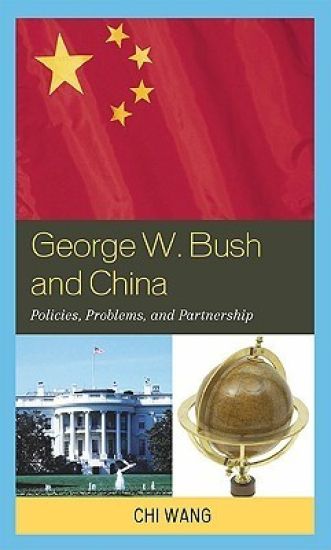
This study analyzes the United States policies regarding China during the administration of President George W. Bush. Chi Wang examines the relationship between the United States and China from its tense origins to its current stability and shows that the China policy of the U.S. is ultimately based on pragmatic national interest that eventually overcomes short-term ideological difficulties or mistakes by inexperienced American administrations. Briefly touching on the China-policy legacy of Presidents George H.W. Bush and Bill Clinton, Wang provides a review of significant developments in U.S.-China policy during President George W. Bush's first term in office. By following with an analysis of the varied agendas of Bush's foreign policy advisors during his second term, readers are able to trace the influence of advisors on the president's China policy. Wang chronicles the reordering of U.S. security priorities after September 11, showing how this prompted Washington to embrace China in a measured partnership and has resulted in the short-term stabilization of U.S.-China relations.

"They misunderestimated me." Or did they? Judge for yourself. Here are over 100 memorable misstatements by our syntactically challenged president, collected, annotated, and introduced by "Slate" magazine's Jacob Weisberg. "I know the human being and fish can coexist peacefully." "Families is where our nation finds hope, where wings take dream." "We'll let our friends be the peacekeepers and the great country called America will be the pacemakers." "It's clearly a budget. It's got a lot of numbers in it." "I know how hard it is for you to put food on your family." "I do know I'm ready for the job [the presidency]. And if not, that's just the way it goes."