Kirjojen hintavertailu. Mukana 11 627 369 kirjaa ja 12 kauppaa.

Kirjahaku

Etsi kirjoja tekijän nimen, kirjan nimen tai ISBN:n perusteella.

1000 tulosta hakusanalla George W. May

George W. Brackenridge

George W. Brackenridge

Marilyn Mcadams Sibley

University of Texas Press
1973
nidottu
George W. Brackenridge (1832–1920) was a paradox to his fellow Texans. A Republican in a solidly Democratic state, a financier in a cattleman's country, a Prohibitionist in the goodtime town of San Antonio, he devoted his energies to making a fortune only to give it to philanthropic causes. Indiana born, Brackenridge came to Texas in 1853, but left the state during the Civil War to serve as U.S. Treasury agent and engage in the wartime cotton trade. Later he settled in San Antonio, where he founded a bank and invested in railroads, utilities, and other enterprises. Some of Brackenridge's contemporaries never forgave him for his Civil War career, but others knew him as a public-spirited citizen, educator, and advocate of civil rights. He cared little for what others thought of him. Yet, he confided once in a rare interview that his fondest ambition was to leave the world a better place for his having lived in it. To this end, he gave generously of himself and his means. His best-known benefaction is Brackenridge Park, which he gave to the city of San Antonio, but most of his contributions were in the field of education. As regent of the University of Texas for more than twenty-five years, he gave the institution its first dormitory, a large tract of land in Austin, and innumerable smaller gifts. He also offered to underwrite the expenses of the University when Governor James E. Ferguson vetoed the appropriation bill for 1917–1919. Other educational institutions to benefit from his largess were the public schools of San Antonio, a Negro college in Seguin, and the University of Texas Medical Branch at Galveston. In addition, he assisted individual students, especially women, through scholarships and loans. Believing that the betterment of humanity lay in education, Brackenridge arranged for the continuation of his philanthropies. By his will he created the George W. Brackenridge Foundation, the first of its kind in Texas and one of the first in the United States. Marilyn McAdams Sibley's study of George W. Brackenridge is the first biography of an important and, for his time, unusual Texan. It presents new material concerning the Mexican cotton trade during the Civil War, on the beginnings of banking in Texas, and on higher education in Texas.
George W. Bush, War Criminal?

George W. Bush, War Criminal?

Michael Haas

Praeger Publishers Inc
2008
sidottu
Eminent jurists, professional legal organizations, and human rights monitors in this country and around the world have declared that President George W. Bush may be prosecuted as a war criminal when he leaves office for his overt and systematic violations of such international law as the Geneva and Hague Conventions and such US law as the War Crimes Act, the Anti-Torture Act, and federal assault laws. George W. Bush, War Criminal? identifies and documents 269 specific war crimes under US and international law for which President Bush, senior officials and staff in his administration, and military officers under his command are liable to be prosecuted. Haas divides the 269 war crimes of the Bush administration into four classes: 6 war crimes committed in launching a war of aggression; 36 war crimes committed in the conduct of war; 175 war crimes committed in the treatment of prisoners; and 52 war crimes committed in postwar occupations. For each of the 269 war crimes of the Bush administration, Professor Haas gives chapter and verse in precise but non-technical language, including the specific acts deemed to be war crimes, the names of the officials deemed to be war criminals, and the exact language of the international or domestic laws violated by those officials. The author proceeds to consider the various US, international, and foreign tribunals in which the war crimes of Bush administration defendants may be tried under applicable bodies of law. He evaluates the real-world practicability of bringing cases against Bush and Bush officials in each of the possible venues. Finally, he weighs the legal, political, and humanitarian pros and cons of actually bringing Bush and Bush officials to trial for war crimes.
George W. Bush

George W. Bush

Clarke Rountree

Greenwood Press
2010
sidottu
This biography examines the life of George W. Bush—one of the most controversial U.S. presidents in recent history—before, during, and after his two terms in the White House. George W. Bush served as president of the United States through some of the most pivotal and memorable events in our nation's history, including the terrorist attacks of September 11, 2001; Hurricane Katrina; and the devastating economic downturn at the end of his second term. It is still too soon to decide how history will judge his administration. Despite suffering much ridicule and scorn for his linguistic gaffes, which became known as "Bushisms," the fact remains that this Yale graduate eventually rose to become a two-term Texas governor and a two-term U.S. president. George W. Bush: A Biography provides a comprehensive view of Bush's life, beginning with his childhood and education, then examining his life as a businessman; his governorships of Texas; his tumultuous, two-term presidency of the United States; and his life after leaving the White House.
George W. Bush's Foreign Policies

George W. Bush's Foreign Policies

Donette Murray; David Brown; Martin A. Smith

Routledge
2021
nidottu
This book offers a fresh assessment of George W. Bush’s foreign policies.It is not designed to offer an evaluation of the totality of George W. Bush’s foreign policy. Instead, the analysis will focus on the key aspects of his foreign and security policy record, in each case considering the interplay between principle and pragmatism. The underpinning contention here is that policy formulation and implementation across Bush’s two terms can more usefully be analysed in terms of shades of grey, rather than the black and white hues in which it has often been painted. Thus, in some key policy areas it will be seen that the overall record was more pragmatic and successful than his many critics have been prepared to give him credit for. The president and his advisers were sometimes prepared to alter and amend their policy direction, on occasion significantly. Context and personalities, interpersonal and interagency, both played a role here. Where these came together most visibly – for instance in connection with dual impasses over Iraq and Iran – exigencies on the ground sometimes found expression in personnel changes. In turn, the changing fortunes of Bush’s first term principals presaged policy changes in his second. What emerges from a more detached study of key aspects of the Bush administration – during a complicated and challenging period in the United States’ post-Cold War history, marked by the dramatic emergence of international Islamist terrorism as the dominant international security threat – is a more complex picture than any generalization can ever hope to sustain, regardless of how often it is repeated.This book will be of much interest to students of US foreign policy, international politics and security studies.
George W Bush Administration Propaganda for an Invasion of Iraq
Hartenian’s history of George W Bush propaganda for an invasion of Iraq returns the administration’s approach to its conceptual origins. Hartenian places "evidence" in the center of his analysis, showing that Rumsfeld’s "the absence of evidence is not evidence of absence" meant that no evidence was necessary to justify an invasion. The 9/11 attacks, indeed, "changed everything" for the Bush administration and in its aftermath the time for regime change in Iraq had simply come. With no good evidence to support its fears, the administration was certain of a post-9/11-conceived Iraq–al Qaeda "nexus," just as with no evidence except the "absence of evidence" it was certain of Iraqi mastery of "denial and deception" that hid "Saddam’s" "evil" activities. Resting on Cheney’s "one percent doctrine," administration "certainty" of the threat from Iraq required a US invasion.The policy offices of Douglas Feith at the Pentagon, with the help of George Tenet at CIA, would generate a case of such fright and enormity—the "mushroom cloud"—that required administration action. Manipulating intelligence and ignoring the growing body of evidence undermining its case, the Bush administration invaded Iraq to bring about "regime change."
George W Bush Administration Propaganda for an Invasion of Iraq
Hartenian’s history of George W Bush propaganda for an invasion of Iraq returns the administration’s approach to its conceptual origins. Hartenian places "evidence" in the center of his analysis, showing that Rumsfeld’s "the absence of evidence is not evidence of absence" meant that no evidence was necessary to justify an invasion. The 9/11 attacks, indeed, "changed everything" for the Bush administration and in its aftermath the time for regime change in Iraq had simply come. With no good evidence to support its fears, the administration was certain of a post-9/11-conceived Iraq–al Qaeda "nexus," just as with no evidence except the "absence of evidence" it was certain of Iraqi mastery of "denial and deception" that hid "Saddam’s" "evil" activities. Resting on Cheney’s "one percent doctrine," administration "certainty" of the threat from Iraq required a US invasion.The policy offices of Douglas Feith at the Pentagon, with the help of George Tenet at CIA, would generate a case of such fright and enormity—the "mushroom cloud"—that required administration action. Manipulating intelligence and ignoring the growing body of evidence undermining its case, the Bush administration invaded Iraq to bring about "regime change."
George W. Bush's Foreign Policies

George W. Bush's Foreign Policies

Donette Murray; David Brown; Martin A. Smith

Routledge
2017
sidottu
This book offers a fresh assessment of George W. Bush’s foreign policies.It is not designed to offer an evaluation of the totality of George W. Bush’s foreign policy. Instead, the analysis will focus on the key aspects of his foreign and security policy record, in each case considering the interplay between principle and pragmatism. The underpinning contention here is that policy formulation and implementation across Bush’s two terms can more usefully be analysed in terms of shades of grey, rather than the black and white hues in which it has often been painted. Thus, in some key policy areas it will be seen that the overall record was more pragmatic and successful than his many critics have been prepared to give him credit for. The president and his advisers were sometimes prepared to alter and amend their policy direction, on occasion significantly. Context and personalities, interpersonal and interagency, both played a role here. Where these came together most visibly – for instance in connection with dual impasses over Iraq and Iran – exigencies on the ground sometimes found expression in personnel changes. In turn, the changing fortunes of Bush’s first term principals presaged policy changes in his second. What emerges from a more detached study of key aspects of the Bush administration – during a complicated and challenging period in the United States’ post-Cold War history, marked by the dramatic emergence of international Islamist terrorism as the dominant international security threat – is a more complex picture than any generalization can ever hope to sustain, regardless of how often it is repeated.This book will be of much interest to students of US foreign policy, international politics and security studies.
George W. Bush: A Little Golden Book Biography

George W. Bush: A Little Golden Book Biography

Joanna Keith

RANDOM HOUSE USA INC
2023
sidottu
Help your little one dream big with a Little Golden Book biography all about President George W. Bush The perfect introduction to nonfiction for preschoolers This Little Golden Book about George W. Bush--the forty-third president of the United States and a talented artist--is an inspiring read-aloud for young readers. Look for more Little Golden Book biographies: - John McCain - My LGB About the White House - My LGB About Johnny Appleseed
George W. Goethals and the Army

George W. Goethals and the Army

Rory McGovern

University Press of Kansas
2023
sidottu
Best known for leading the construction of the Panama Canal, George W. Goethals (1858–1928) also played a key role in the decades-long reform that transformed the American military from a frontier constabulary to the expeditionary force of an ascendant world power. George W. Goethals and the Army is at once the first full account of Goethals's life and military career in ninety years and an in-depth analysis of the process that defined his generation's military service—the evolution of the US Army during the late nineteenth and early twentieth centuries.George W. Goethals was a lieutenant and a captain during the post-Reconstruction years of debate about reform and the future of the army. He was a major when the most significant reforms were created, and he helped with their implementation. As a major general during World War I, he directed a significant part of the army's adaptation, resolving crises in the mobilization effort caused largely by years of internal resistance to reform. Following Goethals's career and analyzing reform from his unique perspective, military historian Rory McGovern effectively shifts the focus away from the intent and toward the reality of reform—revealing the importance of the interaction between society, institutional structures, and institutional culture in the process. In this analysis, Goethals's experiences, military thought, managerial philosophy, conceptions of professionalism, and attitude about training and development provide a framework for understanding the army's institutional culture and his generation's relative ambivalence about reform.In its portrait of an officer whose career bridged the distance between military generations, George W. Goethals and the Army also offers a compelling and complex interpretation of American military reform during the Gilded Age and Progressive Era—and valuable insight into the larger dynamics of institutional change that are as relevant today as they were a century ago.
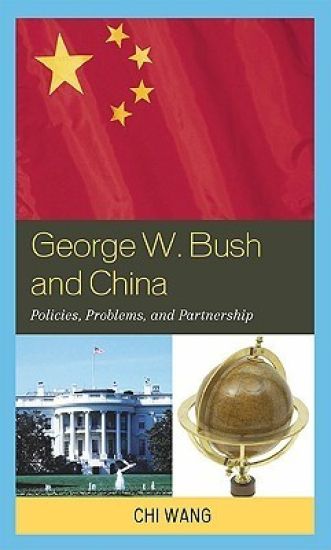
George W. Bush and China

George W. Bush and China

Chi Wang

Lexington Books
2008
sidottu
This study analyzes the United States policies regarding China during the administration of President George W. Bush. Chi Wang examines the relationship between the United States and China from its tense origins to its current stability and shows that the China policy of the U.S. is ultimately based on pragmatic national interest that eventually overcomes short-term ideological difficulties or mistakes by inexperienced American administrations. Briefly touching on the China-policy legacy of Presidents George H.W. Bush and Bill Clinton, Wang provides a review of significant developments in U.S.-China policy during President George W. Bush's first term in office. By following with an analysis of the varied agendas of Bush's foreign policy advisors during his second term, readers are able to trace the influence of advisors on the president's China policy. Wang chronicles the reordering of U.S. security priorities after September 11, showing how this prompted Washington to embrace China in a measured partnership and has resulted in the short-term stabilization of U.S.-China relations.
George W. Bushisms

George W. Bushisms

George W. Bush; Jacob (EDT) Weisberg

Simon Schuster Ltd
2001
pokkari
"They misunderestimated me." Or did they? Judge for yourself. Here are over 100 memorable misstatements by our syntactically challenged president, collected, annotated, and introduced by "Slate" magazine's Jacob Weisberg. "I know the human being and fish can coexist peacefully." "Families is where our nation finds hope, where wings take dream." "We'll let our friends be the peacekeepers and the great country called America will be the pacemakers." "It's clearly a budget. It's got a lot of numbers in it." "I know how hard it is for you to put food on your family." "I do know I'm ready for the job [the presidency]. And if not, that's just the way it goes."
George W. Alexander and Castle Thunder

George W. Alexander and Castle Thunder

Frances H. Casstevens

McFarland Co Inc
2007
pokkari
Captain George W. Alexander was a controversial figure in Richmond during the Civil War, honored as a hero and condemned as a cruel prison superintendent. He was appointed Provost Marshal and put in charge of Castle Thunder in 1862, after escaping imprisonment at Fort McHenry. At his Confederate prison in Richmond, he oversaw prisoners of all types, including Confederates, women, slaves, Federal deserters, and spies. This biography traces Alexander's life from the U.S. Navy voyage with Commodore Perry to Japan, hiding in Canada after Lee's surrender, editorship of Washington DC's Sunday Gazette to his death in 1895. The main body of the text concentrates on Alexander's time at Castle Thunder, but the book also explores the evolution of the prison system and the provost marshal's department, touching on unusual prisoners and escape attempts. Appendix 1 is a partial list of prisoners at Castle Thunder and when, where, and why they were arrested. Appendix 2 is a transcript of the court martial of Private John R. Jones. Appendix 3 lists prisoners sent from Camp Holmes and appendix 4 is a report of Alexander as Assistant Provost Marshall. Appendix 5 is a pamphlet published by the Republican Party National Committee; it struck at the Democratic Party by scorning its "military prison keepers."
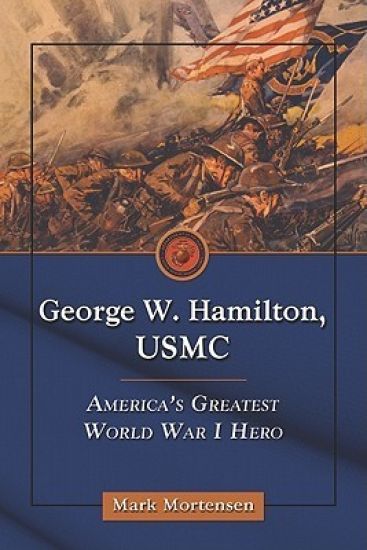
George W. Hamilton, USMC

George W. Hamilton, USMC

Mark Mortensen

McFarland Co Inc
2011
pokkari
In its list of the "Top 10 Badass Marines," Leatherneck magazine declared that Major George W. Hamilton "never asked anyone to do anything he wasn't prepared to do himself...and do better." Indeed, the author of A History of the United States Marine Corps once called Hamilton "the most outstanding Marine Corps hero in World War I." A leader of the first major American assault on June 6, 1918, and the last ranking officer in the American Expeditionary Forces to learn that the war was over, Hamilton remained in the thick of the fighting from start to finish. Although he earned the Distinguished Service Cross, the Navy Cross, the Croix de Guerre, and two Medal of Honor recommendations for his service, Hamilton's fame stalled when he died prematurely in 1922. With this first complete biography, Hamilton takes his rightful place among the first rank of American military heroes.
George W. Bush

George W. Bush

State University of New York Press
2004
pokkari
Essays on the first two years of the Bush presidency. Bringing together presidential scholars, leading voices on the presidency, and former White House aides, this book provides a timely and thorough assessment of George W. Bush at the historic midpoint of his presidency. The book covers Bush's character and leadership style, domestic policy, foreign policy and the War on Terror, and the Bush administration. It concludes with a report card on the Bush presidency, whereby the President, his staff, and his legislative record are graded.
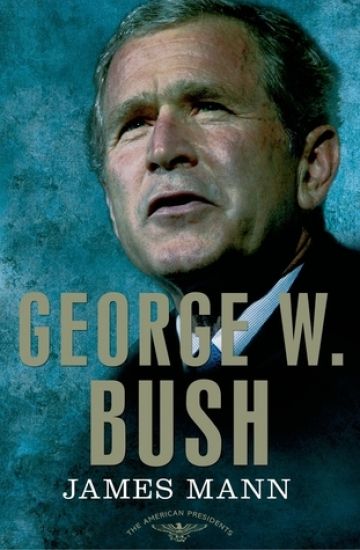
George W Bush

George W Bush

James Mann

Henry Holt Company Inc
2015
sidottu
George W. Bush stirred powerful feelings on both sides of the aisle. Republicans viewed him as a resolute leader who guided America through the worst terrorist attack in its history and retaliated in Afghanistan and Iraq, while Democrats saw him as an overmatched president, subservient to his advisers, who led America into two open-ended and inconclusive wars that sapped the nation's resources and diminished its stature. When Bush left office amid a growing financial crisis, both parties were eager to move on. In this assessment of the nation's forty-third president, the veteran national security journalist James Mann looks beyond the partisan debate to shed light on why George W. Bush made the decisions that shaped his presidency and how the internal debates and fissures within his administration played out in such a charged atmosphere. He shows how and why Bush, despite his political talents, became a polarizing figure in both domestic and foreign affairs, and he examines how Bush's most consequential actions-Iraq, the tax cuts, the war on terror-came about and how they could shape America's course at home and abroad for decades. With a broad perspective and deep knowledge gleaned from years of reporting, Mann's history of this tumultuous presidency points the way to a more complete understanding of George W. Bush and his times.