
Kirjahaku
Etsi kirjoja tekijän nimen, kirjan nimen tai ISBN:n perusteella.
1000 tulosta hakusanalla George Washington

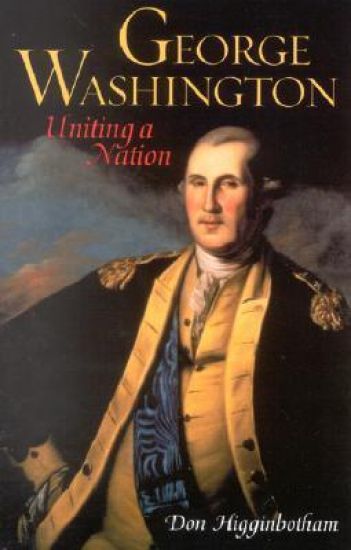
In 1776, thirteen colonies declared their independence from Britain. Although they came together to fight a war, the colonies were far from a unified nation. In George Washington: Uniting a Nation, Don Higginbotham argues that Washington's greatest contribution to American life was creating a sense of American unity. In clear and concise prose, Higginbotham shows that as Revolutionary War commander, proponent of the Constitution, and president, George Washington focused on building national identity and erecting institutions to cement the fledgling nation. The first book on Washington to examine exclusively his role in state formation, George Washington is essential reading for scholars, students, and everyone interested in America's first, and most formative, president.

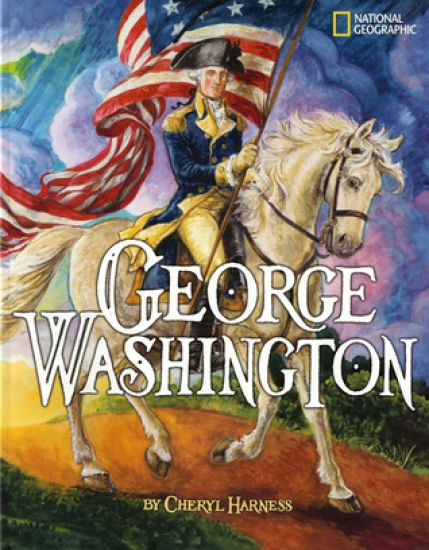
Cheryl Harness uses her wonderfully vibrant art and down-to-earth writing style to "chip away the marble" and present George Washington as more than a monument. We see George the adventurous boy, tromping through the woods with his dog and his hunting rifle; George the courageous military leader fighting alongside his men; George the cunning military strategist, outfoxing the British and forcing their surrender at Yorktown; George the brilliant statesman presiding over the Constitutional Convention; and George the President, wisely protecting our country from enemies foreign and domestic so it could grow strong. But through it all, we see George as happiest living as an experimental farmer at Mount Vernon with his wife, Martha. He could have been Emperor of America, but he chose to spend his last years "looking after things that needed doing" at home. National Geographic supports K-12 educators with ELA Common Core Resources. Visit www.natgeoed.org/commoncore for more information.
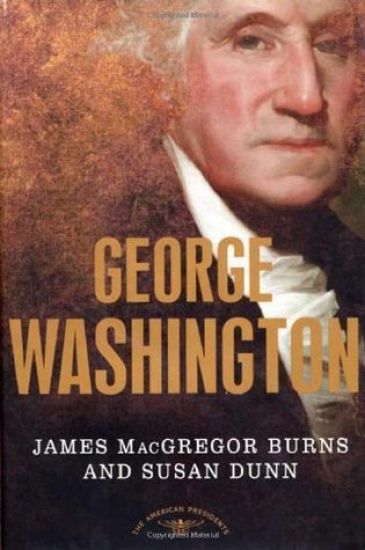
The acclaimed authors of The Three Roosevelts redefine the special qualifications and contributions of America's first president, tracing his accomplishments as a Revolutionary War hero and first citizen of a young republic and explaining how his decisions as president established precedents for the future governing of America. 35,000 first printing.
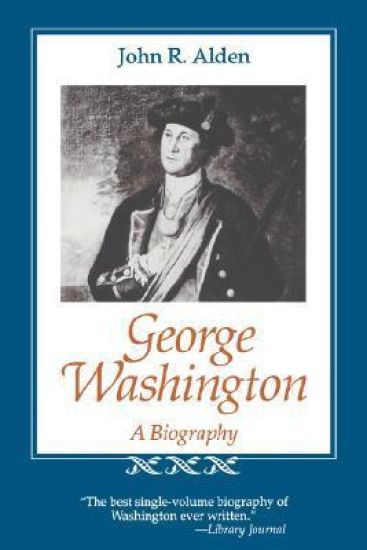
In this highly acclaimed and enduring biography, John R. Alden traces the interwoven histories of George Washington and the nation he helped to create, defend, and guide toward the future. Alden revisits the major events of Washington's personal and professional life, including his boyhood in rural Virginia, his early careers as a surveyor and then a soldier in the French and Indian War, and his staid but lasting marriage. The core of the biography concerns Washington's leadership roles, his assumption of the post of commander in chief of the Continental Army, his part in the Constitutional Convention, and his presidency. As Alden reveals, Washington's greatness lay in his total devotion to the cause of the American nation and in his wisdom as a leader.

The Papers of George Washington Journal of the Proceedings of the President, 1793-97
George Washington
University of Virginia Press
1981
sidottu
The Papers of George Washington v.3; June-Sept, 1789;June-Sept, 1789
George Washington
University of Virginia Press
1989
nidottu
Volume three of the Presidential Series continues the fourth chronological series of ""The Papers of George Washington"". The Presidential Series when complete, will aim to cover the eight precedent-setting years of Washington's presidency and his brief retirement at Mount Vernon until his death in 1799. These volumes deal with the public papers either written by Washington or presented to him during both of his administrations. Among the documents are Washington's messages to Congress, addresses to him from public office and documents concerned with diplomatic and Indian affairs as well as Washington's private papers which include family letters, farm reports, political letters from friends and acquaintances, and documents relating to the administration of the Mount Vernon plantation. Volume three covers most of the summer of 1789 and focuses primarily on the problems facing the new administration. Because of the president's serious illness during this period, a larger proportion of the documents than previously are letters and papers sent to Washington, including massive reports from the Board of Treasury describing the financial status of the new nation, detailed descriptions of Indian and military affairs from Henry Knox, and a plethora of applications for public office. The letters to Washington come from a cross section of Americans and present a resource on such diverse topics as foreign affairs, overseas trade and public attitudes toward the new government. Washington in these months was establishing the great departments of the federal government, and he devoted a considerable amount of his time to appointments and to the staffing of the new civil service.
The Papers of George Washington v.7; Colonial Series;Jan.1761-Dec.1767
George Washington
University of Virginia Press
1990
sidottu
The ten-volume Colonial Series, covering the years 1748-1775, takes the young Washington through his command of the Virginia Regiment during the French and Indian War and then focuses on his political and business activities as a Virginia planter during the fifteen years before the American Revolution.
The Papers of George Washington v.4; Revolutionary War Series;Apr.-June 1776
George Washington
University of Virginia Press
2015
sidottu
Volume Four of the ""Revolutionary War Series"" completes the documentary record of Washington's first year as commander in chief of the Continental army. It opens with this final preparations to leave Cambridge following the successful siege of Boston and concludes with news that General William Howe's British army was soon to arrive at New York, an event which would mark the beginning of the New York campaign. In the interim between campaigns, Washington established his headquarters as New York and began wrestling with the perplexing problems of defending the strategically important corridor between New York and Canada formed by the Hudson River and Lake Champlain. In addition to Washington's activities as commander in chief of the Continental army, the volume includes documents and notes concerning the medal that Congress awarded him for the liberation of Boston, Washington's efforts to terminate his long and successful administration of the Custis estate, and details of his travels from Cambridge to New York and between New York and Philadelphia. As in earlier volumes of the ""Revolutionary War Series"", Washington's writings show him to be unwavering in his advocacy of American independence and in his commitment to the subordination of the military to civil authority.
The Papers of George Washington Confederation Series, v.1: January-July 1784
George Washington
University of Virginia Press
1992
sidottu
This is part of a series which begins on 1 January 1784 with the hero of the American Revolution back at Mount Vernon under his own ""fig tree and vine"", and ends in September 1788 on the eve of his return to public life as president under the new Constitution. The Confederation Series is composed almost entirely of personal letters and includes very few official documents. Documents printed in Volume 1 reflect Washington's main concerns during the first months of peace. Many letters related directly to his resumption of the management not only of his house and farms at Mount Vernon, as well as of his tenanted land in Frederick and Berkeley counties and in Pennsylvania, but also of his vast holdings on the banks of the Great Kanawha and Ohio. Other letters deal with such things as the settlement of his military accounts, his activities as both president and determined reformer of the Society of the Cincinnati, and his preliminary notions about making the Potomac the connecting link between the East and the transmontane West.
The Papers of George Washington Confederation Series, v.2: July 1784-May 1785
George Washington
University of Virginia Press
1992
sidottu
This is part of a series which begins on 1 January 1784 with the hero of the American Revolution back at Mount Vernon under his own ""fig tree and vine"", and ends in September 1788 on the eve of his return to public life as president under the new Constitution. The Confederation Series is composed almost entirely of personal letters and includes very few official documents. Volume 2 documents Washington's emergence as the extraordinarily active leader of the move to open the upper reaches of the Potomac to navigation and to use it to tie the fast-settling West to the seaboard states. Besides documents relating to Washington's presidency of the Potomac River Company and to the routine managment of his private affairs, there are letters dealing with such things as the famous Spanish jacks, the plight of both Patrick Henry and Nathanael Greene, histories by Jeremy Belknap and William Gordon, Lafayette's visit, William Byrd's letters, and David Humphrey's poetry.
The Papers of George Washington v.8; Colonial Series;June 1767-December 1771
George Washington
University of Virginia Press
1993
sidottu
In the late 1760s and early 1770s, George Washington more and more was drawn from affairs of home and hearth by involvement in colonial resistance to British policy and by the lure of western lands. This correspondence documents the evolution of Washington's ideas about economic and political relationships within the empire, and helps to explain how he came to hold his particular vision of the West, both things that were to figure largely in his view of the new nation that he helped to create. Most of the correspondence from these four years, however, has to do with matters both more personal and more local: the acquiring of new farms to enlarge the plantation of Mount Vernon, the management of the complex affairs within the plantation and the sale of its products, the construction of a house in Alexandria, a mill on Dogue Run, and a new church at Pohick, moving Mary Washington into Fredericksburg, arranging for the schooling of John Parke Custis, coping with the Colvill estate's complexities, Mrs Savage's mistreatment, John Posey's fecklessness, Benjamin Moore's bankruptcy, and with the revival of the Dunbar suit, and taking the lead in a movement to improve navigation of the Potomac. The two final volumes in the Colonial Series will trace the emergence of Washington as a revolutionary leader and a major figure in western expansion.
The Papers of George Washington Presidential Series, v.4;Presidential Series, v.4
George Washington
University of Virginia Press
1993
sidottu
Volume 4 of the ""Presidential Series"" continues the fourth chronological series of ""The Papers of George Washington"". The ""Presidential Series"", when complete, will cover the eight precedent-setting years of Washington's presidency and his brief retirement at Mount Vernon until his death in 1799. These volumes deal with the public papers either written by Washington or presented to him during both of his administrations. Among the documents are Washington's messages to Congress, addresses to him from public and private bodies, applications for public office, and documents concerned with diplomatic and Indian affairs as well as Washington's private papers, which include family letters, farm reports, political letters from friends and acquaintances, and documents relating to the administration of Mount Vernon plantation. Volume 4 covers the fall and early winter of 1789-90 and focuses on the problems facing the new administration. Many documents in this volume deal with the difficulties Washington encountered in his attempt to staff the federal judiciary and his fears that failure to attract viable candidates for the Supreme Court and the federal courts would damage the reputation of the new government. There is extensive correspondence dealing with the administration's unsuccessful attempt to negotiate a treaty with the Creek chief Alexander McGillivray and with the growing threat from Indian tribes in the Northwest. Applications for office continued to pour in, often illustrating the private difficulties and public aspirations of the Revolutionary generation. Letters to Washington come from a cross section of Americans and foreign dignitaries and present a rich resource on such diverse topics as foreign affairs, overseas trade and public attitudes toward the new government. In October 1789, Washington undertook a trip through the New England states to attract support for his administration. His triumphal journey is richly documented by the numerous letters of private and public support. Private letters deal with topics ranging from his attempts to furnish his new greenhouse at Mount Vernon with exotic plants and his acquisition of mares to stock the plantation's paddocks to the settlement of the financial affairs of his stepson's estate and his gift of a bit of chintz to the young daughters of a Connecticut innkeeper.
The Papers of George Washington v.5; Revolutionary War Series;June-August 1776
George Washington
University of Virginia Press
1993
sidottu
Covers the preliminary phase of the New York campaign, the period when the stage was set for Washington's greatest challenge yet as commander-in-chief of the Continental army. The importance of Washington's inseparable roles as military commander and political leader is demonstrated.
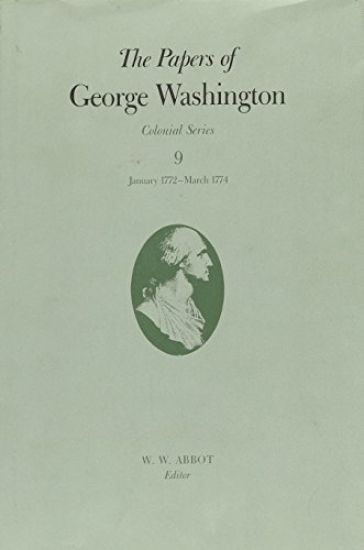
The Papers of George Washington v.9; Colonial Series;January 1772-March 1774
George Washington
University of Virginia Press
1994
sidottu
In the two-year span covered by this volume, Washington continues to be concerned with personal and local matters - the expansion of his Mount Vernon acreage, the development of the flour and fishing industries there, and his promotion of schemes for the navigation of the Potomac River.