
Kirjahaku
Etsi kirjoja tekijän nimen, kirjan nimen tai ISBN:n perusteella.
1000 tulosta hakusanalla Georges FELDIS


Vihdoinkin joidenkin arvostelijoitten Alexandre Dumas vanhemman parhaana pitämän kirjan voi saada myös suomenkielisenä.Dumas kertoo Napoleonin ajan loppuvaiheeseen ajoittuvan nuoren miehen jännittävän kasvutarinan seikkailuineen romantiikalla höystettynä.Tarina kertoo Ranskan siirtomaahan syntyneestä mulatista, hänen elämästään lapsena Ranskan alaisena olleella Ile de Francella keskellä Ranskan ja Englannin valtataisteluja, kasvuvuosista Pariisissa ja paluusta Englannin valtaan siirtyneelle kotisaarelle, uudelta nimeltään Mauritius.Kirja on ainoa, jossa Dumas puhuu rasismista, joskin osin ristiriitaisesti. Dumas oli itse isänäitinsä puolelta musta, joten mukana lienee myös hänen omia kokemuksiaan.
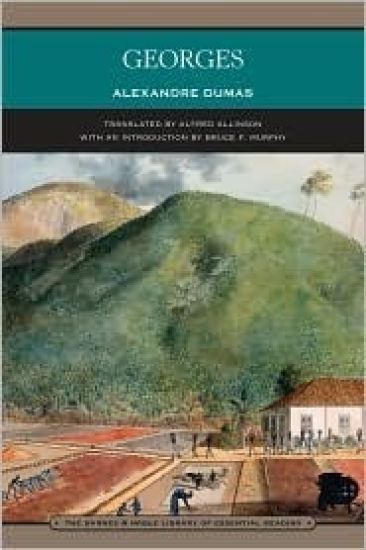
Swashbuckling adventure ensues in Georges, a riveting novel from the same author that wrote The Three Musketeers. In Georges,Alexandre Dumas pulls out all the stops for this story of passion, identity, and racism.A sensitive boy of mixed race, Georges Munier moves within the highest ranks of social circles in France and England before returning to the Indian Ocean island of Mauritius. There he falls in love with Sara. The only problem is: she’s engaged to the son of the powerful plantation owner, Monsier de Malmédie. What follows is a story of a slave rebellion, duels, and battles at sea.
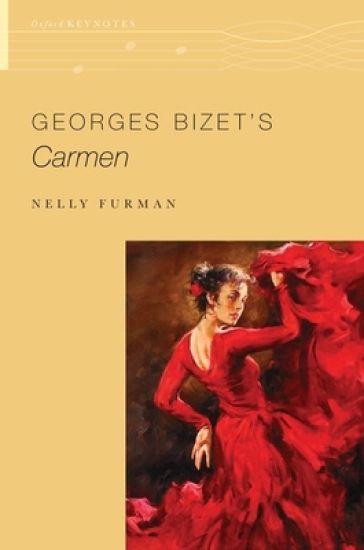
The popularity of Carmen endures across generations and continents, with one of the most frequently performed and instantly recognizable operatic scores of all time and a libretto derived from Prosper Mérimée's novella of the same name, written 30 years prior to the opera's 1875 debut. In Georges Bizet's Carmen—the latest volume in the Oxford Keynotes series—author Nelly Furman explores the evolution of Carmen's story and its meaning, illuminating how the titular heroine has maintained her status as a universally recognizable cultural icon. Grounded in Ludovic Halévy's and Henri Meilhac's libretto—and drawing on a wealth of mostly French critical theory—this book traces the textual, operatic, and cinematic tellings and retellings of the story, from its success as a novella in the industrial age through to its iconic position in our own cinematic era. As Furman delicately navigates the fraught terrain of racial and gendered discourse and ideology that Bizet's setting of Mérimée's work traverses, she uncovers the elements of the story that give it cultural salience and resonance, both in its own right and in support of Bizet's acclaimed musical score. In doing so, Furman reveals how past and present renderings of the Carmen tale mirror the changing concerns and shifting values of individual authors and their societies—and how each new rendering has helped to embed Carmen into the global conscience.
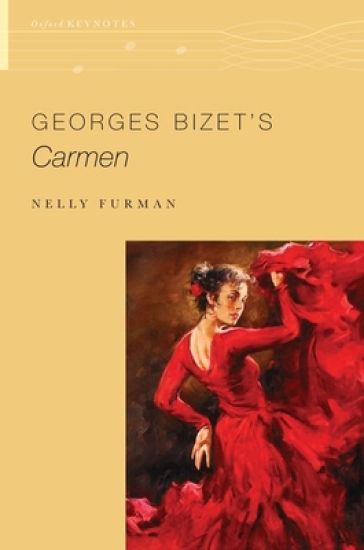
The popularity of Carmen endures across generations and continents, with one of the most frequently performed and instantly recognizable operatic scores of all time and a libretto derived from Prosper Mérimée's novella of the same name, written 30 years prior to the opera's 1875 debut. In Georges Bizet's Carmen—the latest volume in the Oxford Keynotes series—author Nelly Furman explores the evolution of Carmen's story and its meaning, illuminating how the titular heroine has maintained her status as a universally recognizable cultural icon. Grounded in Ludovic Halévy's and Henri Meilhac's libretto—and drawing on a wealth of mostly French critical theory—this book traces the textual, operatic, and cinematic tellings and retellings of the story, from its success as a novella in the industrial age through to its iconic position in our own cinematic era. As Furman delicately navigates the fraught terrain of racial and gendered discourse and ideology that Bizet's setting of Mérimée's work traverses, she uncovers the elements of the story that give it cultural salience and resonance, both in its own right and in support of Bizet's acclaimed musical score. In doing so, Furman reveals how past and present renderings of the Carmen tale mirror the changing concerns and shifting values of individual authors and their societies—and how each new rendering has helped to embed Carmen into the global conscience.
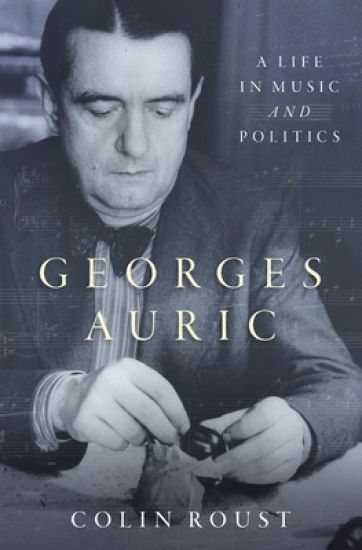
Jean Cocteau, Erik Satie, Moulin Rouge - the names popularly associated with film composer Georges Auric's career conjure visions of a distant and glamorous early twentieth-century Parisian art world. Auric wrote well over 100 film scores, including the soundtrack for Roman Holiday, and was notably affiliated with Les Six, a group of French composers reacting to the musical establishment of the 1920s. But Auric's life and work spanned far beyond this limited sphere. A lifelong involvement in politics - from his leftism during the Popular Front years of the 1930s to his significant role in the French Communist Party's musical resistance of the 1940s - heavily influenced his sound and aesthetic. His advocacy on behalf of his fellow musicians led him into the fight for fair copyright laws, initially in France and then worldwide. And over the course of a seven-decade-long career, Auric took on roles as diverse as music critic, opera director, and arts administrator, revealing a deep involvement in his country's musical life that makes the label of "composer" seem inadequate. The first English-language biography of Auric, Georges Auric: A Life in Music and Politics rethinks the conventional ideas of what it means to be a composer. Drawing from an astonishing three dozen untapped archives, including the private archives of Auric's widow, author Colin Roust presents a picture of Auric that is as multifaceted as the man's career. Using Auric's life as a lens, Roust reveals the transforming role of music - and the composer - in twentieth-century society.
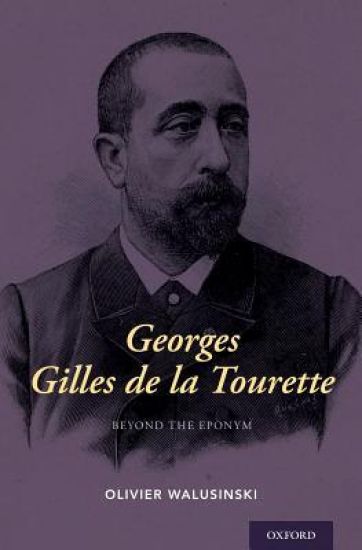
The 19th Century brought many medical advances and discoveries in neurology, with the famed Parisian La Salpêtrière hospital at its center. Medical giants such as Jean-Martin Charcot, Joseph Babinski, and even for a short time Sigmund Freud, walked these halls, so it is a wonder that, an equal among these men, very little exists in the literature on Georges Gilles de la Tourette. This biography is the first comprehensive volume to delve into the life, scholarship, writing, and hobbies of the famed doctor. In Part One, we learn Georges' family history, follow his schooling and mentorship under Charcot, travel to the Worlds Fair of 1900, evade an attempted assassination, all before succumbing to death by syphilis. Part Two provides an in-depth analysis of his neurological and psychiatric works, notably the epynomous neurological disorder that will forever remain "Tourette's Syndrome." Part Three looks at the lighter side of Georges, inspecting his favorite past-times as poet, historian, and art critic. Part Four brings an extensive bibliography of Georges' complete body of work. Author Olivier Walusinski pulls together unpublished family archives, Georges' correspondence with the Parisian journalist Georges Montorgueil, journal articles, and police archives to shed an original light on the famed doctor's life and lasting legacy. These archives have never before been studied or made available to the public, making this one of the first and most comprehensive biographies available and a must-have for any medical library.

Georges Florovsky and the Russian Religious Renaissance
Paul L. Gavrilyuk
Oxford University Press
2013
sidottu
Georges Florovsky is the mastermind of a 'return to the Church Fathers' in twentieth-century Orthodox theology. His theological vision-the neopatristic synthesis-became the main paradigm of Orthodox theology and the golden standard of Eastern Orthodox identity in the West. Focusing on Florovsky's European period (1920-1948), this study analyses how Florovsky's evolving interpretation of Russian religious thought, particularly Vladimir Solovyov and Sergius Bulgakov, informed his approach to patristic sources. Paul Gavrilyuk offers a new reading of Florovsky's neopatristic theology, by closely considering its ontological, epistemological and ecclesiological foundations. It is common to contrast Florovsky's neopatristic theology with the 'modernist' religious philosophies of Pavel Florensky, Sergius Bulgakov, and other representatives of the Russian Religious Renaissance. Gavrilyuk argues that the standard narrative of twentieth-century Orthodox theology, based on this polarization, must be reconsidered. The author demonstrates Florovsky's critical appropriation of the main themes of the Russian Religious Renaissance, including theological antinomies, the meaning of history, and the nature of personhood. The distinctive features of Florovsky's neopatristic theology--Christological focus, 'ecclesial experience', personalism, and 'Christian Hellenism'--are best understood against the background of the main problematic of the Renaissance. Specifically, it is shown that Bulgakov's sophiology provided a polemical subtext for Florovsky's theology of creation. It is argued that the use of the patristic norm in application to modern Russian theology represents Florovsky's theological signature. Drawing on unpublished archival material and correspondence, this study sheds new light on such aspects of Florovsky's career as his family background, his participation in the Eurasian movement, his dissertation on Alexander Herzen, his lectures on Vladimir Solovyov, and his involvement in Bulgakov's Brotherhood of St Sophia.

Georges Florovsky and the Russian Religious Renaissance
Paul L. Gavrilyuk
Oxford University Press
2015
nidottu
Georges Florovsky is the mastermind of a 'return to the Church Fathers' in twentieth-century Orthodox theology. His theological vision-the neopatristic synthesis-became the main paradigm of Orthodox theology and the golden standard of Eastern Orthodox identity in the West. Focusing on Florovsky's European period (1920-1948), this study analyses how Florovsky's evolving interpretation of Russian religious thought, particularly Vladimir Solovyov and Sergius Bulgakov, informed his approach to patristic sources. Paul Gavrilyuk offers a new reading of Florovsky's neopatristic theology, by closely considering its ontological, epistemological and ecclesiological foundations. It is common to contrast Florovsky's neopatristic theology with the 'modernist' religious philosophies of Pavel Florensky, Sergius Bulgakov, and other representatives of the Russian Religious Renaissance. Gavrilyuk argues that the standard narrative of twentieth-century Orthodox theology, based on this polarization, must be reconsidered. The author demonstrates Florovsky's critical appropriation of the main themes of the Russian Religious Renaissance, including theological antinomies, the meaning of history, and the nature of personhood. The distinctive features of Florovsky's neopatristic theology Christological focus, 'ecclesial experience', personalism, and 'Christian Hellenism' are best understood against the background of the main problematic of the Renaissance. Specifically, it is shown that Bulgakov's sophiology provided a polemical subtext for Florovsky's theology of creation. It is argued that the use of the patristic norm in application to modern Russian theology represents Florovsky's theological signature. Drawing on unpublished archival material and correspondence, this study sheds new light on such aspects of Florovsky's career as his family background, his participation in the Eurasian movement, his dissertation on Alexander Herzen, his lectures on Vladimir Solovyov, and his involvement in Bulgakov's Brotherhood of St Sophia.
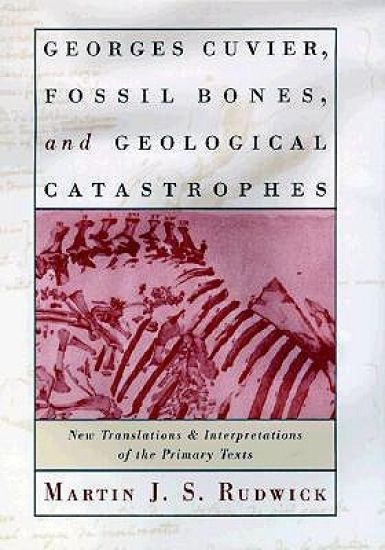
Georges Cuvier, Fossil Bones, and Geological Catastrophes
Martin J. S. Rudwick
University of Chicago Press
1997
sidottu
Until quite recently, French zoologist Georges Cuvier (1769-1832) opposed the biological theory of evolution, and championed the geological theory of catastrophism; but his careful research on fossils helped form and bring credibility to geology and palaeontology, and recent research has proved that his ideas on the importance of mass extinctions and catastrophes were well ahead of their time. In this volume, Martin Rudwick provides the first modern translation of Cuvier's essential writings on fossils and catastrophes, together with two previously unpublished pieces. Rudwick links these translated texts together with his own narrative and interpretive commentary, placing Cuvier's work in its biographical, scientific, and social context. A major feature of this book is a translation of Cuvier's best-known work, the "Preliminary Discourse" (1812). Frequently reprinted and translated, this essay became a key document in 19th-century debates about evolutionary theory, and is still used as source material by many English-speaking historians.
Georges Cuvier, Fossil Bones, and Geological Catastrophes
Martin J. S. Rudwick
University of Chicago Press
1998
nidottu
Until quite recently, French zoologist Georges Cuvier (1769-1832) opposed the biological theory of evolution, and championed the geological theory of catastrophism; but his research on fossils helped form and bring credibility to geology and palaeontology, and recent research has proved that his ideas on the importance of mass extinctions and catastrophes were well ahead of their time. In this volume, Martin Rudwick provides a modern translation of Cuvier's essential writings on fossils and catastrophes, together with two previously unpublished pieces. Rudwick links these translated texts together with his own narrative and interpretive commentary, placing Cuvier's work in its biographical, scientific, and social context. A major feature of this book is a translation of Cuvier's best-known work, the "Preliminary Discourse" (1812). Frequently reprinted and translated, this essay became a key document in 19th-century debates about evolutionary theory, and can still be used as source material by many English-speaking historians.
![Remarques Historiques, Philologiques, Critiques Et Littéraires, Sur Quelques Locutions, Proverbes, Et Dictons Populaires Du Moyen Age / [Georges Adrien Crapelet].](/covers/9780270150568.jpg)
Remarques Historiques, Philologiques, Critiques Et Littéraires, Sur Quelques Locutions, Proverbes, Et Dictons Populaires Du Moyen Age / [Georges Adrien Crapelet].
Georges Adrien Crapelet
Wentworth Press
2018
pokkari
L'Odéon histoire administrative, anecdotique et littéraire du second théatre français. Par Paul Porel et Georges Monval; Volume 2
Georges Mondain Monval; Paul Porel
Wentworth Press
2018
pokkari
![Léon Guillard, archiviste de la Comédie française (1810-1878) [Par] Georges D'Heylli. Portrait à l'eauforte par Ad. Lalauze](/covers/9780274521784.jpg)
Léon Guillard, archiviste de la Comédie française (1810-1878) [Par] Georges D'Heylli. Portrait à l'eauforte par Ad. Lalauze
Georges D' Heylli
Wentworth Press
2018
sidottu
Les balances; comédie en un acte par Georges Courteline
Georges Moinaux
Wentworth Press
2018
pokkari

The first comprehensive research guide and bibliography to the large literature surrounding the life and work of one of the 20th century's greatest artists, this volume includes information on more than 1,100 books and articles as well as a chronology, biographical sketch, and list of exhibitions. The secondary bibliography is arranged by topic and includes citations on the artist's life and career, his relationships with contemporary artists (notably Picasso), his influence on subsequent artists, his work in diverse artistic media as well as his oeuvre in general, iconography, and more. While concentrating on printed materials, this guide also includes selected manuscripts and audio-visual materials.Following a biographical sketch and chronology, the primary bibliography lists articles, essays, letters, interviews, manuscripts, and sketchbooks of Braque. The main part of the secondary bibliography lists monographs, catalogues, dissertations, theses, periodical articles, films, and selected newspaper articles. Substantial book reviews and exhibition reviews are also cited. Arranged by topic, this bibliography includes citations on Braque's career and development as an artist, his relationships with contemporary artists, a section on Braque/Picasso, his influence on other artists, his work in various media including paintings, drawings, prints, illustrated books, papiers decoupes, sculpture, jewelry, theatre designs, and other commissions. Georges Braque first came to world attention as Picasso's friend during the formative years of Cubism. Long overshadowed by his more famous contemporary, in the quarter-century after his death Braque is beginning to be evaluated accurately. Major retrospective exhibitions over the past decade, accompanied by a considerable body of new criticism and scholarship, have brought Braque into the spotlight.